
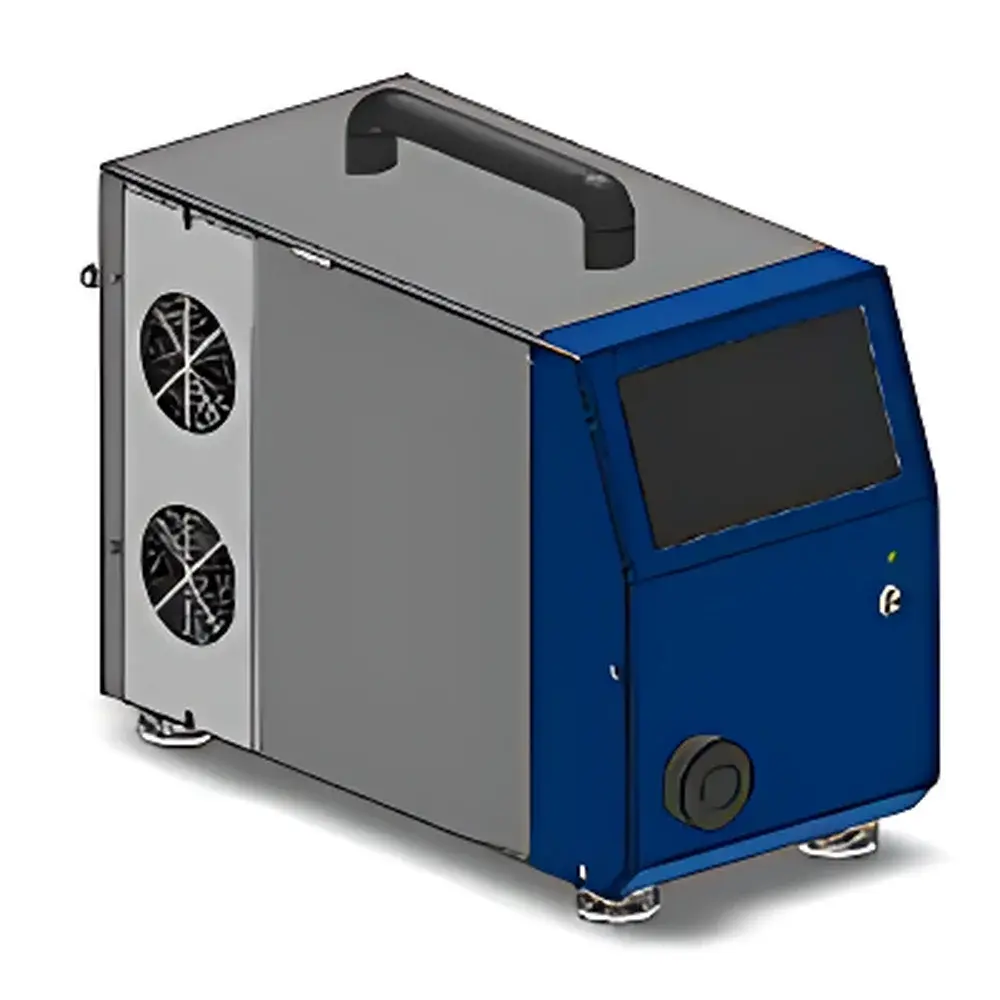
TCT SPNC2000 Portable Particulate Number (PN) Emission Analyzer for Motor Vehicles
| Brand | TCT (Xiamen Tongchuang) |
|---|---|
| Origin | Fujian, China |
| Model | SPNC2000 |
| Instrument Type | Portable |
| Measurement Principle | Diffusion Charging (DC) Method |
| Detection Limit | 1000 #/cm³ |
| Particle Size Range | 10–300 nm |
| Number Concentration Range | 1×10³–5×10⁷ #/cm³ |
| Response Time (T₀–T₉₅) | 0.2 s |
| Sample Inlet | Heated at 150–200 °C (standard 3 m probe) |
| Sensor Heating Temperature | 150–200 °C |
| Detection Efficiency | 20–60% @ 23 nm ±5% |
| Linearity | ±2.5×10⁴ #/cm³ or ±25% of reference value (whichever is greater) |
| Repeatability | Standard deviation ≤ 1/3 of MPE |
| Data Acquisition Frequency | 1–100 Hz |
| Sampling Flow Rate | 5.5 L/min |
| Communication Interfaces | RS232, optional Bluetooth/Wi-Fi |
| Operating Voltage | 100–260 VAC, 50–60 Hz |
| Operating Temperature | −20 to +60 °C |
| Dimensions (L×W×H) | 202 × 470 × 338 mm |
| Weight | <10 kg |
| Maximum Permissible Error (MPE) | ±5% |
| Zero Drift | ±1.5% |
| Span Drift | ±3% |
| Reproducibility | ±2% |
Overview
The TCT SPNC2000 is a portable, field-deployable particulate number (PN) emission analyzer engineered specifically for regulatory compliance testing of light- and heavy-duty motor vehicles under China’s GB 18352.5 (China 5) and GB 18352.6 (China 6) emission standards. It employs the diffusion charging (DC) principle—a well-established, ISO 8502-11–aligned methodology—for real-time quantification of solid ultrafine particles in exhaust streams. Unlike optical or filter-based methods, DC-based detection enables robust, flow-independent measurement of particle number concentration across the critical 10–300 nm size range—covering nucleation-mode particles that dominate modern GDI and diesel engine emissions. The instrument integrates a heated sampling system (150–200 °C), electrostatic classification via corona ionization, and Faraday cup current differential measurement to deliver trace-level sensitivity (detection limit: 1000 #/cm³) with sub-second response (T₀–T₉₅ ≤ 0.2 s). Its compact form factor (<10 kg, handheld design), combined with integrated thermal management and pressure-stable jet dilution, ensures metrological stability during roadside enforcement, chassis dynamometer testing (ASM, Lug-down, VMAS), and transient cycle validation.
Key Features
- True portability: Integrated handle, ruggedized enclosure, and <10 kg mass enable single-operator deployment in mobile inspection units, depot audits, and roadside enforcement scenarios.
- Heated sampling train: Standard 3 m heated probe (150–200 °C) prevents volatile particle loss and condensation artifacts—critical for accurate PN measurement per ISO 29463-3 and UNECE R83 requirements.
- Diffusion charging sensor architecture: Platinum-tipped corona discharge electrode generates ~2 kV ionizing field; jet pump maintains constant 5.5 L/min sample flow independent of exhaust backpressure.
- Multi-mode operational flexibility: Supports free-acceleration, two-speed idle, and real-time continuous monitoring; compatible with chassis dynamometers for standardized test cycles including ASM5015, VMAS, and transient load profiles.
- Dual-parameter acquisition: Optional engine speed and lubricating oil temperature inputs enable correlation of PN emissions with combustion and thermal conditions—supporting root-cause diagnostics.
- Regulatory-grade data integrity: Onboard timestamped logging, audit-trail-enabled report generation, and GLP-aligned metadata tagging (operator ID, location GPS, ambient T/P, calibration status).
Sample Compatibility & Compliance
The SPNC2000 is validated for direct sampling from gasoline direct injection (GDI), port fuel injection (PFI), and compression-ignition (CI) engines operating on conventional fuels, ethanol blends (E10/E85), and biodiesel (B5/B20). Its heated inlet and diffusion charging detection mechanism minimize bias from semi-volatile organic fraction (SVOC) interference—ensuring conformance with the particle volatility correction framework outlined in EU Commission Regulation (EU) 2017/1151 and GB/T 3845–2018. All performance specifications—including MPE (±5%), zero drift (±1.5%), span drift (±3%), and repeatability (±2%)—are verified per JJF 1525–2015 (Calibration Specification for Vehicle PN Analyzers) and referenced against NIST-traceable aerosol generators (e.g., DEHS, NaCl). The system meets electromagnetic compatibility (EMC) requirements per GB/T 18655–2018 and environmental robustness criteria (IP54 rating) for field use.
Software & Data Management
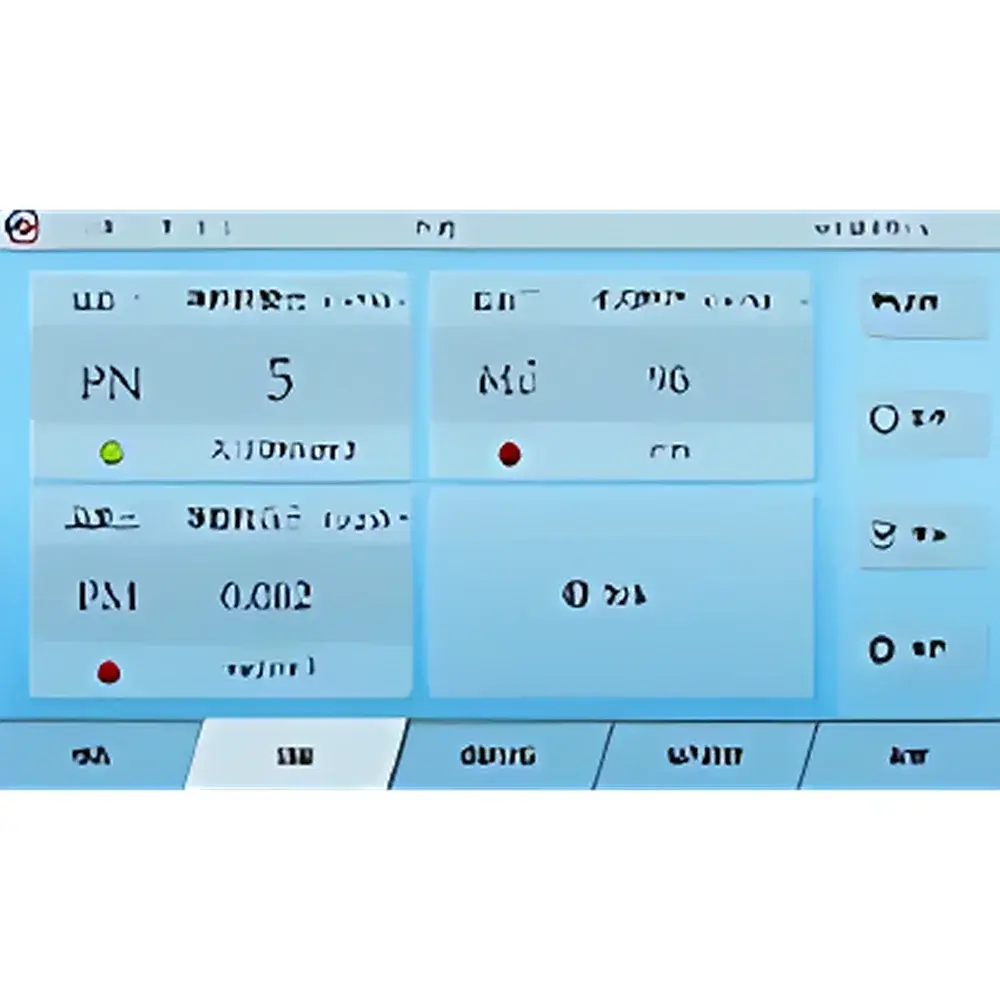
The embedded firmware supports configurable data acquisition frequencies (1–100 Hz), automatic background subtraction, and real-time statistical processing (mean, SD, min/max, 95th percentile). Measurement data are stored locally in CSV-compliant format with ISO 8601 timestamps and full metadata embedding (calibration certificate ID, sensor health flags, ambient conditions). Wireless connectivity (Bluetooth 4.2 / IEEE 802.11n) enables secure pairing with Android/iOS tablets running the certified TCT FieldLink™ application—supporting remote configuration, live waveform visualization, and encrypted cloud upload to centralized air quality databases. Reports comply with GB 3847–2018 annex formatting and include digital signatures, QR-coded verification links, and export options for integration into municipal environmental monitoring platforms or third-party LIMS systems. Audit logs record all user actions, parameter changes, and calibration events in accordance with GLP and ISO/IEC 17025 traceability requirements.
Applications
- Roadside emission enforcement: Rapid screening of in-use vehicles for PN non-compliance without requiring stationary test cells.
- Manufacturing QA/QC: Final-line verification of aftertreatment system integrity (e.g., GPF filtration efficiency, DPF regeneration status) on production vehicles.
- Research & development: Transient PN profiling during WLTC, RDE, and cold-start cycles to optimize combustion strategies and catalyst formulations.
- Fleet maintenance auditing: Correlation of PN spikes with oil degradation, injector fouling, or EGR valve malfunction using synchronized engine parameter inputs.
- Regulatory type-approval support: Supplemental PN data collection for GB 18352.6 certification testing where gravimetric PM mass alone is insufficient.
FAQ
Does the SPNC2000 require periodic recalibration with certified aerosol standards?
Yes. Initial calibration and annual verification must be performed using NIST-traceable monodisperse PSL or DEHS aerosols per JJF 1525–2015. On-site zero/span checks are recommended before each daily test session.
Can the instrument operate continuously during extended RDE testing?
Yes. With external 12 V DC power input (optional adapter), the SPNC2000 supports uninterrupted operation for >8 hours at 10 Hz acquisition rate, maintaining thermal equilibrium across the full −20 to +60 °C ambient range.
Is the diffusion charging method compliant with international PN measurement protocols?
Yes. The DC principle is recognized in ISO 29463-3:2020, UNECE R83 Amendment 12, and SAE J2998 as an equivalent alternative to CPC-based systems when validated for the 10–300 nm range and corrected for size-dependent detection efficiency.
How is data security ensured during wireless transmission?
All Bluetooth and Wi-Fi communications employ AES-128 encryption; device pairing requires manual authorization; no cloud upload occurs without explicit user confirmation and TLS 1.2–secured endpoint authentication.
What maintenance intervals are specified for field serviceability?
The corona electrode and Faraday cup require cleaning every 200 operational hours; the jet pump filter must be replaced quarterly or after 500 km of cumulative vehicle testing—log entries automatically flag upcoming service milestones.
Related Products







