
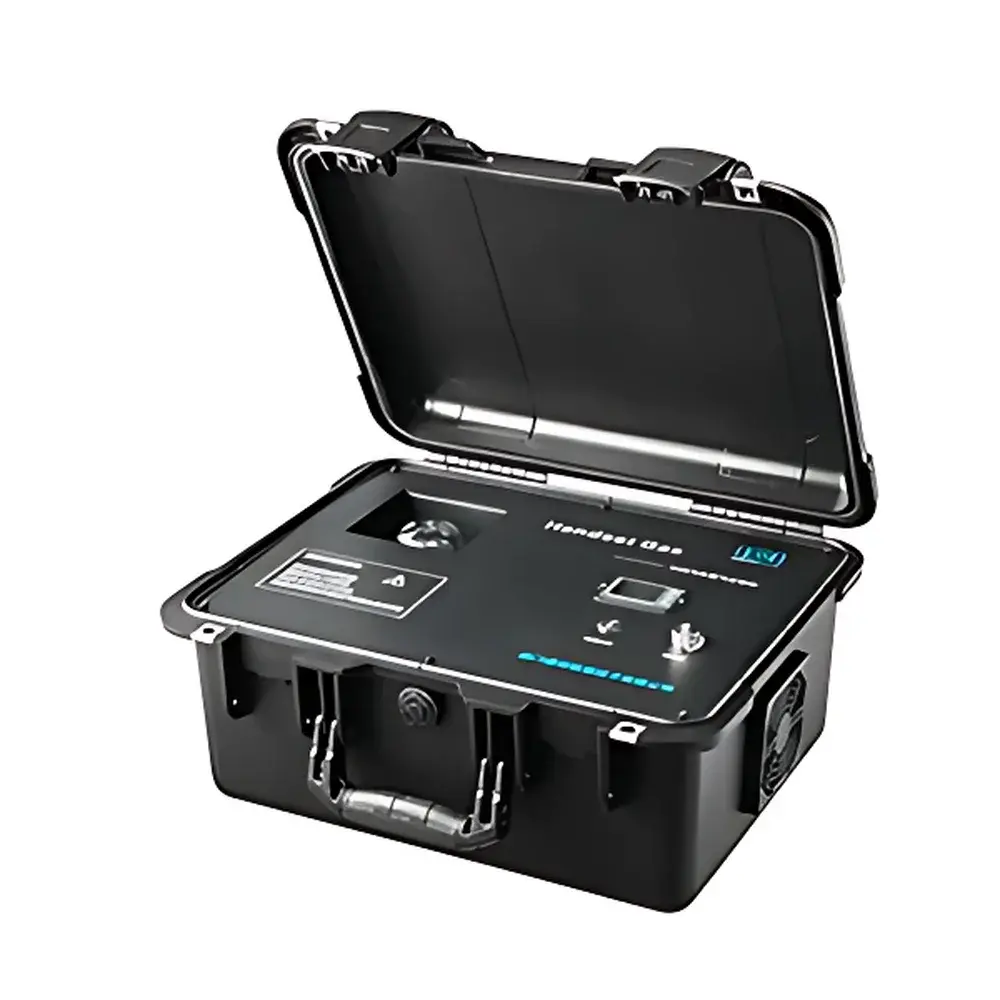
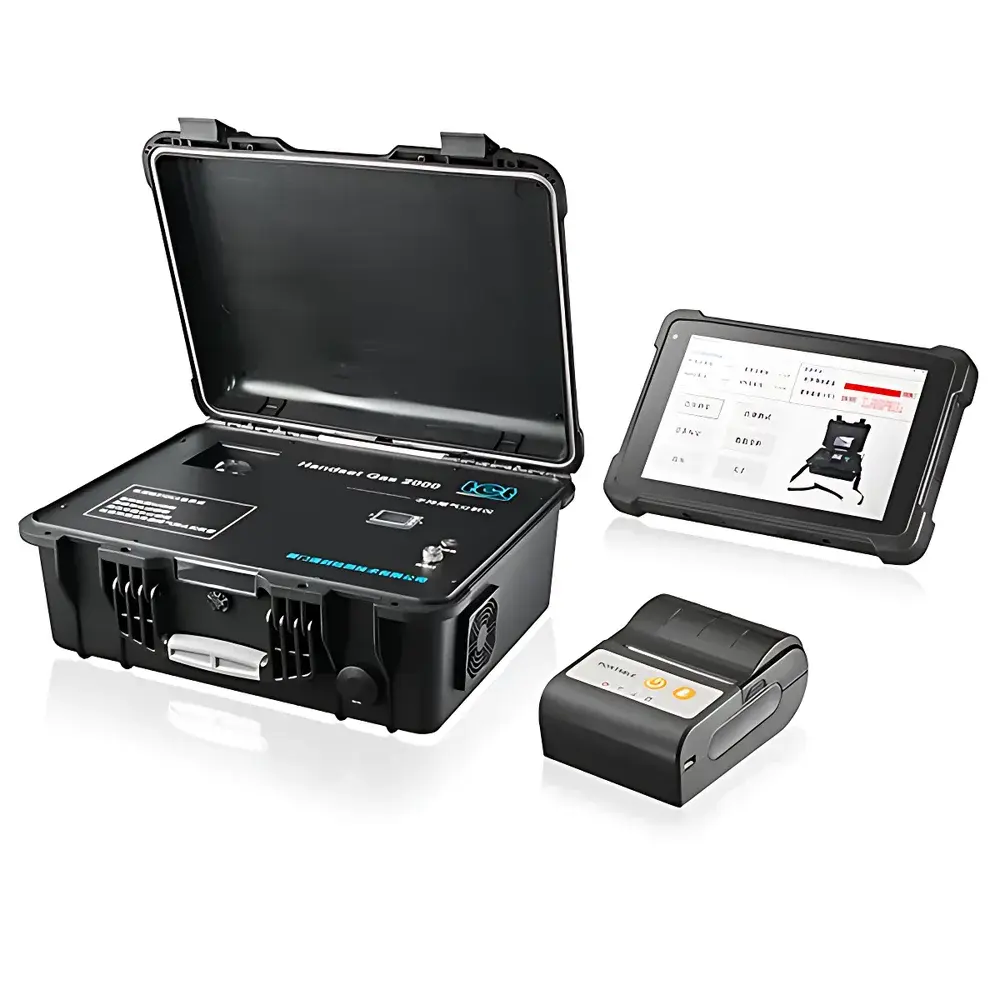

TCT Handset Gas1100 Portable Automotive Exhaust Gas Analyzer
| Brand | TCT |
|---|---|
| Origin | Fujian, China |
| Model | Handset Gas1100 |
| Instrument Type | Portable |
| Detection Principle | Non-Dispersive Infrared (NDIR) Absorption |
| Maximum Permissible Error | ±0.02%vol or ±3% FS (whichever is greater) |
| Zero Drift | ±4 ppm |
| Span Drift | ±4 ppm |
| Repeatability | ≤1% |
| Gas Measurement Ranges | CO (0–15% vol), CO₂ (0–20% vol), HC (0–20,000 ppm as n-hexane), O₂ (0–25% vol), NOₓ (0–1,500 ppm) |
| Resolution | CO (0.001% vol), CO₂ (0.1% vol), HC/O₂ (1 ppm / 0.01% vol), NOₓ (1 ppm) |
| Battery Life | ≥8 hours continuous operation |
| Weight | ≤8 kg |
| Connectivity | Wireless (instrument–handheld terminal), Bluetooth (printer), 4G LTE (cloud upload) |
Overview
The TCT Handset Gas1100 is a CE-compliant, field-deployable automotive exhaust gas analyzer engineered for regulatory enforcement, roadside inspection, and mobile source emissions auditing. It implements dual-spectrum non-dispersive infrared (NDIR) absorption spectroscopy for simultaneous, real-time quantification of carbon monoxide (CO), carbon dioxide (CO₂), and hydrocarbons (HC, expressed as n-hexane equivalent), while integrating electrochemical and dual-zirconia sensor technologies for precise oxygen (O₂) and nitrogen oxides (NOₓ) measurement. The instrument calculates the air–fuel equivalence ratio (λ) in accordance with ISO 8712 and SAE J1930 standards, enabling stoichiometric combustion diagnostics. Designed to meet the technical requirements of GB 18285–2018 (light-duty gasoline vehicles) and DB11/1476–2017 (heavy-duty diesel NOₓ rapid testing), the Gas1100 supports dual-idle testing, transient onboard diagnostics (OBD-II and EOBD), and real-world driving emission (RDE)-aligned portable emissions measurement system (PEMS) workflows.
Key Features
- Integrated handheld terminal with full-color LCD touchscreen, supporting multilingual UI (English default), wireless bidirectional communication (2.4 GHz ISM band), and real-time parameter visualization including CO, CO₂, HC, NOₓ, O₂, vehicle speed (V), engine RPM, fuel consumption, intake airflow, SCR inlet/outlet NOₓ differential, DPF pressure drop, EGR valve position, and urea dosing rate.
- Self-calibrating architecture: automatic zero-point verification, ambient air compensation, sensor health diagnostics, and warm-up sequence—all initiated via single-button operation.
- Onboard thermal management ensures NDIR optical path stability across ambient temperatures from –10 °C to +50 °C, minimizing drift-induced uncertainty in field conditions.
- Rechargeable lithium-ion battery pack (≥8 h runtime at 25 °C), with real-time telemetry of voltage, current, state-of-charge, and estimated remaining operating time displayed on the terminal interface.
- Comprehensive fault detection logic: halts measurement and issues clear-text alerts upon low sample flow (<1.2 L/min), invalid tachometer signal, O₂ sensor saturation, or thermocouple failure—ensuring data integrity per GLP-aligned operational protocols.
- Embedded 4G LTE module enables encrypted, timestamped transmission of raw measurement logs, diagnostic trouble codes (DTCs), and pass/fail determinations directly to centralized mobile source enforcement platforms.
Sample Compatibility & Compliance
The Gas1100 is validated for use with gasoline, diesel, and compressed natural gas (CNG) powered light- and heavy-duty vehicles. Its sampling probe meets ISO 10054:2001 dimensional and flow-rate specifications, and its gas conditioning subsystem includes particulate filtration (≤0.3 µm), water removal (dew point <5 °C), and pressure regulation (±0.5 kPa). All measurement algorithms conform to the metrological traceability framework defined in ISO/IEC 17025:2017. The device satisfies mandatory type-approval criteria under China’s Ministry of Ecology and Environment (MEE) Technical Specification for Motor Vehicle Emission Testing Equipment (HJ 1015–2019), and supports audit-ready data export compliant with GB/T 27025–2019 for laboratory accreditation reporting.
Software & Data Management
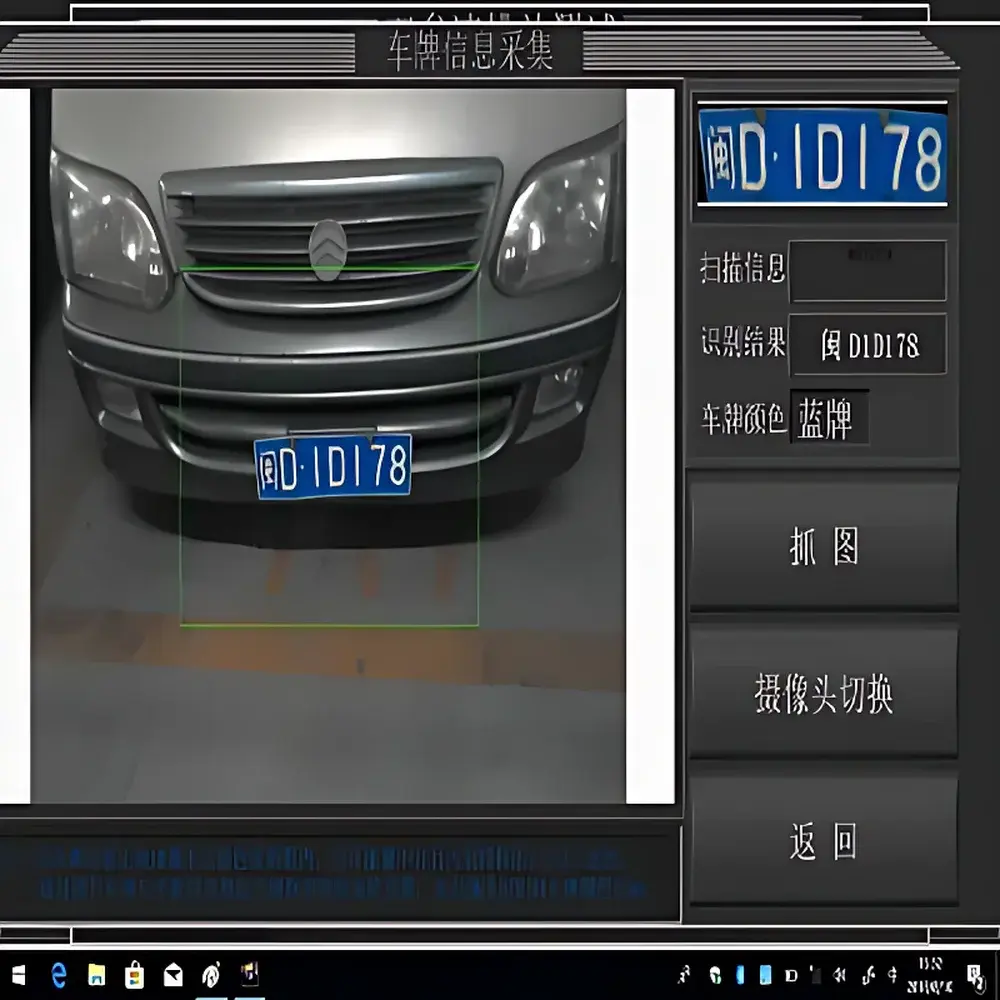
Data acquisition, analysis, and reporting are managed through the embedded TCT EmissionLink™ firmware (v3.2+), which generates ISO/IEC 17025-compliant PDF reports—including test metadata, calibration history, environmental conditions (T, P, RH), raw sensor outputs, λ calculation methodology, and regulatory pass/fail status per GB 18285 Annex A. Reports support digital signing, local storage (≥10,000 records), USB export (CSV/PDF), and cloud synchronization via TLS 1.2–secured API endpoints. Integration with municipal environmental monitoring big-data platforms is enabled via RESTful webhooks and configurable XML schema mapping. A dedicated iOS/Android application and WeChat Mini Program provide fleet-level analytics, historical trend charts, license plate–based vehicle档案 (one-vehicle-one-file), and automated violation flagging aligned with provincial emission thresholds.
Applications
- Roadside emissions screening by environmental protection bureaus and traffic law enforcement agencies.
- Pre-delivery inspection (PDI) and periodic technical inspection (PTI) at certified vehicle testing centers.
- Real-world emissions verification for retrofit compliance (e.g., DPF/SCR installation validation).
- Research-grade transient emission profiling during chassis dynamometer or on-road PEMS campaigns.
- Technical training and certification programs for automotive technicians and emissions auditors.
FAQ
Does the Gas1100 support remote firmware updates?
Yes—over-the-air (OTA) updates are delivered via secure HTTPS channels and require cryptographic signature verification prior to installation.
Is the device certified for use in EU member states?
While not CE-marked for direct sale in the EU, the Gas1100 meets core performance criteria referenced in EN 15085–3 and EN 14181 for portable emission analyzers; formal conformity assessment requires local Notified Body evaluation.
Can measurement data be exported in CSV format for third-party statistical analysis?
Yes—raw time-series data (1 Hz resolution), calibration logs, and summary reports are exportable via USB mass storage mode or SFTP protocol.
What is the recommended calibration interval under daily field use?
A full multi-point calibration using certified span gases is required every 90 days or after 200 test cycles, whichever occurs first; zero checks must be performed before each test session.
Does the handheld terminal support offline operation when cellular connectivity is unavailable?
Yes—full functionality, including measurement, report generation, and local storage, remains available without network connectivity; queued data synchronizes automatically upon reconnection.
Related Products







