
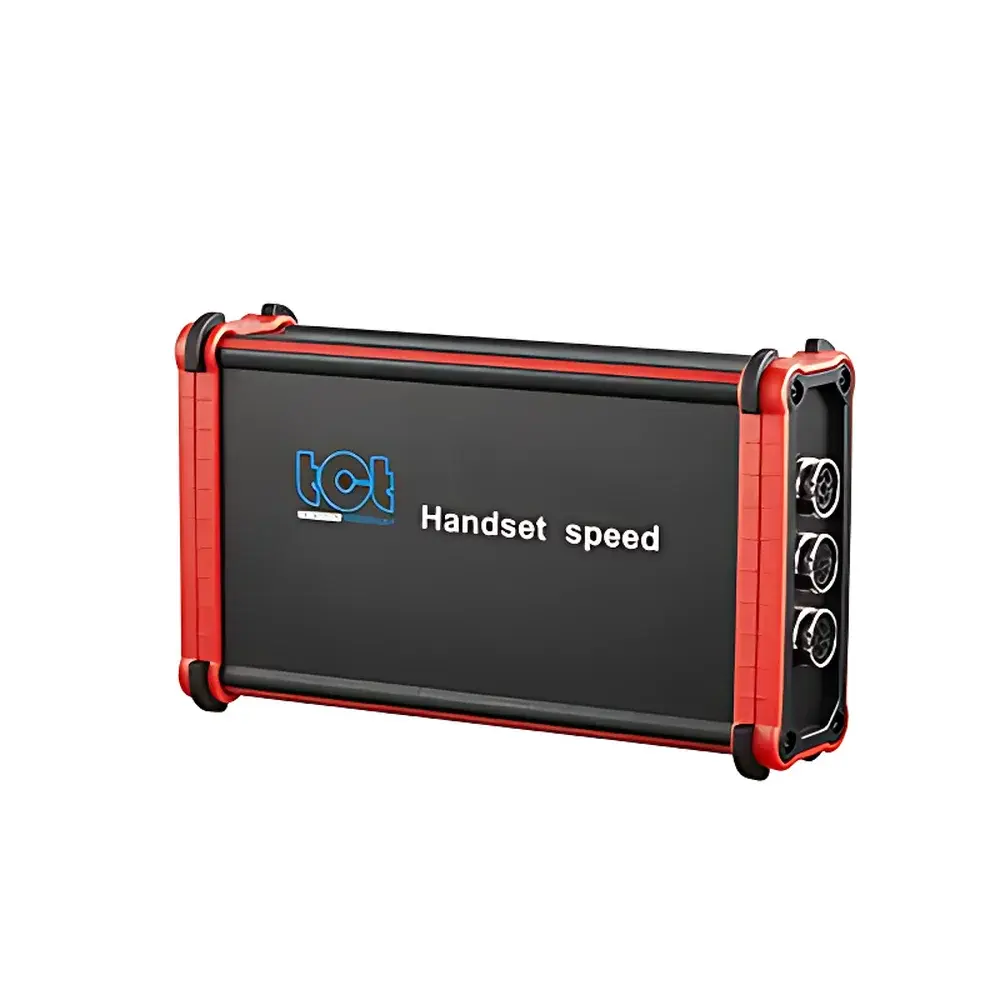
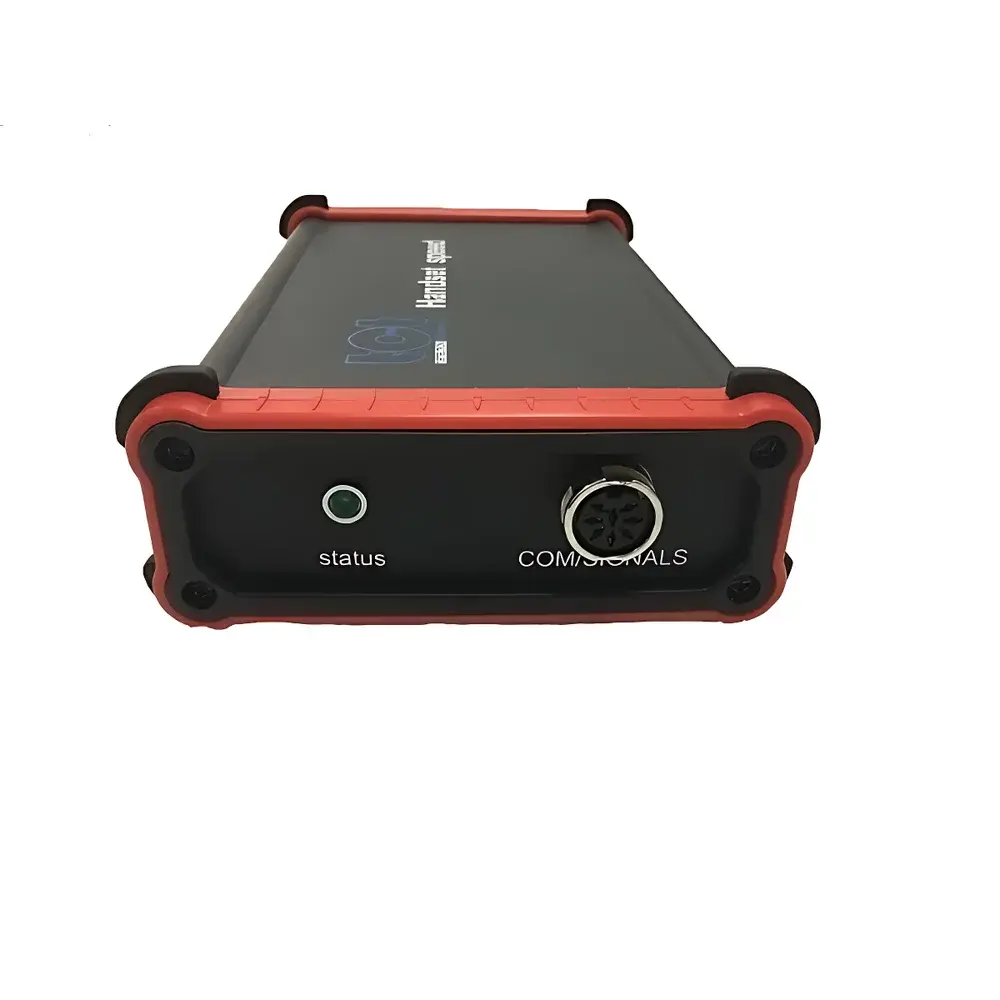
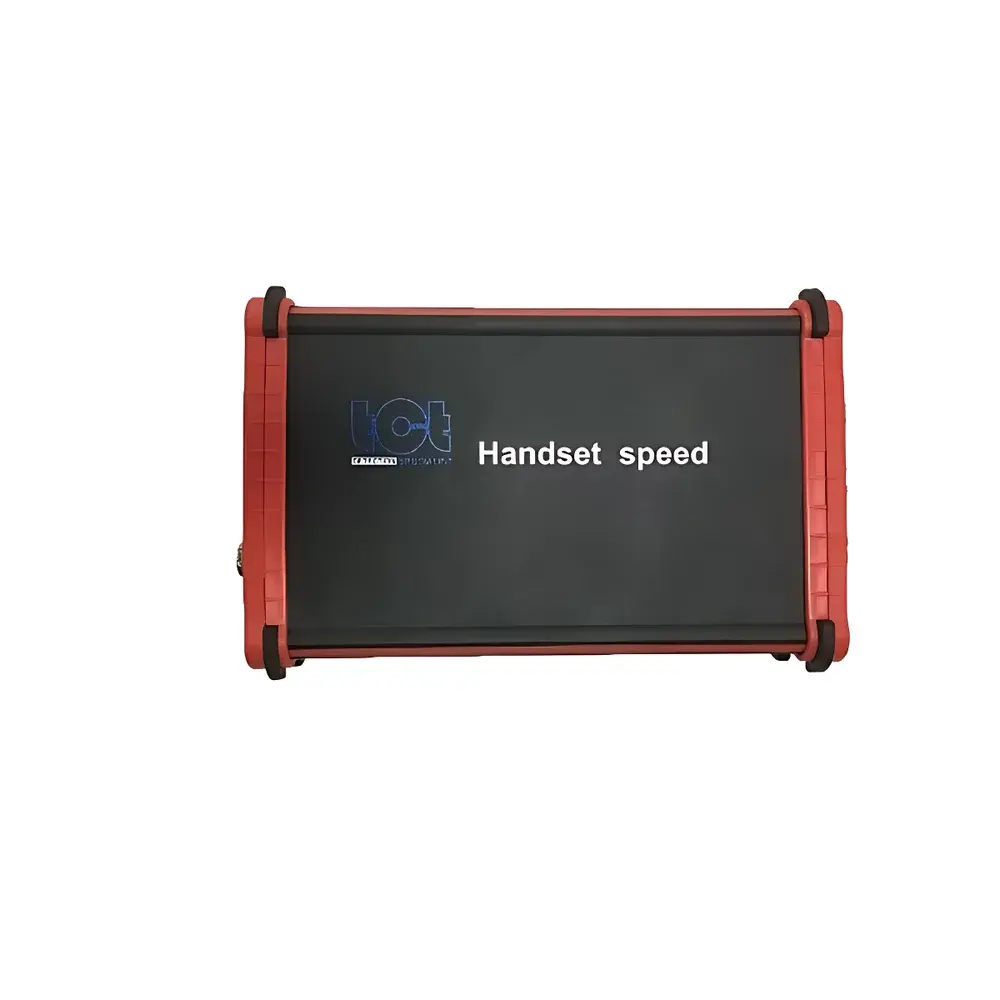
TCT Handset Speed Engine RPM and Oil Temperature Tester
| Brand | TCT |
|---|---|
| Origin | Fujian, China |
| Manufacturer Type | Authorized Distributor |
| Country of Origin | China |
| Model | Handset Speed |
| Instrument Type | Handheld |
| Measurement Principle | Contact Vibration Sensing & Thermocouple-Based Temperature Detection |
| RPM Accuracy | ±20 rpm (400–2000 rpm), ±2% (2001–9999 rpm) |
| Oil Temperature Accuracy | ±1 °C |
| RPM Resolution | 10 rpm |
| Oil Temperature Resolution | 1 °C |
| Zero Drift | ±2% |
| Span Drift | ±20 rpm |
| Repeatability | ≤1% |
| Operating Temperature | 0–50 °C |
| Storage Temperature | −50–70 °C |
| Power Supply | +9 to +30 VDC |
| Response Time | 0.7 s |
| Update Rate | 0.15 s |
| Initialization Time | <15 s (battery-powered), instant (vibration sensor) |
Overview
The TCT Handset Speed Engine RPM and Oil Temperature Tester is a compact, handheld diagnostic instrument engineered for simultaneous real-time measurement of engine rotational speed (RPM) and lubricating oil temperature in internal combustion engines. Unlike optical or inductive tachometers, this device employs dual-sensing architecture: a piezoelectric vibration sensor for non-intrusive RPM acquisition via mechanical coupling to the engine block, and a calibrated thermocouple probe for direct contact-based oil temperature monitoring. Its design targets field service technicians, fleet maintenance personnel, and automotive calibration labs requiring rapid, repeatable, and portable assessment of engine operational parameters—particularly during cold-start characterization, idle stability verification, and post-repair validation. The instrument operates independently of ECU signals or OBD-II protocols, making it suitable for legacy vehicles, diesel gensets, marine auxiliary engines, and off-road machinery where standardized data buses are unavailable.
Key Features
- Dual-parameter acquisition: Synchronized RPM and oil temperature readings with independent signal conditioning paths to prevent cross-talk interference.
- Multi-mode power and sensing flexibility: Supports three operational configurations—direct connection to vehicle battery terminals, plug-in via 12 V cigarette lighter adapter, or standalone operation using the integrated vibration sensor affixed magnetically to cast-iron or aluminum cylinder blocks.
- High temporal fidelity: 0.15-second update rate and sub-second (0.7 s) response time enable dynamic tracking of transient engine behavior, including throttle snap tests and load-step transitions.
- Ruggedized industrial enclosure: IP54-rated housing with reinforced rubber overmold ensures resistance to vibration, dust ingress, and incidental fluid exposure typical in under-hood environments.
- RS-232 serial interface compliant with EIA/TIA-232-F standard: Enables direct integration with Windows-based diagnostic software, automated test benches, and laboratory data acquisition systems for traceable logging and report generation.
- Wide operating voltage range (+9 to +30 VDC): Accommodates 12 V and 24 V nominal vehicle electrical systems without external regulation, eliminating dependency on stabilized bench supplies.
Sample Compatibility & Compliance
The Handset Speed tester is validated for use across gasoline and diesel four-stroke engines with cylinder counts from 2 to 8, including common rail, indirect injection, and carbureted architectures. It does not require engine-specific calibration tables or firmware updates per model year. Sensor mounting relies on mechanical resonance coupling rather than electromagnetic signature recognition, ensuring compatibility with non-OBD-equipped equipment such as agricultural tractors, construction equipment, and vintage motorcycles. While not certified to ISO 16179 (engine parameter measurement) or SAE J1930 (OBD terminology), its performance specifications align with ASTM D6896-22 Annex A2 guidance for handheld engine diagnostics used in preventive maintenance programs. Data integrity meets basic GLP documentation requirements when paired with timestamped RS-232 output and externally validated PC logging software.
Software & Data Management
The device outputs ASCII-formatted telemetry via RS-232 at 9600 baud (8N1), including RPM, oil temperature, unit identifiers, and status flags (e.g., “SENSOR_OK”, “LOW_BATT”). No proprietary driver is required; standard COM port utilities (e.g., PuTTY, Tera Term) or custom LabVIEW/Python scripts can parse and archive streams. Optional TCT-provided Windows application supports real-time graphing, CSV export, and user-defined pass/fail thresholds for go/no-go testing. Audit trails—including operator ID, test timestamp, and environmental ambient temperature (manually entered)—can be embedded into exported files to support ISO/IEC 17025-compliant lab workflows. Firmware updates (if released) are delivered via serial bootloader mode and require no hardware modification.
Applications
- Pre-departure inspection of commercial vehicle fleets to verify stable idle RPM and acceptable oil warm-up profiles.
- Troubleshooting intermittent stalling or rough idle conditions by correlating RPM fluctuations with thermal gradients during engine cooldown cycles.
- Validation of aftermarket ECU tuning maps where oil temperature feedback influences fuel trim and ignition timing strategies.
- Calibration verification of OEM dashboard tachometers and oil temperature gauges during warranty repair procedures.
- Field-based emissions pre-screening: Identifying abnormally low RPM at rated load (indicative of turbocharger lag or air intake restriction) prior to formal exhaust gas analysis.
- Technical training labs for automotive technician certification programs emphasizing hands-on sensor fundamentals and signal interpretation.
FAQ
Does the vibration sensor require adhesive or mechanical fastening?
No—the sensor incorporates a rare-earth neodymium magnet array designed for secure attachment to ferromagnetic engine surfaces without tape, glue, or clamps. Non-ferrous aluminum blocks require optional steel mounting plates (sold separately).
Can the device measure oil temperature in dry-sump systems?
Yes, provided the thermocouple probe tip is inserted into a designated oil gallery port or dipstick tube with sufficient immersion depth (>25 mm) to ensure representative bulk fluid reading.
Is RS-232 output compatible with modern laptops lacking serial ports?
Yes—standard USB-to-RS-232 adapters with FTDI or CP2102 chipsets are fully supported; no additional drivers are needed on Windows 10/11 or Linux distributions with kernel ≥5.4.
What maintenance is required for long-term accuracy?
Annual verification against NIST-traceable RPM and temperature standards is recommended. The vibration sensor requires no recalibration unless physically damaged; the thermocouple probe should be inspected for insulation wear before each high-temperature deployment.
Does the instrument support data logging without a PC?
No—internal memory is not implemented. Continuous logging must be performed externally via connected host software or DAQ hardware.







