
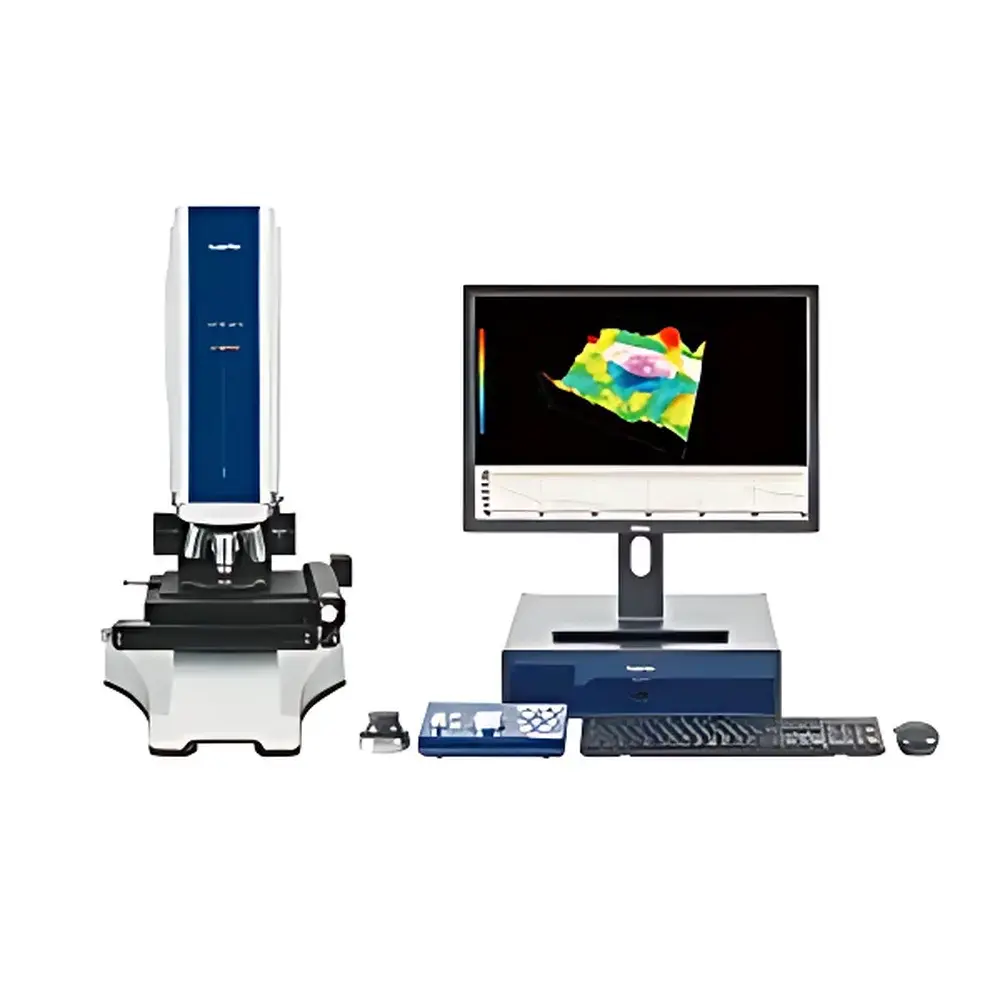
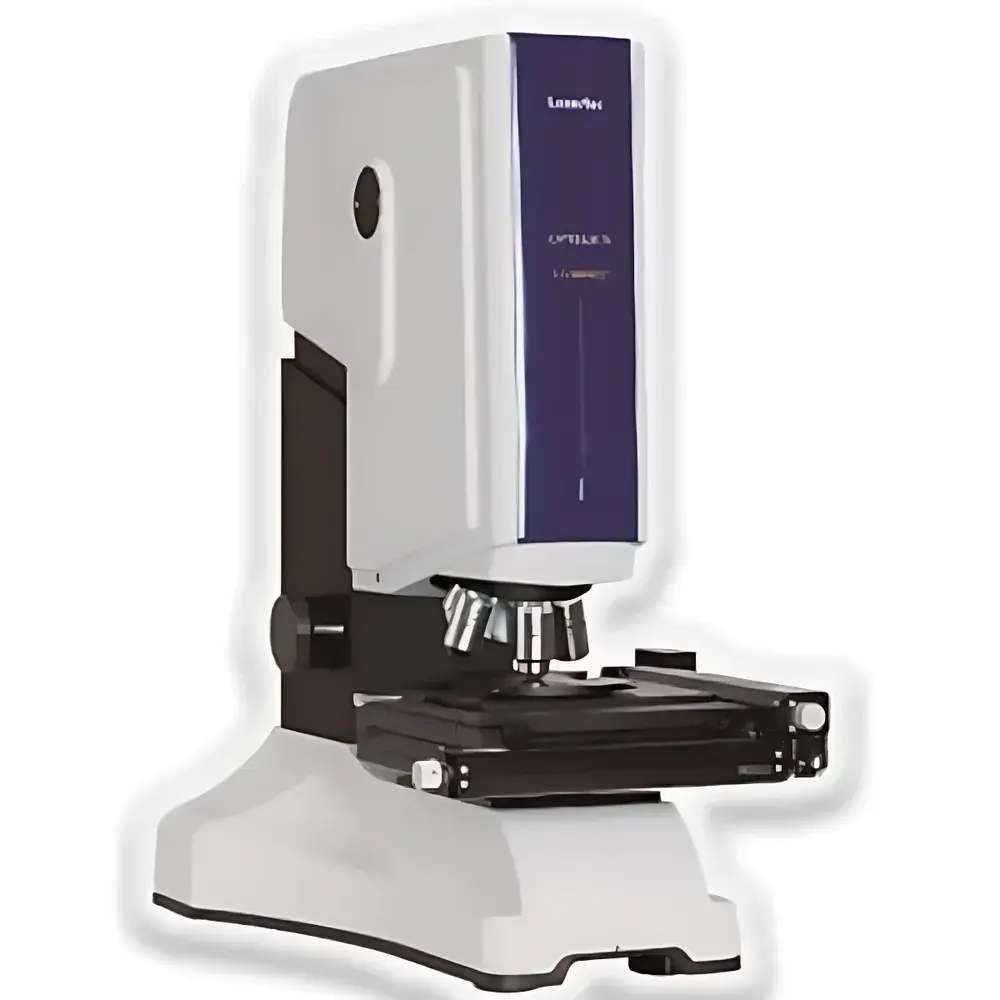
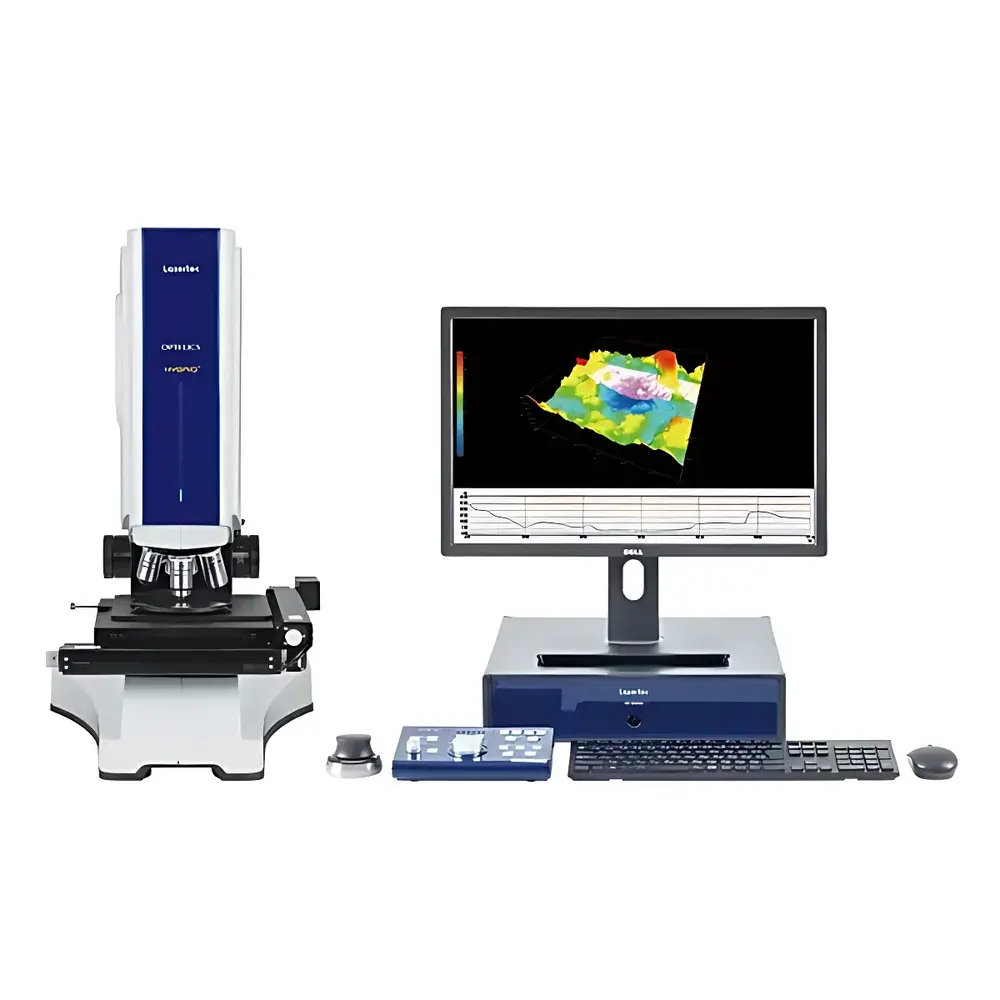
Lasertec HYBRIO Hybrid Laser and White-Light Confocal Microscope
| Brand | Lasertec |
|---|---|
| Origin | Japan |
| Model | HYBRIO |
| Instrument Type | Point-Scanning Confocal Microscope |
| Optical Architecture | Dual-Path Hybrid Confocal System (Laser + White-Light Interferometry) |
| Core Capabilities | Differential Interference Contrast (DIC), Vertical White-Light Interferometry (VWLI), Phase-Shift Interferometry (PSI), Reflectance Spectroscopic Thin-Film Metrology, Confocal Reflectance Imaging, High-Resolution Surface Topography Mapping |
| Compliance | Designed for ISO/IEC 17025-compliant metrology labs |
Overview
The Lasertec HYBRIO Hybrid Laser and White-Light Confocal Microscope is an engineered solution for high-precision, multi-modal surface characterization in advanced R&D and quality control environments. Built upon a dual-path optical architecture, the HYBRIO integrates synchronized laser confocal scanning and white-light vertical interferometry within a single mechanical platform—eliminating inter-system alignment drift and enabling direct correlation between topographic, optical, and film-thickness data from identical measurement locations. Unlike conventional point-scanning confocal systems that rely exclusively on monochromatic laser illumination, the HYBRIO employs a dynamically switchable optical path that preserves diffraction-limited resolution in both modalities while maintaining common-axis registration at sub-micron spatial fidelity. This architecture enables quantitative surface profiling with nanometer-level vertical repeatability (≤0.1 nm RMS over 10 µm range, typical), combined with lateral resolution down to 200 nm (at 405 nm laser wavelength) and broadband spectral reflectance acquisition across 400–1000 nm. The system is purpose-built for applications demanding traceable dimensional metrology, thin-film process validation, and microstructure analysis where orthogonal measurement principles must be co-registered without sample repositioning.
Key Features
- Dual optical engine: Independently optimized laser confocal path (405/488/635 nm options) and white-light interferometric path share a common objective turret and XYZ stage—ensuring pixel-perfect spatial registration across modalities.
- Point-scanning confocal imaging with real-time optical sectioning: Enables depth-resolved reflectance contrast imaging of opaque, semi-transparent, and multilayered samples without staining or coating.
- Vertical white-light interferometry (VWLI) with phase-shifting capability (PSI): Delivers sub-nanometer vertical resolution and high-speed areal topography mapping (up to 100 Hz frame rate for 1024×1024 pixels).
- Integrated spectroscopic reflectance module: Measures film thickness (1 nm–10 µm range), optical constants (n, k), and layer stack composition using calibrated broadband reflectance spectra (400–1000 nm).
- Differential interference contrast (DIC) mode: Provides label-free, high-contrast visualization of surface gradients and edge features with enhanced depth perception—complementary to confocal intensity data.
- Modular objective compatibility: Supports dry, immersion, and long-working-distance objectives (5× to 100×), including specialized objectives for high-NA interferometry and low-distortion DIC.
Sample Compatibility & Compliance
The HYBRIO accommodates a broad range of solid-state specimens—including polished wafers, MEMS devices, precision machined components, optical coatings, biomedical implants, and ceramic substrates—without requiring conductive coating or vacuum environments. Its non-contact, non-destructive measurement principle complies with ASTM E2923-22 (Standard Practice for Measuring Thickness of Transparent and Opaque Films Using Spectral Reflectance), ISO 25178-603 (Surface Texture: Areal — Part 603: Nominal Characteristics of Instruments), and JIS B 0601 (Geometrical Product Specifications). Data acquisition workflows support 21 CFR Part 11–compliant electronic signatures and audit trail logging when paired with Lasertec’s certified Metrology Suite software. System calibration is traceable to NMIJ (National Metrology Institute of Japan) standards, and routine performance verification follows ISO/IEC 17025 procedures for accredited metrology laboratories.
Software & Data Management
Control and analysis are performed via Lasertec’s Metrology Suite v5.x—a Windows-based application designed for regulated industrial environments. The software provides synchronized acquisition across all optical modes, automated multi-point measurement routines, and integrated uncertainty estimation per GUM (Guide to the Expression of Uncertainty in Measurement). Raw interferograms, confocal Z-stacks, reflectance spectra, and DIC images are stored in vendor-neutral HDF5 format with embedded metadata (including instrument configuration, environmental conditions, and calibration history). Export options include CSV, TIFF, STP, and STEP AP210 for CAD-integrated inspection workflows. Optional modules enable SPC charting, GD&T evaluation (per ASME Y14.5), and integration with MES/ERP systems via OPC UA protocol.
Applications
- Semiconductor front-end metrology: Critical dimension verification, CMP uniformity assessment, and post-etch profile analysis on patterned wafers.
- Optical thin-film development: In-line monitoring of anti-reflective, dielectric mirror, and ITO stack deposition processes.
- Precision manufacturing QA: Surface roughness (Sa, Sq), step height, curvature, and defect classification on injection-molded optics and microfluidic chips.
- Advanced materials research: Correlating grain boundary topography (via DIC) with local reflectance anomalies (via confocal mapping) in polycrystalline ceramics and battery electrode coatings.
- Medical device validation: Quantitative assessment of surface texture parameters (e.g., Sa, Sz) on orthopedic implants per ISO 10993-22 and ASTM F2792.
FAQ
What distinguishes the HYBRIO from conventional laser-only confocal microscopes?
The HYBRIO’s hybrid architecture enables simultaneous or sequential acquisition of confocal reflectance, interferometric topography, and spectroscopic film data from identical XY coordinates—without recalibration or repositioning. This eliminates registration error inherent in multi-instrument workflows.
Is the system suitable for measuring transparent or multi-layered films?
Yes. The integrated spectroscopic reflectance module quantifies thickness and optical constants of single and multi-layer stacks (e.g., SiO₂/TiO₂ on glass) using full-spectrum modeling and Levenberg-Marquardt fitting algorithms.
Can the HYBRIO perform automated batch measurements across wafers or large-area substrates?
Yes. The motorized XY stage (100 mm × 100 mm travel, 50 nm encoder resolution) and programmable autofocus support fully automated grid-based metrology with wafer-map export and statistical reporting.
Does the system meet regulatory requirements for pharmaceutical or medical device manufacturing?
When configured with validated software modules and documented IQ/OQ protocols, the HYBRIO supports GLP, GMP, and FDA 21 CFR Part 11 compliance for use in regulated quality systems.
What maintenance or recalibration intervals are recommended?
Annual traceable calibration is recommended per ISO/IEC 17025 guidelines; daily verification using NIST-traceable step-height standards is advised for critical metrology applications.






