
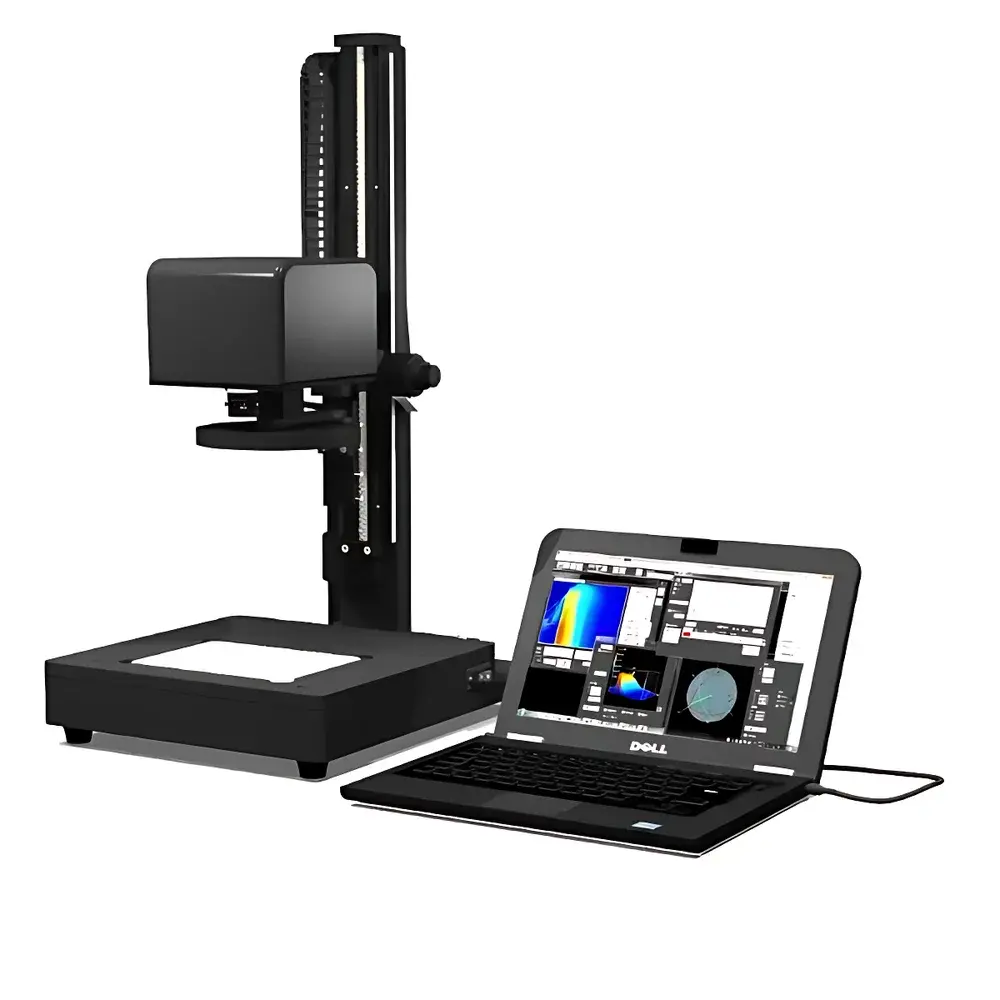
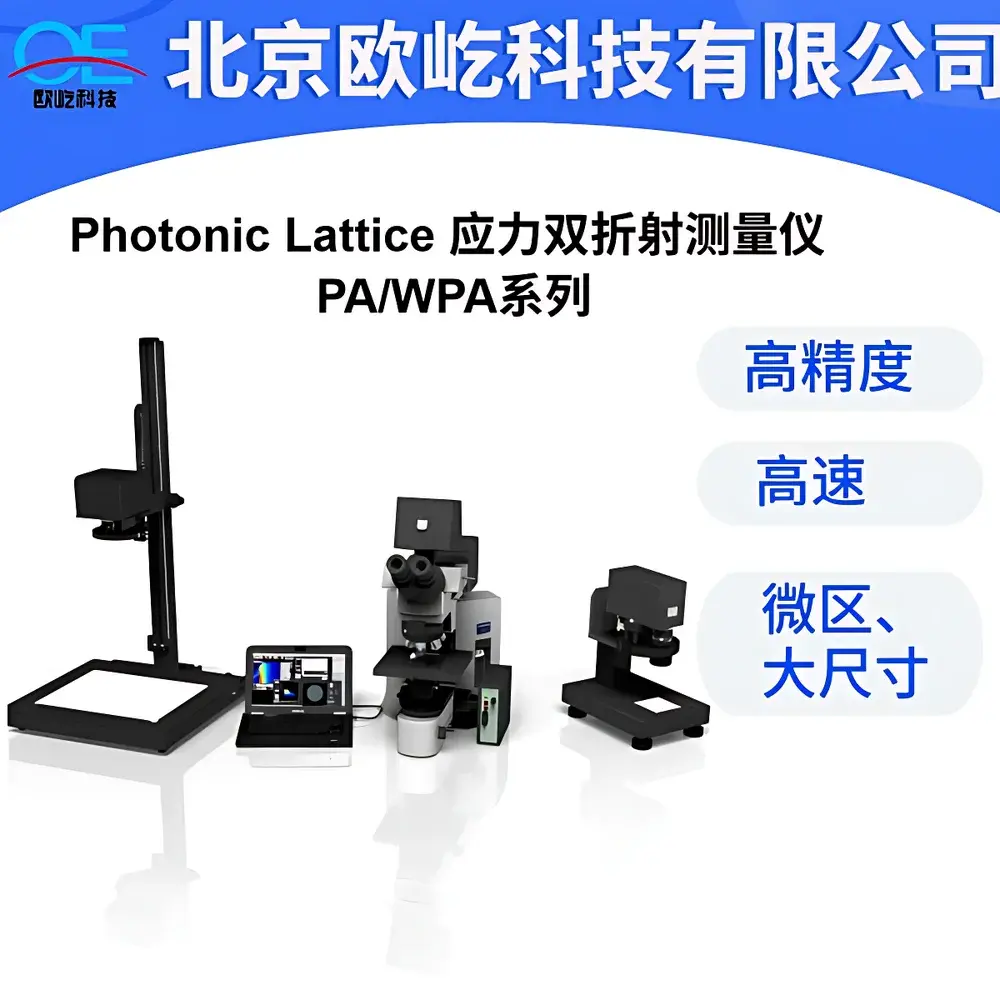
Photonic Lattice PA-300-NIR Polarizing Stress Meter
| Brand | Photonic Lattice |
|---|---|
| Origin | Japan |
| Model | PA-300-NIR |
| Birefringence Range | 0–130 nm |
| Measurement Speed | < 5 s per full-field scan |
| Spatial Resolution | 5 MP (2448 × 2048) |
| Output Parameters | Retardation (nm), Azimuth Angle (°), Stress (MPa), Stress Birefringence (nm/mm) |
| Sample Size Capacity | Up to Ø500 mm |
| Optical Configuration | Near-Infrared (NIR) Imaging Polarimeter with Photonic Crystal Polarizer Array |
Overview
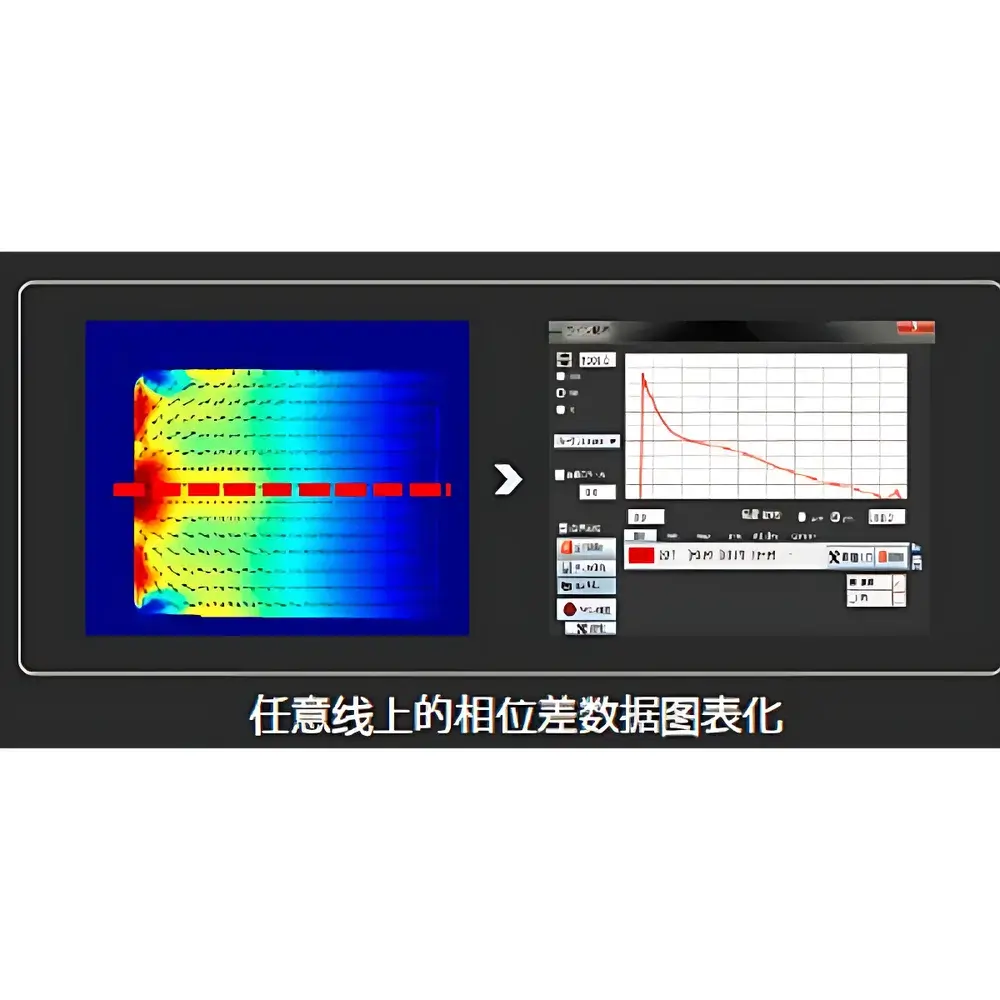
The Photonic Lattice PA-300-NIR is a high-speed, full-field imaging polarimeter engineered for quantitative measurement of photoelastic birefringence and residual stress in transparent and semi-transparent optical materials. Operating on the principle of polarization-resolved retardation mapping, the system utilizes a patented photonic crystal polarizer array integrated into a near-infrared (NIR) optical path (typically centered at 780–1050 nm), enabling high-contrast, low-noise detection of stress-induced anisotropy in glass, polymer lenses, optical substrates, display cover plates, and injection-molded plastic components. Unlike point-scanning or rotating-analyzer systems, the PA-300-NIR captures spatially resolved retardation and azimuth data across the entire field of view—up to Ø500 mm—in a single exposure, eliminating mechanical scanning artifacts and ensuring traceable, repeatable measurements compliant with ISO 11477 (Plastics — Determination of photoelastic constants) and ASTM D4093 (Standard Test Method for Photoelastic Stress Analysis of Transparent Plastics).
Key Features
- Patented photonic crystal polarizer array enabling simultaneous acquisition of four polarization states without moving parts
- NIR illumination (780–1050 nm) minimizes surface reflection interference and enhances penetration depth in thick or coated samples
- 5-megapixel CMOS sensor (2448 × 2048) with 12-bit dynamic range ensures high spatial fidelity and sub-nm retardation sensitivity
- Real-time full-field computation of retardation (nm), azimuth angle (°), principal stress direction, and stress magnitude (MPa) using proprietary tensor-based inversion algorithm
- Automated calibration routines traceable to NIST-certified retardation standards; supports user-defined material constants (stress-optic coefficient C)
- Rugged industrial enclosure rated IP52, compatible with cleanroom Class 1000 and production-line integration via Ethernet/IP or Modbus TCP
Sample Compatibility & Compliance
The PA-300-NIR accommodates flat, curved, and laminated specimens ranging from 3 mm × 3 mm micro-optics to 500 mm diameter display glass substrates. It supports transmission-mode measurement of isotropic and uniaxial materials including fused silica, BK7, borosilicate glass, polycarbonate, PMMA, cyclic olefin copolymer (COC), and tempered soda-lime glass. All measurement outputs comply with GLP documentation requirements: audit trails record operator ID, calibration timestamp, environmental conditions (temperature/humidity), and raw interferometric data files (16-bit TIFF + metadata XML). The system supports 21 CFR Part 11-compliant electronic signatures when deployed with validated software modules and network authentication.
Software & Data Management
Control and analysis are performed via PolarView™ v4.2 software, a Windows-based application supporting both manual operation and automated batch workflows. The software provides native export to CSV, HDF5, and industry-standard .mat formats, with optional plugins for MATLAB, Python (via PyPA300 SDK), and LabVIEW. Measurement reports include ISO/IEC 17025-aligned uncertainty budgets calculated per GUM (JCGM 100:2008), incorporating contributions from pixel noise, temperature drift (< ±0.02 nm/°C), and calibration standard uncertainty. Raw data archives are stored with SHA-256 checksums and time-stamped digital signatures to satisfy FDA and EU MDR traceability mandates.
Applications
- Residual stress mapping in precision optical lenses prior to coating or assembly
- In-process monitoring of annealing uniformity in float glass manufacturing
- Failure root-cause analysis of spontaneous fracture in tempered automotive glazing
- Quality assurance of OLED encapsulation films and foldable display cover layers
- Verification of stress-free bonding interfaces in hybrid SiO₂–polymer waveguide substrates
- Research-grade characterization of stress evolution during UV-curing of acrylate adhesives
FAQ
What NIR wavelength range does the PA-300-NIR operate in?
The system uses a broadband NIR source spanning 780–1050 nm, with peak sensitivity at 850 nm, optimized for minimal dispersion and maximal signal-to-noise ratio in silicate and polymer matrices.
Can the PA-300-NIR measure curved or non-planar samples?
Yes—within optical working distance limits (standard lens: 150–300 mm), the system accommodates convex and concave surfaces up to ±10 D curvature; optional telecentric lenses extend compatibility to higher curvatures.
Is material-specific stress-optic coefficient (C-value) required for MPa conversion?
Yes. The software includes a built-in library of C-values for common optical materials (e.g., 2.23 × 10⁻¹² Pa⁻¹ for BK7, 4.4 × 10⁻¹² Pa⁻¹ for PMMA); users may input custom coefficients with documented metrological traceability.
Does the system support GMP/GLP validation documentation?
Photonic Lattice provides IQ/OQ protocols, calibration certificates traceable to PTB/NMIJ standards, and a URS template aligned with Annex 11 and ISO 13485 requirements.
How is thermal drift compensated during long-duration measurements?
An internal thermistor monitors optical path temperature in real time; the algorithm applies dynamic correction using pre-characterized thermal sensitivity coefficients stored per lens and detector module.





