
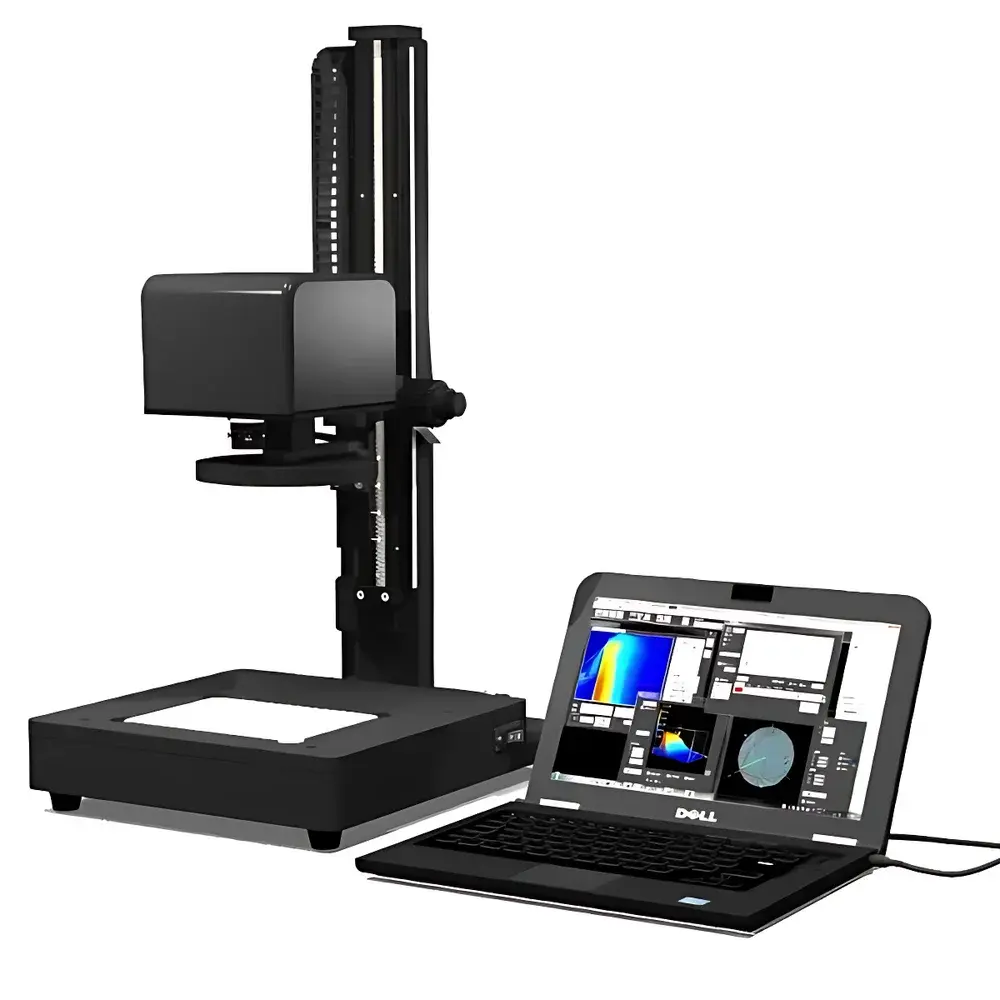
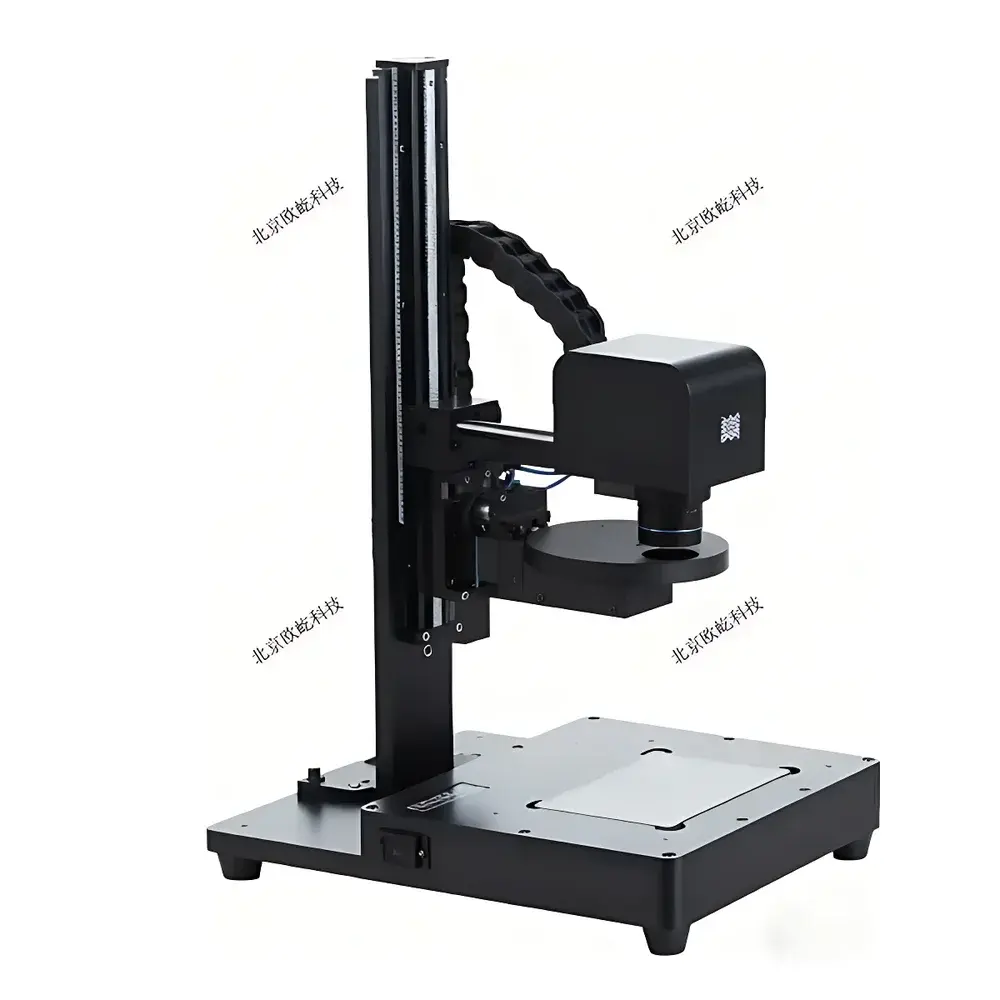
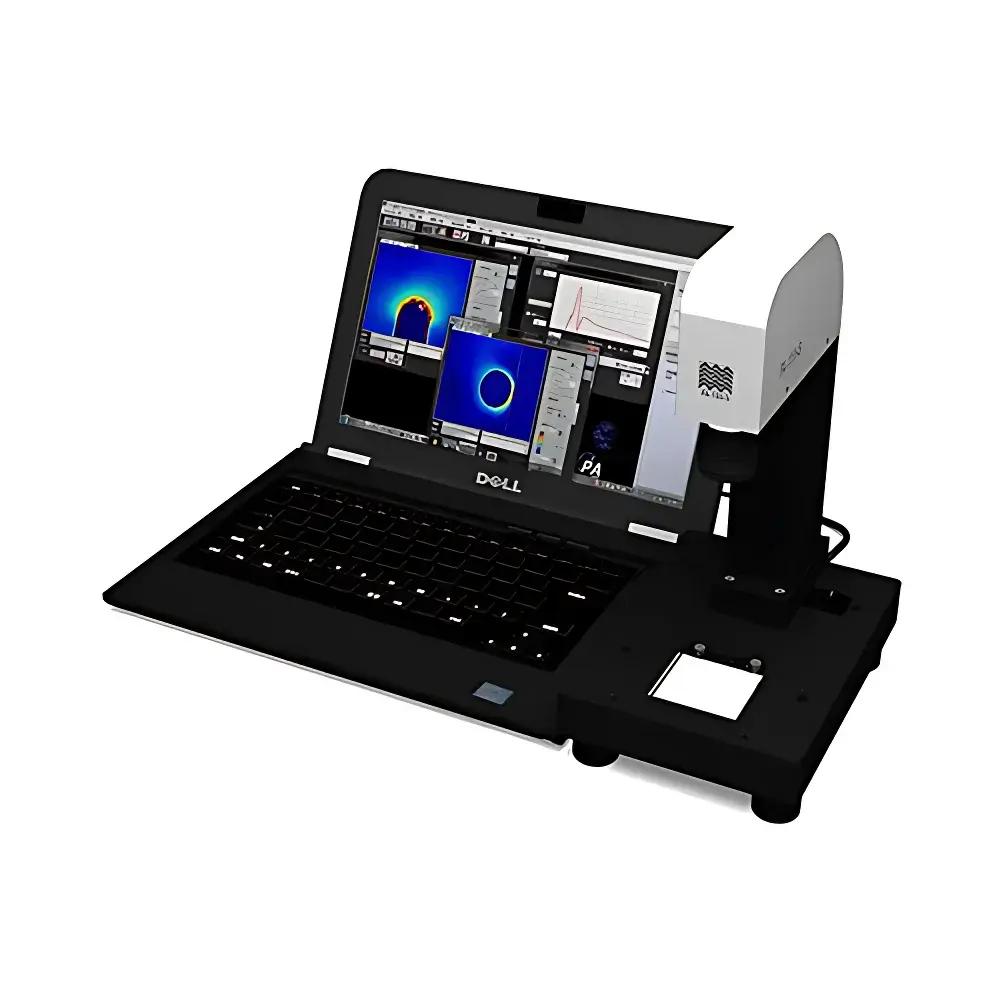
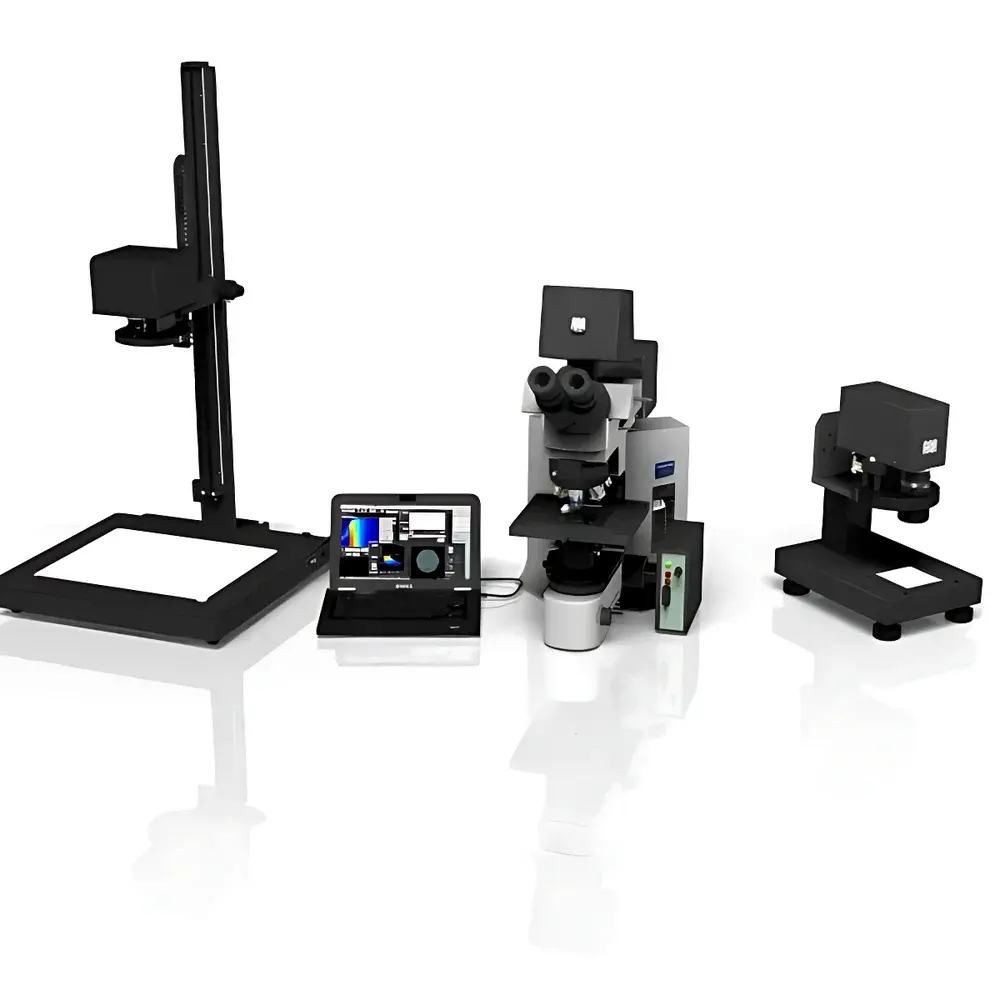
Photonic Lattice WPA-200-L Polarizing Stress Meter
| Brand | Photonic Lattice |
|---|---|
| Origin | Japan |
| Model | WPA-200L |
| Measurement Range (Retardation) | 0–3500 nm (extendable to 10,000 nm) |
| Wavelength Options | Triple-wavelength (e.g., 532/633/780 nm) |
| Output Units | Retardation (nm), Azimuth Angle (°), Stress (MPa), Stress Birefringence (nm/mm) |
| Measurement Mode | Full-field imaging |
| Analysis Modes | Point, Line, Area, 3D stress mapping |
| Typical Measurement Time | < 5 seconds per field of view |
Overview
The Photonic Lattice WPA-200-L Polarizing Stress Meter is a high-precision, full-field optical instrument engineered for quantitative evaluation of stress-induced birefringence in transparent isotropic materials. It operates on the principle of polarization interferometry enhanced by proprietary photonic crystal-based polarization image sensor technology. Unlike conventional single-point or scanning polariscopes, the WPA-200-L captures spatially resolved retardation and azimuth data across an entire field of view in a single exposure—enabling non-contact, non-destructive, and rapid assessment of internal mechanical stress distribution. This capability is especially critical during quality control of injection-molded optical components (e.g., lenses, light guides, polymer prisms), where residual stress directly impacts wavefront fidelity, polarization uniformity, and long-term dimensional stability. The system is calibrated traceably to NIST-traceable standards and complies with fundamental optical metrology frameworks defined in ISO 11146 (laser beam parameters) and ASTM F2893 (birefringence measurement in plastic optics).
Key Features
- Full-field polarization imaging using a monolithic photonic crystal polarization sensor—eliminates moving parts and mechanical polarization modulation, ensuring high temporal stability and measurement reproducibility.
- Triple-wavelength illumination (standard: 532 nm, 633 nm, 780 nm) enables dispersion-corrected retardation quantification and supports material-specific calibration for polymers, glasses, and optical resins.
- Simultaneous acquisition of retardation magnitude (0–3500 nm, extendable to 10,000 nm) and fast-axis orientation (0–180°) with sub-degree angular resolution.
- Direct conversion from measured retardation to stress values (MPa) and stress birefringence (nm/mm) via user-configurable photoelastic coefficients—supports both isotropic and anisotropic material models.
- Integrated motorized XYZ stage (optional) and auto-focus module for repeatable positioning of irregular or curved samples up to 200 mm × 200 mm.
- Rugged industrial enclosure rated IP52, designed for integration into cleanroom environments and production-line QC stations.
Sample Compatibility & Compliance
The WPA-200-L accommodates flat, curved, or molded transparent substrates including polycarbonate, PMMA, COP/COC, fused silica, BK7, and optical-grade thermoplastics. Sample thickness ranges from 0.1 mm to 50 mm; minimum transmission >60% at selected wavelengths is recommended. The system meets electromagnetic compatibility requirements per IEC 61326-1 and safety standards under IEC 61010-1. All measurement reports include embedded metadata (timestamp, operator ID, calibration ID, environmental conditions) to support GLP/GMP documentation workflows. Audit trails and electronic signatures are configurable to align with FDA 21 CFR Part 11 requirements when deployed in regulated manufacturing settings.
Software & Data Management
Control and analysis are performed via WPA Studio™ v4.x—a Windows-based application featuring real-time visualization, batch processing, and customizable report generation (PDF, CSV, TIFF, HDF5). The software implements pixel-level uncertainty estimation based on photon shot noise and sensor SNR models. Exported datasets retain georeferenced coordinates, enabling correlation with CAD models or downstream FEA stress simulations. Version-controlled calibration files are digitally signed and stored with SHA-256 hash verification. Raw polarization image data (12-bit, 2048 × 2048) can be archived for retrospective reanalysis without loss of metrological integrity.
Applications
- Process validation of injection molding cycles—correlating mold temperature, packing pressure, and cooling rate with residual stress gradients.
- Pre-shipment inspection of optical assemblies (e.g., AR-coated lenses, LED collimators) to verify birefringence below ISO 10110-5 Class 2 thresholds.
- Development of low-stress adhesive bonding protocols for hybrid glass-polymer optics.
- Fundamental research on viscoelastic relaxation kinetics in amorphous polymers under thermal cycling.
- Failure analysis of delamination or microcracking in laminated displays and touch sensors.
FAQ
What is the minimum measurable retardation and its typical uncertainty?
The system achieves a base resolution of 0.5 nm with Type A standard uncertainty ≤ ±1.2 nm (k=2) under controlled lab conditions (23 ± 0.5°C, <30% RH).
Can the WPA-200-L measure curved surfaces?
Yes—when equipped with optional telecentric imaging optics and Z-height mapping, it compensates for surface tilt up to ±8°, maintaining quantitative accuracy across radius-of-curvature down to 25 mm.
Is third-party calibration available?
Photonic Lattice provides annual factory recalibration with NIST-traceable retardation standards; accredited external labs (e.g., A2LA-certified) may perform on-site verification per ISO/IEC 17025.
How is stress calculated from retardation data?
Using the generalized stress-optic law: σ = C⁻¹·δ/t, where δ is measured retardation (nm), t is sample thickness (mm), and C is the material-specific stress-optic coefficient (nm/mm·MPa), which users define or import from validated databases.
Does the system support automated pass/fail judgment against user-defined limits?
Yes—WPA Studio™ allows zone-based tolerance masking and binary output (OK/NG) with configurable logging to SQL or MES interfaces.




