
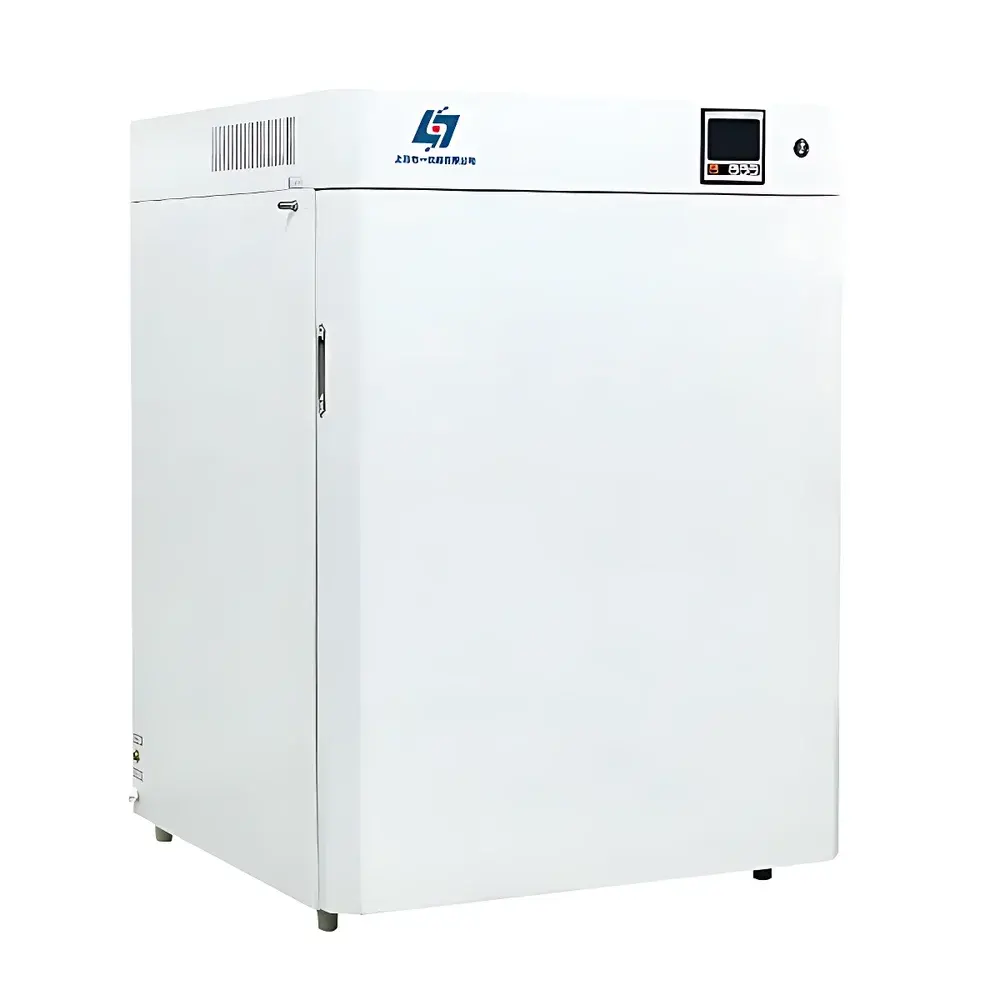
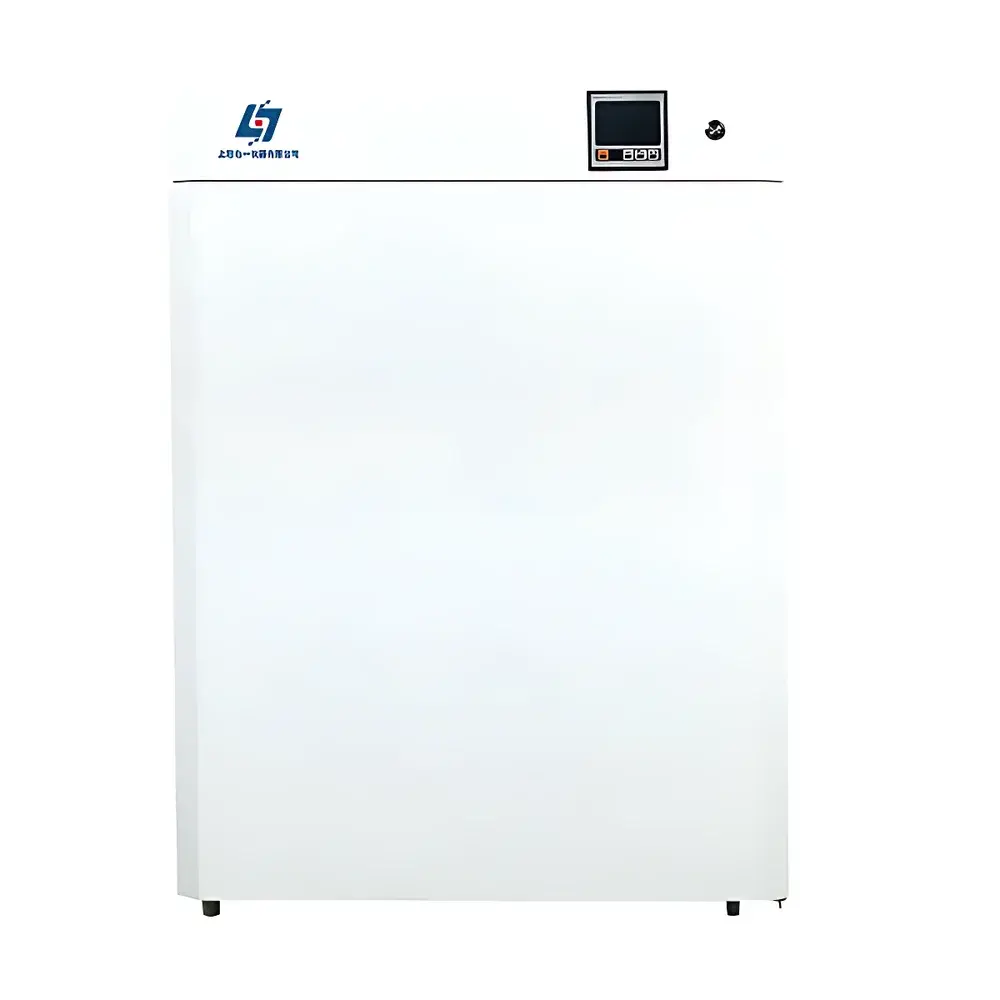
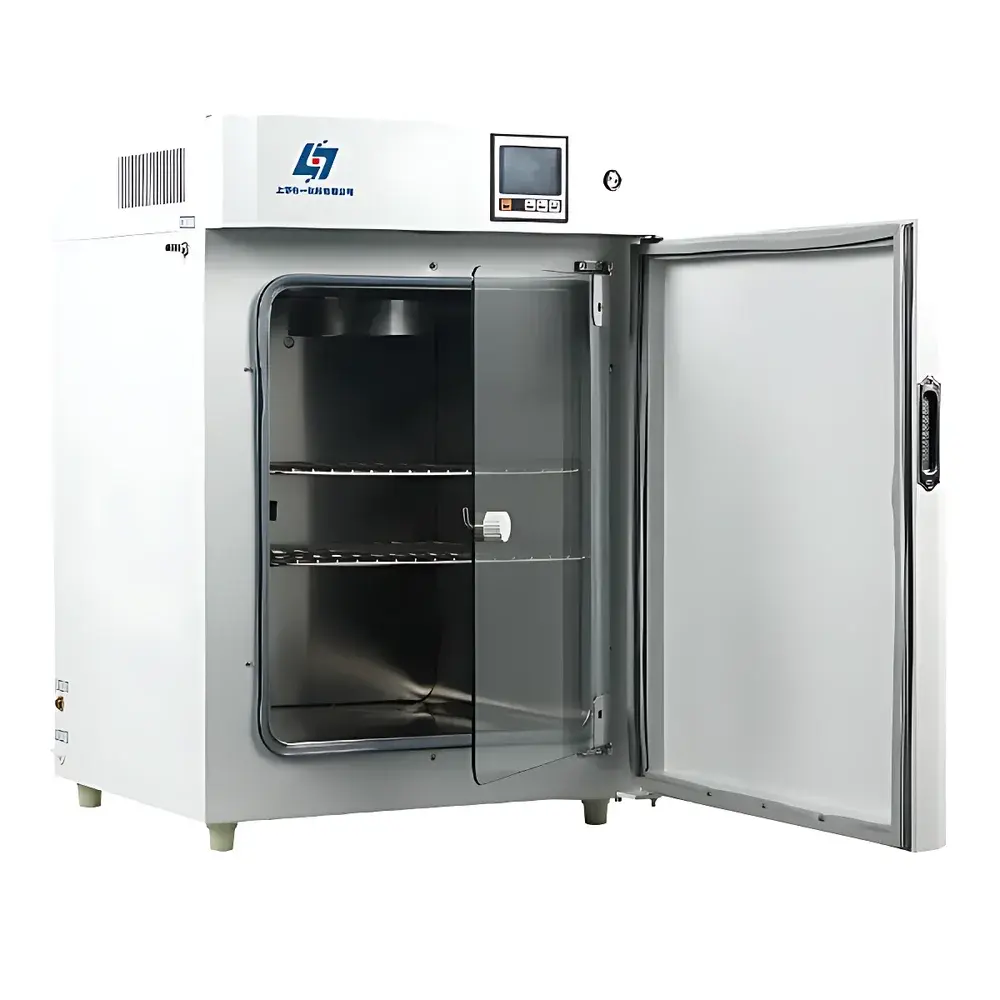
Yoyilab GHP-9270 Water-Jacketed Constant Temperature Incubator
| Brand | Yoyilab |
|---|---|
| Origin | Shanghai, China |
| Manufacturer Type | Direct Manufacturer |
| Model | GHP-9270 |
| Air Circulation | Forced Convection |
| Control Method | Digital PID Temperature Control |
| Temperature Range | RT+5°C to 65°C |
| Temperature Control Accuracy | ±0.1°C |
| Temperature Uniformity | ±1.0°C (at 37°C) |
| Temperature Fluctuation | ±0.5°C |
| Chamber Capacity | 270 L |
| External Dimensions (W×D×H) | 795 × 715 × 1030 mm |
| Heating Method | Water-Jacketed |
| Power Input | 1350 W |
| Working Chamber Dimensions (W×D×H) | 600 × 600 × 750 mm |
| Shelving | 2 Adjustable Stainless Steel Shelves |
| Temperature Resolution | 0.1°C |
| Timer Range | 1–9999 min |
Overview
The Yoyilab GHP-9270 is a precision-engineered water-jacketed constant temperature incubator designed for stable, uniform thermal environments essential in microbiological culture, cell propagation, enzyme activity assays, and long-term biological storage. Unlike air-jacketed units, its double-walled chamber incorporates a circulating water jacket that provides superior thermal inertia and spatial homogeneity—critical for applications sensitive to transient fluctuations, such as mammalian cell line maintenance or bacterial colony isolation under GLP-compliant conditions. The system operates across a validated range of RT+5°C to 65°C, with microprocessor-based PID control ensuring minimal overshoot and rapid recovery following door openings or load changes. Its robust construction—including cold-rolled steel exterior with phosphate coating and electrostatic powder finish, and a mirror-polished 304 stainless steel interior with radius-corner design—meets stringent hygiene requirements for pharmaceutical QC labs and academic core facilities.
Key Features
- Water-jacketed heating architecture delivering enhanced thermal stability and extended hold time during brief power interruptions
- Digital PID controller with intuitive menu-driven interface; real-time display of setpoint, actual temperature, timer status, and alarm indicators
- Double-door configuration: outer insulated door + inner tempered glass door with independent seal, minimizing thermal loss during observation
- Intelligent water-level monitoring system with audible/visual alarms triggered by low/high water levels or temperature deviation beyond set thresholds
- Pressure-balanced water inlet port engineered to prevent back-siphoning during refilling—a common failure mode in conventional water-jacketed systems
- Non-volatile memory preserving all operational parameters (setpoint, timer, alarm settings) after unexpected shutdown or power loss
- High-efficiency insulation using high-density polyurethane foam and compression-molded silicone gaskets, achieving low standby heat loss and extended service life
- Two adjustable stainless steel shelves with reinforced load-bearing capacity; shelf positions freely configurable to accommodate varied vessel heights
Sample Compatibility & Compliance
The GHP-9270 accommodates standard laboratory vessels including Petri dishes, multiwell plates, flasks (up to 2 L), and culture bags without compromising airflow or thermal uniformity. Its interior geometry supports ISO 14644-1 Class 8 cleanroom-compatible workflows when operated in controlled environments. While not certified to IEC 61010-1 or UL 61010B out-of-the-box, the unit conforms to fundamental safety principles for Class II laboratory equipment, including overtemperature protection via redundant mechanical thermostat (optional standalone limit controller available). For regulated environments, optional RS485 communication enables integration into centralized monitoring systems compliant with FDA 21 CFR Part 11 data integrity requirements when paired with validated software platforms.
Software & Data Management
The base model features embedded firmware supporting local parameter logging (time-stamped temperature records stored in non-volatile memory for up to 30 days). Optional RS485 interface (add-on module) permits bidirectional communication with SCADA or LIMS systems using Modbus RTU protocol. When configured with the P-series programmable controller (GHP-9270P), users can define up to 30 segmented temperature profiles with ramp/soak logic—enabling complex protocols such as simulated diurnal cycles or staged microbial growth curves. All alarm events—including water level faults, temperature excursions, and door-open duration—are timestamped and retained for audit trail generation per GLP documentation standards.
Applications
- Maintenance of aerobic and anaerobic bacterial cultures (e.g., E. coli, Bacillus subtilis) at optimal physiological temperatures
- Incubation of mammalian cell lines (HEK293, CHO-K1) requiring tight thermal control to preserve viability and expression fidelity
- Pharmaceutical stability testing per ICH Q1A(R3) guidelines under long-term and accelerated conditions
- Veterinary diagnostics and aquaculture pathogen isolation where ambient humidity independence is critical
- Food safety testing—including Salmonella enrichment and Listeria recovery—under AOAC-approved protocols
- Agricultural seed germination studies and plant tissue culture pre-incubation steps
FAQ
What distinguishes water-jacketed incubators from air-jacketed models?
Water-jacketed units provide significantly higher thermal mass, resulting in slower temperature drift during power loss and improved spatial uniformity—especially beneficial for overnight or unattended runs.
Is the GHP-9270 suitable for CO₂ or hypoxic applications?
The standard configuration lacks gas-tight sealing or built-in gas mixing; however, optional inert gas inlet (N₂/CO₂) with flow meter enables basic anoxic or modified-atmosphere operation when combined with external gas supply.
Can temperature data be exported for regulatory submissions?
Yes—when equipped with the RS485 module and compatible host software, continuous temperature logs with electronic signatures and audit trails meet 21 CFR Part 11 requirements.
How often does the water jacket require maintenance?
Distilled or deionized water should be replaced every 3–6 months depending on ambient humidity and usage frequency; periodic inspection of seals and water-level sensor is recommended annually.
Are calibration certificates available?
Third-party NIST-traceable calibration services (including as-found/as-left reports per ISO/IEC 17025) are available upon request through authorized Yoyilab service partners.
Related Products





