
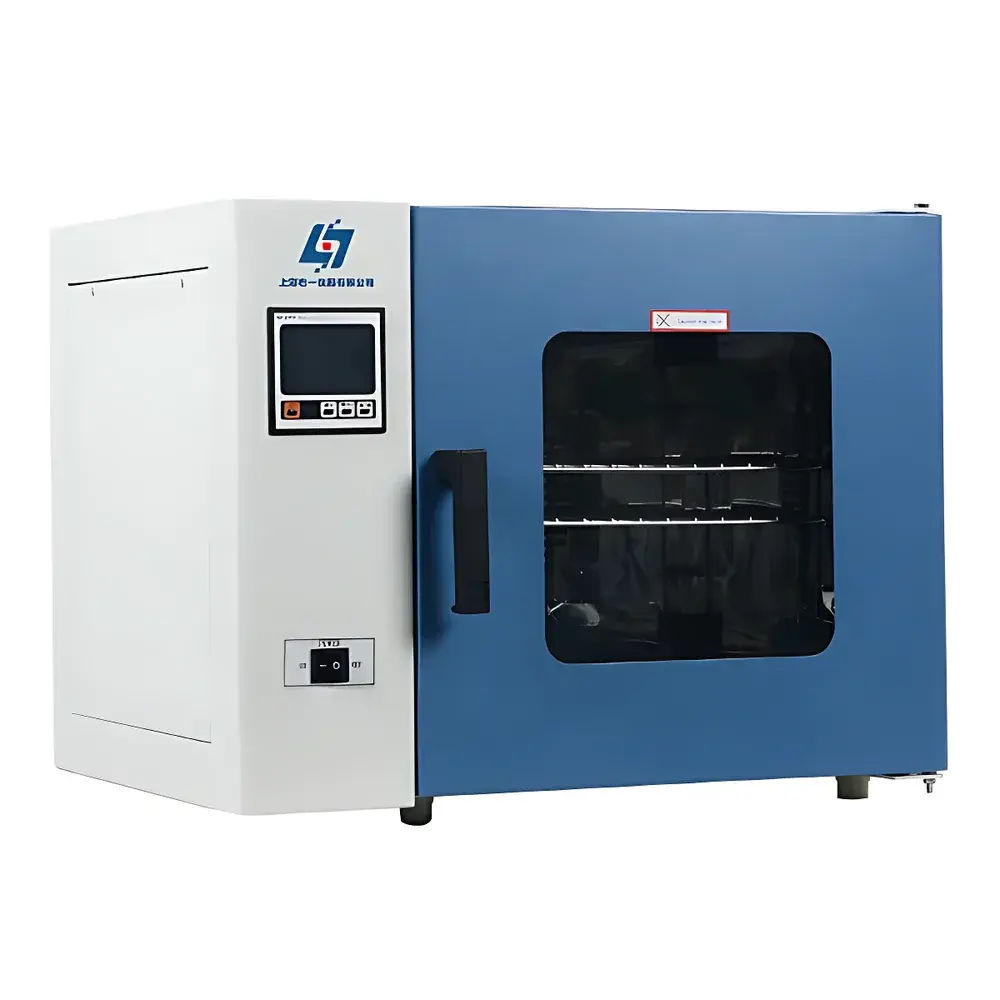
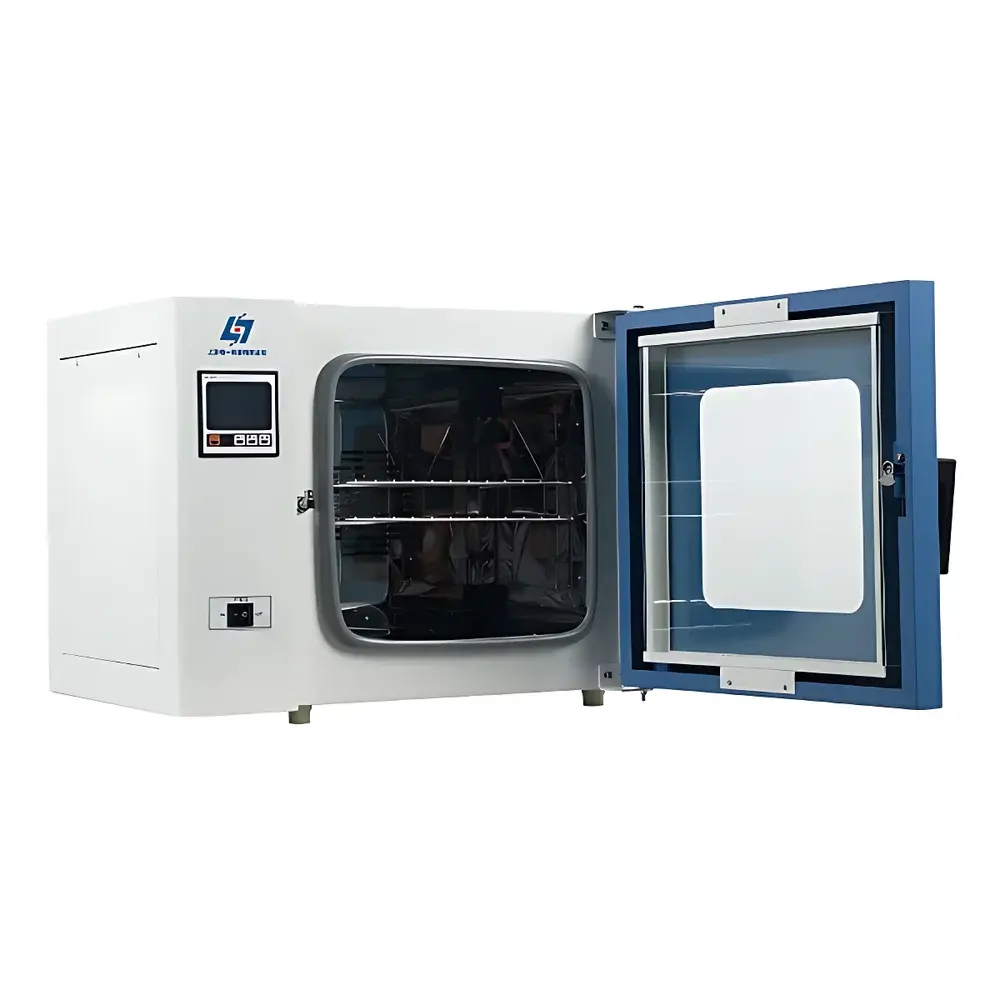
Yoyilab DHG-9055A Precision Forced-Air Constant-Temperature Drying Oven
| Brand | Yoyilab |
|---|---|
| Origin | Shanghai, China |
| Manufacturer | Yes |
| Product Type | Precision Drying Oven |
| Temperature Range | RT+10 to 300 °C |
| Temperature Uniformity | ±2.5% (at 100 °C) |
| Temperature Fluctuation | ±1 °C |
| Temperature Resolution | 0.1 °C |
| Internal Dimensions (W×D×H) | 420 × 350 × 390 mm |
| External Dimensions (W×D×H) | 705 × 610 × 530 mm |
| Chamber Material | Mirror-Finish Stainless Steel (SUS304) |
| Heating Method | Forced-Air Circulation via Rear-Mounted Centrifugal Blower |
| Power Consumption | 1100 W |
| Rated Voltage/Frequency | AC 220 V / 50 Hz |
| Working Environment | 5–40 °C ambient, ≤80% RH |
| Standard Compliance | GB/T 30435–2013 |
Overview
The Yoyilab DHG-9055A is a precision forced-air constant-temperature drying oven engineered for reproducible thermal processing in regulated laboratory and industrial quality control environments. It operates on the principle of convective heat transfer enhanced by a rear-mounted centrifugal blower and optimized air duct architecture, ensuring uniform temperature distribution across the stainless steel chamber. Designed to meet the requirements of GB/T 30435–2013 — the Chinese national standard for electric heating drying ovens — the DHG-9055A delivers stable thermal performance from ambient +10 °C up to 300 °C, with a certified temperature fluctuation of ±1 °C and uniformity of ±2.5% (measured at 100 °C under no-load conditions). Its robust construction, microprocessor-based control system, and configurable safety protocols make it suitable for applications demanding traceable, repeatable, and compliant thermal treatment — including moisture content determination, polymer curing, pharmaceutical stability testing, electronic component baking, and pre-sterilization conditioning.
Key Features
- Microcomputer-controlled PID temperature regulation with 0.1 °C resolution, real-time digital display, and programmable timer (1–9999 minutes)
- Mirror-finish SUS304 stainless steel interior chamber and adjustable stainless steel shelving for corrosion resistance and easy cleaning
- Double-layer tempered glass observation window with silicone gasket seal for continuous visual monitoring without thermal disturbance
- Optimized rear-mounted air duct system with automatic intake/exhaust ports to manage internal humidity and prevent condensation buildup
- High-efficiency centrifugal circulation fan with optional stepless speed control (accessory) to fine-tune airflow intensity per sample type
- Dual independent over-temperature protection: primary controller limit + optional standalone mechanical cut-off (IEC 61000-4-2 compliant)
- Power-loss recovery function preserving set parameters and operational state after unexpected shutdown or brownout
- Electrostatically coated cold-rolled steel exterior with reinforced structural rigidity and ergonomic door hinge design
Sample Compatibility & Compliance
The DHG-9055A accommodates a broad range of sample formats — from Petri dishes and weighing boats to PCB assemblies, ceramic substrates, and bulk powder containers — within its 50 L usable chamber volume. Its inert atmosphere compatibility (via optional inert gas inlet with calibrated float flowmeter) supports oxygen-sensitive processes such as metal oxide sintering or lithium battery electrode drying. The unit complies with GB/T 30435–2013 for thermal accuracy, stability, and safety interlocks. While not CE-marked or UL-listed out-of-the-box, its electrical architecture and enclosure design align with IEC 61010-1 fundamentals for laboratory equipment. When integrated with optional RS485 communication and audit-trail-capable software, the oven supports GLP/GMP-aligned workflows requiring electronic record retention and user-access logging.
Software & Data Management
Standard operation requires no external software; all parameters are managed via the built-in LCD menu interface. Optional RS485 serial interface enables integration with LabVIEW, MATLAB, or custom SCADA systems for remote monitoring and centralized data logging. An embedded thermal printer (optional accessory) provides hard-copy output of temperature profiles, start/stop timestamps, and alarm events — essential for ISO/IEC 17025-compliant calibration labs. Firmware supports time-stamped parameter change history with user ID tagging when paired with electronic door lock and authentication modules. All data export formats comply with ASTM E2500-13 guidelines for raw instrument data integrity.
Applications
- Moisture loss-on-drying (LOD) assays per USP and AOAC 950.46
- Pre-conditioning of test specimens prior to tensile, impact, or dielectric testing (ASTM D618, ISO 291)
- Baking of printed circuit boards (PCBs) to remove residual solvents before conformal coating
- Thermal aging studies of elastomers, adhesives, and packaging films (ISO 188, ASTM D573)
- Cell culture flask and glassware drying under controlled low-humidity conditions
- Pre-heating of crucibles and analytical standards in gravimetric analysis workflows
- Low-temperature polymer crosslinking and solvent evaporation in R&D laboratories
FAQ
What is the maximum recommended operating temperature for continuous use?
The DHG-9055A is rated for sustained operation up to 300 °C. For optimal long-term reliability and sensor longevity, continuous use above 250 °C should be limited to validated process cycles with documented thermal mapping.
Does the oven support ramp-soak programming?
Standard firmware does not include multi-segment ramp/soak capability; however, this functionality is available via the optional programmable temperature controller accessory (part #PTC-1500), which supports up to 30 segments with hold, rate, and loop functions.
Can the unit be validated for IQ/OQ/PQ protocols?
Yes — the DHG-9055A’s stable thermal profile, digital calibration interface, and optional data logging accessories enable full qualification per GAMP5 and Annex 15 requirements. Calibration certificates traceable to NIM (China National Institute of Metrology) are available upon request.
Is the stainless steel chamber electropolished?
No — the interior uses mechanically polished mirror-finish SUS304 stainless steel (Ra ≤ 0.8 µm), sufficient for most pharmaceutical and academic applications; electropolishing is available as a custom modification.
What maintenance intervals are recommended for the blower motor and temperature sensors?
Blower bearings require lubrication every 12 months under normal use; PT100 sensor calibration verification is recommended semiannually using a NIST-traceable dry-block calibrator.



