
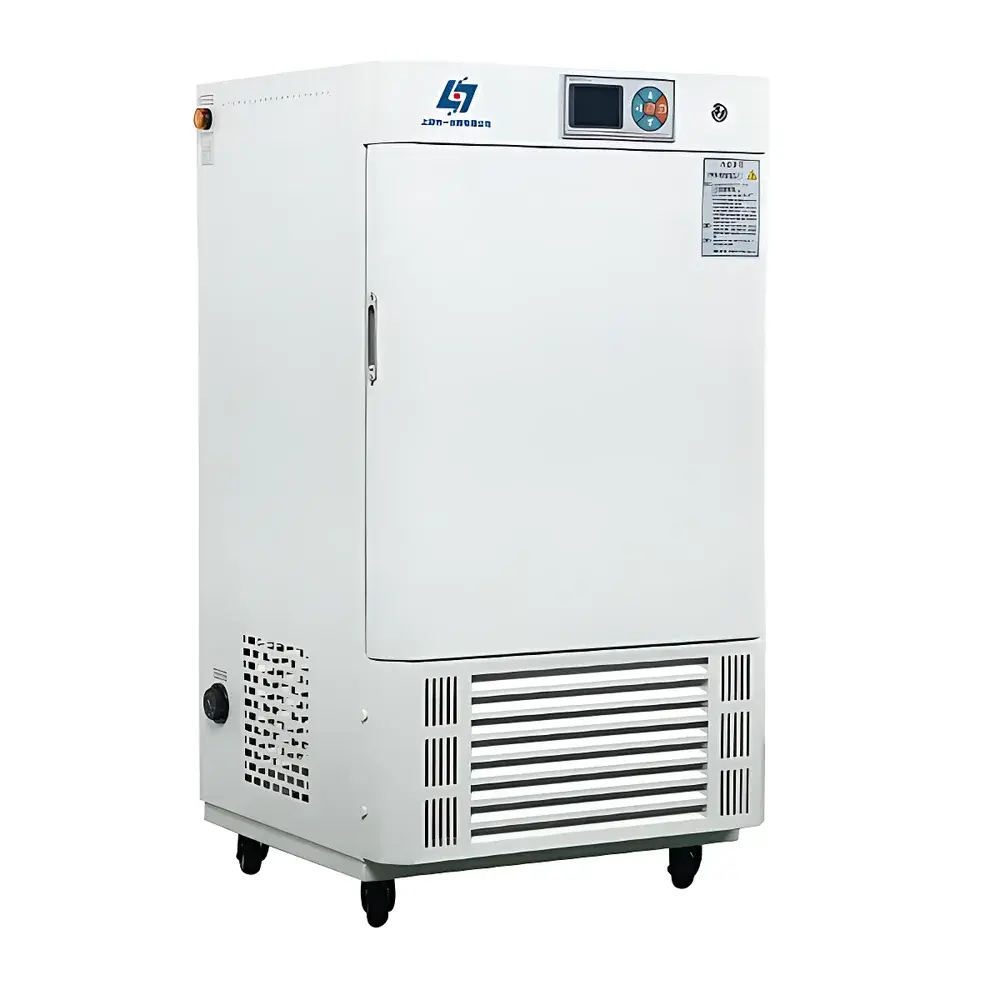
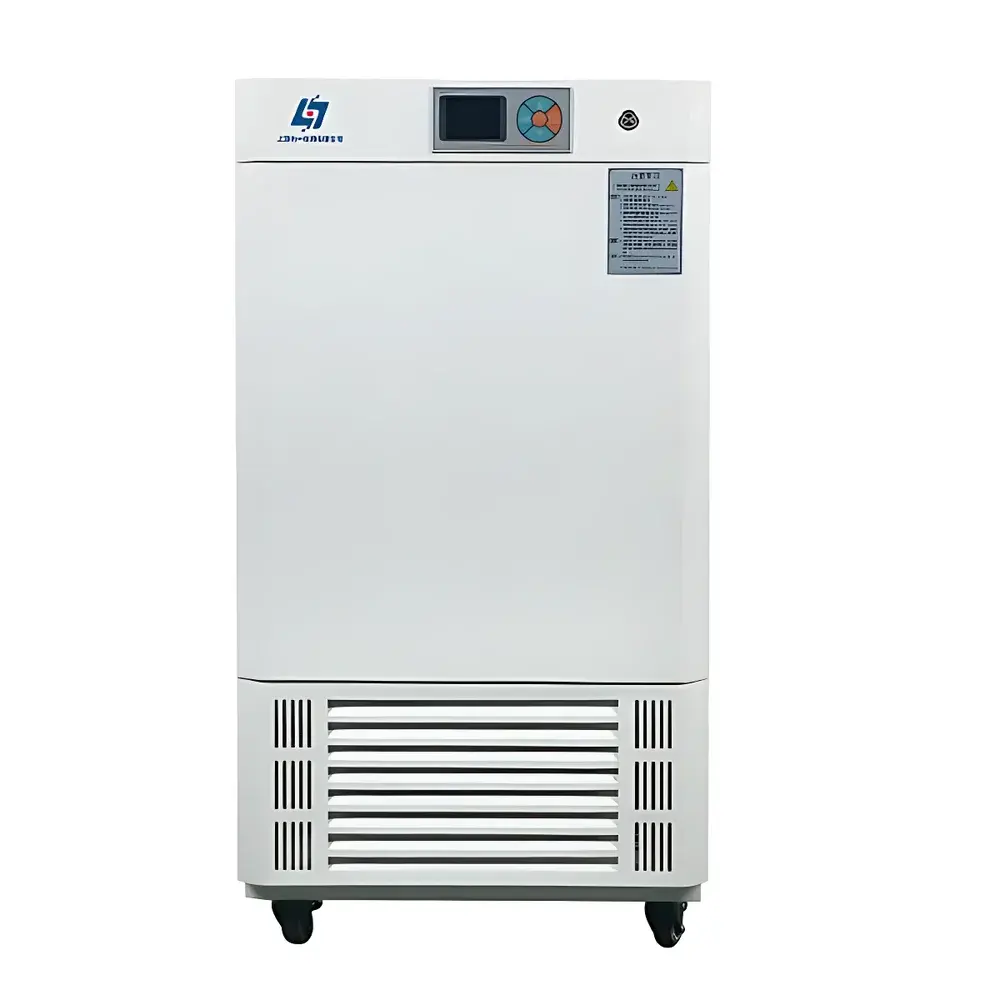
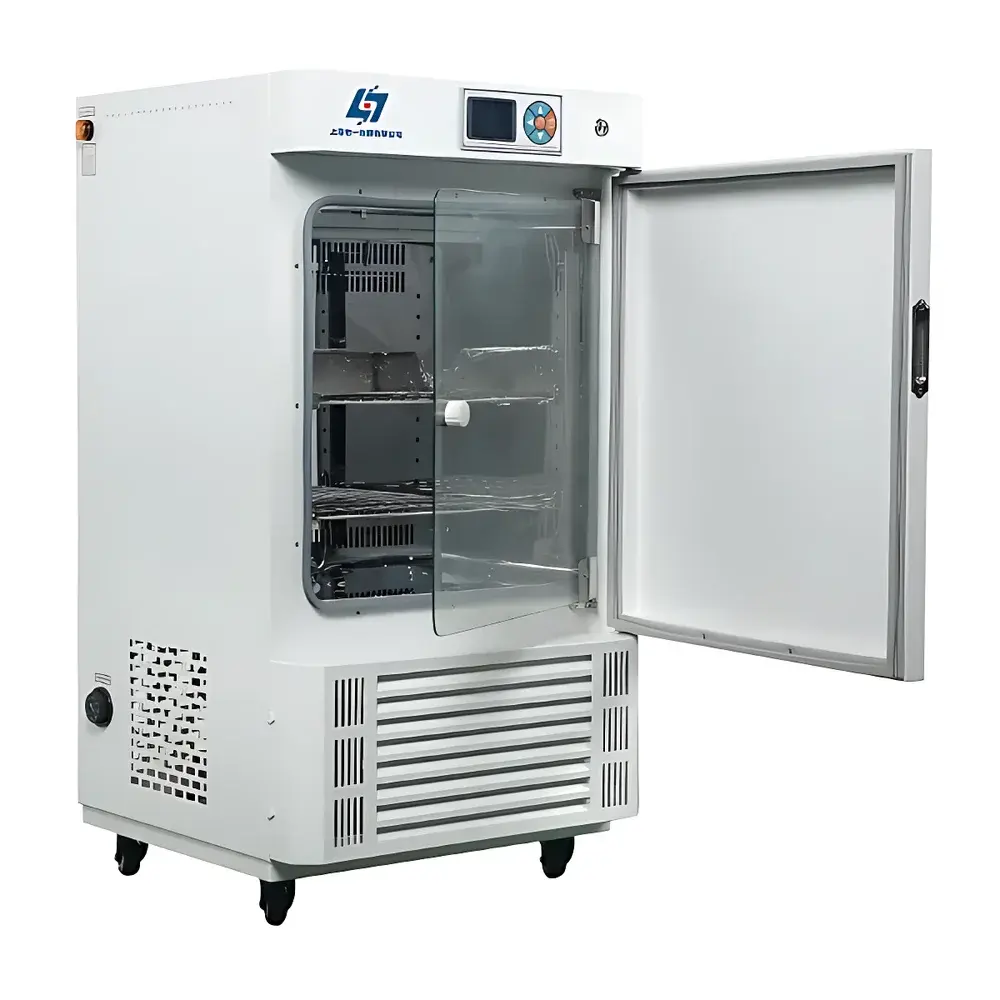
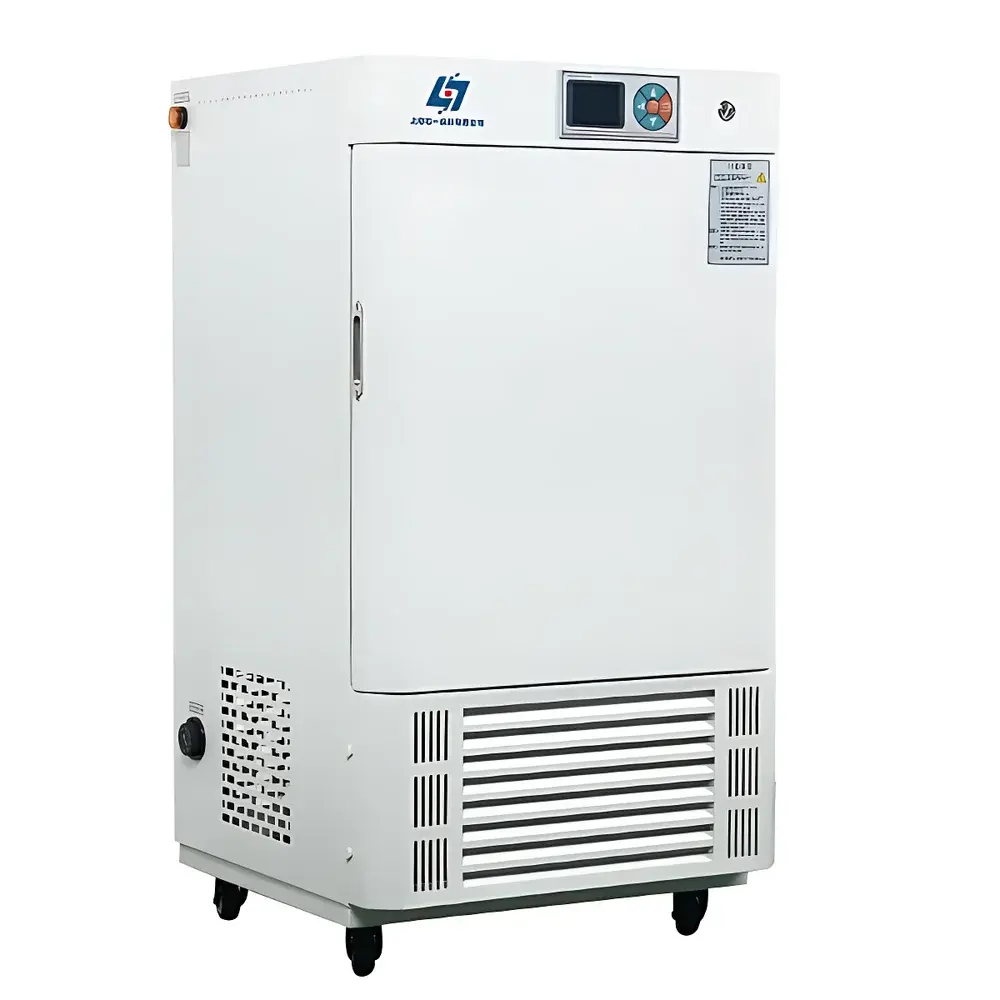
Yoyilab MJ-250F-I Mold Incubator with LCD Display and Microcomputer PID Temperature Control
| Brand | Yoyilab |
|---|---|
| Origin | Shanghai, China |
| Manufacturer Type | Direct Manufacturer |
| Model | MJ-250F-I |
| Control Method | Microcomputer PID (LCD Interface) |
| Air Circulation | Forced Convection |
| Temperature Range | 0–65 °C |
| Temperature Fluctuation | ±0.5 °C (High Temp), ±1.0 °C (Low Temp) |
| Temperature Uniformity | ±1.5 °C (at 25 °C test point) |
| Capacity | 250 L |
| External Dimensions (W×D×H) | 705×725×1525 mm |
| Internal Dimensions (W×D×H) | 580×500×850 mm |
| Power Input | 1400 W |
| Display | 5.7-inch TFT LCD menu interface |
| UV Sterilization System | Integrated top-mounted ultraviolet lamp |
| Environmental Compliance | CFC-free refrigerant, energy-efficient design |
| Optional Accessories | RS485 communication interface, programmable temperature controller, independent overtemperature limiter, BOD socket |
Overview
The Yoyilab MJ-250F-I Mold Incubator is a precision-engineered, forced-air environmental chamber designed for reliable long-term cultivation of fungi, yeasts, molds, and other mesophilic or thermotolerant microorganisms under strictly controlled thermal conditions. Built upon the principles of convective heat transfer and closed-loop PID feedback regulation, this incubator maintains stable temperature profiles across its 250 L working volume—critical for reproducible microbiological assays, mycological identification protocols, and stability testing per ISO 8513, USP , and CLSI M38-A3 standards. Its operational range spans 0–65 °C, supporting both ambient-temperature fungal growth studies and elevated-temperature stress testing (e.g., thermotolerance screening of Aspergillus or Penicillium isolates). The unit integrates an internal UV-C (254 nm) irradiation system to suppress airborne microbial load during operation—a feature aligned with GLP-compliant cell culture facility requirements where background contamination must be minimized without chemical intervention.
Key Features
- Microcomputer-based PID temperature control system with 0.1 °C resolution and real-time digital display on a 5.7-inch TFT LCD screen—enabling simultaneous visualization of setpoint, actual chamber temperature, elapsed time, and remaining hold duration.
- Forced convection airflow architecture with rear-mounted centrifugal fan and optimized baffle configuration ensures ±1.5 °C temperature uniformity (verified at 25 °C per IEC 60068-3-5), eliminating thermal stratification commonly observed in natural-convection units.
- Dual-door structure with magnetic silicone gasket and low-emissivity double-glazed viewing window minimizes thermal leakage while permitting non-intrusive observation—critical for uninterrupted incubation cycles in BSL-1/BSL-2 laboratories.
- Stainless steel (SUS304) interior chamber with seamless, radius-cornered construction and adjustable stainless steel shelving (standard: 3 trays) facilitates complete decontamination and meets FDA-recommended cleanability criteria for repeated-use microbiological equipment.
- Robust mechanical design includes four-position leveling feet with locking casters (two fixed, two swivel), enabling secure positioning on uneven laboratory floors and safe relocation without disassembly.
- Comprehensive safety architecture includes dual-stage overtemperature protection: primary PID-controlled cutoff and independent mechanical limiter (adjustable up to 70 °C), plus power-fail data retention memory and auto-restart functionality compliant with IEC 61000-4-29 voltage dip immunity requirements.
Sample Compatibility & Compliance
The MJ-250F-I accommodates standard microbiological sample formats including Petri dishes (up to 150 mm diameter), multi-well plates, slant tubes, liquid culture flasks (up to 2 L), and agar-filled jars—all positioned on corrosion-resistant, load-rated shelves. Its temperature performance has been validated under empty-chamber conditions per ISO 15265:2019 Annex A for incubators used in water quality analysis (e.g., membrane filtration for total coliforms) and ASTM D3273–22 for fungal resistance evaluation of polymeric materials. As a CFC-free appliance using R134a refrigerant, it conforms to EU F-Gas Regulation (EU) No 517/2014 and meets ENERGY STAR® equivalent efficiency benchmarks for Class II biological incubators. Electrical safety complies with IEC 61010-1:2010 Ed.3 for laboratory equipment.
Software & Data Management
While the base unit operates via embedded firmware with no external PC dependency, optional RS485 serial interface (Modbus RTU protocol) enables integration into centralized laboratory monitoring systems (e.g., LabVantage, Siemens Desigo CC, or custom SCADA). Firmware supports timestamped event logging—including door openings, temperature excursions >±2 °C, UV activation cycles, and alarm triggers—with audit trail capability suitable for 21 CFR Part 11–aligned environments when paired with validated third-party data acquisition software. Optional programmable controller adds 99-cycle, 30-segment ramp-soak profiling—essential for simulating seasonal humidity-temperature stress in pharmaceutical stability chambers (ICH Q1A–Q1E).
Applications
- Regulatory microbiological testing: mold and yeast enumeration in food, cosmetics, and pharmaceutical raw materials (ISO 21527-1, USP , EP 2.6.12).
- BOD5 incubation per APHA Standard Methods 5210B and ISO 5815-1, with dedicated BOD socket option for standardized electrode connectivity.
- Fungal susceptibility testing (AFST) and antifungal drug screening using CLSI M38-A3–defined incubation conditions (35 °C, 48–72 h).
- Environmental simulation for material durability assessment—including ASTM G21–22 (synthetic polymer resistance to fungi) and MIL-STD-810H Method 508.7 (fungus resistance verification).
- Plant tissue culture pre-incubation and spore germination studies requiring precise sub-ambient to moderate thermophilic regimes.
FAQ
Does the MJ-250F-I support humidity control?
No—the “F” suffix denotes CFC-free refrigeration only; humidity control is exclusive to the MJ-250-II variant. This model maintains dry-air conditions ideal for mold isolation and thermal stress assays.
Is UV sterilization active during temperature cycling?
Yes—the UV lamp operates independently of thermal control and can be manually enabled/disabled via front-panel toggle, allowing periodic air decontamination without interrupting incubation.
What validation documentation is provided?
Each unit ships with factory calibration certificate traceable to NIM (National Institute of Metrology, China), IQ/OQ checklist templates, and a Declaration of Conformity covering EMC (IEC 61326-1) and safety (IEC 61010-1).
Can the incubator be integrated into a LIMS or building management system?
Yes—via optional RS485 Modbus RTU interface (order code: MJ-RS485-KIT), supporting read-only parameter polling and alarm status reporting at configurable intervals.
What is the recommended maintenance schedule?
Biannual inspection of door seal integrity, quarterly cleaning of UV lamp sleeve and fan inlet grille, and annual verification of temperature uniformity using NIST-traceable thermocouple arrays per ISO/IEC 17025 clause 6.4.3.




