
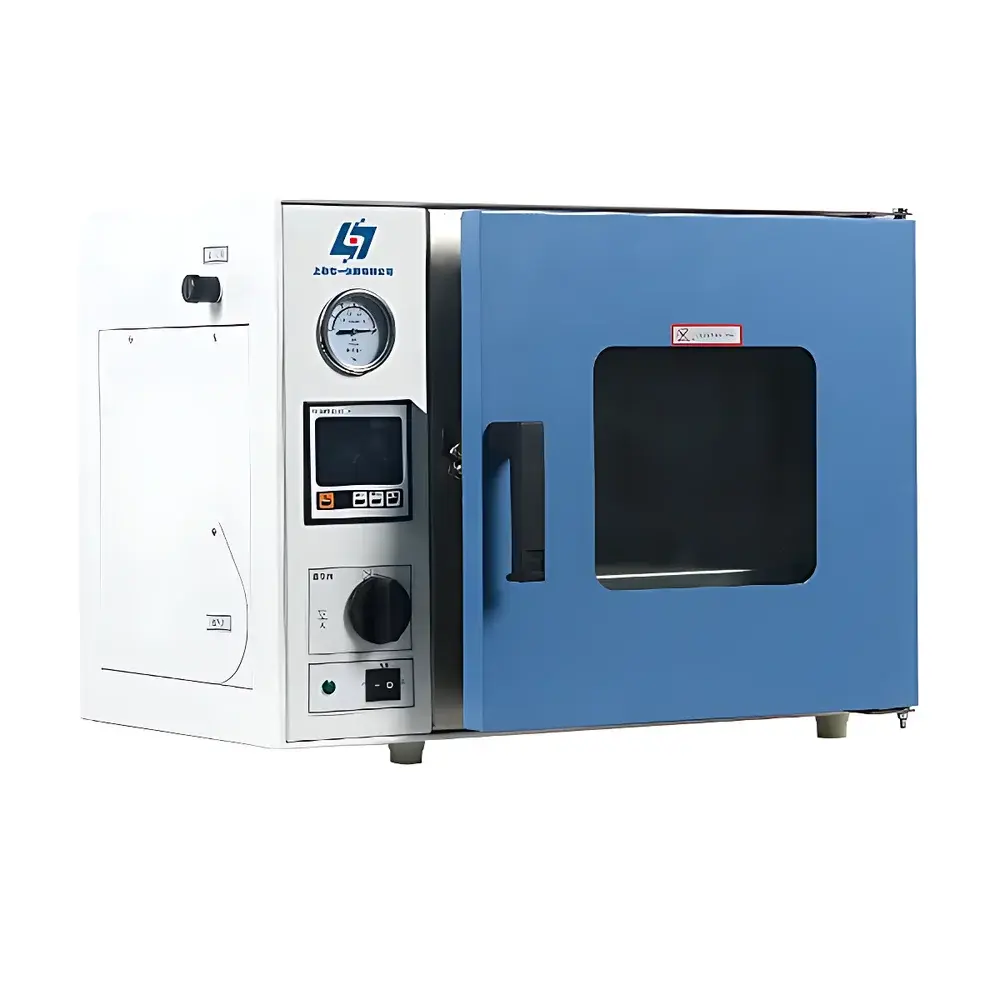
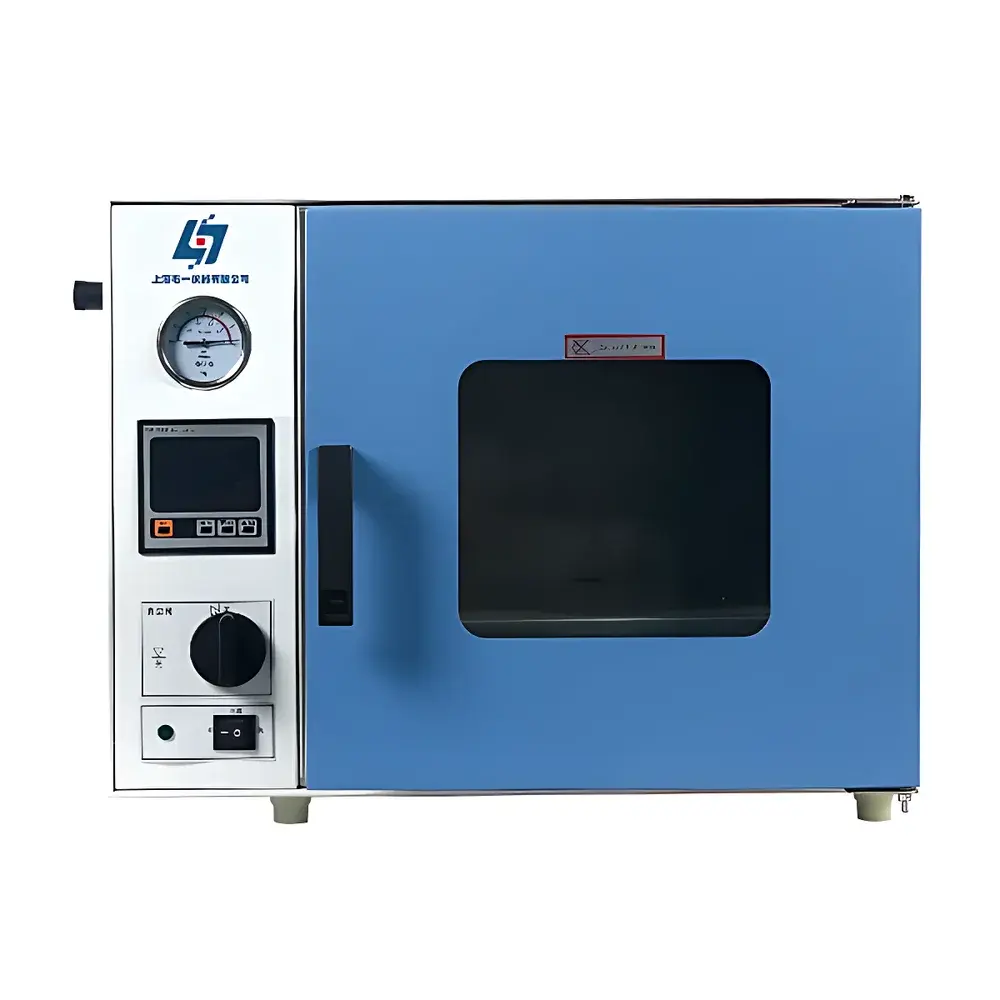
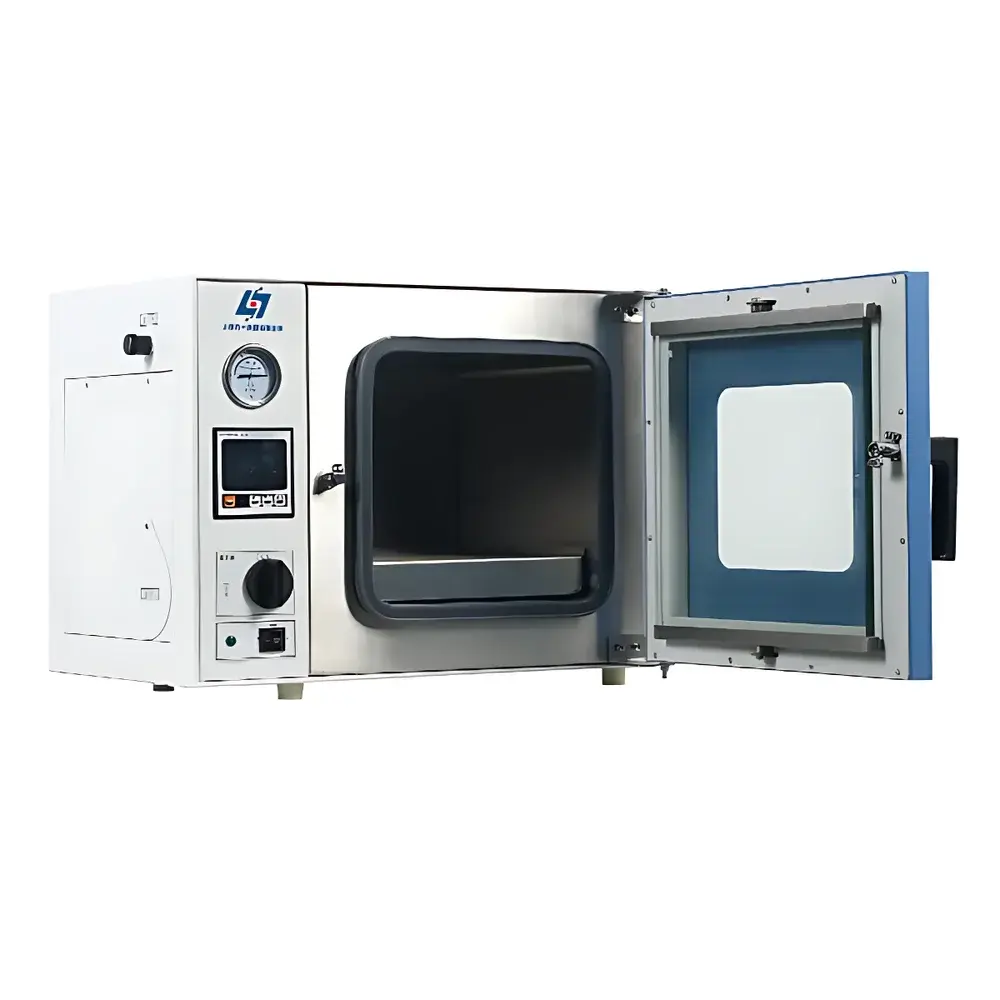
Yoyi DZF-6050C Benchtop Nitrogen-Purged Vacuum Oven
| Brand | Yoyi |
|---|---|
| Origin | Shanghai, China |
| Manufacturer Type | Direct Manufacturer |
| Product Category | Domestic |
| Model | DZF-6050C |
| Instrument Type | Vacuum Oven |
| Temperature Range | RT+10°C to 250°C |
| Temperature Uniformity | ±1°C |
| External Dimensions | 830 × 640 × 540 mm |
| Internal Chamber Dimensions | 415 × 370 × 345 mm |
| Temperature Resolution | 0.1°C |
| Chamber Material | Stainless Steel |
| Ultimate Vacuum Level | ≤133 Pa |
Overview
The Yoyi DZF-6050C is a benchtop nitrogen-purged vacuum oven engineered for precise thermal processing under controlled inert atmospheres. It operates on the principle of simultaneous vacuum evacuation and nitrogen backfilling to eliminate oxygen and moisture—critical for preserving oxidation-sensitive, thermally labile, or hygroscopic materials during drying, curing, degassing, or stabilization. Unlike conventional convection ovens, this system maintains process integrity by suppressing oxidative degradation, polymer crosslinking interference, and volatile loss during low-pressure heating. Its dual-mode operation (vacuum-only or nitrogen-purged vacuum) supports applications requiring strict atmospheric control—such as semiconductor component drying, pharmaceutical active ingredient stabilization, battery electrode conditioning, and analytical sample preparation prior to gravimetric or spectroscopic analysis.
Key Features
- Microprocessor-based PID temperature controller with real-time monitoring, programmable ramp/soak profiles, over-temperature cut-off, and auto-recovery after power interruption.
- Stainless steel internal chamber (AISI 304 grade) with seamless welding and polished finish—resistant to corrosion from solvents, acids, and residual organics.
- Double-layer tempered glass observation window with silicone-sealed gasket, enabling visual inspection without compromising vacuum integrity.
- Integrated nitrogen inlet with quick-connect fitting (Φ10 mm), floating-ball flow regulator (0–10 L/min range), and calibrated scale for repeatable gas dosing.
- Ceramic fiber insulation between outer casing and inner chamber—achieving low thermal conductivity (<0.04 W/m·K) and minimizing standby energy consumption.
- Mechanically robust door sealing system with adjustable compression and molded silicone gasket, validated to maintain ≤133 Pa vacuum for ≥48 h under static conditions.
- Analog stainless-steel vacuum gauge (0–0.1 MPa range) with embedded mounting for durability and ease of calibration verification.
- Internal heating configuration with aluminum alloy shelves—engineered for uniform heat distribution and minimal thermal mass, reducing temperature overshoot during setpoint transitions.
Sample Compatibility & Compliance
The DZF-6050C accommodates diverse sample formats including Petri dishes, crucibles, vials, wafers, coated substrates, and powder-filled trays—up to 2× standard stainless steel shelves (included). Its chamber volume (53.5 L) and dimensional envelope support routine QC batch processing while retaining benchtop footprint efficiency. The system complies with general laboratory safety standards (IEC 61010-1) and supports GLP/GMP-aligned workflows through traceable temperature logging (via optional RS485 interface), audit-ready parameter history, and non-volatile memory retention for up to 10 user-defined programs. While not certified to ISO 17025 or ASTM E2042 per se, its performance specifications align with common validation requirements for thermal stability testing (e.g., USP , ICH Q5C) when operated within defined qualification protocols.
Software & Data Management
The unit features an embedded LCD interface with intuitive menu navigation and multi-parameter display (actual/set temperature, elapsed time, vacuum level, nitrogen flow status). All operational parameters—including target temperature, hold duration, vacuum setpoint, and purge cycle count—are stored in EEPROM with automatic backup upon power loss. Optional data export via RS485 enables integration with LabVIEW, MATLAB, or LIMS platforms for centralized instrument monitoring and electronic record retention. For regulated environments, the system supports 21 CFR Part 11-compliant add-ons (e.g., external USB logger with digital signature capability), though native firmware does not include electronic signatures or role-based access control.
Applications
- Drying heat-sensitive biologicals (enzymes, antibodies, lyophilized intermediates) without denaturation.
- Removing residual solvents from polymer films, OLED layers, and thin-film coatings under inert atmosphere.
- Accelerated aging studies of lithium-ion battery cathode/anode materials under controlled O₂ partial pressure.
- Pre-conditioning reference standards for moisture content analysis (ASTM D4457, ISO 15512).
- Outgassing of optical components and vacuum-compatible hardware prior to high-vacuum chamber loading.
- Stabilization of metal-organic frameworks (MOFs) and porous carbons to preserve surface area and pore structure.
FAQ
What vacuum pump is recommended for optimal performance?
A two-stage oil-sealed rotary vane pump rated for ≤1×10⁻² mbar base pressure is recommended; the unit includes a built-in vacuum port compatible with standard KF-16 or NW16 flanges.
Can the nitrogen purge function operate independently of vacuum mode?
Yes—the system allows standalone nitrogen purging at atmospheric pressure or sequential vacuum/nitrogen cycles via manual or timed program steps.
Is the chamber pressure monitored digitally or only via analog gauge?
Standard configuration includes only the analog vacuum gauge; digital vacuum transducers (capacitance manometer, 0.1–1000 Pa range) are available as factory-installed options.
What is the maximum load weight per shelf?
Each aluminum shelf is rated for 15 kg distributed load; total chamber capacity remains limited by thermal uniformity constraints above 10 kg net mass.
Does the unit support remote start/stop via external signal input?
Yes—a dry-contact terminal block (24 V DC logic level) is provided for integration into automated lab systems or building management interfaces.



