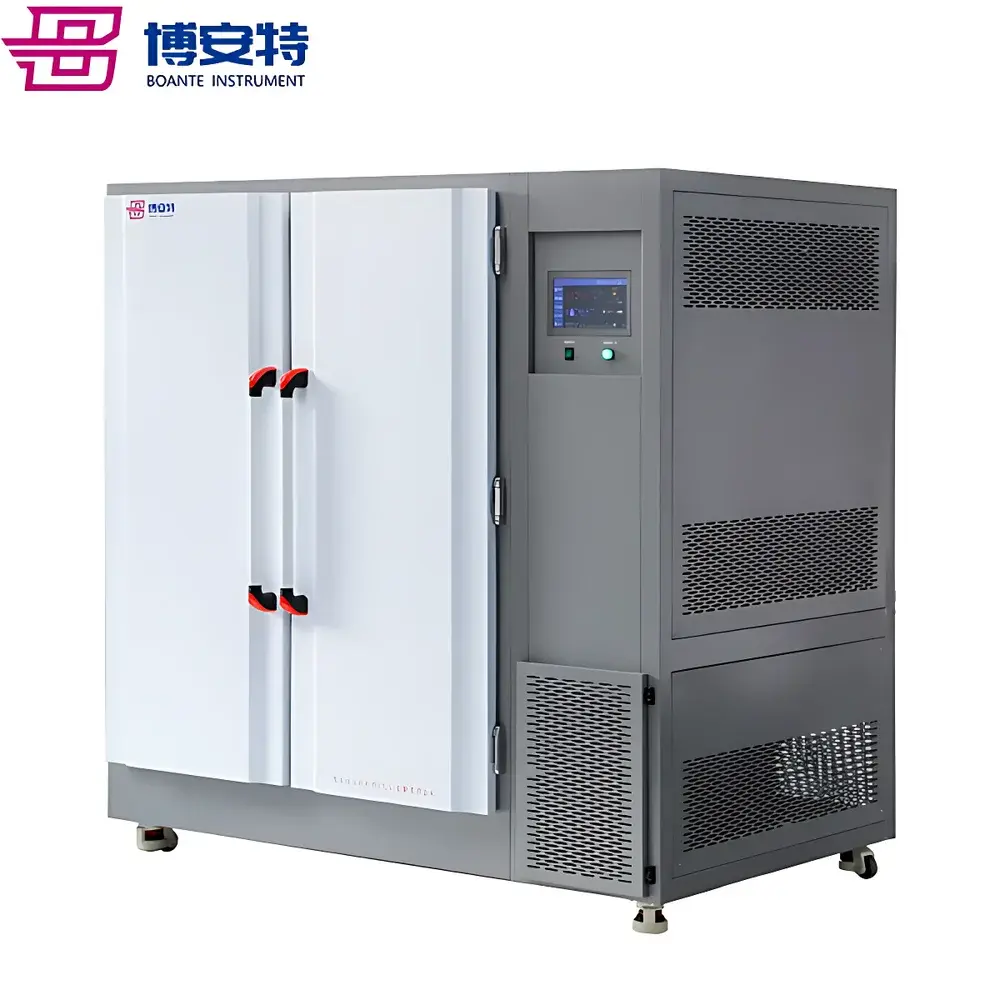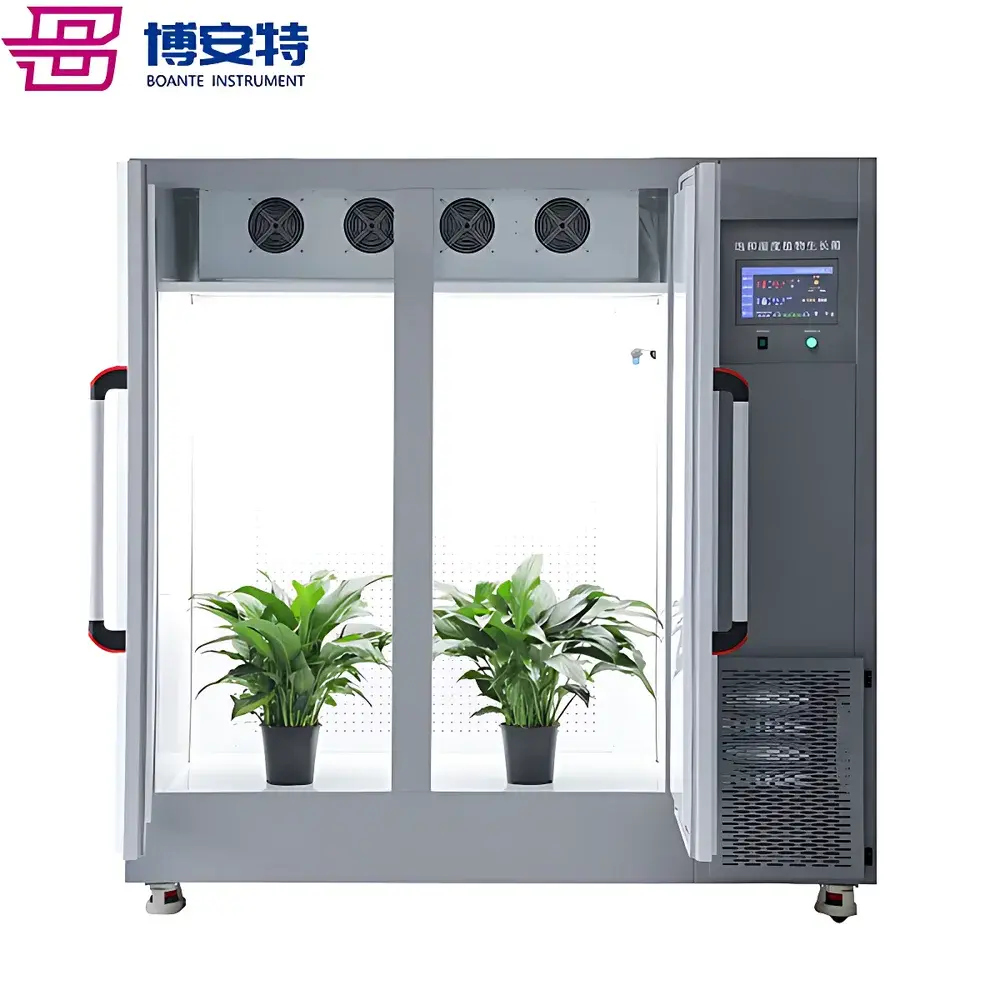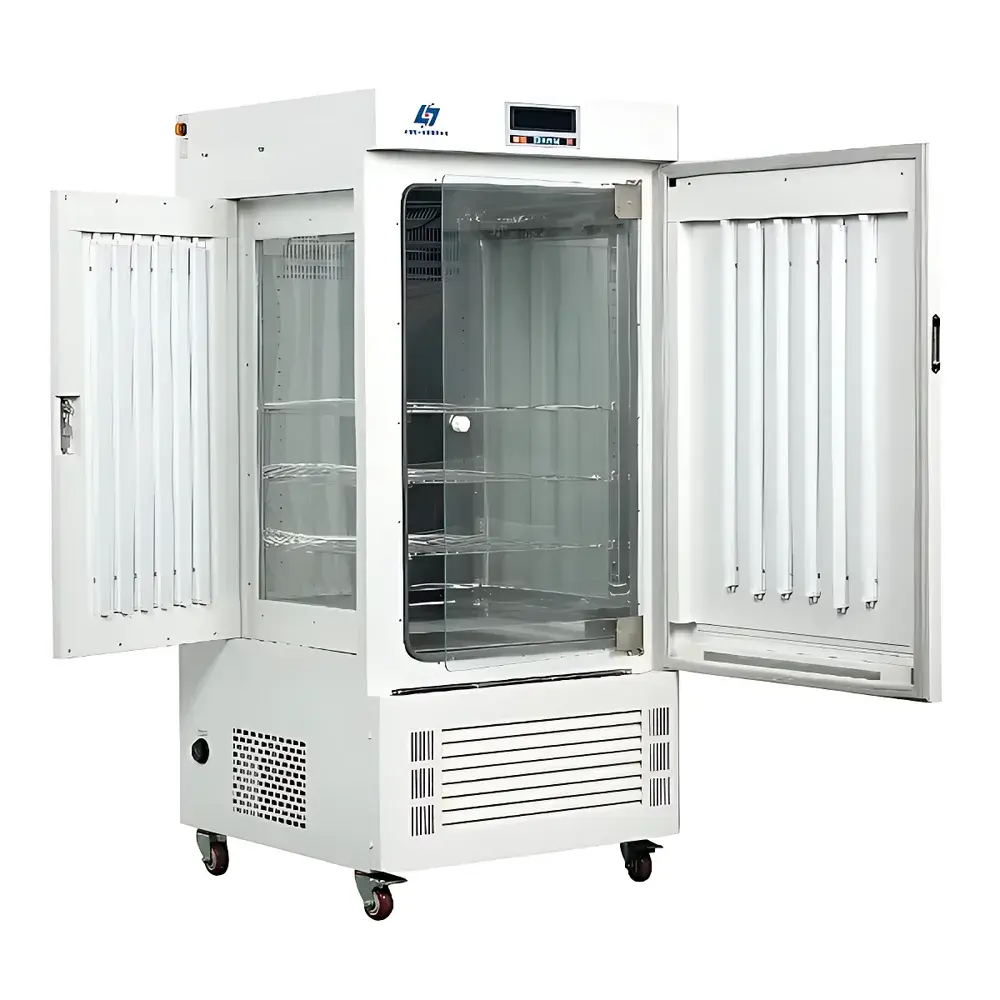
Yoyi MGC-250 Plant Growth Chamber
| Brand | Yoyi |
|---|---|
| Origin | Shanghai, China |
| Manufacturer Type | Direct Manufacturer |
| Model | MGC-250 |
| Illumination Configuration | Triple-Sided LED Lighting |
| Light Spectrum | Visible Spectrum (400–700 nm) |
| Temperature Range | 10–50°C (with illumination), 4–50°C (without illumination) |
| Temperature Fluctuation | ±1°C |
| Temperature Uniformity | ±1.5°C |
| Light Intensity Adjustment | 6-Step Dimming |
| Chamber Capacity | 250 L |
| External Dimensions | 780 × 745 × 1560 mm (W×D×H) |
| Refrigerant | R134a / R406a |
| Control System | Microprocessor-Based PID with Dual-Mode (Day/Night) Programming |
| Programmable Cycles | 99 cycles × 30 segments × 99 h 59 min per segment |
| Continuous Operation Capability | ≥360 hours |
| Optional Features | Independent Over-Temperature Cut-Off Alarm, RS485/USB Data Logging Interface, Customizable LED Spectral Output (Red/Blue) |
Overview
The Yoyi MGC-250 Plant Growth Chamber is an engineered environmental control system designed for reproducible, long-term plant physiology studies, seed germination assays, tissue culture maintenance, and controlled-environment microbiology experiments. It operates on the principle of active thermoelectric and compressor-based temperature regulation combined with uniform, spectrally stable LED illumination—enabling precise simulation of diurnal light–temperature cycles essential for photobiological research. Unlike general-purpose incubators, the MGC-250 integrates triple-sided LED arrays to minimize shadowing and ensure spatially homogeneous photosynthetic photon flux density (PPFD) across the entire 250 L working volume. Its dual-mode microprocessor controller independently manages temperature setpoints during illuminated and non-illuminated phases—a critical requirement for circadian rhythm studies and stress-response protocols compliant with ISO 17025-accredited laboratory workflows.
Key Features
- Triple-sided, high-efficiency white LED illumination system delivering up to 15,000 lux at chamber center; six-step intensity adjustment enables fine-tuned photoperiod optimization without spectral shift.
- Microprocessor PID temperature control with 0.1°C resolution and ±1°C fluctuation tolerance; maintains stability under dynamic load conditions including door opening, lighting transitions, and ambient temperature drift.
- Double-glass insulated door with silicone gasket seal minimizes thermal leakage while enabling uninterrupted visual monitoring—critical for time-lapse phenotyping and non-invasive observation.
- Interior constructed from electropolished 304 stainless steel with radius-corner geometry facilitates decontamination and meets GLP-compliant cleaning validation requirements.
- Dual-compressor redundancy option supports uninterrupted operation over extended durations (>360 h), reducing experimental downtime in multi-week growth trials.
- Programmable logic architecture supports up to 99 independent cycles, each containing 30 user-defined segments—allowing complex diel profiles (e.g., ramped temperature + pulsed light + dark recovery) required by ASTM E2912-22 and ISO 22716-aligned protocols.
Sample Compatibility & Compliance
The MGC-250 accommodates standard tissue culture vessels (e.g., Petri dishes, Magenta boxes, growth pouches), hydroponic trays, insect rearing cages (up to 20 cm height), and microbial slant/stab tubes. Its 580 × 500 × 850 mm internal dimensions and adjustable stainless-steel shelving (3 standard tiers, spacing increment: 45 mm) support flexible configuration for heterogeneous sample loads. The chamber complies with IEC 61000-4 electromagnetic immunity standards and incorporates Class II electrical safety insulation. While not certified to UL 61010-1 or EN 61010-1 out-of-box, its design aligns with key risk-mitigation elements referenced in FDA 21 CFR Part 11 Annex 11 for electronic record integrity when paired with optional RS485 data logging and timestamped audit trails.
Software & Data Management
The embedded controller features a 4.3-inch TFT LCD interface with intuitive menu navigation and real-time overlay of temperature, light status, and elapsed cycle time. Optional RS485 communication enables integration into centralized lab management systems via Modbus RTU protocol; raw sensor logs (temperature, light-on/off timestamps) are exportable as CSV files for downstream analysis in MATLAB, Python (Pandas), or JMP. USB host functionality supports direct connection to thermal printers (optional accessory) for GLP-compliant hardcopy generation of operational parameters—meeting documentation traceability expectations in regulated academic core facilities and contract research organizations (CROs).
Applications
- Photomorphogenesis studies requiring wavelength-specific irradiance (custom red/blue LED modules available upon request).
- Seed viability testing per ISTA Rules and AOSA Standard Germination Protocols.
- Controlled abiotic stress induction (e.g., heat shock, cold acclimation) with synchronized light–temperature transitions.
- Maintenance of photoautotrophic algal cultures (Chlamydomonas, Chlorella) under defined PPFD and thermal regimes.
- Preclinical evaluation of phytochemical biosynthesis kinetics under variable photoperiods.
- Standardized insect development assays (Drosophila, Tribolium) where developmental timing is light- and temperature-dependent.
FAQ
What is the maximum sustained light output (lux) achievable inside the MGC-250?
The chamber delivers up to 15,000 lux at the geometric center under full-intensity white LED illumination, verified using NIST-traceable lux meters calibrated to CIE photopic response curves.
Can the MGC-250 maintain temperature stability during frequent door access?
Yes—the dual-fan air circulation system and high-density polyurethane insulation (≥45 mm wall thickness) limit temperature recovery time to <12 minutes after 15-second door opening under standard test conditions (20°C ambient).
Is the LED lighting spectrum tunable beyond the default white output?
Standard units ship with broad-spectrum white LEDs (CCT ≈ 6500 K); however, OEM spectral customization—including discrete red (660 nm) and blue (450 nm) bands—is available as a factory-configured option.
Does the unit support remote monitoring via Ethernet or Wi-Fi?
No native Ethernet/Wi-Fi interface is included; however, third-party RS485-to-Ethernet gateways (e.g., Moxa EDS-205A) can be deployed to enable networked supervision within existing institutional IT infrastructure.
What regulatory documentation is provided for GxP environments?
Factory calibration certificates (temperature uniformity, light intensity mapping) and IQ/OQ templates are supplied with optional qualification packages—supporting alignment with USP , EU GMP Annex 15, and ISO/IEC 17025 method validation frameworks.
Related Products