
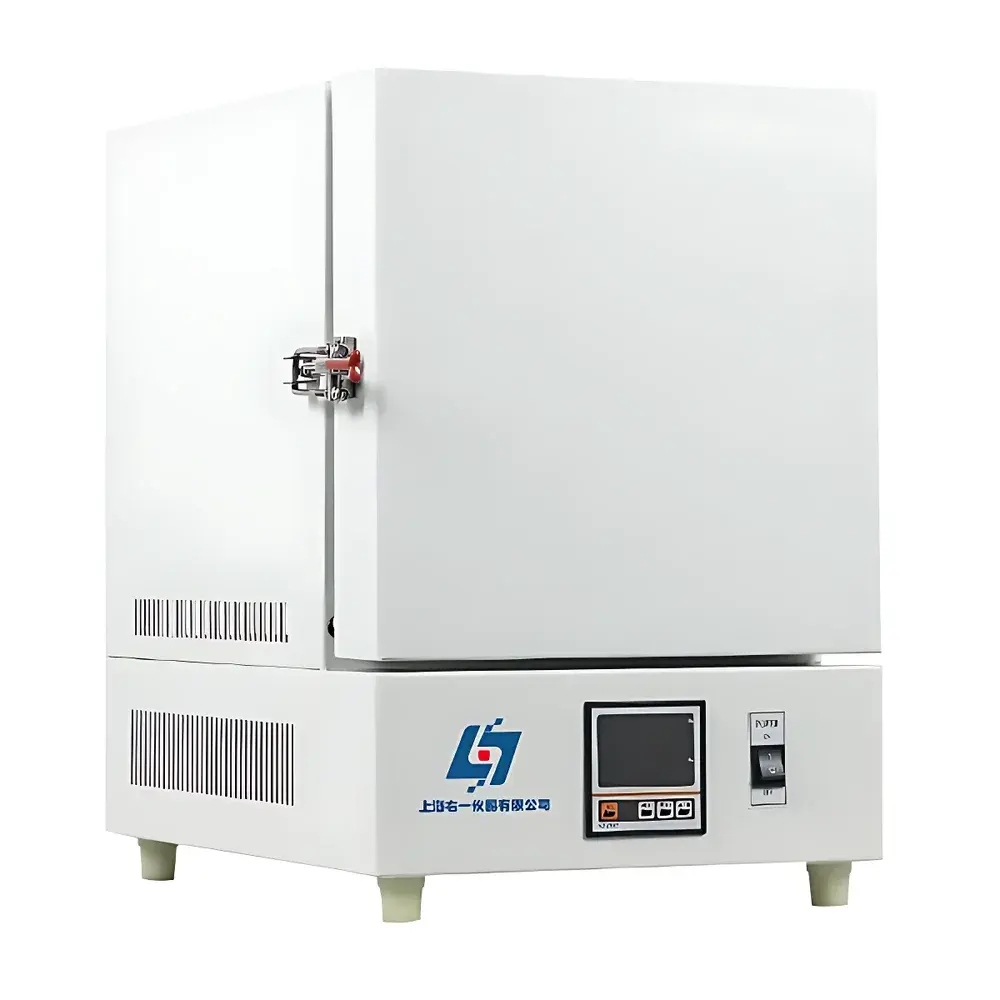
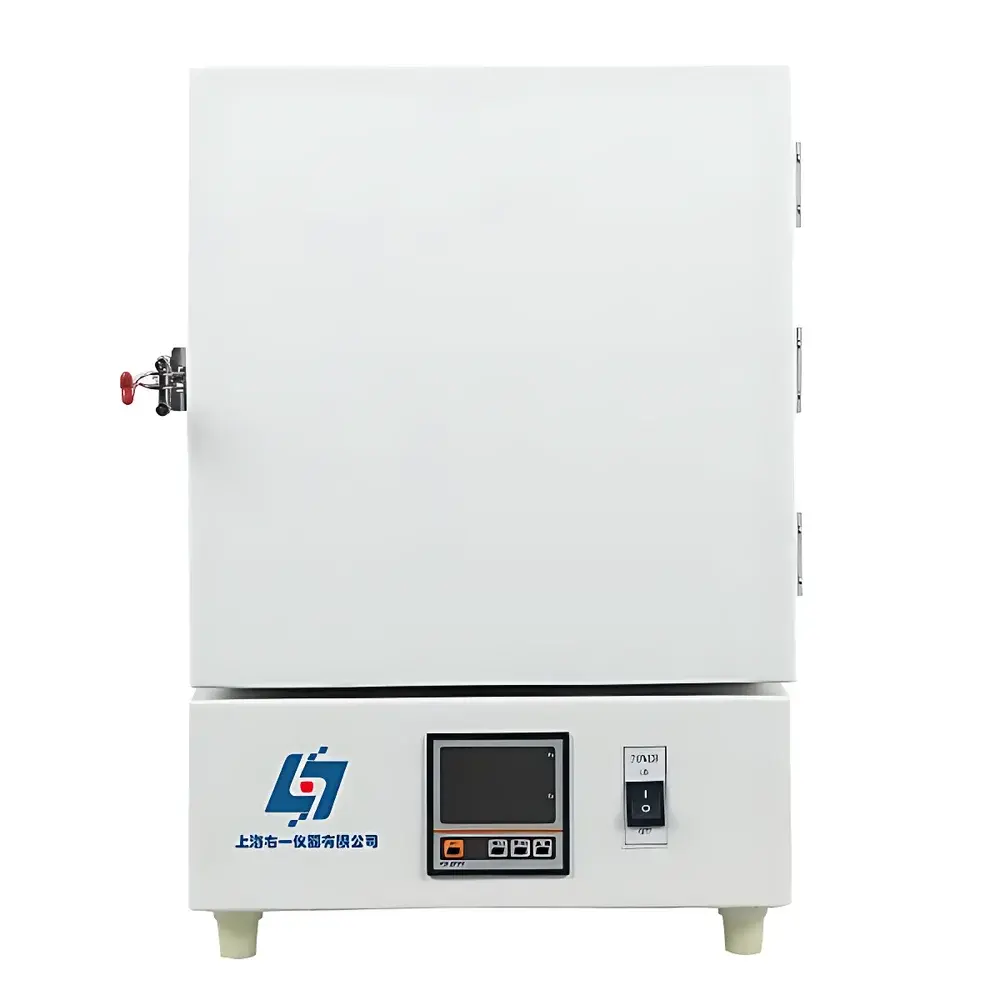
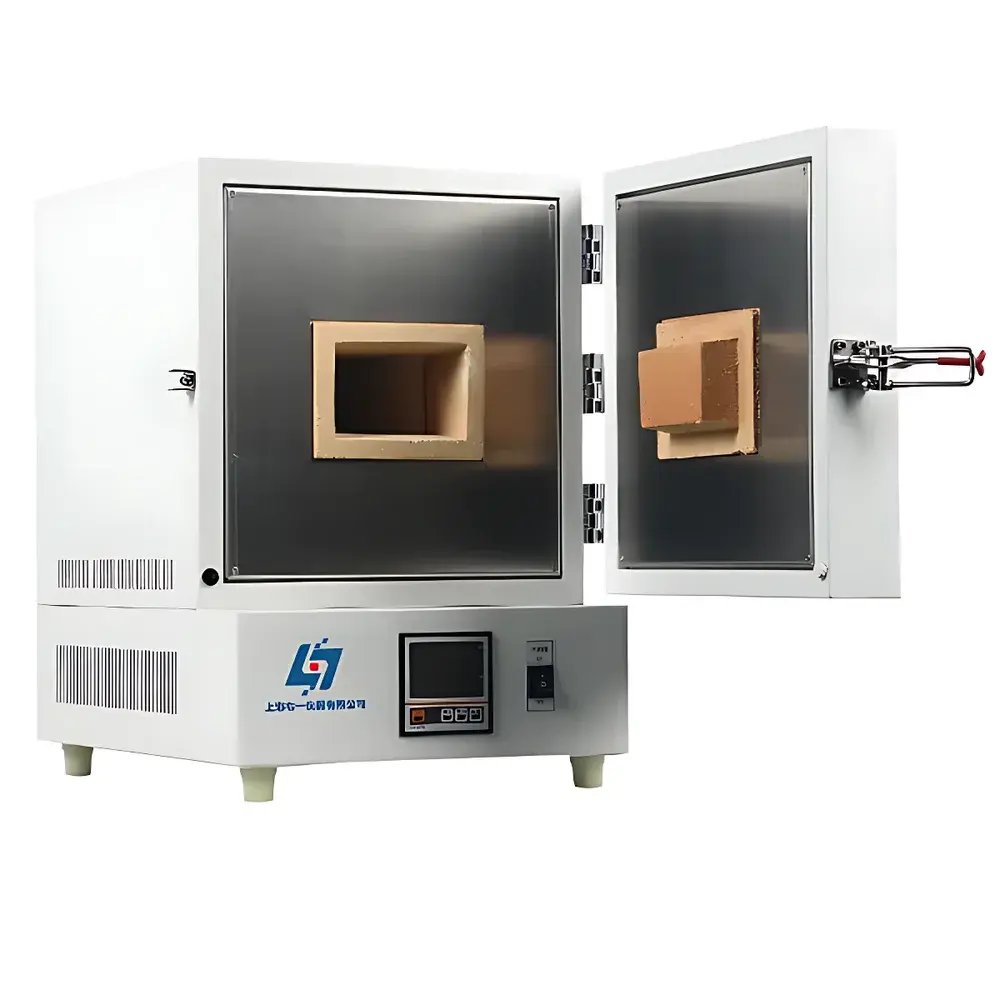
Yoyilab SX2-2.5-12 Benchtop Muffle Furnace
| Brand | Yoyilab |
|---|---|
| Origin | Shanghai, China |
| Manufacturer | Yes |
| Product Type | Box-Type Muffle Furnace |
| Model | SX2-2.5-12 |
| Max Temperature | 1200 °C |
| Temperature Control Accuracy | ±3 °C |
| Rated Power | 2.5 kW |
| Heating Method | Electric Resistance Heating |
| Internal Chamber Dimensions | 120 × 200 × 80 mm |
| Nominal Volume | 2 L |
| Control Interface | 4.3-inch LCD with PID Algorithm |
| Temperature Resolution | 1 °C |
| Timer Range | 1–9999 min |
| Thermocouple Type | K-type |
| Heating Element | Nichrome Wire |
| Chamber Lining | Refractory Brick |
| Safety Features | Over-temperature alarm, door-interlocked power cutoff, leakage current protection, over-current/over-voltage/over-heat protection |
| Power Supply | 220 V / 50 Hz |
Overview
The Yoyilab SX2-2.5-12 is a compact, benchtop muffle furnace engineered for precision thermal processing in research laboratories, quality control environments, and small-scale industrial R&D settings. Designed around resistive heating principles, it isolates samples from combustion byproducts and external contaminants using a fully enclosed refractory brick chamber—ensuring uniform heat distribution and reproducible thermal profiles up to 1200 °C. Its integral architecture integrates the furnace chamber and microprocessor-based controller into a single unit, minimizing footprint while maintaining structural rigidity and thermal stability. The furnace complies with fundamental safety and electromagnetic compatibility requirements for Class I laboratory electrical equipment (IEC 61010-1), and its operational envelope supports standardized thermal protocols used in ASTM E1113 (determination of ash content), ISO 562 (coal and coke analysis), and USP (heavy metals testing via dry ashing).
Key Features
- Benchtop form factor with footprint of only 440 × 460 mm—optimized for space-constrained labs and fume hood integration.
- Refractory brick-lined chamber (one-piece monolithic construction) providing excellent thermal insulation, low heat loss, and long-term dimensional stability under cyclic thermal stress.
- Microcomputer-based PID temperature controller with 4.3-inch backlit LCD interface; supports real-time display of setpoint, actual chamber temperature, and remaining hold time.
- Temperature resolution of 1 °C and sustained control accuracy of ±3 °C across the full operating range (RT + 50 °C to 1200 °C), validated per ASTM E742 calibration methodology.
- Comprehensive electrical safety system: dual-stage over-temperature cutoff, door-actuated contactor disengagement, residual-current device (RCD) protection, and automatic reset prevention after fault conditions.
- Power-loss recovery function retains user-defined parameters—including ramp rates, soak durations, and final setpoints—enabling uninterrupted operation following grid interruption or unexpected shutdown.
- Nichrome (Ni80/Cr20) resistance heating elements mounted on side walls ensure symmetrical heat flux and minimize thermal gradients within the 2 L working volume.
Sample Compatibility & Compliance
The SX2-2.5-12 accommodates crucibles, boats, and ceramic setters up to 120 mm (W) × 200 mm (D) × 80 mm (H), supporting common labware materials including alumina, quartz, silicon carbide, and stainless steel. It is routinely deployed for ashing organic matrices (e.g., foodstuffs, polymers, biological tissues), calcination of catalyst precursors, sintering of oxide ceramics, and thermal gravimetric pre-treatment prior to XRD or SEM-EDS analysis. The furnace meets essential design criteria for GLP-compliant thermal treatment workflows, including audit-trail-capable parameter logging (when paired with optional RS485 interface and compliant software), traceable temperature calibration paths, and documented failure-mode response behavior. While not certified to UL 746B or CE Machinery Directive Annex I out-of-the-box, its construction adheres to baseline mechanical and electrical safety expectations for non-automated laboratory thermal equipment.
Software & Data Management
The standard configuration includes local parameter storage and real-time monitoring via the built-in LCD interface. For enhanced data integrity and regulatory alignment, optional accessories extend functionality: an RS485 serial interface enables bidirectional communication with external SCADA or LIMS platforms, supporting Modbus RTU protocol for remote setpoint adjustment, temperature logging at configurable intervals (1–60 s), and event-triggered alarms. A dedicated PC software package (sold separately) provides CSV export, trend visualization, and electronic signature support aligned with FDA 21 CFR Part 11 requirements—subject to customer-configured user access controls and audit trail activation. Optional thermal printer integration delivers hard-copy records of cycle start/end timestamps, peak temperatures, and deviation alerts—useful for internal QA documentation and third-party inspection readiness.
Applications
- Ash content determination per AOAC 942.05, ASTM D3174, and ISO 1171 in feed, fuel, and environmental samples.
- Pre-concentration of trace metals in water and soil digests prior to ICP-OES or AAS analysis.
- Thermal decomposition studies of battery cathode materials (e.g., LiCoO₂, NMC) under controlled oxidative atmospheres.
- Heat treatment of metallurgical specimens for microstructural homogenization prior to metallographic preparation.
- Low-mass ceramic glaze firing and frit melting trials in materials science education and prototyping labs.
- Residue quantification in pharmaceutical excipient purity testing (USP , ) and extractables/leachables screening.
FAQ
What is the recommended maintenance schedule for the SX2-2.5-12?
Routine visual inspection of heating elements and chamber lining should occur every 50 operational hours; thermocouple verification against a calibrated reference source is advised quarterly.
Can this furnace operate under inert or reducing atmospheres?
No—the standard model lacks gas inlet/outlet ports and is rated for ambient air operation only. Custom modifications require engineering review and void standard warranty coverage.
Is the furnace compatible with external programmable controllers?
Yes—via the optional RS485 interface and Modbus-compatible host software; however, standalone multi-segment programming requires the separately priced programmable controller add-on.
Does the unit include a calibration certificate?
A factory-assembled temperature uniformity report is provided; NIST-traceable calibration certification is available upon request at additional cost and lead time.
What is the typical warm-up time to 1000 °C?
Approximately 45–55 minutes from ambient, depending on load mass and chamber loading configuration; ramp rate is user-adjustable between 1 °C/min and 10 °C/min.



