
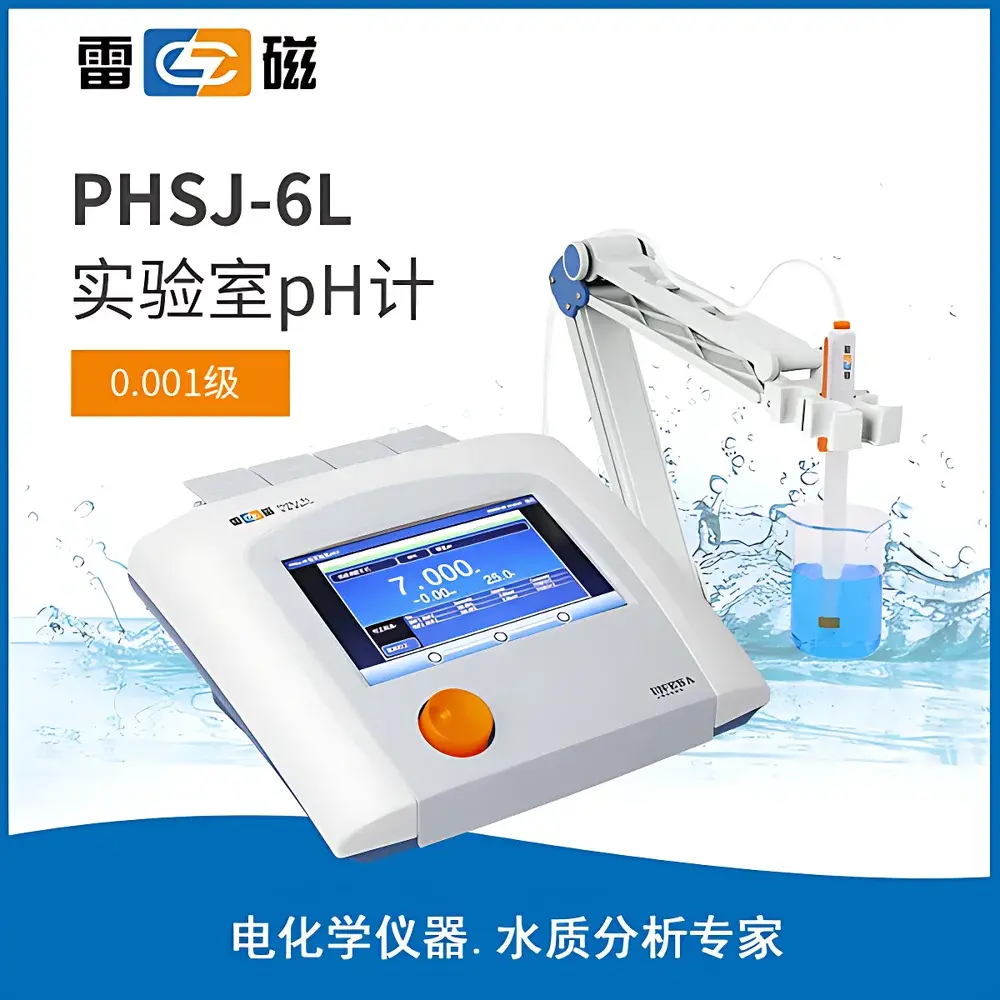
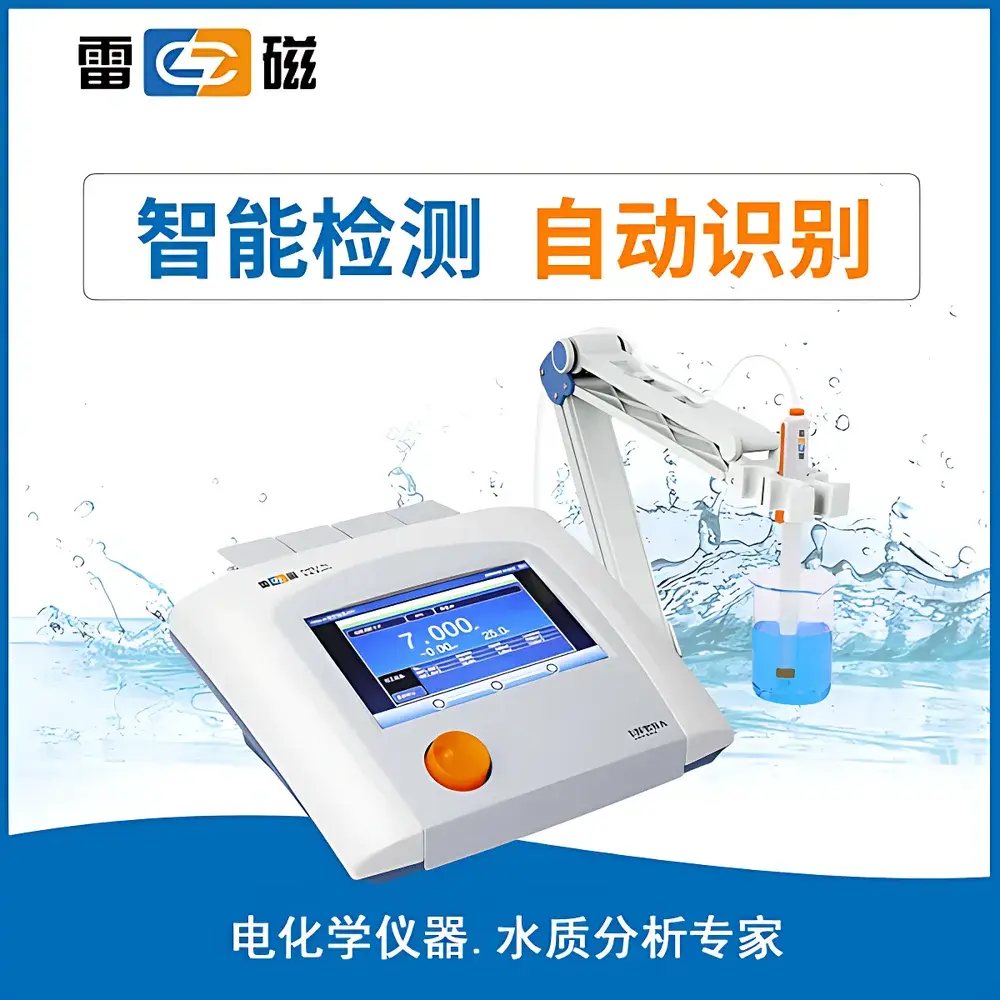
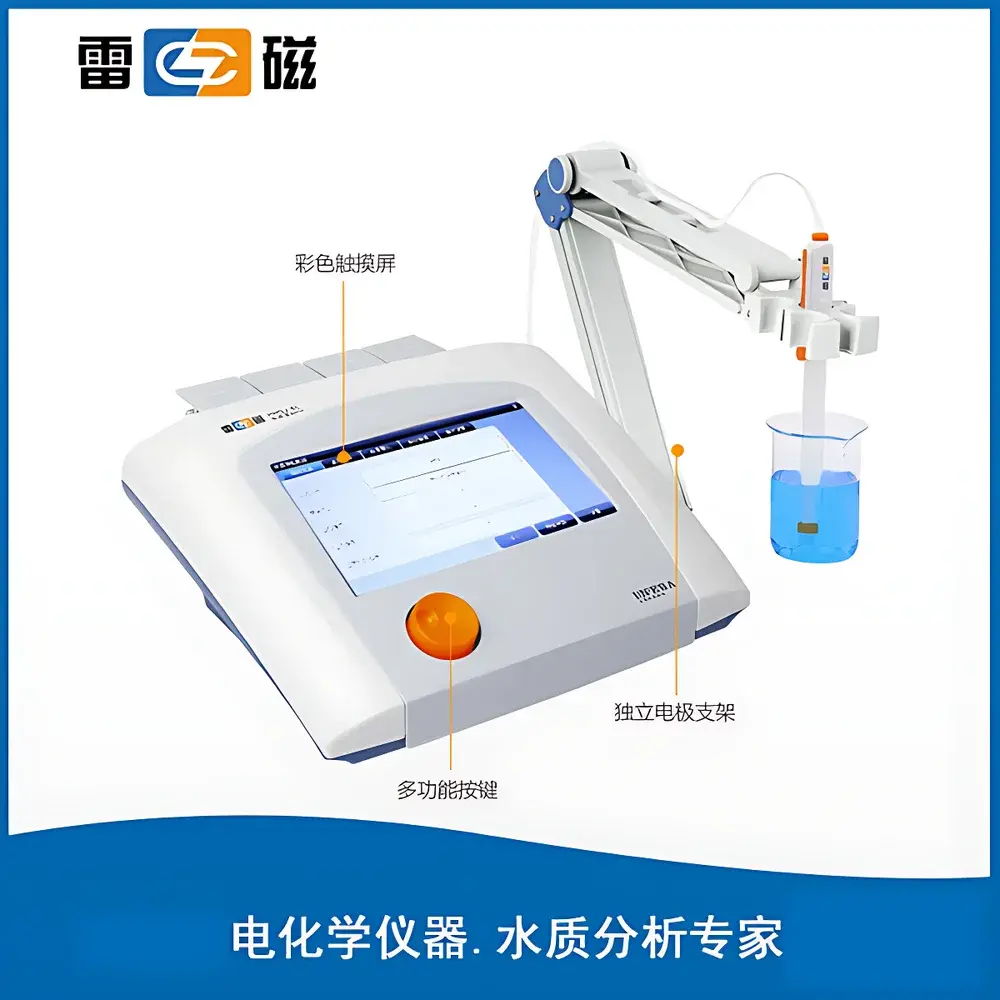
Lemon PHSJ-6L Benchtop pH Meter
| Brand | Lemon |
|---|---|
| Origin | Shanghai, China |
| Instrument Type | Benchtop |
| Parameter Types | Multi-parameter (pH, mV, Temperature) |
| pH Measurement Range | −2.000 to 20.000 pH |
| pH Resolution | 0.001 pH |
| pH Accuracy | ±0.002 pH |
| mV Range | −2000.00 to +2000.00 mV |
| mV Resolution | 0.01 mV |
| mV Accuracy | ±0.03% FS |
| Temperature Range | −5.0 to 130.0 °C |
| Temperature Resolution | 0.1 °C |
| Temperature Accuracy | ±0.1 °C |
| Stability | ±0.002 pH / 3 h |
| Calibration Points | 1–6 points automatic |
| Buffer Recognition | GB, DIN, NIST, and 22 additional standard buffer sets (25 total) |
| Data Storage Capacity | 1000 measurement records |
| Compliance | GLP-compliant data management with audit trail support |
| Connectivity | RS-232, USB host (for U-disk), optional PC software interface |
Overview
The Lemon PHSJ-6L is a high-precision benchtop pH meter engineered for rigorous laboratory environments where trace-level pH quantification, redox potential (ORP), and temperature monitoring must meet stringent analytical requirements. Based on potentiometric measurement principles—utilizing a glass electrode and reference electrode pair—the instrument delivers stable, reproducible readings across an extended pH range of −2.000 to 20.000, enabling accurate analysis of highly acidic, neutral, and strongly alkaline samples encountered in pharmaceutical formulation, electroplating bath control, semiconductor wafer cleaning validation, and environmental water quality assessment. Its 0.001-pH resolution and ±0.002-pH electronic unit accuracy conform to ISO 7888 and ASTM D1293 specifications for high-fidelity aqueous electrochemical measurements. The integrated temperature sensor enables automatic temperature compensation (ATC) across −5.0 to 130.0 °C, supporting both aqueous and non-aqueous media characterization.
Key Features
- High-resolution multi-parameter acquisition: Simultaneous real-time display of pH, mV (ORP), and temperature with dedicated digital readouts for each parameter.
- Intelligent endpoint detection: Configurable reading modes—including auto-read (stable-signal triggered), timed-read (user-defined interval), fixed-interval logging, and manual capture—to accommodate diverse sample kinetics and operator workflows.
- Advanced calibration architecture: Automatic 1–6 point calibration with dynamic electrode status evaluation; built-in calibration reminder system alerts users prior to scheduled recalibration intervals.
- Comprehensive buffer library: Native recognition of 25 standardized pH buffer solutions (including GB, DIN, NIST, JIS, and AFNOR profiles); supports user-defined buffer composition and custom buffer group management for method-specific SOP alignment.
- Modular connectivity: Equipped with RS-232 serial port and USB host interface for direct connection to PCs, automated titrators, or USB mass storage devices—enabling seamless export of raw data, calibration logs, and audit trails.
- GLP-compliant operation: Full traceability via timestamped records, user ID assignment, electrode ID registration, and calibration history retention—designed to satisfy FDA 21 CFR Part 11 readiness requirements when paired with validated PC software.
Sample Compatibility & Compliance
The PHSJ-6L is compatible with standard single-junction and double-junction combination pH electrodes, as well as specialized probes for low-ionic-strength water, high-sodium media, and organic solvent mixtures. It meets essential performance criteria outlined in ISO/IEC 17025 for testing laboratories and aligns with pharmacopeial standards including USP and EP 2.2.3 for pH determination in drug substance and product release testing. All stored data include metadata such as operator ID, electrode serial number, calibration date/time, ambient temperature, and buffer lot information—ensuring full compliance with Good Laboratory Practice (GLP) documentation mandates.
Software & Data Management
The instrument stores up to 1000 complete measurement records locally, each containing pH/mV/temperature values, measurement mode, calibration parameters, and environmental timestamps. Data export supports CSV and TXT formats for downstream statistical analysis in Excel, MATLAB, or LIMS platforms. Optional Lemon LabLink PC software provides enhanced functionality: customizable report templates, trend visualization, statistical summary (mean, SD, RSD), outlier detection, and electronic signature-enabled approval workflows. Audit trail generation includes immutable logs of all configuration changes, calibration events, and data deletions—critical for regulatory submissions and internal QA audits.
Applications
- Pharmaceutical QC/QA labs performing pH verification of injectables, ophthalmic solutions, and buffer preparations per ICH Q5C stability guidelines.
- Environmental testing facilities conducting EPA Method 9040C-compliant pH analysis of wastewater, leachate, and soil extracts.
- Chemical manufacturing process control for caustic soda concentration monitoring, acid regeneration loop optimization, and catalyst slurry pH stabilization.
- Academic research in electrochemistry, corrosion science, and enzyme kinetics requiring sub-millipH resolution under variable thermal conditions.
- Food & beverage R&D labs validating pH thresholds for microbial inhibition in fermented products and acidified sauces.
FAQ
Does the PHSJ-6L support automatic electrode diagnosis or slope calculation during calibration?
Yes—it calculates and displays electrode slope (%), offset (mV), and asymmetry potential in real time during calibration, flagging deviations beyond configurable acceptance limits.
Can the instrument be integrated into a fully automated analytical workflow?
Yes—via RS-232 or optional relay module, it interfaces with third-party autosamplers and LIMS systems using ASCII command protocol for remote triggering, data polling, and status reporting.
Is firmware upgrade supported in the field?
Yes—updates are delivered via USB flash drive using Lemon’s official firmware utility; version history and changelogs are published on the manufacturer’s technical support portal.
What documentation is provided for regulatory validation?
Factory calibration certificate, IQ/OQ protocol templates, and GLP traceability matrix are included in the instrument documentation package; full 21 CFR Part 11 validation support requires licensed LabLink software with electronic signature module.
How is temperature compensation applied when measuring non-aqueous samples?
The PHSJ-6L applies linear ATC based on the Nernst equation; for non-aqueous or mixed-solvent systems, users may select manual temperature entry or disable ATC and apply correction factors post-measurement using documented empirical models.
Related Products




