
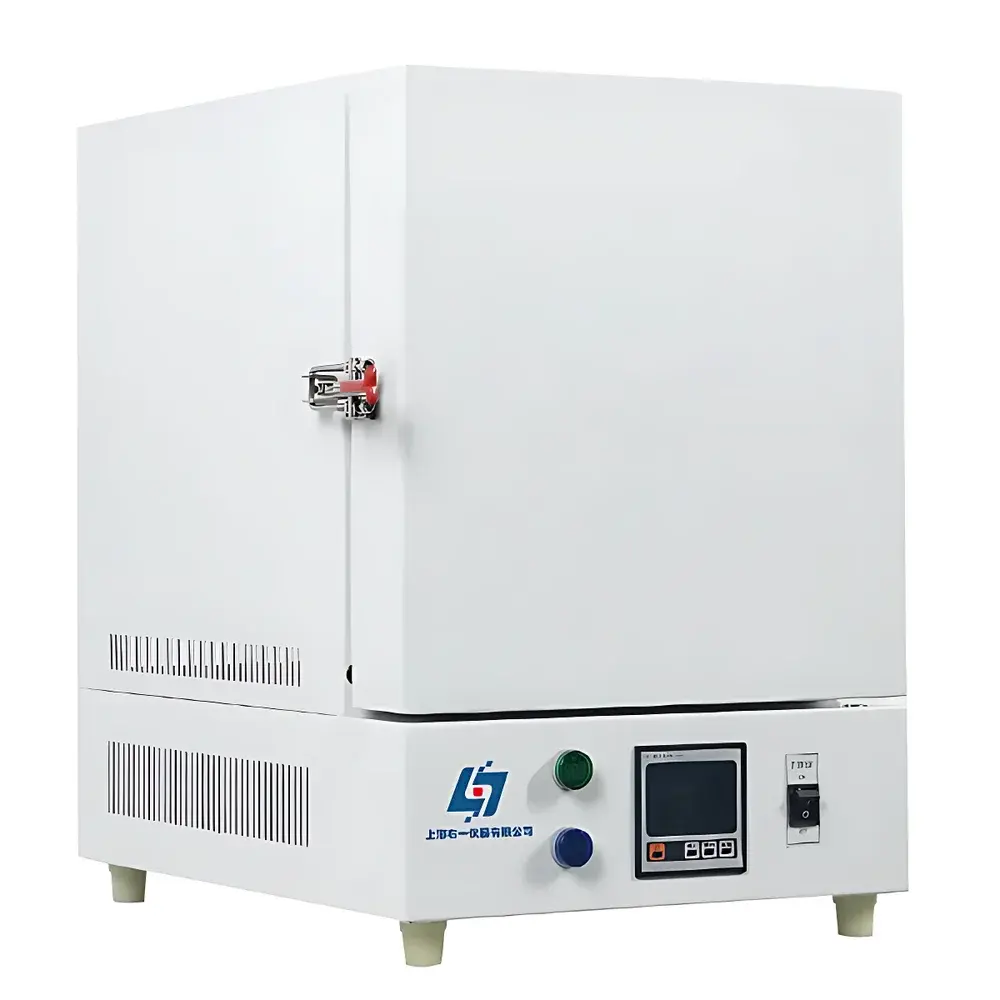
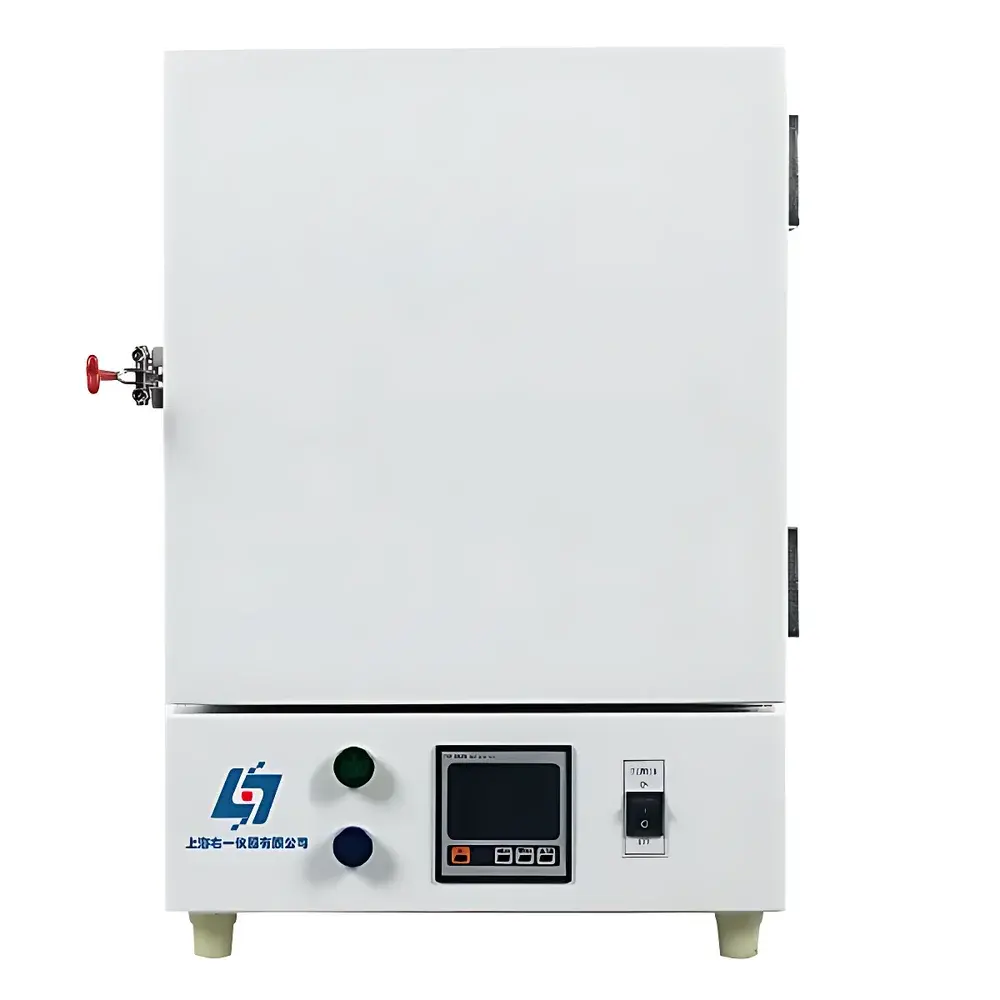
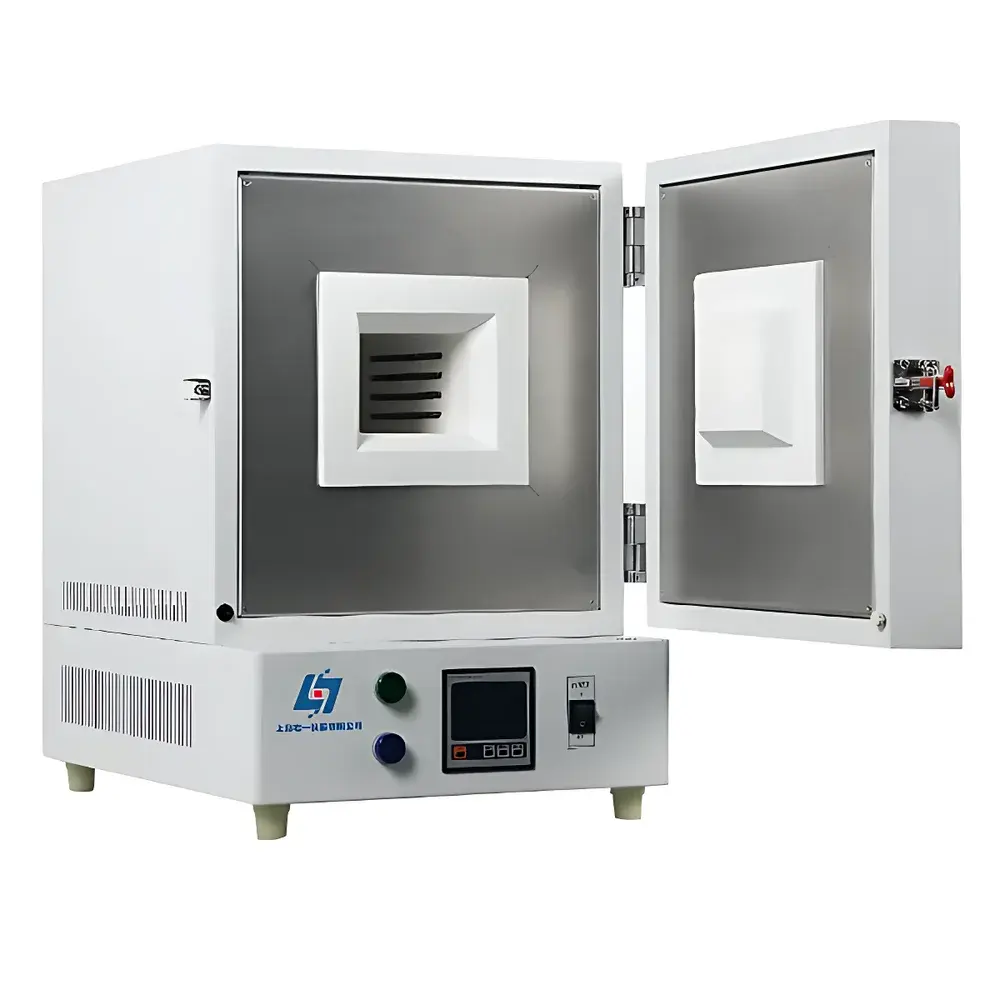
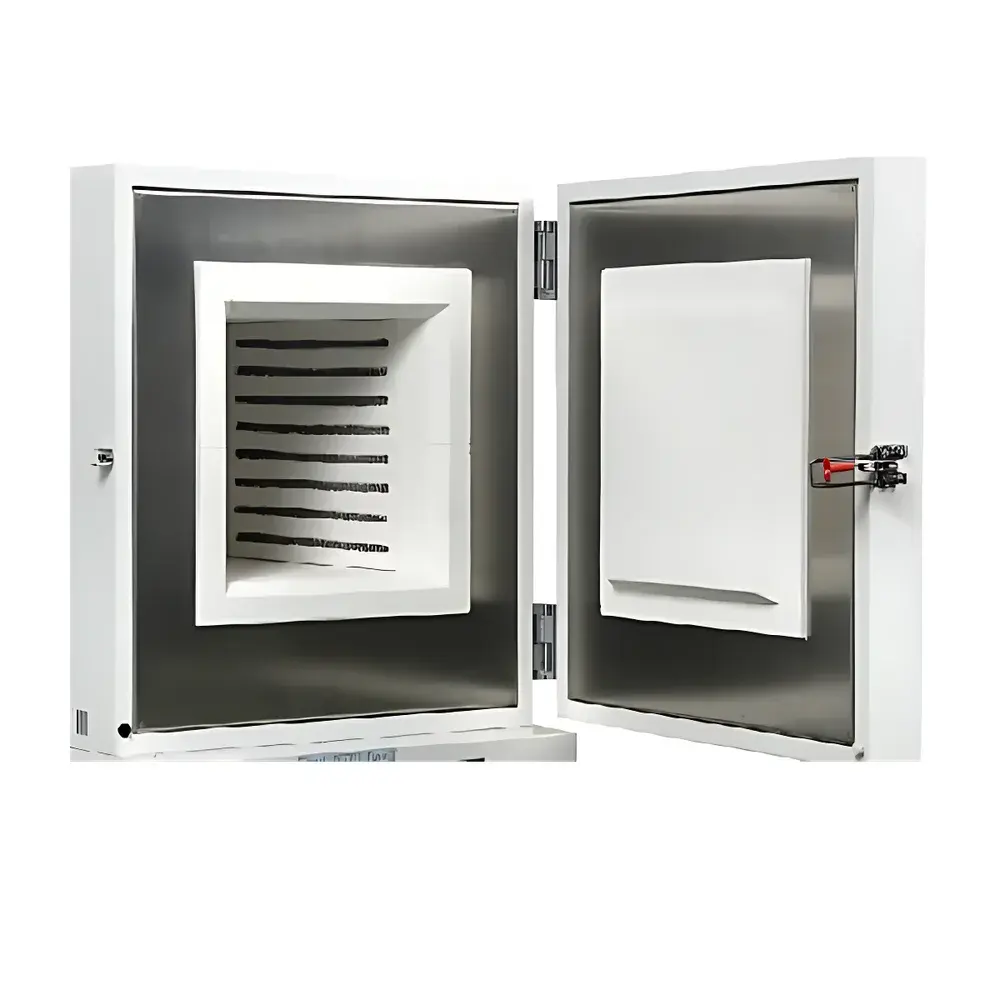
Yoyi SX2-4-12A Ceramic Fiber Muffle Furnace (Box-Type High-Temperature Laboratory Furnace)
| Brand | Yoyi |
|---|---|
| Origin | Shanghai, China |
| Manufacturer Type | Direct Manufacturer |
| Instrument Type | Box-Type Resistance Furnace |
| Maximum Temperature | 1200 °C |
| Temperature Control Accuracy | ±1 °C |
| Rated Power | 4 kW |
| Heating Element | Ni-Cr Wire (Mo-doped for 1200 °C stability) |
| Internal Chamber Dimensions | 200 × 300 × 120 mm |
| Nominal Volume | 7.2 L |
| Insulation | Dual-layer Ceramic Fiber Board (Hot-face + Backup Layers) |
| Control System | Microprocessor-Based PID Controller with LCD Menu Interface |
| Safety Features | Over-current, over-voltage, over-temperature, earth-leakage, and short-circuit protection |
| Power Supply | 220 V AC, 50/60 Hz |
Overview
The Yoyi SX2-4-12A is a high-performance ceramic fiber muffle furnace engineered for precision thermal processing in academic laboratories, materials R&D centers, and quality control environments. It operates on resistive heating principles, utilizing Mo-doped nickel-chromium (Ni-Cr) alloy wire wound in optimized helical geometry to deliver uniform heat distribution across the chamber. The furnace achieves stable operation up to 1200 °C with ±1 °C control accuracy—critical for reproducible sintering, ashing, annealing, and calcination protocols. Its lightweight ceramic fiber insulation—comprising high-purity alumina-silica (>95% Al₂O₃ + SiO₂) with low thermal conductivity (<0.1 W/m·K at 800 °C)—enables rapid ramp rates (up to 30 °C/min typical), reduced standby energy loss, and surface temperatures ≤50 °C at 1000 °C internal setpoint. Unlike traditional brick-lined furnaces, this design eliminates thermal mass delays and supports GLP-compliant thermal profiling where dwell time consistency and thermal gradient minimization are essential.
Key Features
- Ultra-low thermal inertia architecture: Full-ceramic fiber chamber (density ~128 kg/m³) reduces preheat time by >50% versus refractory brick equivalents.
- Dual-zone thermal shielding: Inner hot-face layer (1400 °C rated) backed by secondary insulating board ensures structural integrity and long-term dimensional stability under cyclic thermal stress.
- Intelligent PID temperature controller with auto-tuning: Supports ramp-hold programming (up to 30 segments), real-time deviation compensation, and automatic recovery after power interruption.
- Robust mechanical construction: Cold-rolled steel housing with phosphate conversion coating and epoxy-polyester electrostatic spray finish resists corrosion and mechanical abrasion in shared lab environments.
- Comprehensive electrical safety: Integrated solid-state relay (SSR), Class II insulation, residual-current device (RCD), and redundant thermocouple monitoring (Type K, grounded junction) meet IEC 61000-6-3 EMC and IEC 61010-1 safety standards.
- LCD-based human-machine interface: Simultaneous display of setpoint, actual chamber temperature, elapsed time, remaining hold duration, and system status codes.
Sample Compatibility & Compliance
The SX2-4-12A accommodates crucibles, boats, and trays made from alumina, quartz, silicon carbide, or stainless steel—compatible with ASTM E1111 (ash content determination), ISO 1171 (determination of ash in coal and coke), and USP (residue on ignition). Its sealed muffle configuration prevents cross-contamination during oxidation-sensitive processes such as metal oxide synthesis or catalyst precursor decomposition. The furnace complies with laboratory-grade electromagnetic compatibility (EMC) requirements per EN 61326-1 and carries CE marking for use within the European Economic Area. For regulated environments, optional RS485 Modbus RTU interface enables integration into LIMS or MES platforms supporting FDA 21 CFR Part 11 audit trails when paired with validated data acquisition software.
Software & Data Management
While the standard unit features standalone operation via front-panel controls, optional accessories extend digital functionality: a multi-segment programmable controller supports up to 30-step thermal profiles with independent ramp rate, soak time, and cooling rate parameters; an RS485 serial interface (with included PC software) permits remote monitoring, real-time graphing, and CSV export of temperature/time logs. All firmware implements non-volatile memory retention—preserving calibration offsets, user-defined programs, and historical alarm records through power cycles. Data logging intervals are configurable from 1 second to 60 minutes, satisfying internal SOPs requiring traceable thermal history for GMP-relevant processes like ceramic component qualification or pharmaceutical excipient stability testing.
Applications
- Materials science: Sintering of ferrites, piezoelectrics, and solid electrolytes; controlled oxidation of transition metal precursors.
- Geochemistry & environmental analysis: Loss-on-ignition (LOI) testing of soils and sediments per EPA Method 9080.
- Ceramics & glass R&D: Glaze firing trials, nucleation annealing of lithium aluminosilicate (LAS) glasses, and devitrification studies.
- Metallurgy: Homogenization heat treatment of alloy powders prior to HIP consolidation; decarburization studies on tool steels.
- Academic research: Kinetic modeling of solid-state reactions using isoconversional methods (e.g., Kissinger-Akahira-Sunose).
FAQ
What is the maximum recommended continuous operating temperature?
The SX2-4-12A is rated for continuous operation at 1150 °C; 1200 °C is specified as the absolute upper limit for short-duration (<2 h) thermal cycles.
Can this furnace be used under inert or reducing atmospheres?
No—the standard configuration is air-atmosphere only; optional quartz tube inserts with flanged gas ports (N₂, Ar, H₂/N₂ mixtures) are available as field-upgradable accessories.
Is calibration certificate included with shipment?
A factory-as-tested temperature uniformity report (measured at three points: center, top corner, bottom corner) is provided; NIST-traceable calibration certificates require separate purchase and third-party verification.
How often does the heating element require replacement?
Under normal usage (≤10 cycles/week, max 1150 °C), Mo-doped Ni-Cr wire exhibits service life exceeding 3,000 hours; visual inspection every 500 h is advised per maintenance SOP.
Does the furnace support external data logging without optional hardware?
No—native data export requires either the RS485 module or analog output (0–5 VDC) option; no USB or Ethernet connectivity is built-in.



