
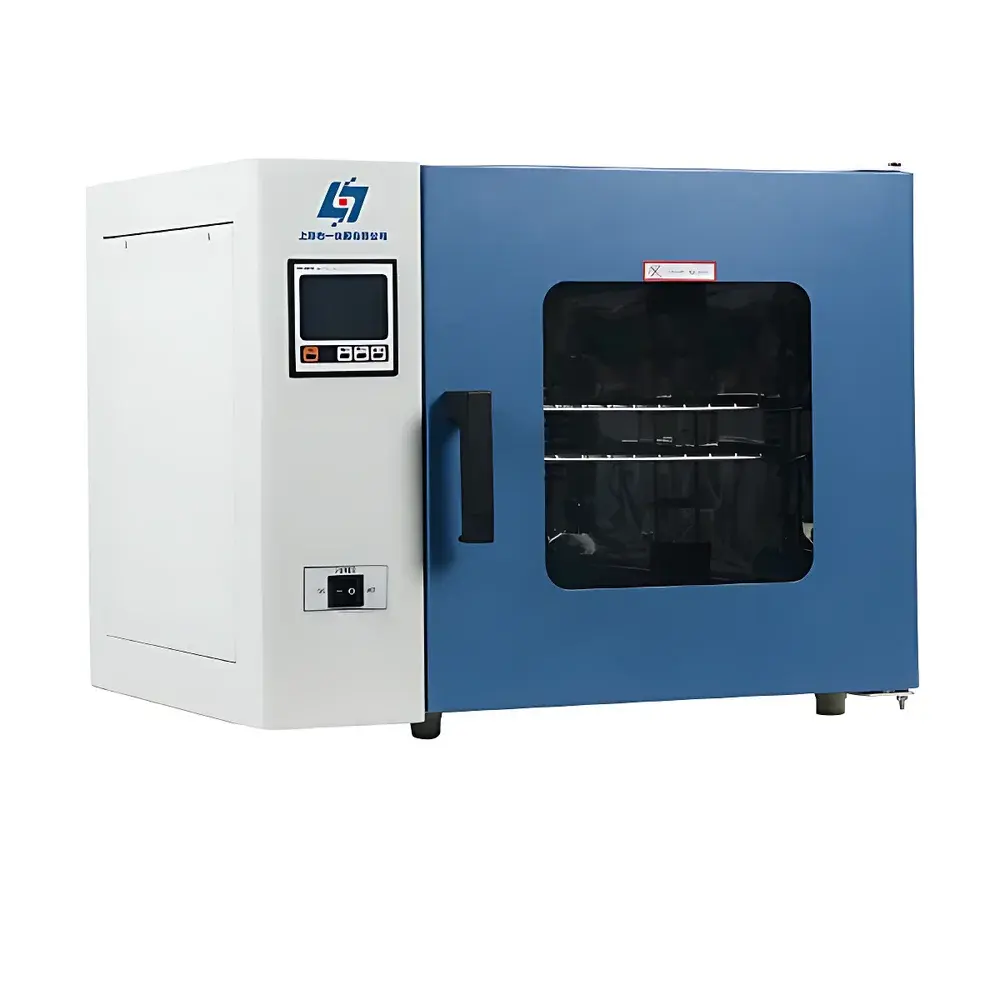
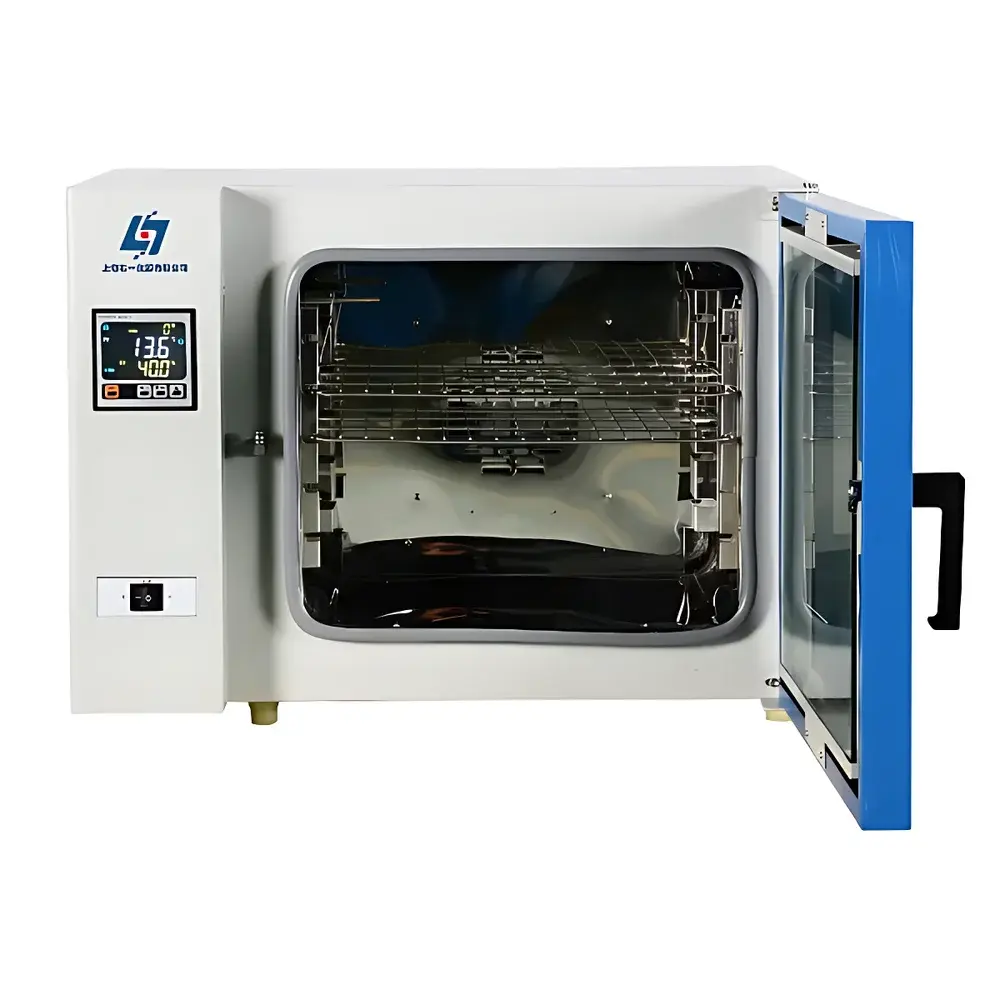
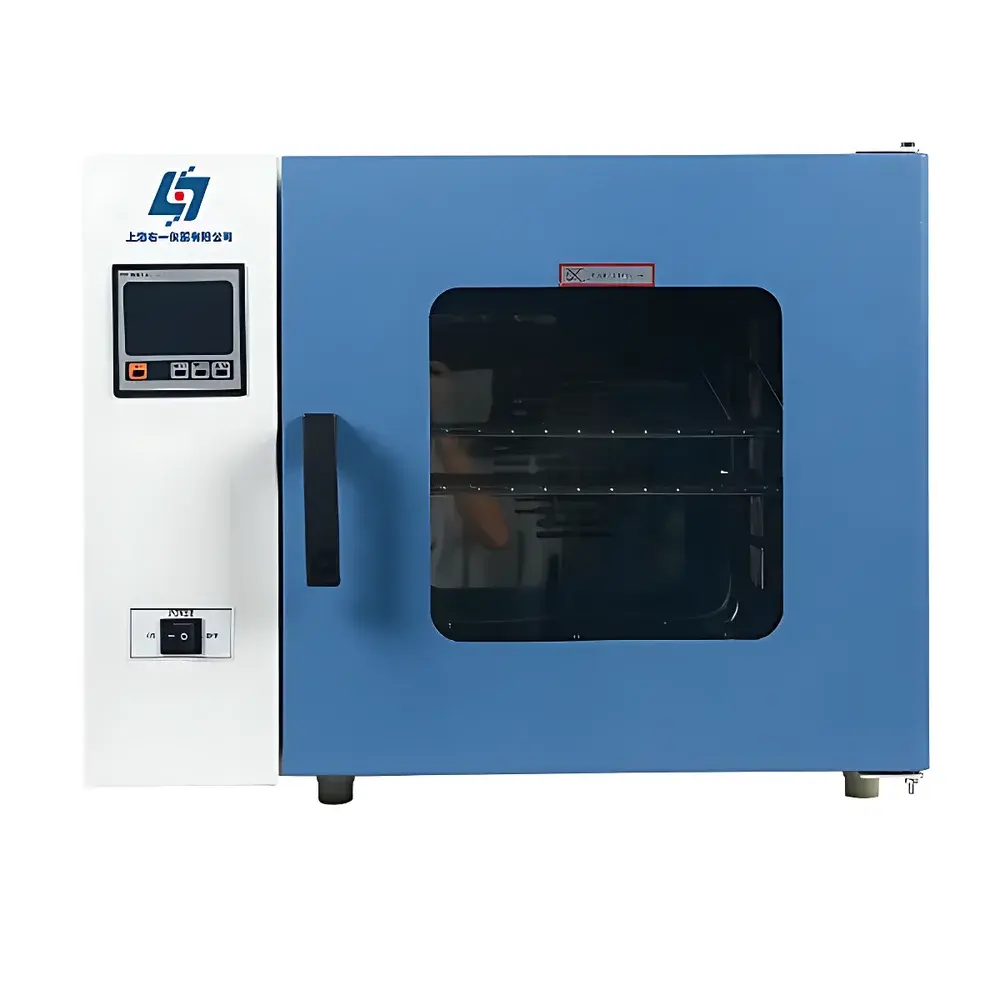
Shanghai Youyi GRX-9053A Forced-Air Hot Air Sterilization Oven (Dry Heat Oven)
| Brand | Shanghai Youyi (SHYY) |
|---|---|
| Origin | Shanghai, China |
| Manufacturer | Yes |
| Type | Dry Heat Sterilization Oven |
| Model | GRX-9053A |
| Temperature Range | RT+10°C to 250°C |
| Temperature Fluctuation | ±1°C |
| Interior Dimensions (W×D×H) | 420 × 350 × 390 mm |
| Temperature Resolution | 0.1°C |
| Interior Material | Mirror-Finish Stainless Steel |
| Temperature Uniformity | ±2.5% |
| Power Input | 1100 W |
| Rated Volume | 50 L |
| Timer Range | 1–9999 min |
| Operating Ambient | +5°C to +40°C |
| Compliance | Designed for GLP-compliant dry heat sterilization per ISO 17665-1 and USP <1211> guidelines |
Overview
The Shanghai Youyi GRX-9053A Forced-Air Hot Air Sterilization Oven is a precision-engineered dry heat sterilization system designed for reliable, repeatable microbial inactivation in laboratory, pharmaceutical, and biomedical settings. Unlike moist heat methods (e.g., autoclaving), this oven operates on the principle of dry heat sterilization—leveraging sustained elevated temperatures to induce irreversible oxidative damage to cellular components, denature structural and enzymatic proteins, and cause electrolyte imbalance leading to microbial death. Validated for sporicidal efficacy at ≥160°C for ≥120 minutes or ≥170°C for ≥60 minutes (per ISO 17665-1 Annex A), the GRX-9053A delivers consistent thermal exposure across its 50 L chamber without condensation or moisture-related corrosion risks. Its forced-air convection architecture ensures rapid thermal equilibration and minimizes cold spots—critical for sterility assurance of glassware, metal instruments, powders, oils, and anhydrous materials incompatible with steam.
Key Features
- Forced-air circulation system with adjustable rear-mounted blower for uniform heat distribution and accelerated heating (typical time to 180°C: <25 min from ambient)
- Microprocessor-based PID temperature controller with 0.1°C resolution, ±1°C fluctuation tolerance, and real-time digital display of setpoint, actual chamber temperature, and remaining timer duration
- Mirror-finish stainless steel interior (304 grade) resistant to oxidation and easy to decontaminate; seamless welded corners prevent particulate accumulation
- Dual-layer tempered glass observation window with silicone gasket seal—enables non-intrusive process monitoring while maintaining thermal integrity
- Independent mechanical overtemperature cut-off (adjustable up to 260°C) plus electronic safety limiter—both trigger automatic power disconnection upon deviation beyond user-defined thresholds
- Power-loss recovery function: retains all programmed parameters (set temperature, hold time, ramp rate) during unexpected interruption and resumes operation upon power restoration
- Cold-rolled steel exterior with epoxy-polyester powder coating for chemical resistance and mechanical durability in shared lab environments
Sample Compatibility & Compliance
The GRX-9053A accommodates a broad range of heat-stable items requiring depyrogenation or sterilization: borosilicate glass vials and pipettes, stainless-steel forceps and scalpels, ceramic filters, talc, starch-based excipients, and silicone tubing. It excludes thermolabile polymers, solvents, or biological tissues. Chamber geometry supports up to three independently adjustable stainless steel shelves (standard configuration includes two), allowing flexible load arrangement without impeding airflow. The unit meets foundational requirements for dry heat validation per ISO 17665-1:2012 (Sterilization of health care products — Moist heat — Part 1: Requirements for the development, validation and routine control of a sterilization process for medical devices), and supports documentation traceability aligned with FDA 21 CFR Part 11 when paired with optional RS485 interface and compliant software. Temperature mapping protocols (per ISO/IEC 17025) are facilitated by standard 25 mm test port (optional 50 mm available).
Software & Data Management
While the base GRX-9053A operates via embedded firmware with local LCD interface, optional digital enhancements extend auditability and integration capability. The RS485 serial interface (add-on module) enables bidirectional communication with validated PC-based data acquisition platforms supporting CSV export, real-time graphing, and electronic signature workflows compliant with 21 CFR Part 11. Optional embedded printer provides timestamped hard-copy records of cycle start/end times, peak temperature, dwell duration, and alarm events—satisfying GLP record retention mandates. Multi-segment programmable controller (optional) permits complex thermal profiles (e.g., ramp-hold-cool sequences) essential for depyrogenation validation studies.
Applications
- Sterilization of reusable surgical instruments and laboratory glassware in QA/QC labs
- Depyrogenation of containers and closures prior to aseptic filling (pharmaceutical manufacturing)
- Moisture removal from hygroscopic reagents and calibration standards
- Pre-sterilization conditioning of filter membranes and chromatography columns
- Thermal stability testing of excipients under controlled dry heat stress (ICH Q1A)
- Residue ashing preparation for elemental analysis (e.g., USP )
FAQ
What is the maximum validated sterilization temperature for the GRX-9053A?
The chamber is rated for continuous operation up to 250°C; however, standard sterilization cycles follow ISO 17665-1 recommendations (e.g., 160°C for 120 min or 170°C for 60 min). Extended exposure above 200°C requires verification of material compatibility.
Does the unit support IQ/OQ/PQ protocol execution?
Yes—the stable thermal performance (±1°C fluctuation, ±2.5% uniformity), programmable timer, and optional data logging interface enable full qualification under GMP/GLP frameworks. Temperature mapping templates and sensor calibration guidance are provided in the technical manual.
Can I install additional shelves or modify internal airflow baffles?
Standard configuration includes two adjustable shelves; up to three may be installed without compromising convection efficiency. Baffle modification is not supported—airflow path is factory-optimized and sealed to maintain uniformity specifications.
Is the oven suitable for use with organic solvents?
No. Dry heat ovens must never be used with flammable or volatile substances due to explosion risk. Only non-volatile, thermally stable materials should be processed.
How often does the overtemperature safety limiter require recalibration?
Per manufacturer recommendation, the independent mechanical limiter should be verified annually against NIST-traceable reference standards as part of routine preventive maintenance.



