
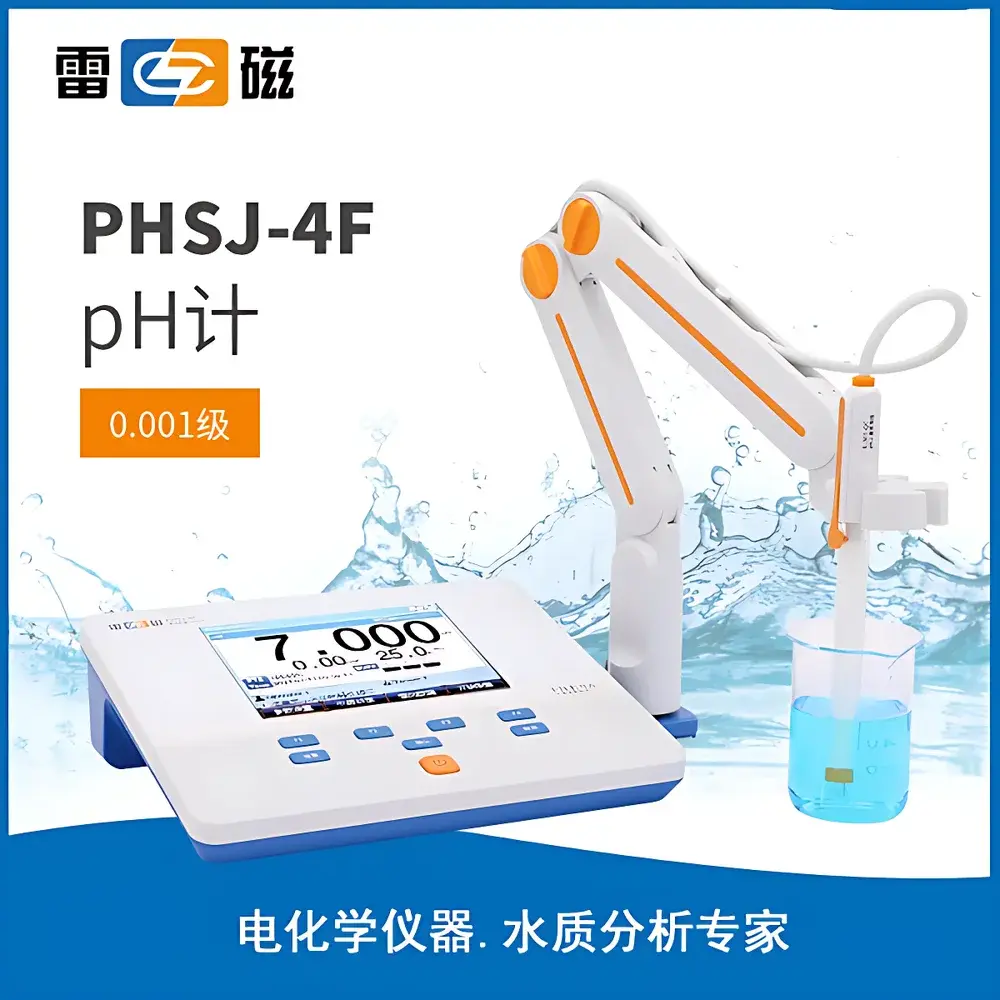
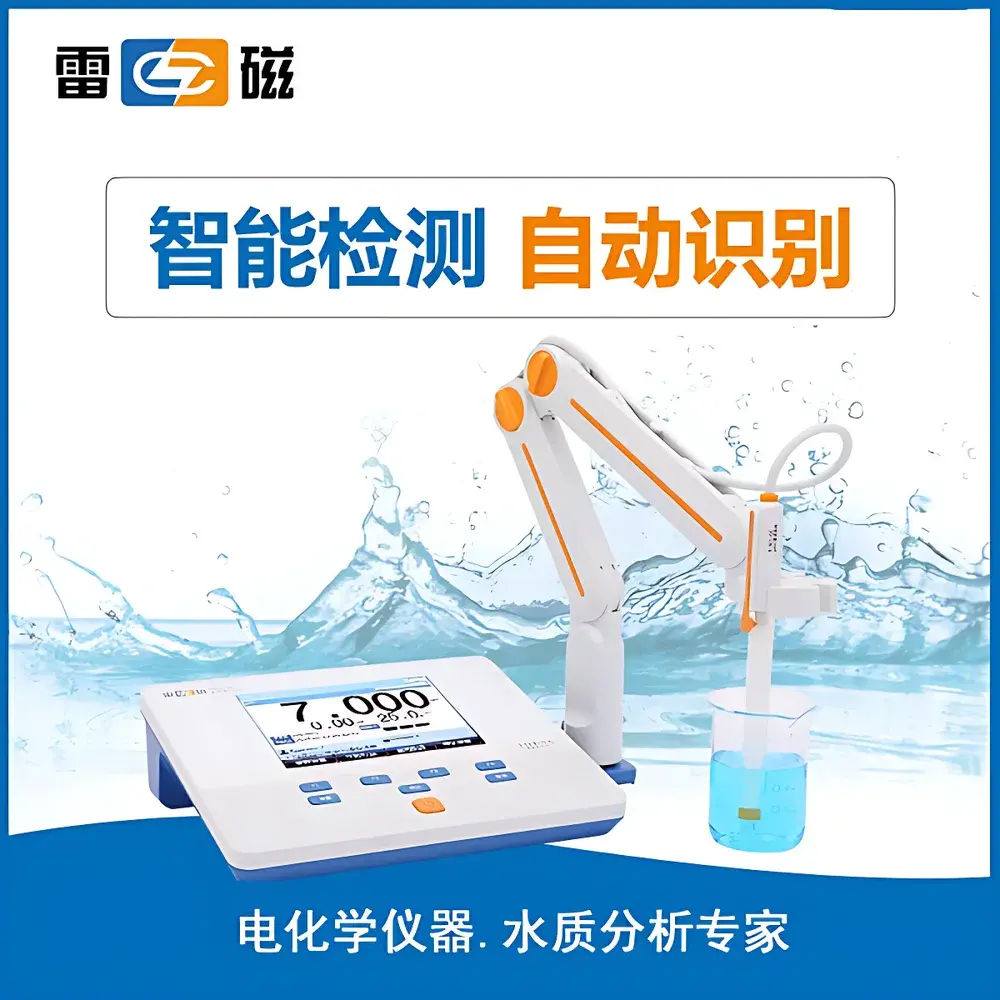
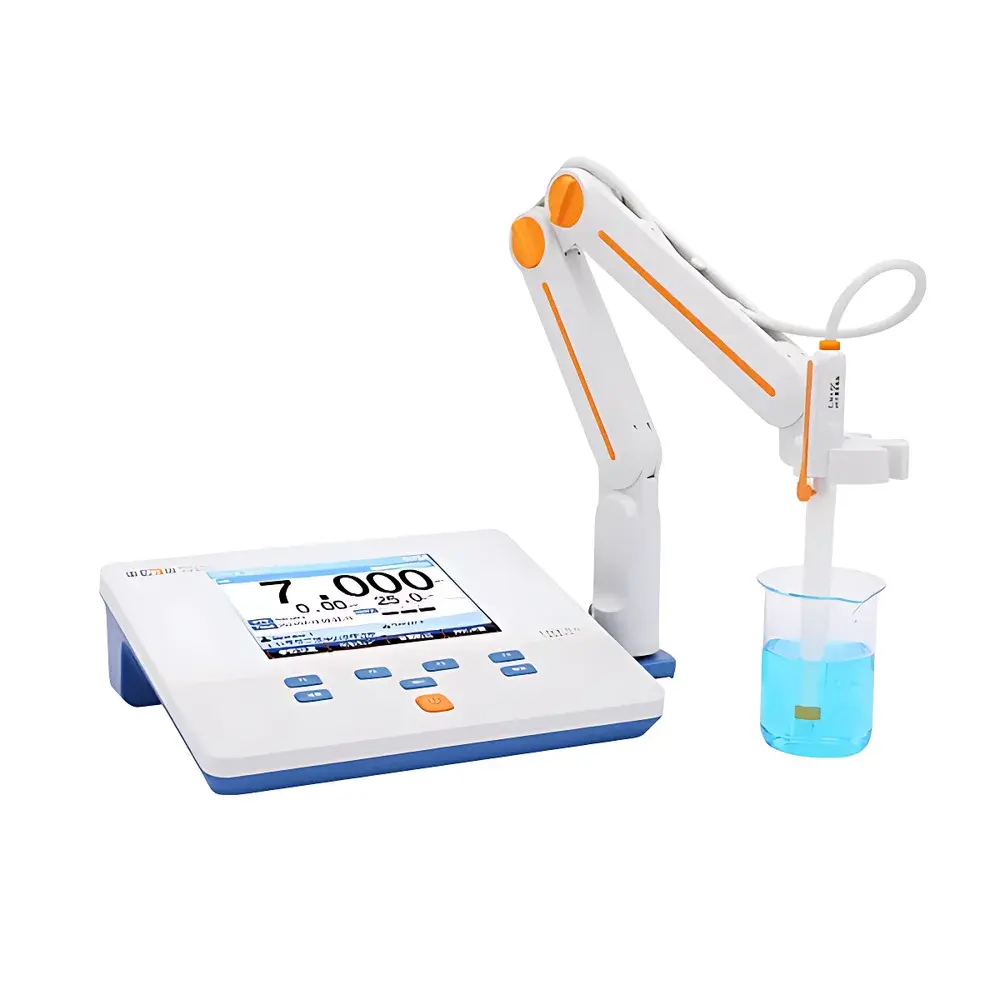
Leici PHSJ-4F Benchtop pH Meter
| Brand | Leici |
|---|---|
| Origin | Shanghai, China |
| Model | PHSJ-4F |
| Instrument Type | Benchtop |
| Parameter Types | pH, mV (ORP), Temperature |
| Measurement Accuracy | ±0.002 pH |
| pH Range | −2.000 to 20.000 pH |
| pH Resolution | 0.001 pH |
| Temperature Range | −5.0 to 110.0 °C |
| Temperature Resolution | 0.1 °C |
| mV Range | −1999.9 to +1999.9 mV |
| mV Resolution | 0.1 mV |
| Stability | ±0.002 pH ±1 digit / 3 h |
| Power Supply | 9 V DC, 800 mA (center-positive) |
| Dimensions | 280 × 215 × 92 mm |
| Weight | 1 kg |
| Data Storage | 500 sets with GLP-compliant metadata (date/time, electrode ID, calibration history, temperature) |
| Calibration | 1–3 point, auto-buffer recognition for 5 standard pH buffers (pH 4.01, 6.86, 7.00, 9.18, 10.01) |
| Connectivity | USB to PC, RS-232 to serial printer |
| Operating Modes | Smart-Read (auto-endpoint detection), Timed-Read (programmable interval storage), Cont-Read (continuous real-time display) |
| Additional Features | Electrode condition alert, calibration due reminder, auto-temperature compensation (ATC), firmware upgradability, power-loss data retention |
Overview
The Leici PHSJ-4F is a high-precision benchtop pH meter engineered for routine and regulatory-compliant pH, mV (ORP), and temperature measurements in academic laboratories, quality control environments, and industrial R&D settings. Built upon potentiometric measurement principles—where the electromotive force (EMF) generated at the interface between a pH-sensitive glass electrode and reference electrode is converted into a quantitative pH value—the PHSJ-4F delivers traceable, reproducible results across an extended pH range of −2.000 to 20.000. Its 0.001-pH resolution and ±0.002-pH basic error meet the performance criteria of a Class 0.001 instrument per Chinese national standard JJG 119–2018 and align with international expectations for GLP-aligned electrochemical instrumentation. The integrated ATC (Automatic Temperature Compensation) module uses a built-in NTC thermistor to correct pH readings in real time based on sample temperature, eliminating manual correction errors and ensuring thermodynamic consistency across variable thermal conditions.
Key Features
- Triple-mode measurement operation: Smart-Read (intelligent endpoint detection with configurable stability threshold), Timed-Read (user-defined interval logging for kinetic studies), and Cont-Read (real-time continuous display for dynamic process monitoring)
- GLP-compliant data management: Stores up to 500 complete measurement records—including timestamp, electrode identification, calibration status, ambient temperature, and operator ID—with immutable audit trails
- Intelligent calibration system: Auto-recognition of five standard IUPAC-recommended buffer solutions (pH 4.01, 6.86, 7.00, 9.18, 10.01) and support for 1-, 2-, or 3-point calibration with slope and offset diagnostics
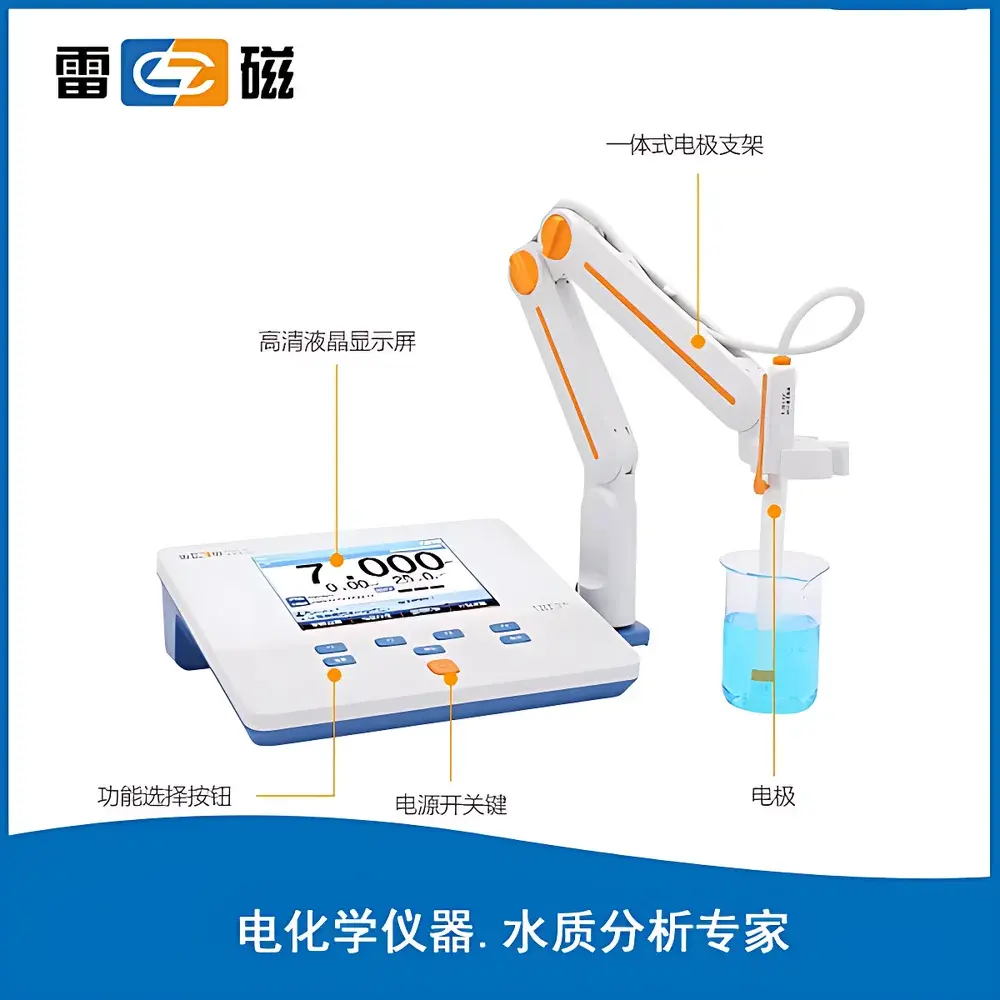
- Durable human-machine interface: Rugged polycarbonate front panel with tactile membrane keys; high-contrast dot-matrix LCD displaying simultaneous pH/mV/°C values plus status icons (e.g., electrode health, calibration due, ATC active)
- Robust data connectivity: Native USB interface for direct communication with Windows-based laboratory software (e.g., Leici LabSuite); RS-232 serial port for direct printing to compatible thermal or dot-matrix printers
- Embedded system reliability: Non-volatile memory retains all settings and stored data during power interruption; field-upgradable firmware ensures long-term compatibility with evolving software and compliance requirements
Sample Compatibility & Compliance
The PHSJ-4F is compatible with all standard BNC-input combination pH electrodes and separate half-cell configurations (e.g., Ag/AgCl double-junction reference + glass sensing electrode). It supports aqueous, low-ionic-strength, high-salinity, and mildly corrosive samples within its specified operating temperature range (−5.0 to 110.0 °C). While not intrinsically rated for hazardous locations, it complies with GB/T 18268.1–2010 (equivalent to IEC 61326-1) for electromagnetic compatibility in laboratory environments. Its data structure and metadata capture satisfy core elements of FDA 21 CFR Part 11 for electronic records when used with validated software and access controls. All calibration and measurement logs include mandatory GLP fields—date, time, operator, electrode serial number, buffer lot numbers, and measured slope (%R)—enabling full traceability in regulated QC workflows.
Software & Data Management
The PHSJ-4F operates as a standalone instrument but integrates seamlessly into centralized lab informatics systems via its bidirectional USB interface. When connected to Leici LabSuite or third-party compliant software (e.g., LabArchives, Empower), users can export CSV-formatted datasets containing raw EMF, compensated pH, temperature, electrode impedance, and calibration diagnostics. The internal memory maintains chronological integrity and prevents overwriting of existing entries without explicit user confirmation. Printouts—generated via RS-232—include header information (instrument ID, date/time, operator), measurement table, calibration summary, and footer signature line, supporting paper-based SOP adherence where required. Firmware updates are delivered as signed binary packages, verified prior to installation to ensure system integrity and prevent unauthorized modification.
Applications
- Pharmaceutical QC: Dissolution media pH verification per USP <791>; buffer preparation validation in API synthesis
- Environmental testing: Acid rain analysis (pH <2), alkaline leachate monitoring (pH >14) in landfill studies
- Food & beverage: Fermentation broth tracking, dairy product titratable acidity correlation, shelf-life stability testing
- Academic research: Electrode characterization, pKa determination of weak acids, redox potential mapping in electrochemical cells
- Water treatment: Coagulant dosing optimization, membrane fouling assessment via zeta potential proxy (mV trends)
FAQ
What calibration buffers are auto-recognized by the PHSJ-4F?
The instrument identifies five standard pH buffers: 4.01, 6.86, 7.00, 9.18, and 10.01 at 25 °C. Recognition is based on measured EMF and temperature-corrected theoretical values per NIST SRM protocols.
Does the PHSJ-4F support differential pH measurement (ΔpH)?
No—it reports absolute pH, mV, and temperature values only. Delta calculations must be performed externally using exported data.
Can the device store electrode-specific calibration curves?
Yes. Each calibration event is tagged with electrode ID (manually entered), enabling retrospective performance trending and lifetime evaluation per electrode.
Is the USB interface compatible with macOS or Linux?
The native USB port implements CDC ACM class protocol; driver-free operation is confirmed on Windows 10/11. macOS and Linux support requires custom serial terminal configuration and is not officially validated by Leici.
How is GLP compliance enforced in data storage?
All 500 memory slots enforce mandatory timestamping and prevent deletion without administrator-level password authentication. Calibration history is appended to each measurement record, satisfying ALCOA+ principles (Attributable, Legible, Contemporaneous, Original, Accurate, Complete, Consistent, Enduring, Available).





