
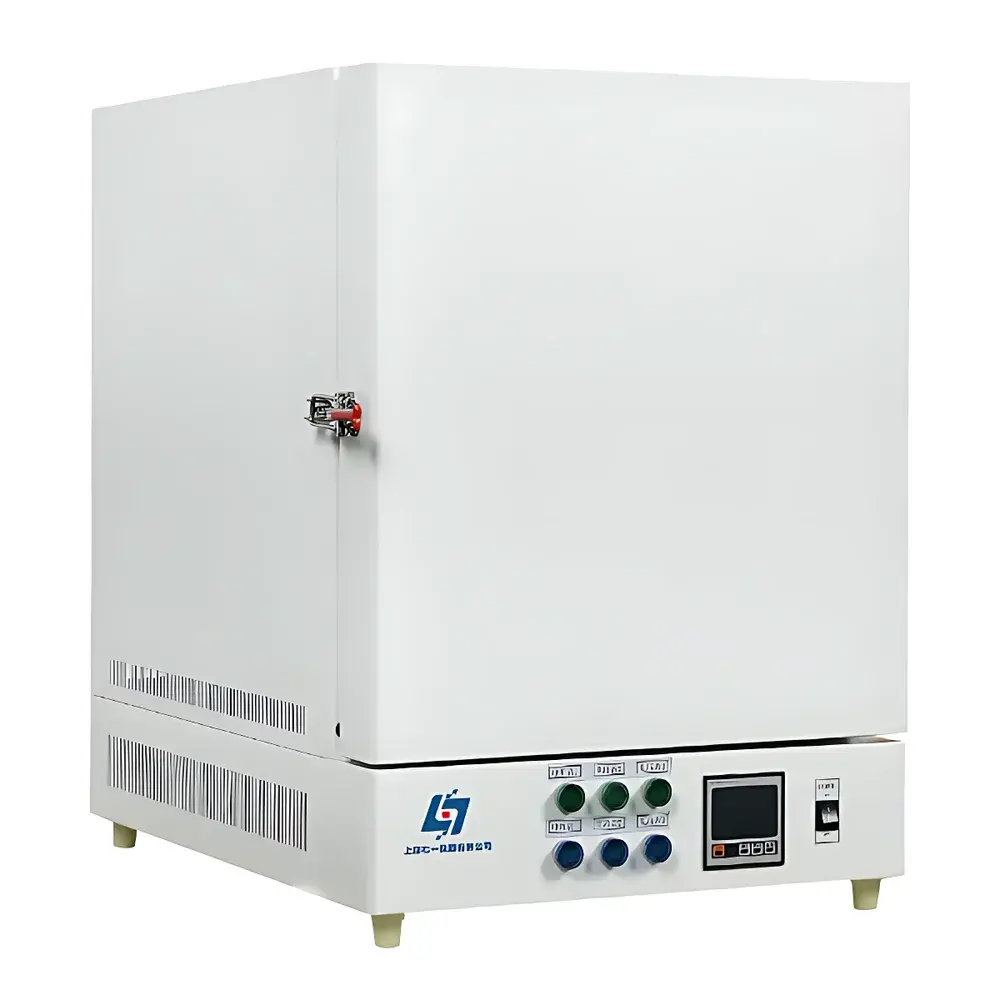
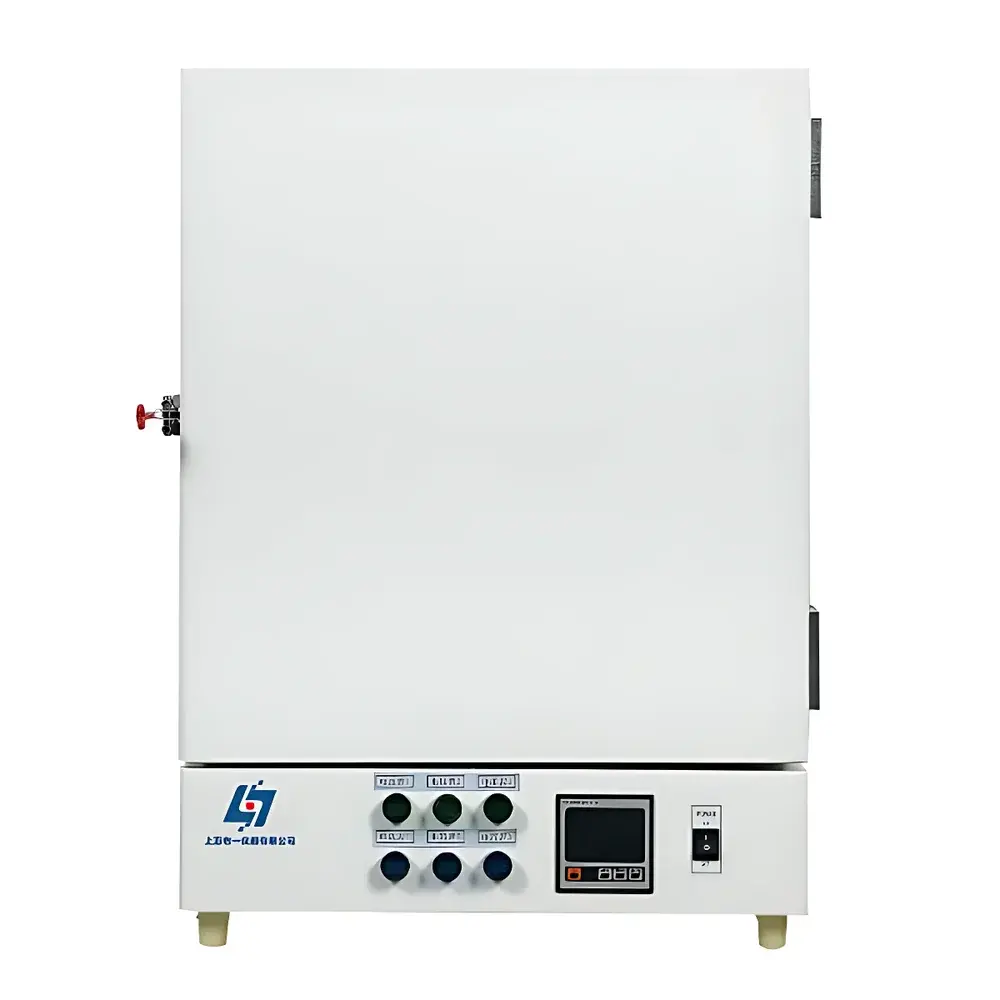
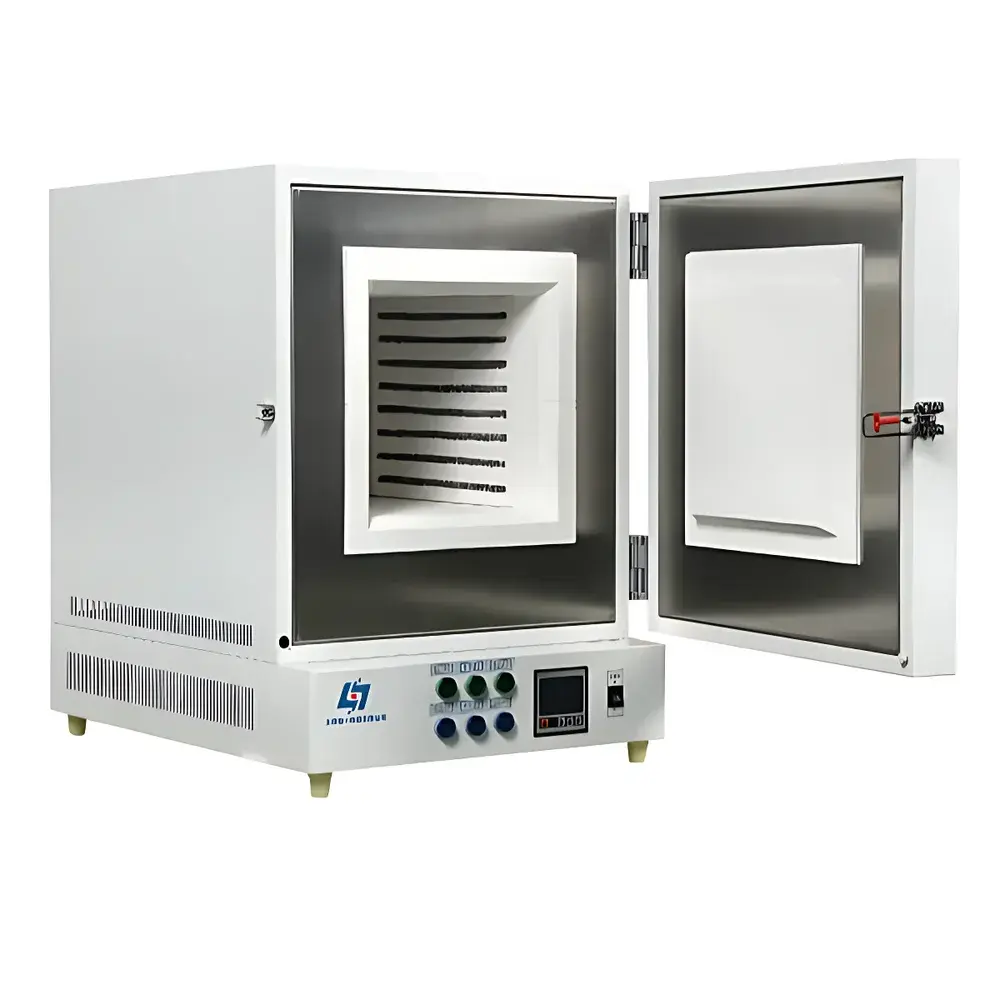
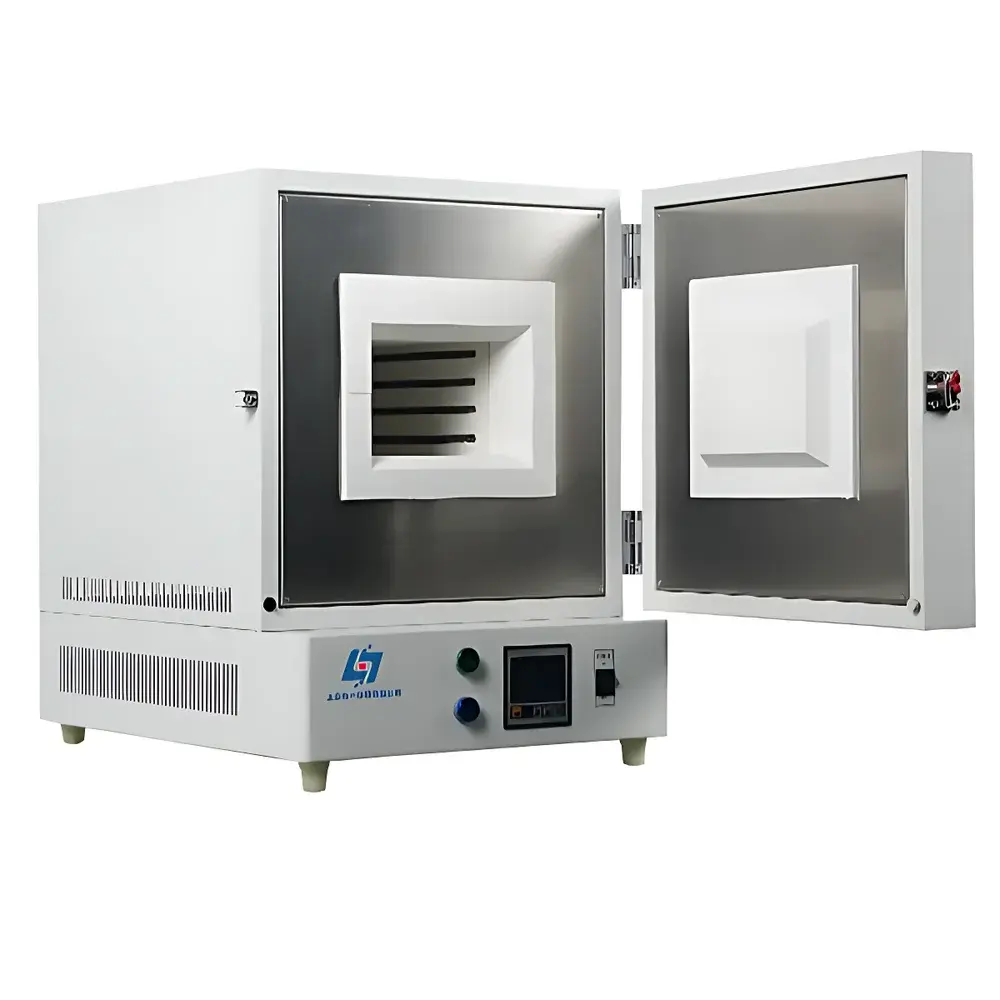
Yoyi SX2-8-10A Ceramic Fiber Muffle Furnace (1000 °C Box-Type Laboratory Furnace)
| Brand | Yoyi |
|---|---|
| Origin | Shanghai, China |
| Manufacturer Type | Direct Manufacturer |
| Instrument Type | Box-Type Muffle Furnace |
| Max Temperature | 1000 °C |
| Temperature Control Accuracy | ±1 °C |
| Rated Power | 8 kW |
| Heating Element | Ni-Cr Resistance Wire (Mo-doped for 1000 °C stability) |
| Internal Chamber Dimensions | 250 × 400 × 160 mm |
| Nominal Volume | 16 L |
| Voltage | 380 V AC, 3-phase |
| Insulation | Dual-layer ceramic fiber board (high-purity alumina-silica, ≥1260 °C service rating) |
| Control System | Microprocessor-based PID controller with LCD interface, programmable ramp/soak profiles, auto-recovery after power interruption, real-time data display (setpoint, actual temperature, elapsed/remaining time) |
Overview
The Yoyi SX2-8-10A is a high-performance, energy-efficient ceramic fiber muffle furnace engineered for precise thermal processing in research laboratories, materials science facilities, and quality control environments. It operates on the principle of resistive heating via Mo-doped nickel-chromium alloy wire embedded in a low-conductivity, high-temperature ceramic fiber insulation matrix. This architecture enables rapid thermal response, exceptional temperature uniformity (±3 °C across the working zone at 1000 °C), and minimal thermal mass—critical for applications requiring controlled heating rates, short soak durations, or frequent thermal cycling. Unlike traditional brick-lined furnaces, the SX2-8-10A eliminates thermal lag and reduces standby losses, making it suitable for ASTM C1171 (ceramic sintering), ISO 11358 (thermogravimetric analysis support), and USP heavy metal residue ashing protocols.
Key Features
- Lightweight ceramic fiber chamber (density ≈ 220 kg/m³) offering 60% lower thermal inertia than refractory brick—enabling typical ramp rates up to 15 °C/min from ambient to 1000 °C
- Dual-layer insulation system: primary hot-face layer (1260 °C-rated ceramic fiber board) + secondary structural barrier (low-conductivity fiber blanket), limiting external surface temperature to ≤50 °C at steady-state 1000 °C operation
- Robust safety architecture including over-temperature cutoff (independent of main controller), phase-loss detection, earth-leakage protection (30 mA RCD), and thermal fuse redundancy
- Intelligent PID temperature controller with 10-segment programmable ramp-soak capability, real-time deviation monitoring, and non-volatile memory preserving setpoints and alarm history during power failure
- Cold-rolled steel enclosure with phosphate conversion coating and epoxy-polyester electrostatic finish (corrosion-resistant per ISO 9227 neutral salt spray ≥500 h)
- LCD interface supporting simultaneous display of setpoint, measured temperature, elapsed time, remaining hold time, and active program segment
Sample Compatibility & Compliance
The SX2-8-10A accommodates crucibles (alumina, quartz, silicon carbide), sintering boats, sample holders, and standard ASTM E112 grain-size test specimens within its 16 L workspace. Its uniformity profile meets ISO/IEC 17025 calibration requirements for furnace validation when operated with traceable Pt/Pt–13%Rh thermocouples (Type S). The unit complies with IEC 61000-6-3 (EMC emissions), IEC 61000-6-2 (immunity), and UL 61010-1 (safety for laboratory equipment). Optional RS485 Modbus RTU interface supports integration into GLP/GMP-compliant data acquisition systems with audit-trail functionality per FDA 21 CFR Part 11 when paired with validated software.
Software & Data Management
While the base unit operates autonomously via front-panel controls, optional RS485 communication enables bidirectional data exchange with third-party SCADA or LIMS platforms. The included PC software (Windows-compatible) logs timestamped temperature readings at user-defined intervals (1–60 s), generates CSV-exportable reports, and supports graphical overlay of multiple runs for comparative thermal profiling. All logged data includes operator ID, instrument serial number, environmental timestamp, and digital signature metadata—fulfilling ALCOA+ principles (Attributable, Legible, Contemporaneous, Original, Accurate, Complete, Consistent, Enduring, Available).
Applications
- Thermal treatment of advanced ceramics (sintering of ZrO₂, Al₂O₃, Si₃N₄) under air or inert gas purge (requires optional gas inlet kit)
- Residue ashing per AOAC 942.05 and EPA Method 3050B for heavy metal quantification in environmental and food matrices
- Heat treatment of metallurgical samples: annealing, stress relieving, and tempering of tool steels and aluminum alloys
- Pre-firing of catalyst supports and battery electrode materials (e.g., LiCoO₂, NMC precursors)
- Calibration reference source for infrared pyrometer verification (within ±1 °C uncertainty band at 1000 °C using certified blackbody cavity insert)
- Thermogravimetric pre-conditioning of TGA sample pans and crucibles prior to high-sensitivity mass measurement
FAQ
What is the maximum recommended continuous operating temperature?
The SX2-8-10A is rated for continuous operation at 1000 °C. Extended use above 950 °C requires periodic verification of thermocouple drift and heating element resistance.
Can this furnace be used under vacuum or controlled atmosphere?
No—this is an open-air muffle design. For inert or reducing atmospheres, a dedicated tube furnace or sealed box furnace with gas-tight flanges and pressure relief is required.
Does the furnace include a calibration certificate?
Factory calibration is performed at three points (200 °C, 600 °C, 1000 °C) using NIST-traceable reference thermometers; a test report is supplied. ISO/IEC 17025-accredited calibration is available as an add-on service.
What maintenance is required for long-term accuracy?
Annual inspection of thermocouple integrity, visual check of ceramic fiber integrity (no cracking or dusting), and verification of door gasket compression force are recommended. Heating element resistance should be measured quarterly.
Is the controller compatible with LabVIEW or Python-based automation?
Yes—the RS485 interface supports Modbus RTU protocol. Driver libraries for LabVIEW (NI-VISA), Python (pymodbus), and MATLAB are provided with the optional communication module.
Related Products



