
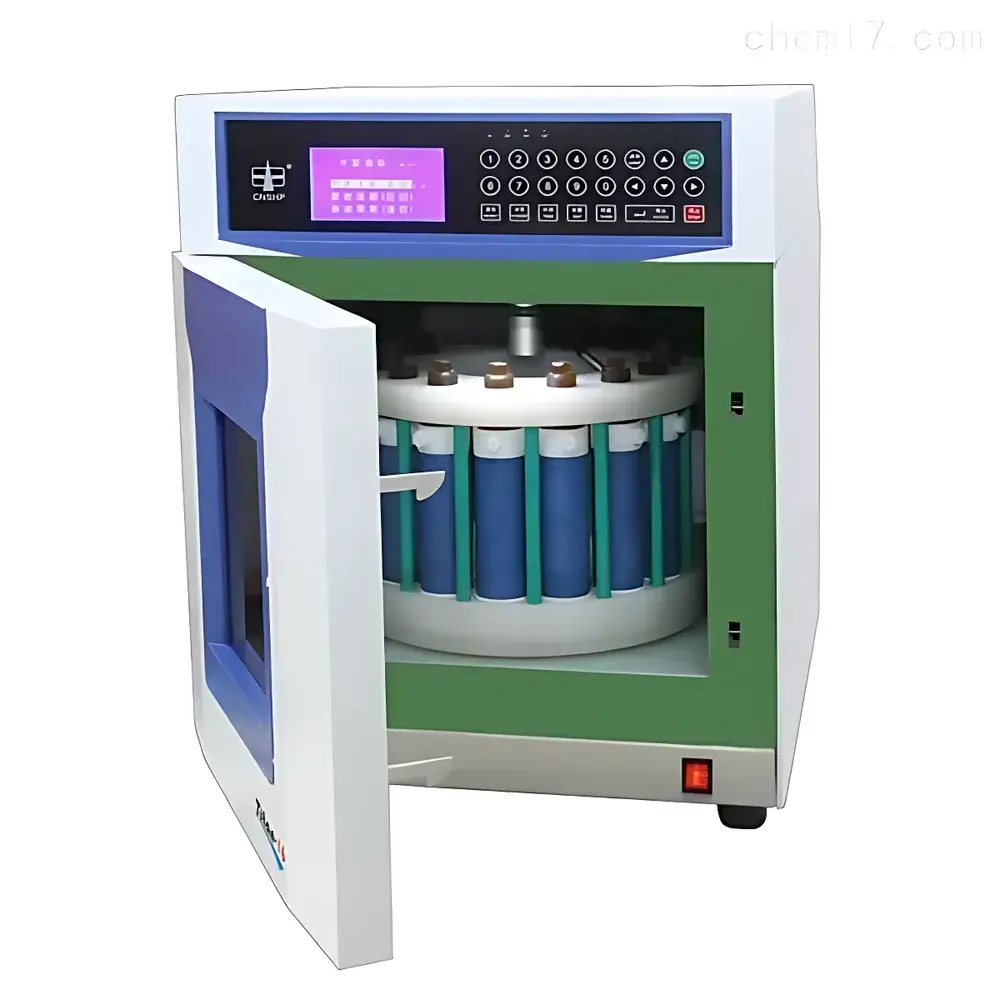
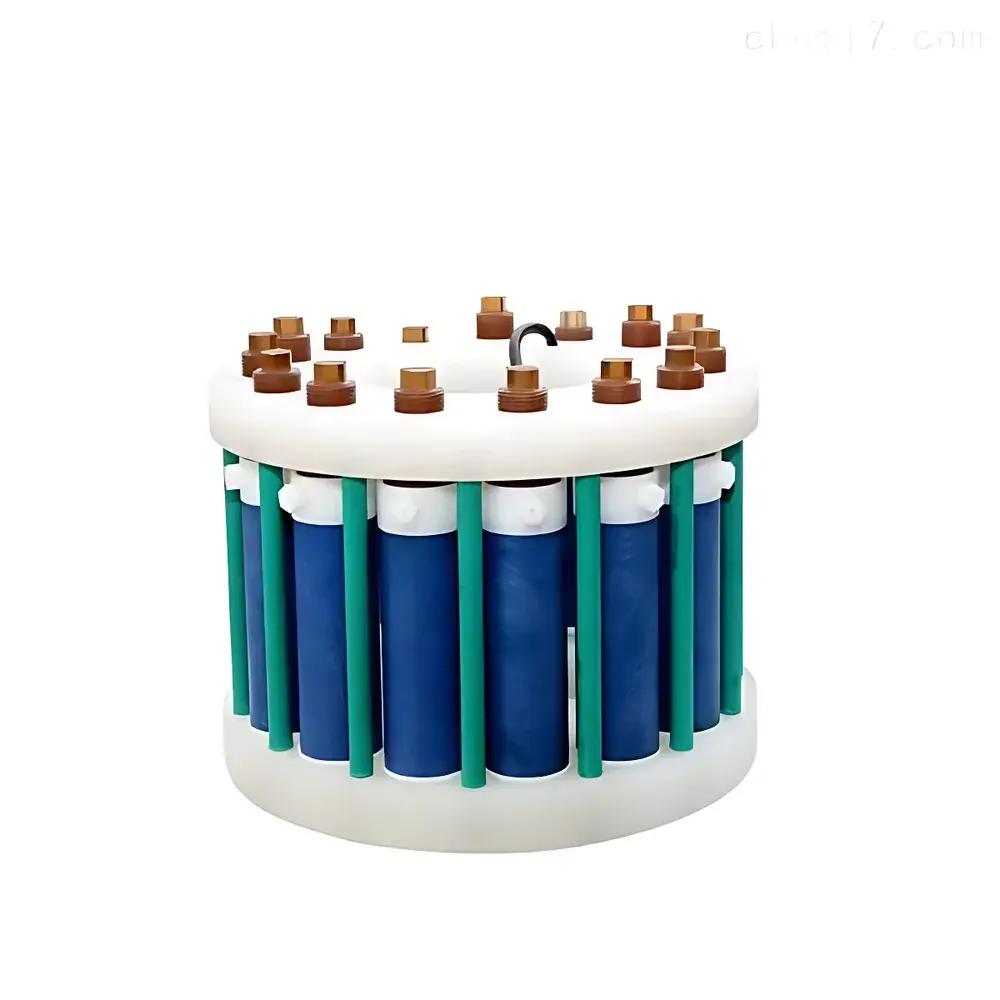
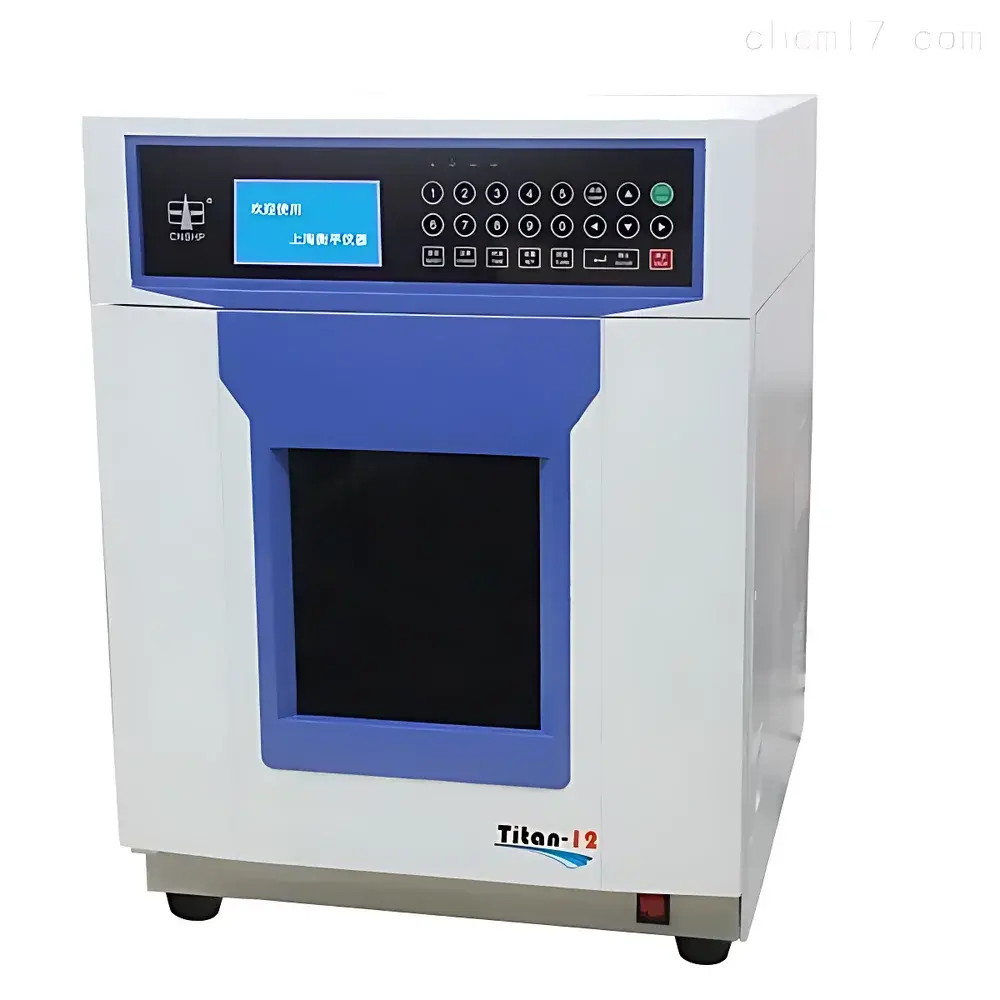
yoyilab TITAN12B 12-Position High-Throughput Microwave Digestion System with Dual Magnetron
| Key | Brand: yoyilab |
|---|---|
| Origin | Shanghai, China |
| Manufacturer Type | OEM Manufacturer |
| Model | TITAN12B |
| Cavity Class | Industrial-Grade |
| Batch Capacity | 12 samples |
| Microwave Source | Dual Magnetron (3600 W total output) |
| Max Temperature | 300 °C |
| Max Pressure | 20 MPa |
| Cavity Material | 316L Stainless Steel |
| Cavity Coating | 8-layer PFA fluoropolymer |
| Outer Vessel Material | Aerospace-grade composite fiber with full PFA encapsulation (rated to 85 MPa) |
| Temperature Sensor | High-precision Pt1000 RTD (−40–500 °C, ±0.1 °C control accuracy) |
| Pressure Sensor | Piezoelectric crystal transducer (0–20 MPa, ±0.01 MPa control accuracy, ±0.1 MPa display resolution) |
| Rotation | Unidirectional continuous rotation |
| Safety Systems | Active real-time monitoring + passive pressure-relief (bow-spring module + burst disc), auto-ejecting safety door, triple-lock interlock, multi-point LED status feedback |
Overview
The yoyilab TITAN12B is an industrial-grade, high-throughput microwave digestion system engineered for rigorous sample preparation in environmental, geological, pharmaceutical, food safety, and clinical laboratories. It operates on the principle of controlled microwave energy absorption—where polar molecules (e.g., H2O, HNO3, HF) rapidly rotate under a 2450 MHz electromagnetic field—generating uniform volumetric heating within sealed quartz or high-performance polymer vessels. Unlike open-vessel hotplate digestion, this closed-vessel approach enables rapid, reproducible decomposition of complex matrices (e.g., soils, biological tissues, polymers, alloys) under elevated temperature (up to 300 °C) and pressure (up to 20 MPa), minimizing analyte loss, contamination risk, and reagent blank contribution. The dual-magnetron configuration delivers 3600 W total microwave power with automatic frequency tuning—ensuring stable energy coupling across variable load conditions and eliminating thermal hotspots common in pulsed-power systems.
Key Features
- Industrial Cavity Architecture: Constructed from electropolished 316L stainless steel with eight-layer PFA fluoropolymer coating—providing exceptional resistance to aggressive acid mixtures (aqua regia, HF/HNO3, perchloric acid vapors) and extending service life beyond typical commercial-grade systems.
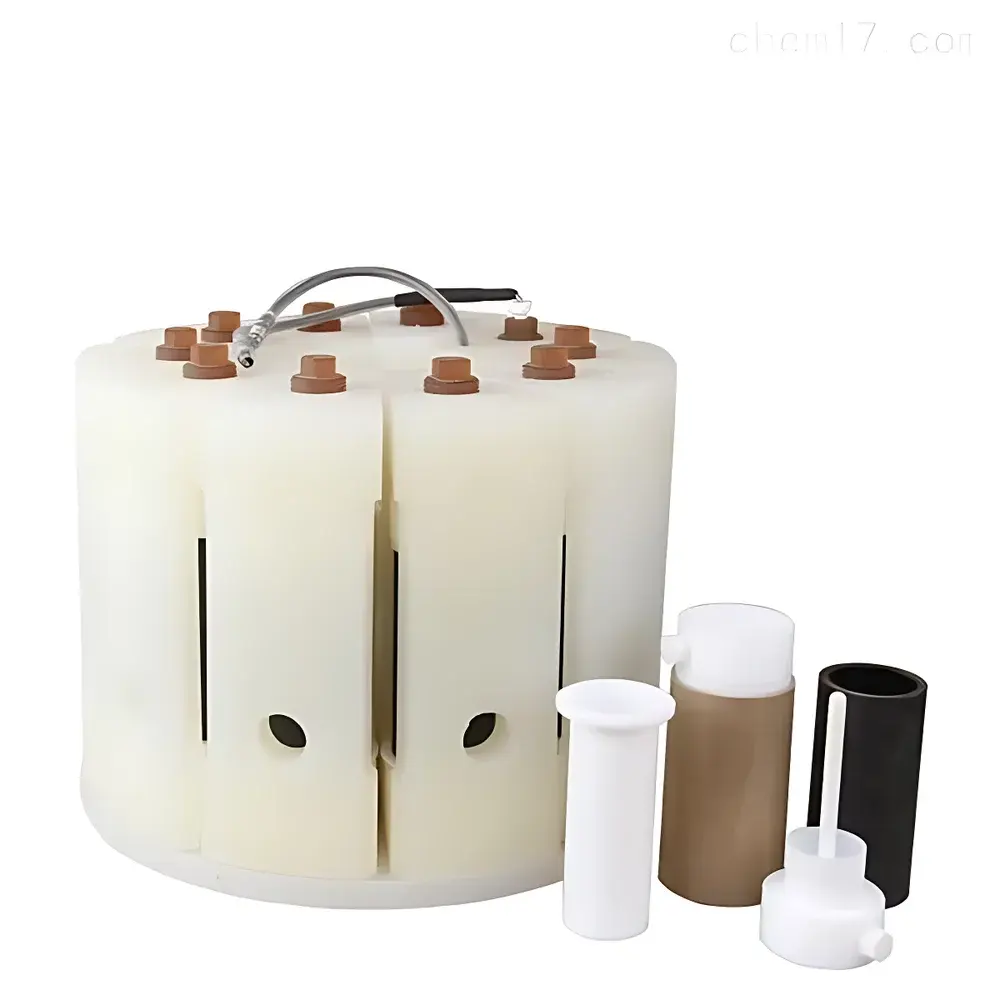
- Patented Composite Outer Vessels: Fully encapsulated aerospace composite fiber outer vessels coated via PFA spray process—rated to 85 MPa burst pressure and chemically inert up to 300 °C. This design eliminates structural degradation observed in conventional PEEK-based vessels exposed to prolonged HF or high-temperature nitric acid environments.
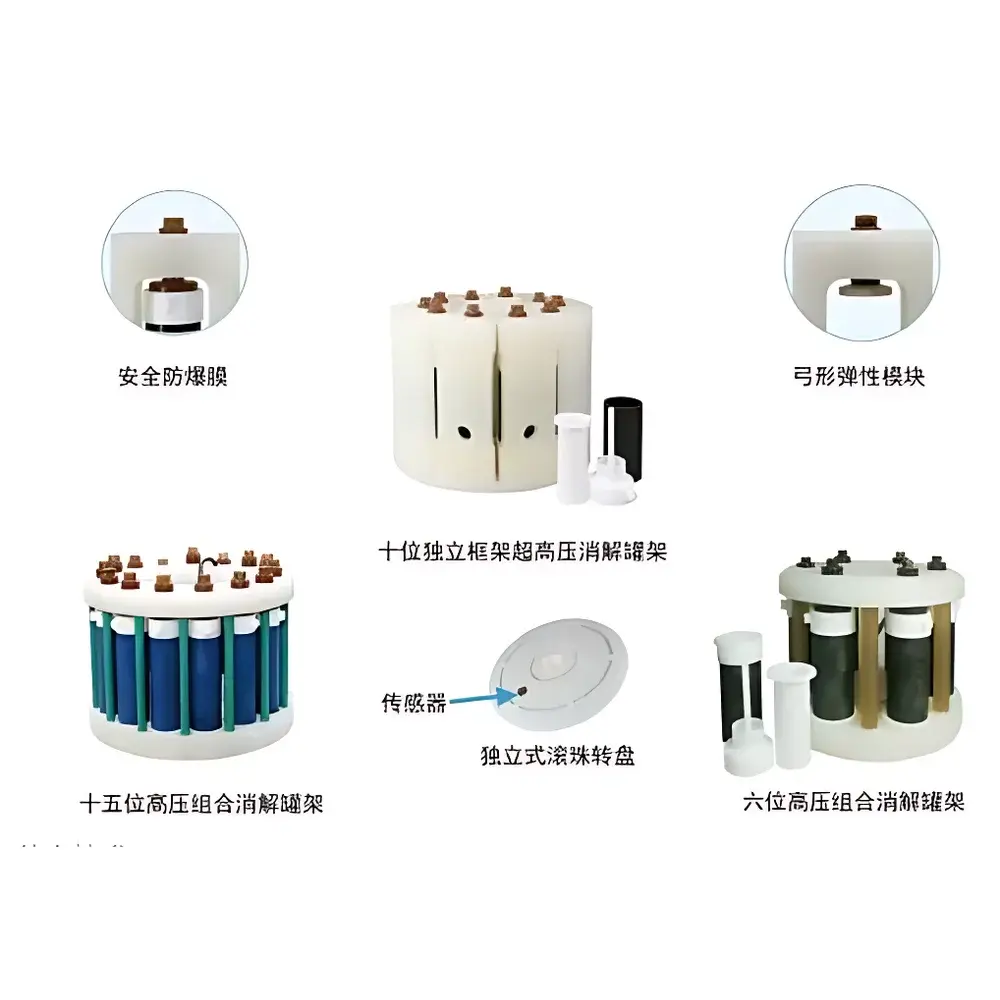
- Three-Dimensional Passive Safety: Integrates bow-spring pressure-limiting modules and calibrated rupture discs for quantitative overpressure release; combined with an auto-ejecting safety door that vents laterally upon catastrophic overpressure—diverting gas flow away from operator position per ISO/IEC 17025-aligned hazard mitigation protocols.
- Real-Time Active Monitoring Suite: Dedicated LED indicators on the control panel provide simultaneous visual feedback for door interlock status, magnetron emission, rotor rotation continuity, and keypress registration—enabling remote operational verification without physical proximity to the cavity.
- PID-Controlled Closed-Loop Regulation: Uses high-fidelity Pt1000 RTD sensors and piezoelectric pressure transducers to dynamically modulate microwave output—achieving ±0.1 °C temperature control and ±0.01 MPa pressure regulation during ramp-and-hold sequences per ASTM D5511, EPA Method 3052, and ISO 11885 requirements.
Sample Compatibility & Compliance
The TITAN12B accommodates standardized 55 mL or 100 mL high-pressure digestion vessels—including quartz, TF-1000 (PTFE/PFA hybrid), and custom-designed rotors compatible with ICP-MS, AAS, and ICP-OES workflows. Its 12-position rotor supports batch processing of heterogeneous samples while maintaining individual vessel pressure independence—critical for regulatory-compliant digestion of mixed-certified reference materials (CRMs). The system conforms to electromagnetic compatibility standards (EN 61326-1), pressure equipment directives (PED 2014/68/EU), and laboratory safety guidelines (ANSI Z9.5, ISO 15190). Full audit trail capability—including user login, method parameters, temperature/pressure profiles, and alarm logs—is configurable to meet FDA 21 CFR Part 11 and GLP/GMP documentation requirements when paired with validated software modules.
Software & Data Management
The embedded operating system supports method-driven operation with up to 50 programmable digestion protocols—each storing ramp rates, hold times, maximum setpoints, and safety thresholds. All sensor data (temperature, pressure, power, rotation speed) are time-stamped at 100 ms intervals and exported in CSV or XML format for LIMS integration. Optional PC-based software provides advanced analytics—including derivative curve analysis for reaction endpoint detection, comparative overlay of replicate runs, and automated pass/fail evaluation against predefined QC limits. Electronic signatures, role-based access control, and encrypted database storage ensure compliance with data integrity frameworks such as ALCOA+ and Annex 11.
Applications
- Environmental analysis: Total metal quantification in sediments, sludges, and airborne particulates (EPA 3052, ISO 11885)
- Geochemical testing: Rare earth element (REE) extraction from silicate rocks and ores
- Pharmaceutical QA/QC: Residual catalyst metal determination in active pharmaceutical ingredients (USP <232>)
- Food safety: Lead, cadmium, and arsenic screening in fortified cereals and infant formula (AOAC 999.10)
- Clinical research: Trace element profiling in serum, whole blood, and hair matrices using ICP-MS
- Materials science: Digestion of Ni-based superalloys, ceramic composites, and battery cathode materials prior to elemental mapping
FAQ
What distinguishes the dual-magnetron architecture from single-magnetron systems?
Dual magnetrons enable higher total power delivery (3600 W vs. 1800 W) with improved field homogeneity and redundancy—reducing digestion time by up to 35% for refractory samples while maintaining consistent thermal distribution across all 12 positions.
Can the TITAN12B be integrated into automated lab workflows?
Yes—the system features RS-232, Ethernet, and optional USB device ports supporting SCPI command sets for bidirectional communication with robotic sample handlers and LIMS platforms.
Is the outer vessel material compliant with HF-based digestion protocols?
Absolutely—the fully PFA-encapsulated composite fiber construction resists HF penetration and thermal deformation up to 300 °C, unlike standard PEEK which degrades above 220 °C in hydrofluoric acid environments.
How does the unidirectional rotor rotation improve reproducibility?
Continuous rotation eliminates stop-start inertia and ensures uniform microwave exposure per vessel—eliminating cold spots and reducing inter-vial RSDs to ≤2.1% for Cr in NIST SRM 1643e digestions.
What validation documentation is provided with the instrument?
Each unit ships with Factory Acceptance Test (FAT) reports, calibration certificates traceable to NIST standards for temperature and pressure sensors, and a comprehensive Installation Qualification (IQ) / Operational Qualification (OQ) protocol package aligned with ISO/IEC 17025 clause 6.4.



