
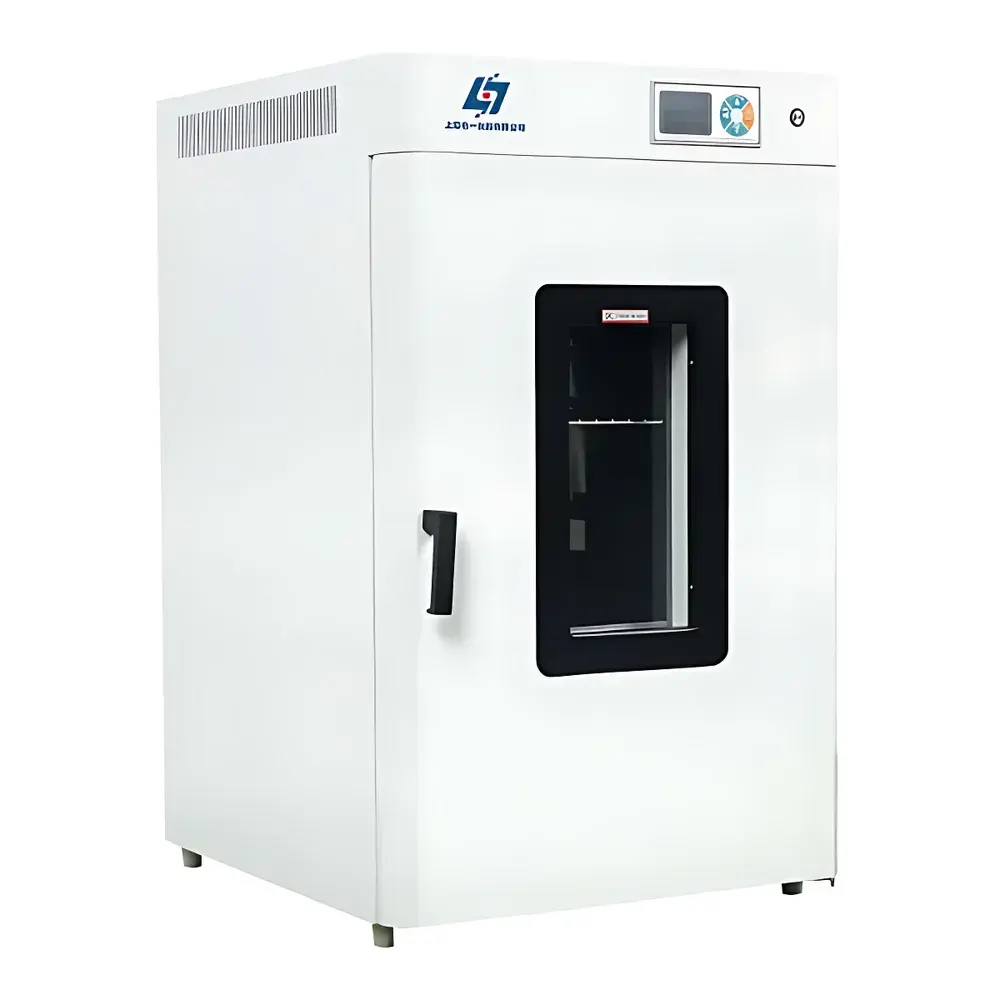
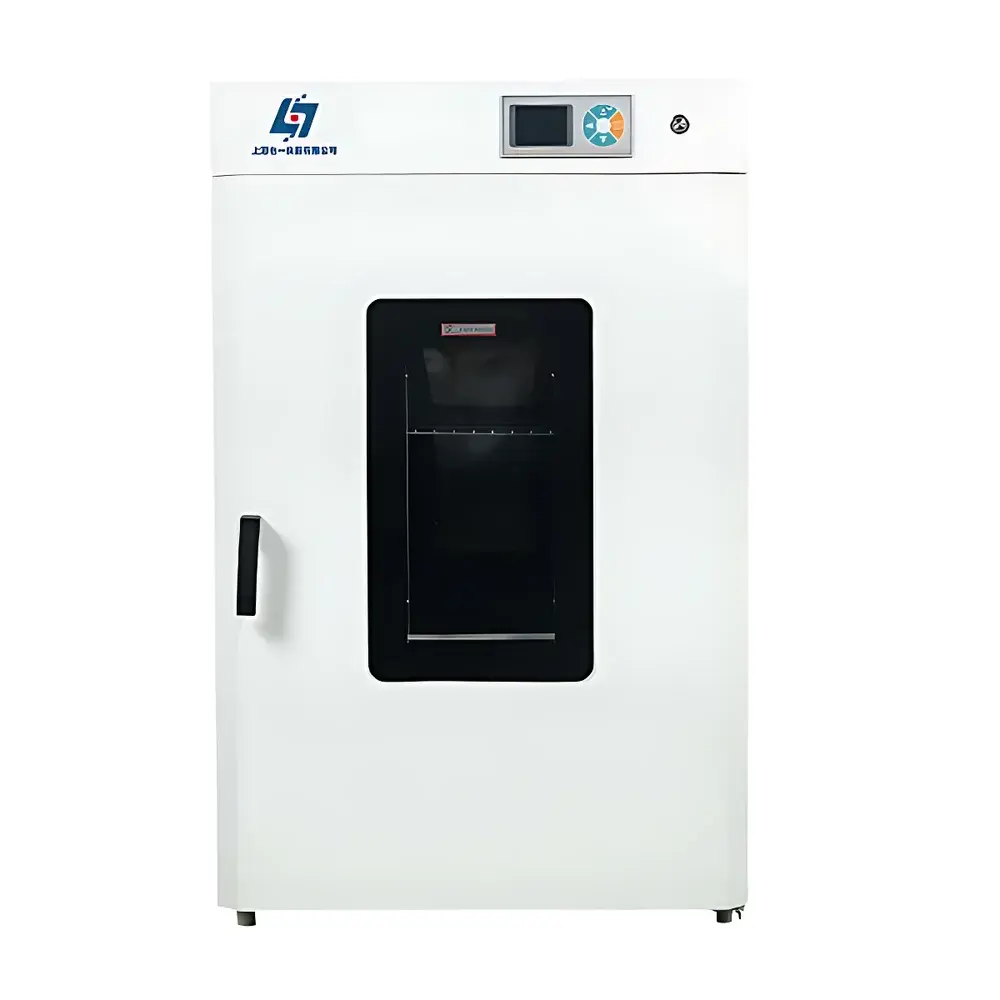
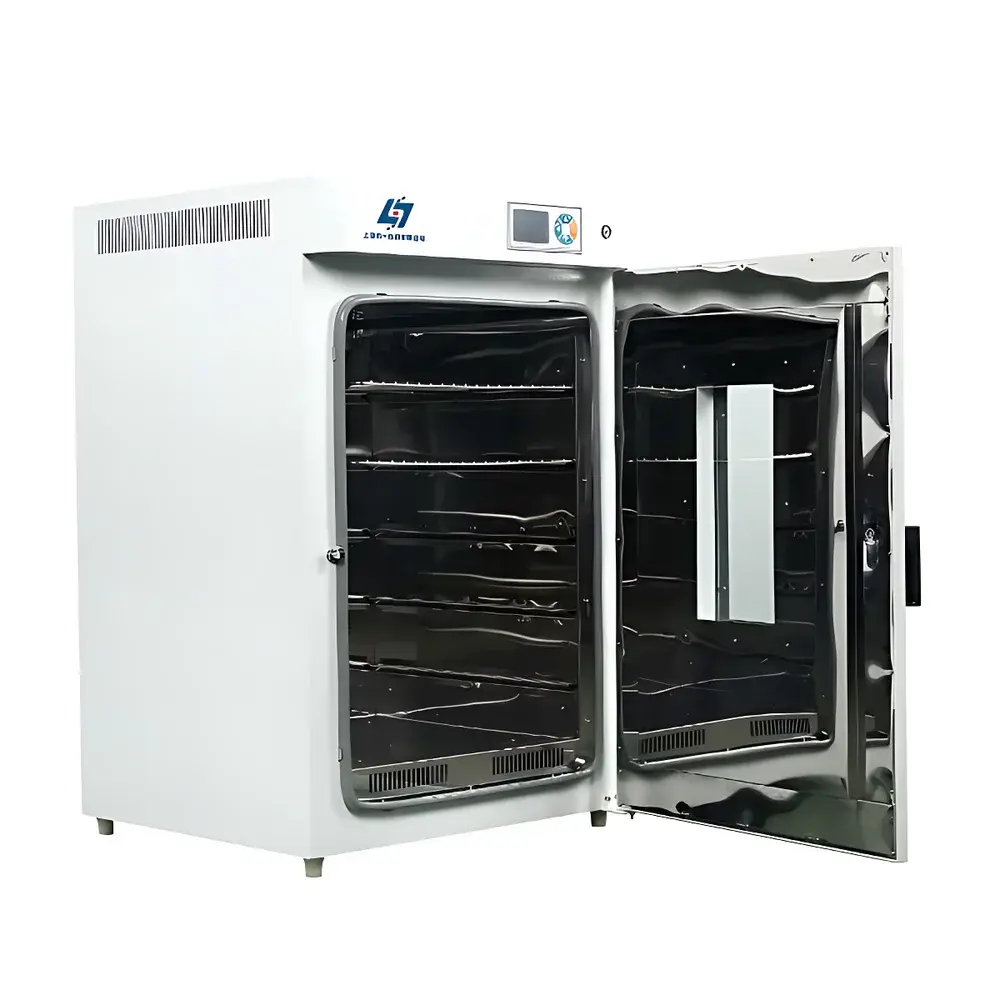
Yoyi LHG-9245A Vertical Forced-Air Constant-Temperature Drying Oven
| Brand | Yoyi |
|---|---|
| Origin | Shanghai, China |
| Manufacturer Type | Direct Manufacturer |
| Country of Origin | China |
| Model | LHG-9245A |
| Instrument Category | Precision Drying Oven |
| Temperature Range | RT+10°C to 300°C |
| Temperature Uniformity (Empty Chamber, 100°C) | ±2.5% |
| Temperature Fluctuation | ±1.0°C |
| External Dimensions (W×D×H) | 680×800×1205 mm |
| Internal Chamber Dimensions (W×D×H) | 500×600×750 mm |
| Internal Chamber Material | Mirror-Finish Stainless Steel (SUS304) |
| Heating Method | Electric Resistance Heating |
| Power Input | 2500 W |
| Timer Range | 1–9999 min |
| Temperature Resolution | 0.1°C |
| Air Circulation | Adjustable Forced-Air Convection with Rear Intake/Exhaust Ports |
| Optional Accessories | RS485 Interface & Data Logging Software, Embedded Thermal Printer, Inert Gas Inlet Port with Float Flowmeter, Multi-Stage Programmable Controller, Independent Over-Temperature Cut-Off System, Adjustable Fan Speed Module, Optional Test Ports (25 mm / 50 mm) |
Overview
The Yoyi LHG-9245A is a vertically oriented, forced-air constant-temperature drying oven engineered for precision thermal processing in research laboratories, quality control environments, and industrial R&D settings. It operates on the principle of convection-driven heat transfer, utilizing a rear-mounted, dynamically balanced centrifugal blower to generate uniform airflow across the stainless-steel chamber. This architecture ensures consistent thermal distribution—critical for applications requiring reproducible drying kinetics, moisture loss profiling, or thermal stabilization of sensitive samples. Designed and validated in accordance with GB/T 30435–2013 (Chinese national standard for electrically heated forced-air ovens), the LHG-9245A meets foundational requirements for temperature stability, uniformity, and safety applicable to ISO/IEC 17025-accredited testing laboratories. Its operational envelope spans from ambient +10°C to 300°C, supporting protocols ranging from low-temperature desiccation of biological specimens to high-temperature polymer curing and residual solvent removal.
Key Features
- Microprocessor-based PID temperature controller with intuitive LCD menu interface—displays setpoint, real-time chamber temperature, elapsed time, and remaining hold duration simultaneously
- Mirror-finish SUS304 stainless-steel interior chamber with seamless welded corners and removable, height-adjustable stainless-steel shelves (2 standard trays included)
- Dual-layer tempered glass observation window with silicone-gasketed door seal—enables visual monitoring without thermal disturbance or condensation buildup
- Optimized air duct design featuring rear intake and top/bottom exhaust ports—facilitates continuous vapor evacuation and prevents internal humidity accumulation during extended drying cycles
- Robust cold-rolled steel exterior with electrostatic epoxy-polyester powder coating—resistant to abrasion, corrosion, and incidental chemical exposure
- Non-volatile memory retention system—preserves user-defined parameters (setpoint, timer, alarm thresholds) during power interruption; automatic resumption upon recovery
- Dedicated over-temperature protection circuit—hardware-independent secondary limit controller interrupts heating if chamber exceeds user-defined threshold (optional accessory)
Sample Compatibility & Compliance
The LHG-9245A accommodates a broad spectrum of sample types—including petri dishes, weighing boats, crucibles, glassware, PCB assemblies, polymer films, pharmaceutical excipients, and botanical matrices—within its 225 L working volume. Its stainless-steel construction complies with Good Manufacturing Practice (GMP) and Good Laboratory Practice (GLP) surface hygiene standards. While not certified to UL/CSA or CE for North American/EU markets, its electrical architecture conforms to IEC 61010-1 safety principles for laboratory equipment. The oven supports validation activities per ASTM E2297 (Standard Guide for Validation of Thermal Processing Equipment) and aligns with temperature uniformity expectations defined in USP for thermal sterilization support processes. All optional accessories—including inert gas inlet kits and RS485 data interfaces—are designed to integrate into 21 CFR Part 11–compliant workflows when paired with validated third-party software.
Software & Data Management
The LHG-9245A supports traceable thermal process documentation via optional RS485 serial interface (Modbus RTU protocol) and bundled PC software, enabling real-time temperature logging, export to CSV/Excel, and generation of audit-ready reports. An embedded thermal printer (optional) provides immediate hardcopy output of cycle start/end timestamps, peak temperatures, and deviation alerts. For advanced process control, the multi-stage programmable temperature controller (optional) allows up to 30 segments with ramp/soak profiles—ideal for thermal aging studies or gradient-based material conditioning. All logged data include timestamping with millisecond resolution, user ID fields, and digital signature capability when integrated with compliant LIMS or ELN platforms.
Applications
- Drying and moisture content determination per AOAC 950.46, ASTM D2272, or ISO 787-2
- Thermal stabilization of reference standards and calibration materials
- Baking of electronic components prior to soldering or encapsulation
- Pre-conditioning of polymers, composites, and adhesives before mechanical testing
- Residual solvent removal from coated substrates in R&D labs
- Low-temperature incubation of culture media and reagent kits (RT+10°C minimum)
- Heat treatment of metallographic samples prior to etching or mounting
- Accelerated aging of packaging materials under controlled thermal stress
FAQ
What is the maximum operating temperature of the LHG-9245A?
The unit is rated for continuous operation up to 300°C—validated under no-load conditions per GB/T 30435–2013.
Does the oven support inert atmosphere processing?
Yes—when equipped with the optional inert gas inlet port and calibrated float flowmeter, users can introduce nitrogen or argon at adjustable flow rates to suppress oxidation during thermal treatment.
Can temperature data be exported for regulatory submission?
Yes—via RS485 interface and compliant software, users may generate FDA 21 CFR Part 11–aligned audit trails including operator ID, timestamped temperature logs, and event annotations.
Is the chamber volume verified and certified?
Chamber dimensions are factory-measured and documented; volumetric verification (e.g., per ASTM E2297 Annex A2) is performed upon request as part of IQ/OQ validation support services.
What maintenance is required to sustain temperature uniformity?
Annual recalibration of the primary Pt100 sensor and blower motor performance check are recommended; door gasket integrity should be visually inspected before each use.



