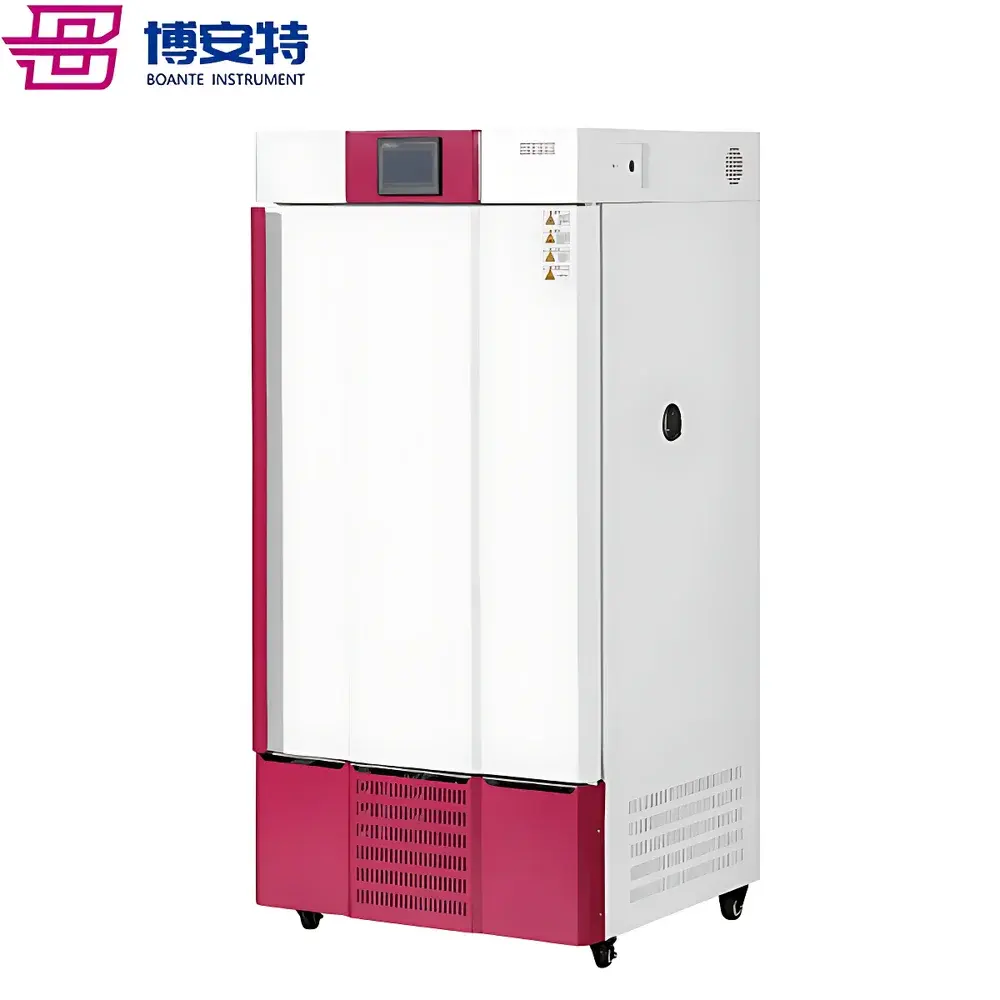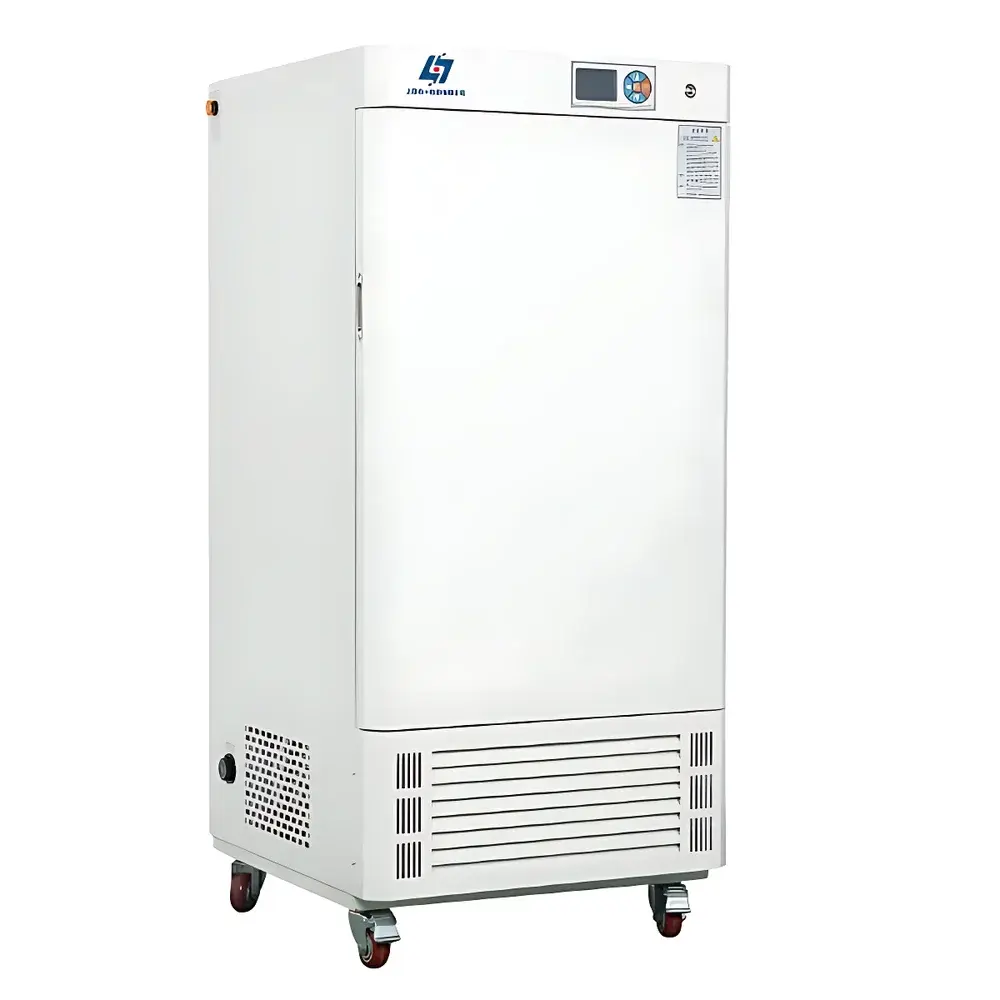
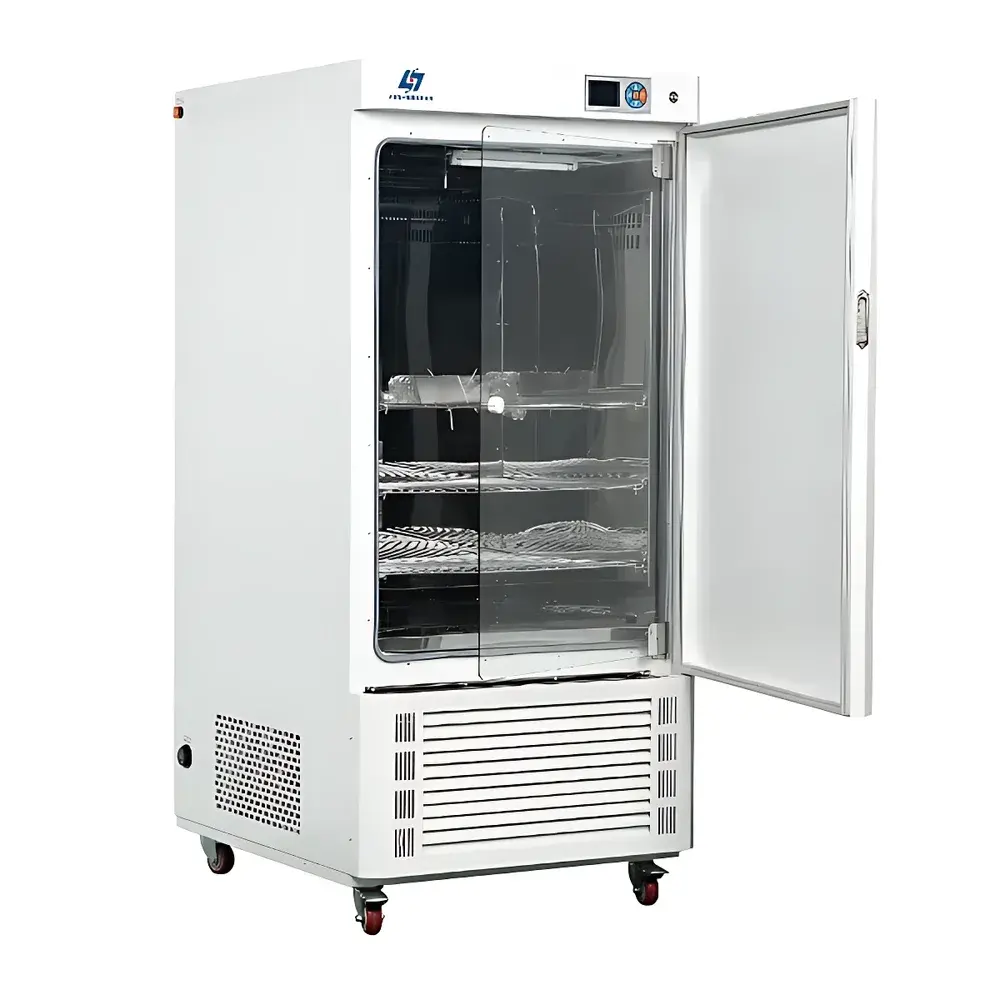
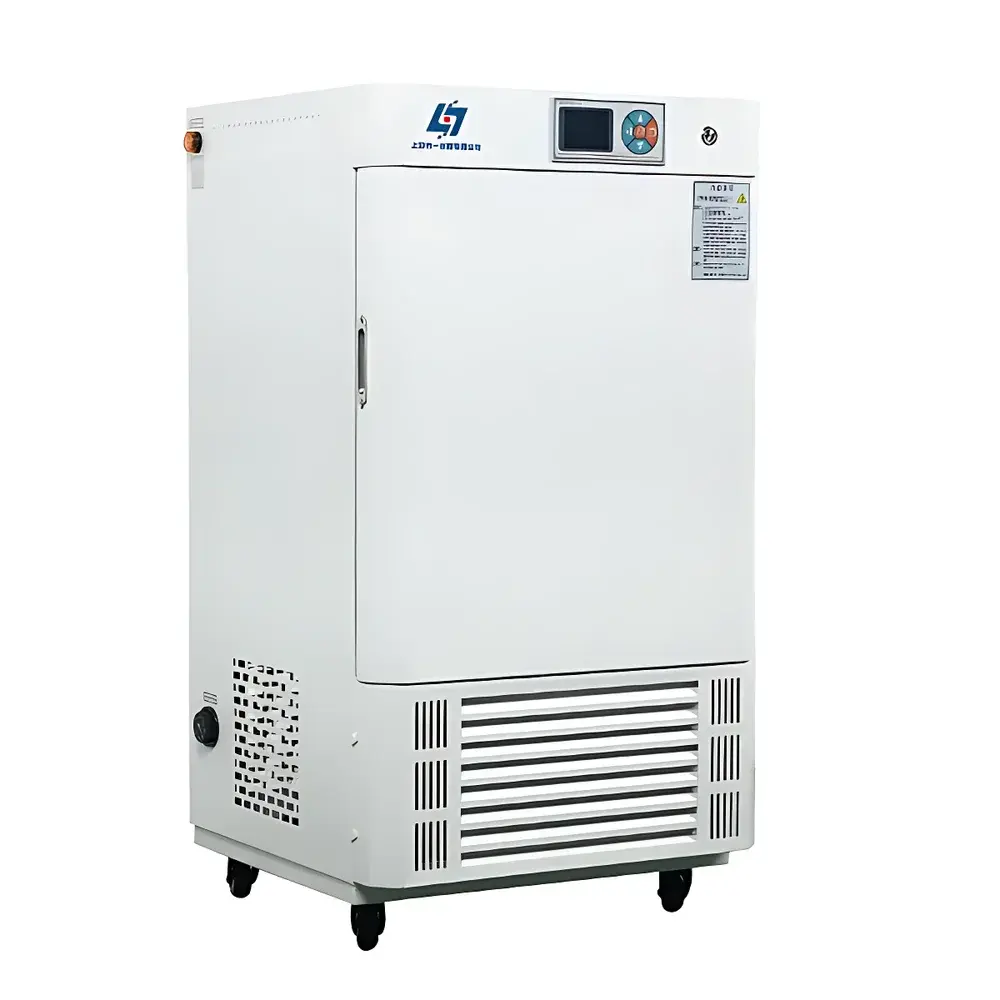
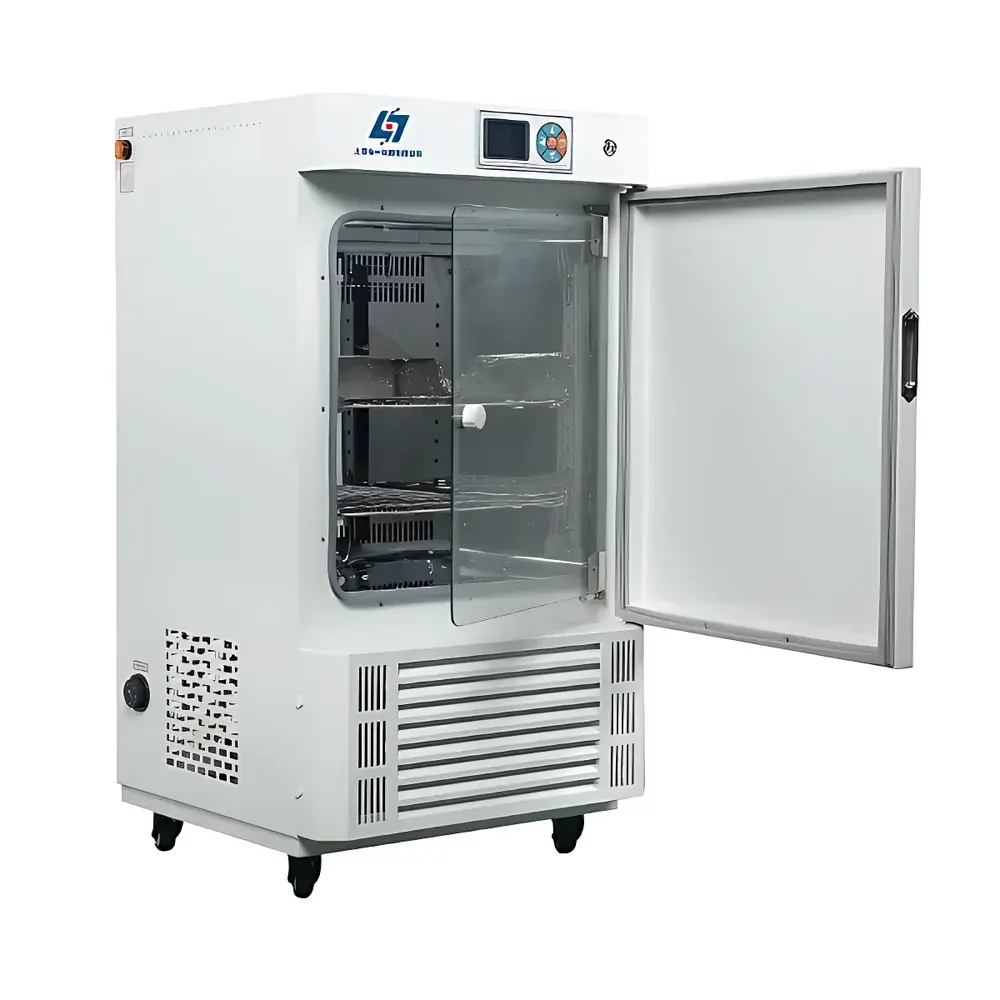
Yoyi MJ-500F-I 500L Forced-Air Mold Incubator for BOD and Microbiological Culture
| Brand | Yoyi |
|---|---|
| Origin | Shanghai, China |
| Manufacturer | Yes |
| Type | Domestic |
| Model | MJ-500F-I |
| Control Method | Mechanical Buttons + Microprocessor PID Temperature Control |
| Air Circulation | Forced Convection |
| Temperature Range | 0–65 °C |
| Temperature Fluctuation | ±0.5 °C (High Temp), ±1 °C (Low Temp) |
| Temperature Uniformity | ±1.5 °C (at 25 °C test point) |
| Capacity | 500 L |
| External Dimensions (W×D×H) | 825 × 925 × 1780 mm |
| Internal Dimensions (W×D×H) | 700 × 700 × 1020 mm |
| Display | 5.7″ LCD Menu Interface |
| UV Sterilization | Integrated Top-Mounted UV Lamp |
| Humidity Control | Not equipped (F-type indicates eco-friendly refrigerant |
| Power Supply | AC 220 V, 50 Hz |
| Input Power | 2000 W |
| Compliance | Designed for GLP-aligned microbiological workflows |
Overview
The Yoyi MJ-500F-I is a 500-liter forced-air mold incubator engineered for stable, reproducible environmental conditioning in regulated life science applications. It operates on the principle of active air circulation via an internal centrifugal fan and optimized duct geometry to ensure uniform thermal distribution across the entire chamber volume—critical for BOD (Biochemical Oxygen Demand) testing, fungal viability assays, microbial preservation, and long-term strain maintenance. Unlike natural convection units, its forced-air architecture minimizes vertical and horizontal thermal gradients, enabling compliance with ISO/IEC 17025 method validation requirements for incubation-based biological testing. The unit employs R134a or R600a refrigerant (non-ozone-depleting, low-GWP), satisfying EU F-Gas Regulation (EU No. 517/2014) and China’s GB/T 7725-2004 standards for eco-efficient laboratory equipment.
Key Features
- Robust structural design: Cold-rolled steel exterior with electrostatic powder coating; mirror-finish 304 stainless-steel interior with radius-cornered seams for seamless cleaning and reduced microbial retention.
- Dual-door configuration with magnetic gasket seal and low-emissivity double-glazed observation window—maintains thermal integrity during visual inspection without disturbing setpoint stability.
- Microprocessor-based PID temperature controller with 0.1 °C resolution, programmable timer (1–9999 minutes), and auto-recovery logic after power interruption—retains user-defined parameters and resumes operation at pre-failure setpoints.
- Integrated ultraviolet germicidal irradiation (UV-C, 254 nm) mounted in the ceiling plenum, activated independently to decontaminate recirculated air and suppress airborne contaminants between cycles—validated per ISO 15714 for UV efficacy in enclosed chambers.
- Four-position adjustable stainless-steel shelving system; load capacity up to 15 kg per shelf; reinforced support brackets prevent sagging under repeated sterilization cycles.
- Heavy-duty mobility system: Four swivel casters (two with mechanical locking brakes) plus adjustable leveling feet—enables precise horizontal alignment on uneven lab flooring while meeting IEC 61000-4-2 ESD immunity requirements.
Sample Compatibility & Compliance
The MJ-500F-I accommodates standard microbiological vessels including Petri dishes (up to 150 mm diameter), culture flasks (up to 2 L), BOD bottles (60–300 mL), and multi-well plates stacked on compatible carriers. Its temperature uniformity (±1.5 °C at 25 °C) meets the performance criteria outlined in ISO 20387:2018 (Biobanking) for ambient-temperature storage of reference strains and ASTM E2927-14 (Standard Practice for Performance Verification of Incubators). While not humidity-controlled, the F-I variant complies with ICH Q5C stability testing guidelines for non-hygroscopic biological samples stored at constant temperature. All electrical components conform to GB 4793.1–2019 (equivalent to IEC 61010-1) for safety in laboratory environments.
Software & Data Management
This model features embedded firmware supporting audit-trail-capable parameter logging (temperature setpoint, actual chamber reading, elapsed time, alarm events) stored internally for ≥30 days. Optional RS485 interface (sold separately) enables integration with LabVantage, Thermo Fisher SampleManager, or custom SCADA systems using Modbus RTU protocol. Data export is available in CSV format via USB port; timestamps are synchronized to internal real-time clock with ±2 s/month drift. Firmware versioning and calibration history are accessible through service mode—supporting FDA 21 CFR Part 11 readiness when paired with validated third-party electronic lab notebook (ELN) platforms.
Applications
- BOD5 determination per APHA Standard Methods 5210B and ISO 5815-1:2019 using seeded dilution water incubated at 20 ±1 °C.
- Fungal growth assessment under controlled conditions for ASTM D3273 (Resistance to Growth of Mold on Plastic and Elastomeric Materials) and JIS Z 2911.
- Maintenance of fungal stock cultures (e.g., Aspergillus niger, Penicillium chrysogenum) and bacterial reference strains (ATCC®, DSMZ) per CLSI M44-A3 recommendations.
- Environmental simulation for accelerated aging studies of pharmaceutical excipients and medical device packaging materials per ISO 11607-1.
- Pre-incubation conditioning of agar plates prior to antimicrobial susceptibility testing (AST) as specified in CLSI M02-A13.
FAQ
Does the MJ-500F-I include humidity control?
No—the “F-I” designation indicates a non-humidified, fluorocarbon-free configuration. Humidity capability is exclusive to the “II” series (e.g., MJ-500-II), which integrates a steam generator and capacitive RH sensor.
What safety certifications does this incubator hold?
It complies with GB 4793.1–2019 (Laboratory Equipment Safety Requirements), EMC standard GB/T 18268.1–2010, and RoHS Directive 2011/65/EU. CE marking is not applied, as it is manufactured for domestic and export markets requiring local certification.
Can the UV lamp be operated while samples are inside?
UV irradiation is interlocked with door position—activation is disabled when either door is ajar. Continuous UV exposure during sample incubation is not supported; use is restricted to chamber sanitization between runs.
Is calibration documentation provided with shipment?
A factory-issued temperature uniformity report (per ISO 17025-accredited internal procedure) and NIST-traceable thermometer calibration certificate are included. On-site IQ/OQ validation support is available upon request.
What is the expected service life under continuous operation?
Rated for 20,000 hours of cumulative runtime with scheduled maintenance (fan filter replacement every 6 months, refrigerant pressure verification annually) per manufacturer’s maintenance schedule.