
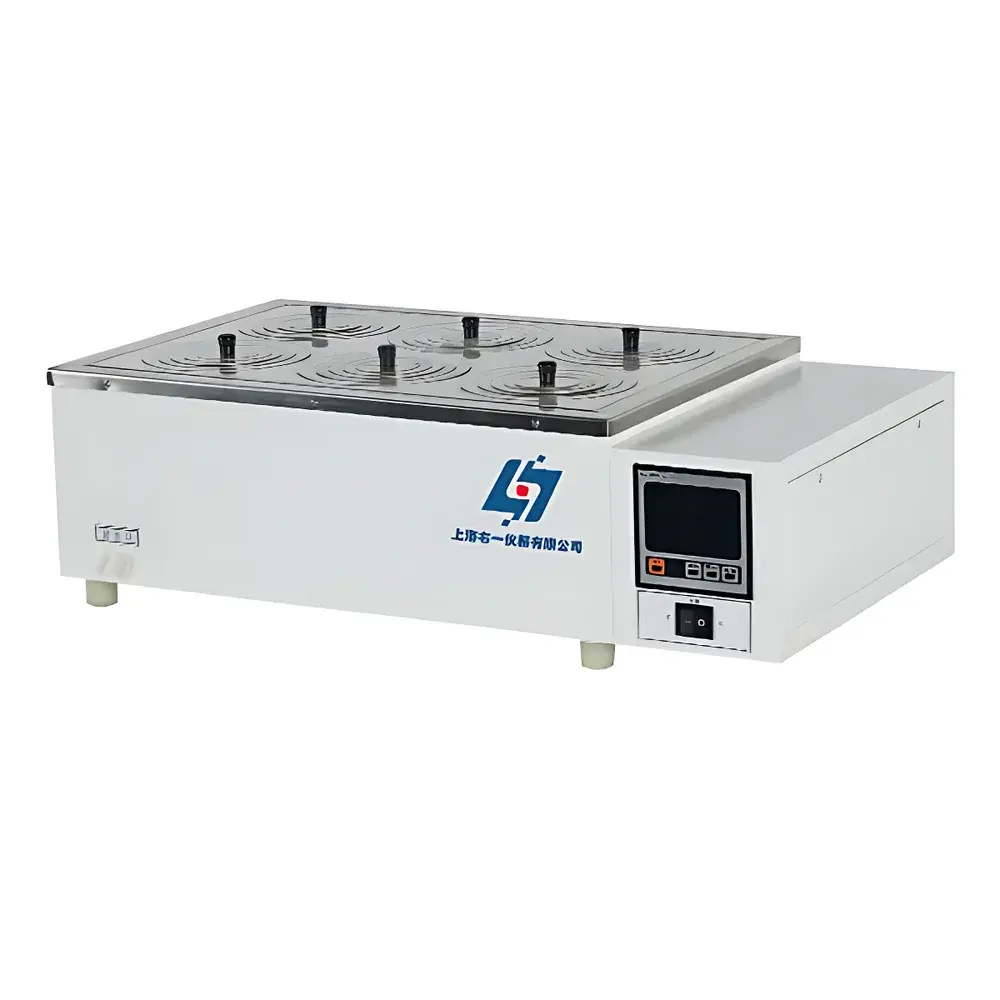
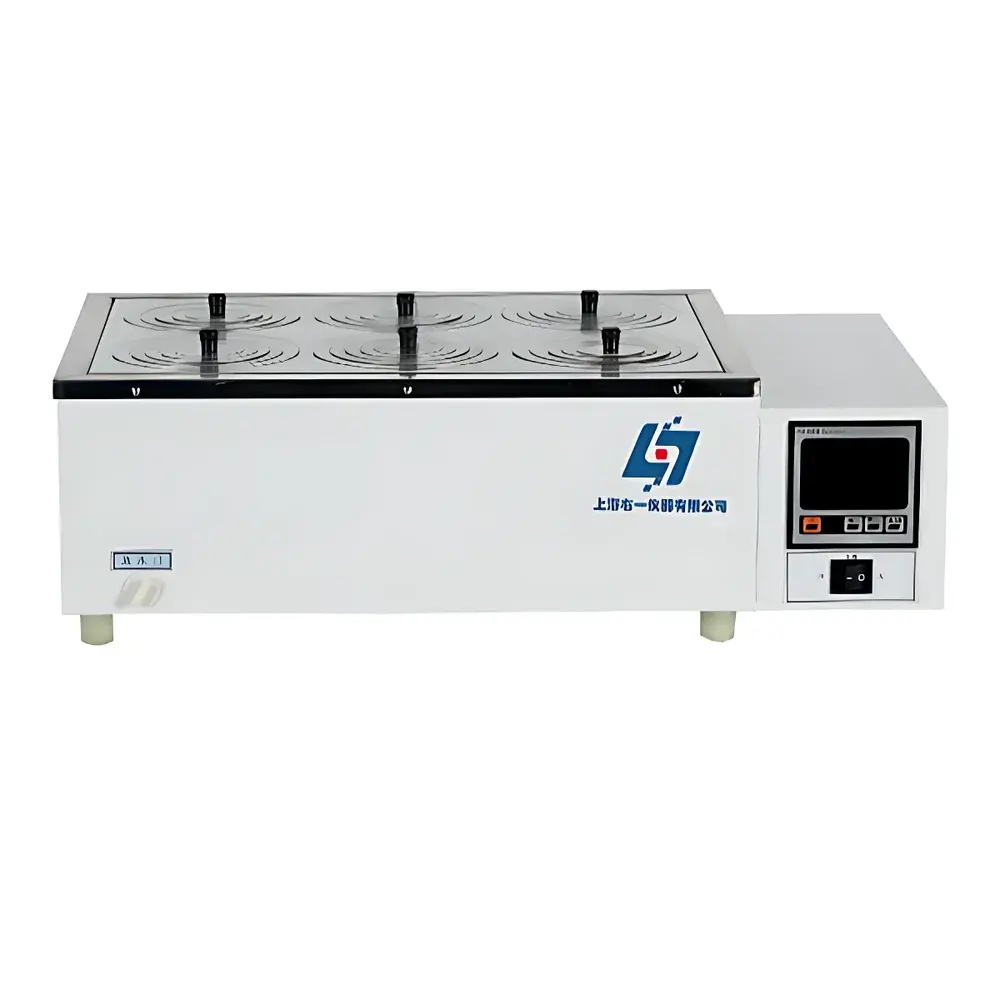
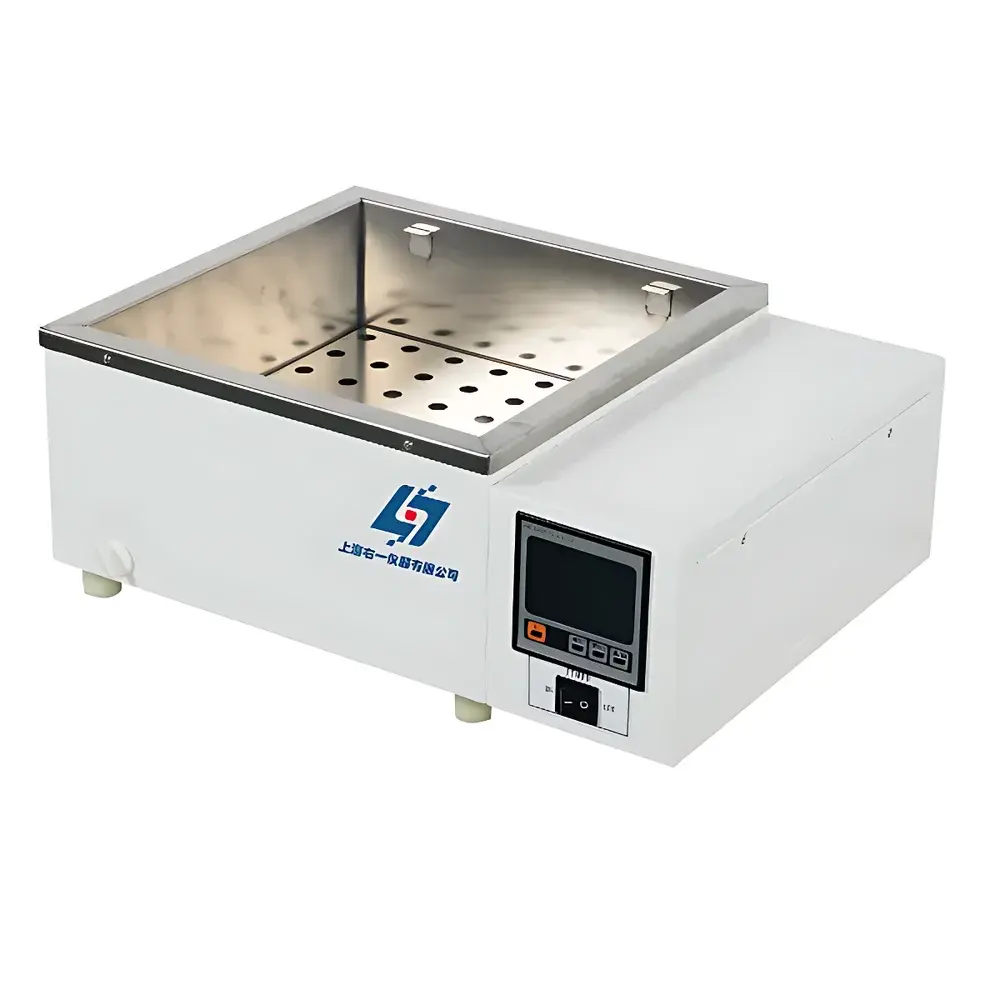
Shanghai Youyi DK-S26 Dual-Row Six-Position Electric Constant-Temperature Water Bath
| Brand | Shanghai Youyi (SHYY) |
|---|---|
| Origin | Shanghai, China |
| Manufacturer Type | Direct Manufacturer |
| Country of Origin | China |
| Model | DK-S26 |
| Operating Temperature Range | RT+5 to 100 °C |
| Temperature Control Accuracy | ±0.1 °C |
| Bath Capacity | 15 L |
| Heating Power | 1500 W |
Overview
The Shanghai Youyi DK-S26 Dual-Row Six-Position Electric Constant-Temperature Water Bath is a precision-engineered laboratory thermal management system designed for reproducible, stable heat transfer via liquid-phase conduction. Utilizing direct immersion U-shaped electric heating elements—constructed from stainless steel sheaths filled with compacted magnesium oxide and resistance wire—the unit achieves rapid thermal response and minimal energy loss. Its operating range spans from ambient +5 °C to 100 °C, making it suitable for applications requiring gentle, uniform heating without thermal shock or localized boiling. The bath’s dual-row, six-position configuration provides independent spatial access to six identical sample zones, each accommodating standard laboratory glassware such as test tubes, flasks, and beakers up to 500 mL capacity. Constructed with a cold-rolled steel outer casing finished in electrostatic epoxy coating and a 304 stainless steel inner tank and lid, the DK-S26 ensures long-term corrosion resistance and thermal stability under continuous operation.
Key Features
- Microprocessor-based PID temperature controller with 0.1 °C resolution and ±0.1 °C setpoint accuracy, ensuring high repeatability across extended operation cycles.
- Dual-row, six-position stainless steel well array (450 mm × 300 mm × 110 mm internal dimensions) enabling parallel processing of multiple samples with consistent thermal exposure.
- 1500 W high-efficiency heating system delivering rapid warm-up times and stable equilibrium within ±0.5 °C temperature fluctuation at steady state.
- Over-temperature alarm with audible and visual indicators (LED warning light + buzzer), automatically cutting power if the bath exceeds user-defined safety thresholds.
- Front-panel LCD display showing real-time temperature, setpoint, and elapsed time; intuitive keypad navigation supports both manual and timed operation modes (1–999 minutes).
- Seamless 304 stainless steel tank and lid resistant to oxidation, acid/base exposure, and repeated sterilization cycles—compliant with routine GLP laboratory cleaning protocols.
Sample Compatibility & Compliance
The DK-S26 accommodates common laboratory vessels including borosilicate glass test tubes (12–25 mm OD), Erlenmeyer flasks (50–250 mL), volumetric flasks, and reaction vials. Its open-bath design allows full immersion of containers up to 100 mm in height. The unit meets general-purpose electrical safety requirements per IEC 61010-1 (2010) for laboratory equipment and conforms to EMC directive 2014/30/EU. While not certified for Class I Div 1 hazardous locations, its construction supports use in ISO 17025-accredited testing environments where traceable temperature control and documented calibration are required. Routine verification may be performed using NIST-traceable PT100 probes per ASTM E2251–22 guidelines for liquid bath uniformity assessment.
Software & Data Management
The DK-S26 operates as a standalone analog-digital hybrid instrument with no embedded data logging or PC interface. However, its analog voltage output (0–5 V DC proportional to measured temperature) is compatible with third-party data acquisition systems (e.g., LabVIEW, MATLAB, or PLC-based SCADA) when paired with an external analog-to-digital converter. For regulated environments requiring audit trails, users may integrate the unit into validated workflows by pairing it with external calibrated thermistors and electronic loggers compliant with FDA 21 CFR Part 11 requirements. All firmware operations—including alarm activation, timer countdown, and setpoint retention after power interruption—are stored in non-volatile memory.
Applications
- Enzyme activity assays and protein denaturation studies requiring precise incubation between 25–65 °C.
- Pre-heating reagents prior to HPLC injection or GC sample introduction to minimize column thermal stress.
- Controlled solubilization of polymers, surfactants, and hydrophobic compounds in pharmaceutical formulation development.
- Water-bath sterilization of media components (e.g., agar, buffers) prior to aseptic filtration or autoclaving validation.
- Accelerated stability testing per ICH Q1A(R3) guidelines, supporting temperature-controlled storage simulation at 40 °C/75% RH equivalent conditions.
- Supporting ASTM D92 (flash point), D86 (distillation), and D129 (sulfur content) test methods where water-jacketed heating is specified.
FAQ
What is the maximum recommended operating temperature for continuous use?
The DK-S26 is rated for sustained operation up to 100 °C; however, prolonged use above 95 °C may accelerate evaporation and require more frequent water top-ups. For optimal longevity, operation between 30–85 °C is recommended.
Is the bath compatible with corrosive solutions such as sodium hydroxide or hydrochloric acid?
The 304 stainless steel tank resists mild alkalis and dilute acids; however, concentrated or heated caustic solutions will cause pitting. Use only deionized or distilled water unless explicitly validated for specific chemical compatibility.
Can the DK-S26 be used for shaking or agitation applications?
No—this model is a static water bath. For orbital or linear agitation, refer to Shanghai Youyi’s DK-ZO series water bath shakers.
Does the unit include a calibration certificate?
Factory calibration is performed using reference-grade thermistors; a UKAS-traceable calibration certificate is available upon request at additional cost and must be specified at time of order.
What maintenance is required to ensure long-term accuracy?
Monthly descaling with 5% citric acid solution is advised for hard-water regions; annual verification of sensor drift against a calibrated reference probe is recommended per ISO/IEC 17025 clause 6.5.



