
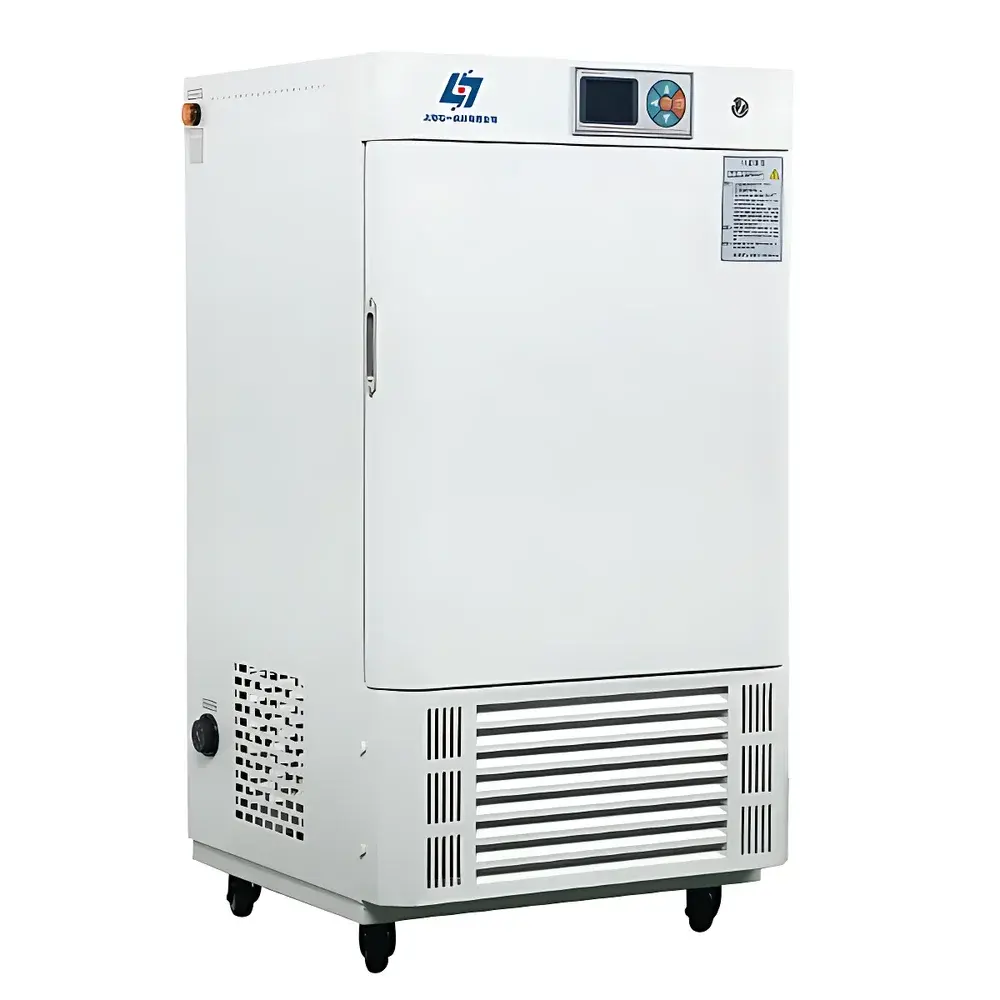
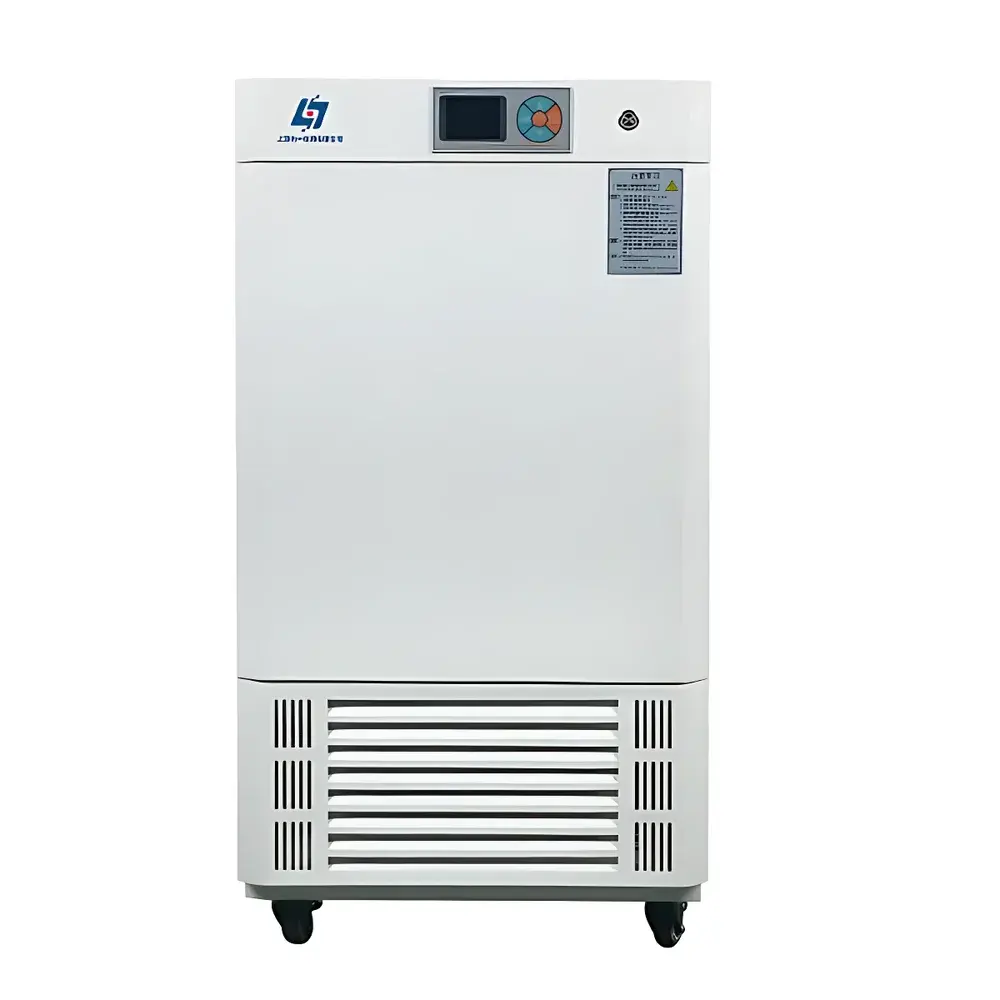
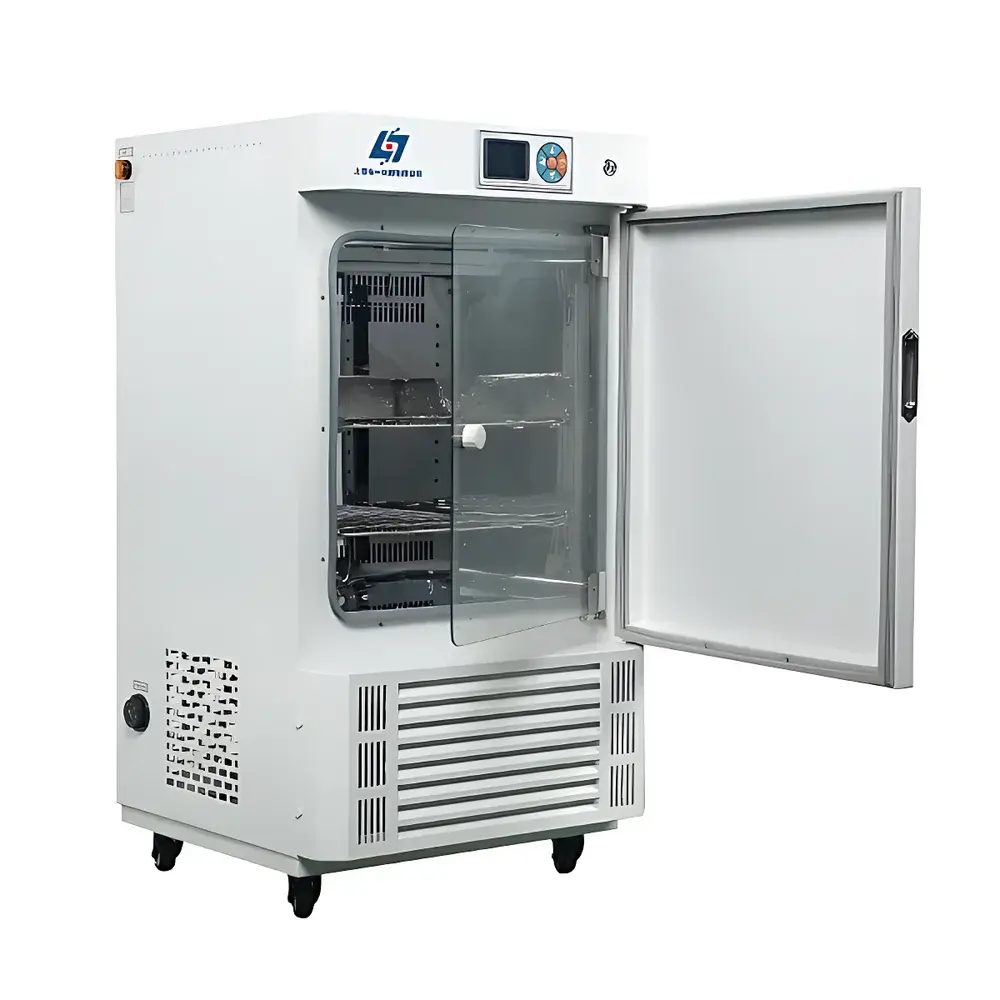
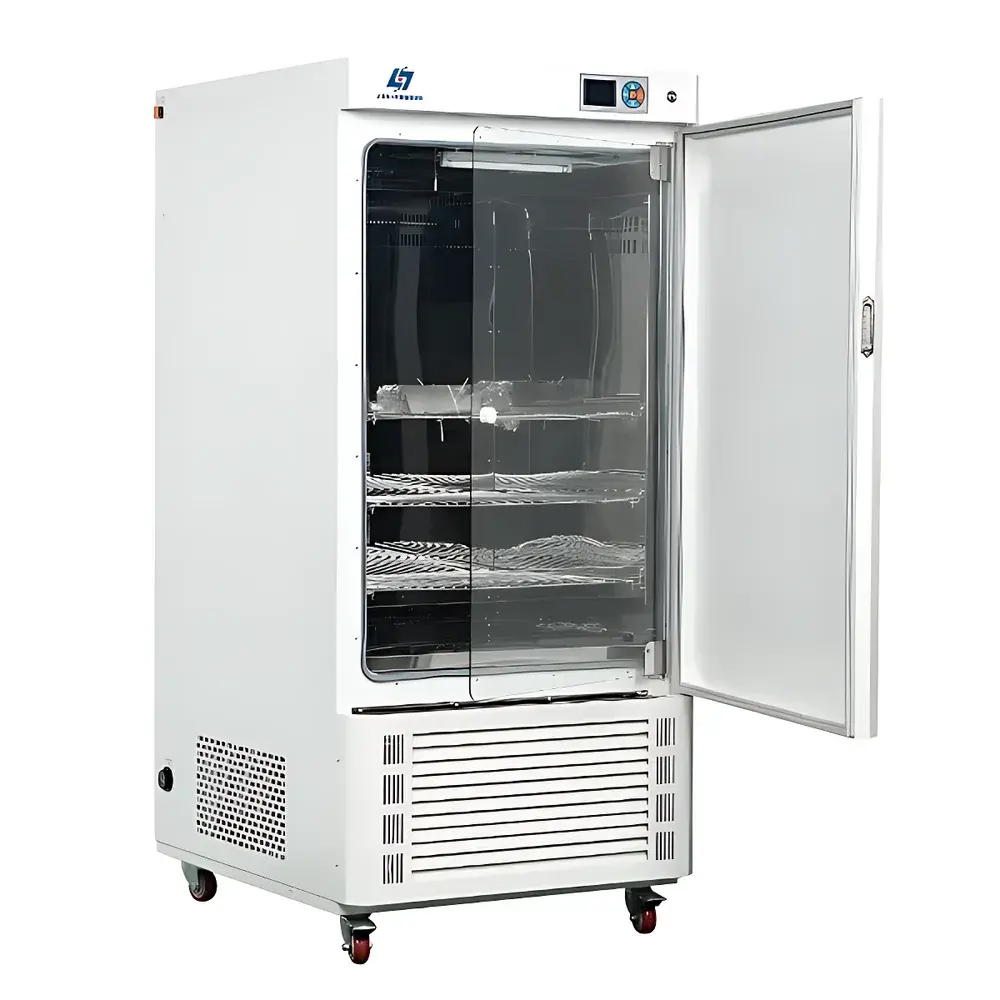
Yoyilab MJ-300-II Mold Incubator with Humidity Control and 30-Stage Programmable Controller
| Brand | Yoyilab |
|---|---|
| Origin | Shanghai, China |
| Manufacturer | Yoyilab Instruments |
| Model | MJ-300-II |
| Control Method | Mechanical Buttons + Microcomputer PID Temperature & Humidity Control |
| Air Circulation | Forced Convection |
| Temperature Range | 15–60 °C (with humidity), 10–60 °C (without humidity) |
| Temperature Fluctuation | ±0.5 °C at high setpoints, ±1 °C at low setpoints |
| Temperature Uniformity | ±1.5 °C (measured at 25 °C) |
| Humidity Range | 60–85 %RH |
| Humidity Deviation | ±5 %RH |
| Chamber Capacity | 300 L |
| External Dimensions (W×D×H) | 705×765×1640 mm |
| Internal Dimensions (W×D×H) | 580×540×950 mm |
| Power Input | 1950 W |
| Display | 5.7″ LCD Menu Interface |
| Programming Capability | 99 cycles × 30 segments/cycle, up to 99 h 99 min/segment |
| UV Sterilization | Integrated top-mounted ultraviolet lamp |
| Insulation | Double-door structure with high-efficiency thermal barrier |
| Construction | Cold-rolled steel exterior with electrostatic powder coating |
| Safety | Over-temperature deviation protection, power failure data retention & auto-recovery, timer function, alarm output |
Overview
The Yoyilab MJ-300-II Mold Incubator is a precision-engineered environmental chamber designed specifically for controlled fungal growth, microbial culture maintenance, and long-term stability testing under regulated temperature and relative humidity conditions. It operates on the principle of forced-air convection combined with microcomputer-based PID feedback control for both thermal and hygric parameters—ensuring stable, repeatable, and traceable environmental profiles essential for regulatory-compliant microbiological work. Unlike general-purpose incubators, the MJ-300-II incorporates dedicated humidity management architecture compliant with ISO 8573-1 (compressed air quality) and ASTM D3273 (mold resistance testing), making it suitable for applications ranging from BOD analysis and pharmaceutical stability studies to accelerated aging assessments per ICH Q1 guidelines. Its dual-door insulation system minimizes thermal load disturbance during observation, while the integrated UV-C lamp (254 nm) provides continuous airborne bioburden reduction—critical for maintaining sterility in non-aseptic but contamination-sensitive workflows.
Key Features
- Forced convection airflow ensures uniform temperature distribution (±1.5 °C at 25 °C) across the full 300 L working volume, validated per ISO 15270:2020 Annex A for incubator performance verification.
- Microcomputer-controlled humidity regulation maintains 60–85 %RH within ±5 %RH deviation, using calibrated capacitive RH sensors and precision vapor delivery—ideal for Aspergillus niger or Penicillium chrysogenum cultivation protocols.
- Advanced 30-segment programmable controller supports up to 99 independent cycles, enabling complex multi-phase experiments such as temperature ramping followed by humidity hold, mimicking seasonal environmental shifts in ecotoxicology or material durability testing.
- 5.7-inch backlit LCD interface displays real-time chamber values—including setpoint, actual temperature/humidity, elapsed time, and remaining segment duration—without requiring external software or proprietary drivers.
- Robust mechanical + digital hybrid control architecture includes over-temperature deviation alarm, automatic data retention during power interruption, and configurable audible/visual alerts per GLP documentation requirements.
- UV sterilization module mounted at the chamber ceiling delivers continuous low-dose germicidal irradiation (≥100 µW/cm² at 1 m), reducing airborne colony-forming units (CFU/m³) between runs without compromising sensor integrity or sample integrity.
Sample Compatibility & Compliance
The MJ-300-II accommodates standard microbiological vessels including Petri dishes (up to 150 mm), test tubes (16–20 mm OD), Erlenmeyer flasks (up to 2 L), and custom racks for agar plates or slant cultures. Its stainless-steel interior and radius-corner design meet FDA 21 CFR Part 11 criteria for cleanability and residue-free decontamination. The unit complies with EN 61000-6-3 (EMC emission standards), IEC 61010-1 (safety for laboratory equipment), and supports audit-ready operation when paired with optional RS485 interface and timestamped log export (CSV format). It is routinely deployed in laboratories adhering to USP /, EP 2.6.12, and ISO 11133:2014 for culture media performance validation.
Software & Data Management
While the MJ-300-II operates autonomously via its embedded controller, optional RS485 communication enables integration into centralized lab monitoring systems (e.g., LabVantage, Thermo Fisher SampleManager). Logged data—including temperature, humidity, cycle stage, alarm events, and power status—is stored internally with timestamp resolution of 1 second and retained for ≥30 days without external storage. Exported logs include ISO 8601-formatted timestamps and support third-party statistical process control (SPC) analysis. No proprietary software installation is required; raw data files are compatible with Excel, Python pandas, and JMP for trend analysis and out-of-specification (OOS) root cause investigation.
Applications
- Mycological research: Controlled sporulation, spore germination kinetics, and antifungal susceptibility testing (CLSI M38-A3).
- Pharmaceutical stability: Accelerated mold challenge studies per ICH Q5C and packaging material resistance evaluation (ASTM D6329).
- Environmental microbiology: BOD₅ incubation, activated sludge acclimation, and wastewater biofilm development assays.
- Material science: Fungal degradation testing of polymers, textiles, and coatings per ISO 846 and JIS Z 2911.
- Food safety: Yeast and mold enumeration (ISO 21527-1), shelf-life modeling, and preservative efficacy testing (PET).
- Educational labs: Curriculum-aligned experiments in microbial physiology, environmental adaptation, and quantitative ecology.
FAQ
Does the MJ-300-II support GLP-compliant data integrity?
Yes—the internal logging system records all parameter changes, alarms, and power events with immutable timestamps. Optional RS485 output allows integration with validated electronic lab notebooks (ELN) supporting 21 CFR Part 11 audit trails.
Can humidity be disabled independently of temperature control?
Yes—humidity generation can be deactivated via the menu interface while retaining full PID temperature regulation, enabling use as a standard forced-air incubator.
What is the calibration interval recommendation for temperature and humidity sensors?
Yoyilab recommends annual field calibration using NIST-traceable reference probes (e.g., Fluke 1523/1524) per ISO/IEC 17025 accredited procedures.
Is the UV lamp interlocked with the door switch?
Yes—the UV system automatically deactivates upon door opening and re-engages after 10 seconds of closure to prevent operator exposure.
Are spare shelves and humidity wicks available as consumables?
Stainless steel shelves (part #MJ-SH-300), water reservoir wicks (part #MJ-WICK-01), and UV lamps (GPH110TQ, 11W, 254 nm) are stocked and ship within 48 hours globally.




