
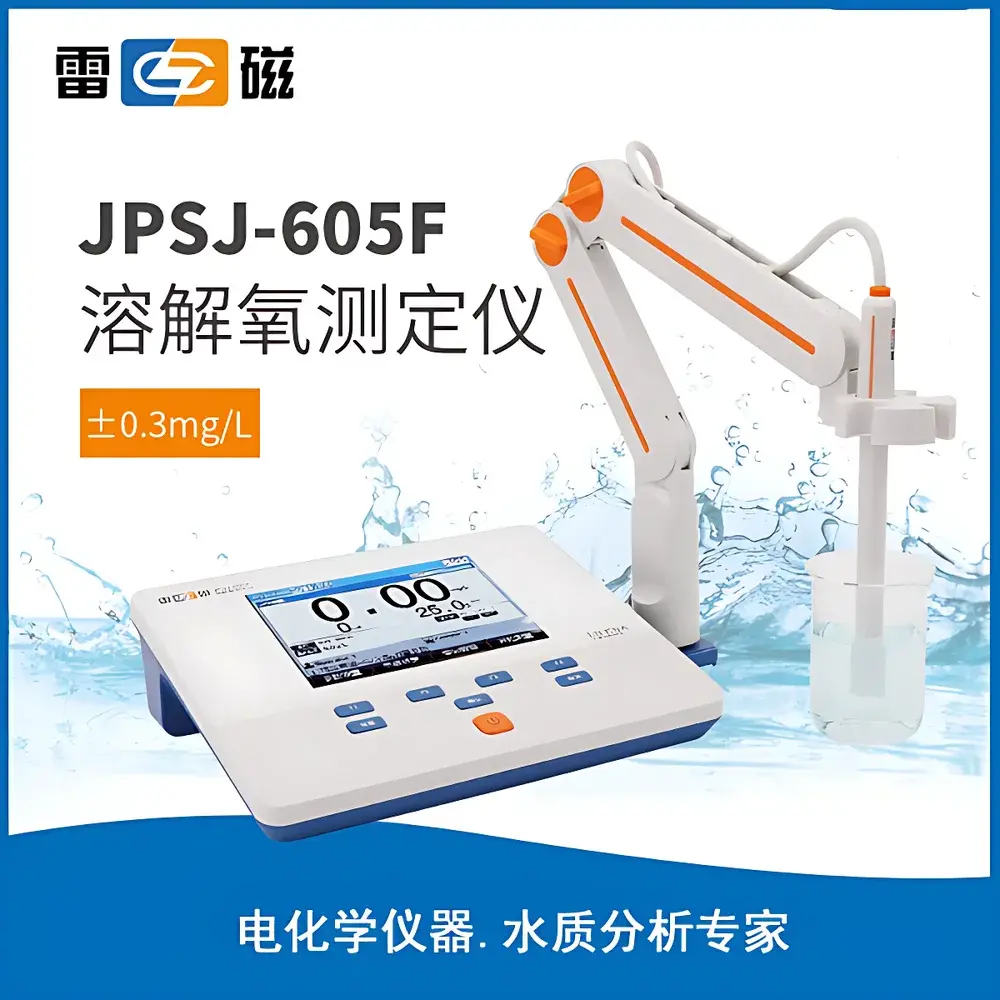
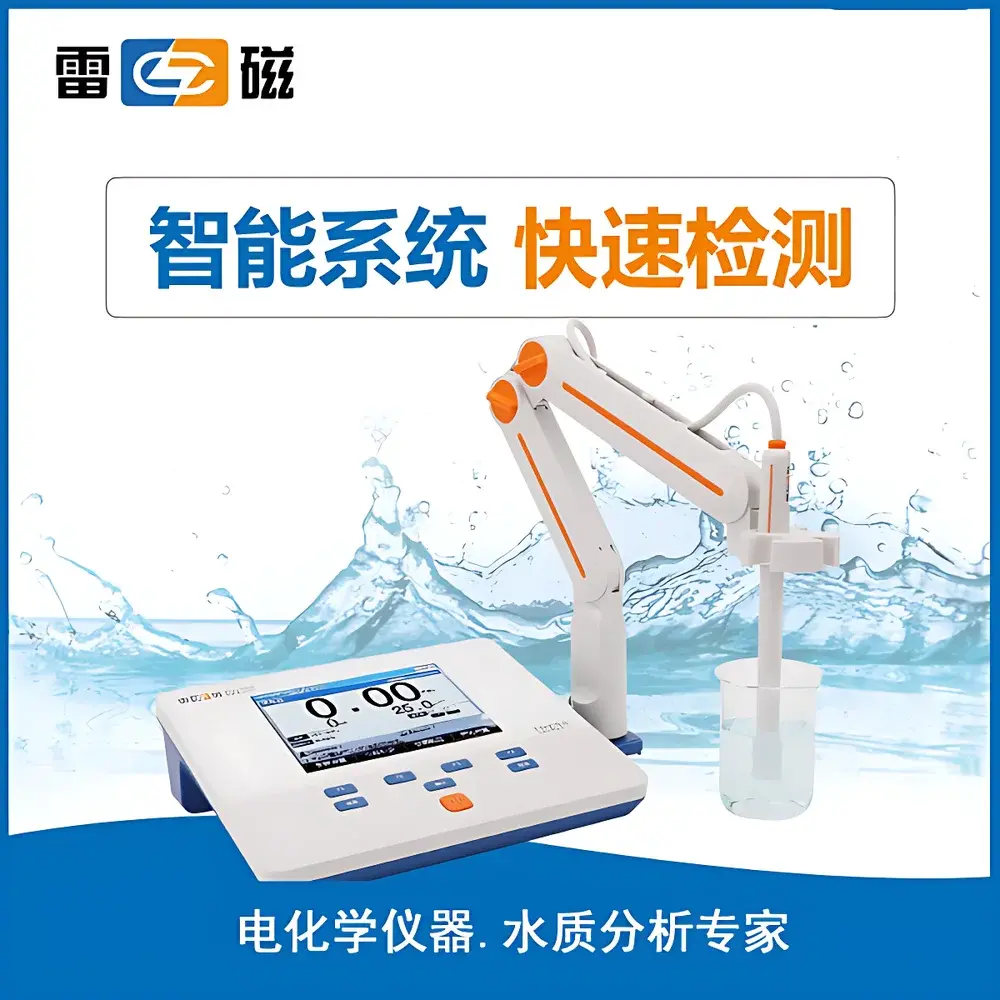
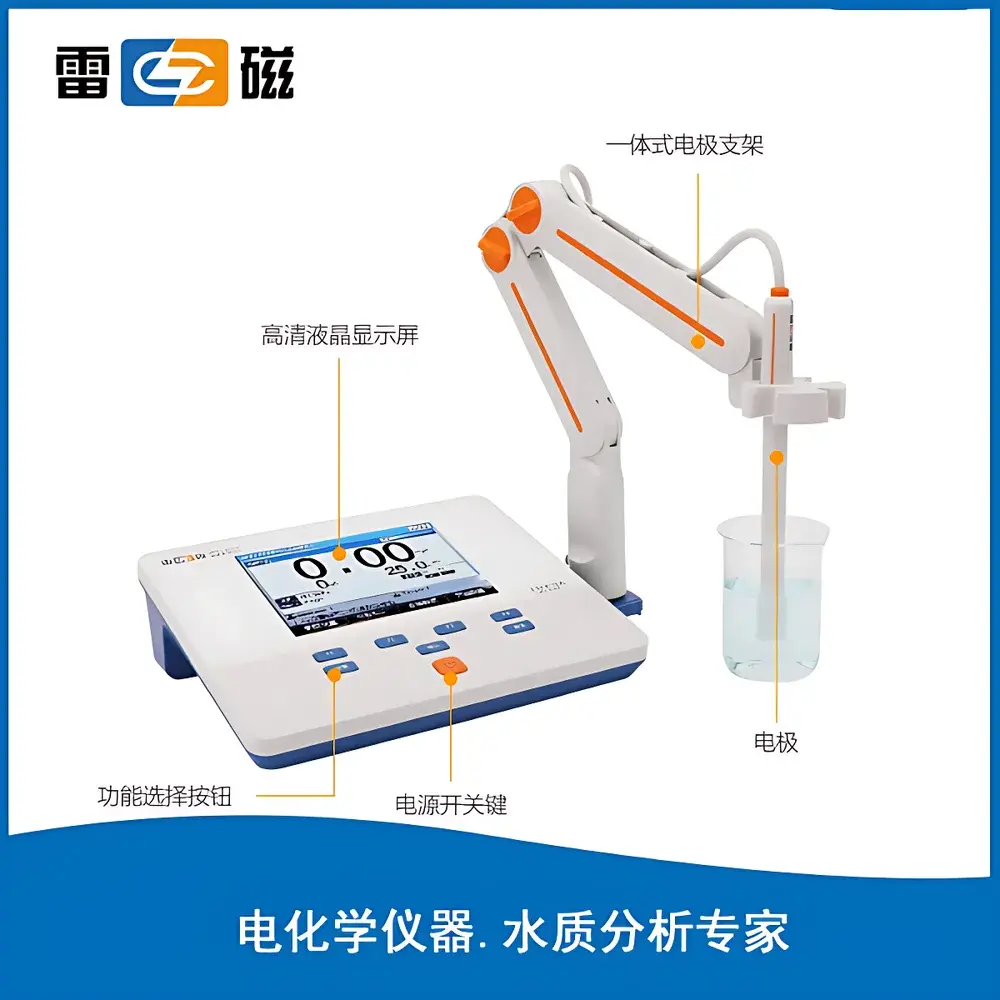
Leici JPSJ-605F Dissolved Oxygen Meter (Shanghai INESA Scientific Instrument Co., Ltd.)
| Brand | Leici |
|---|---|
| Origin | Shanghai, China |
| Manufacturer | INESA Scientific Instrument Co., Ltd. |
| Type | Benchtop Laboratory Dissolved Oxygen Meter |
| Measurement Principle | Polarographic Electrochemical Sensor |
| Range | (0.00–20.00) mg/L DO |
| Accuracy | ±0.30 mg/L (full-scale error) |
| Repeatability | ±0.07 mg/L over 1 h |
| Temperature Compensation | Automatic (0.0–40.0 °C) |
| Atmospheric Pressure Compensation | Manual (60.0–110.0 kPa) |
| Salinity Compensation | Manual (0.0–40.0 g/L) |
| Resolution | 0.01 mg/L (DO), 0.1% (saturation), 0.1 °C (temperature) |
| Data Storage | 500 datasets with GLP-compliant metadata (date/time/stamp) |
| Interface | USB to PC, RS-232 to serial printer |
| Power Supply | 9 V DC, 500 mA (center-positive) |
Overview
The Leici JPSJ-605F Dissolved Oxygen Meter is a benchtop electrochemical analyzer engineered for precise, traceable, and compliant measurement of dissolved oxygen (DO) concentration in aqueous samples. It operates on the polarographic principle—utilizing a Clark-type membrane-covered electrode with a cathode (typically gold or platinum) and anode (silver/silver chloride), immersed in an electrolyte solution. When polarized at a fixed voltage (~−0.6 V vs. Ag/AgCl), molecular oxygen diffuses through a selective gas-permeable membrane and undergoes reduction at the cathode surface, generating a diffusion-limited current linearly proportional to the partial pressure of O₂ in the sample. This current is converted to concentration units (mg/L) via calibration and compensated for temperature, atmospheric pressure, and salinity—critical variables influencing oxygen solubility in water. Designed for routine use in municipal water quality labs, aquaculture facilities, environmental monitoring stations, wastewater treatment plants, beverage R&D centers, and academic research groups, the JPSJ-605F meets functional requirements aligned with ISO 5814:2012 (water quality — determination of dissolved oxygen — electrochemical probe method) and supports workflows consistent with GLP documentation standards.
Key Features
- High-resolution graphical LCD display showing real-time DO concentration (mg/L), saturation (%), temperature (°C), atmospheric pressure (kPa), and measurement mode—alongside date/time stamping for audit-ready records.
- Multi-parameter output: simultaneous readout of dissolved oxygen concentration, % saturation, electrode current (nA), and temperature—enabling cross-validation and sensor health assessment.
- Comprehensive calibration suite: zero-oxygen (sodium sulfite) and full-scale (air-saturated or Winkler-standard) calibration; automatic electrode condition alert prior to scheduled recalibration.
- Three adaptive reading modes: Smart-Read (user-selectable stability thresholds: “Fast”, “Medium”, or “Strict”); Timed-Read (programmable interval logging or single-point timed termination); Cont-Read (continuous dynamic tracking for kinetic studies or process monitoring).
- Integrated compensation algorithms: automatic temperature compensation (0.0–40.0 °C), manual barometric pressure adjustment (60.0–110.0 kPa), and manual salinity correction (0.0–40.0 g/L)—ensuring accurate DO reporting across freshwater, estuarine, and brackish matrices.
- Robust data governance: internal storage of up to 500 measurement records with GLP-compliant metadata (operator ID optional via software), including timestamp, calibration history, and environmental compensation settings.
Sample Compatibility & Compliance
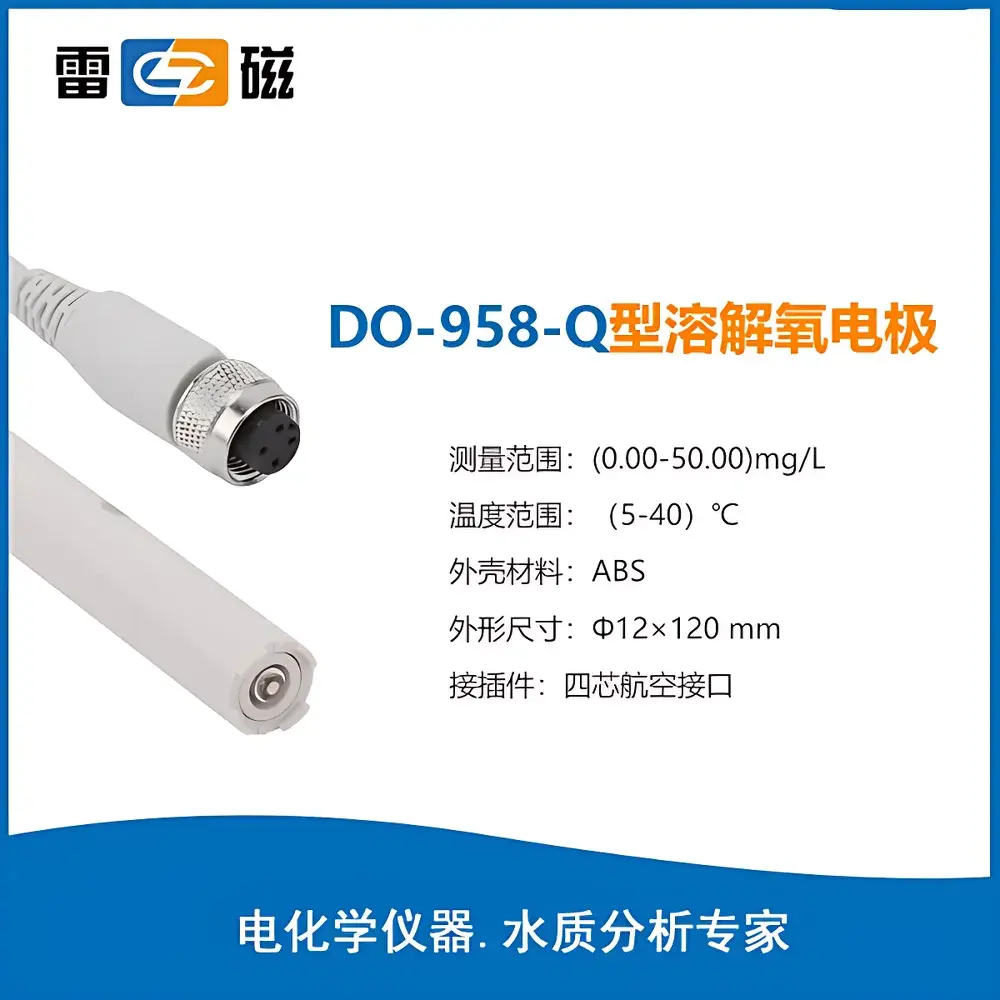
The JPSJ-605F is validated for use with liquid-phase aqueous samples within pH 4–9 and conductivity < 20 mS/cm. It accommodates standard 12-mm diameter DO-958-S polarographic electrodes equipped with Teflon membranes and KCl-based electrolyte. The instrument supports regulatory alignment in routine environmental testing contexts—including compliance with U.S. EPA Method 360.1 (for DO in natural waters) and Chinese HJ 506-2009 (environmental monitoring—determination of dissolved oxygen—electrochemical probe method). While not certified to IEC 61000-6-3 or ATEX, its design conforms to general laboratory electromagnetic compatibility (EMC) and safety expectations per GB/T 18268.1-2010 (equivalent to IEC 61326-1). All stored data include immutable time/date stamps and operator-assigned session identifiers—facilitating internal QA audits and third-party verification under GLP frameworks.
Software & Data Management
Data export is supported via USB interface to Windows-based PCs using Leici’s proprietary desktop utility (compatible with Windows 7–11, 64-bit), enabling CSV export with column headers for DO (mg/L), saturation (%), temperature (°C), pressure (kPa), salinity (g/L), and measurement timestamp. RS-232 output allows direct connection to serial thermal printers for hard-copy reports compliant with laboratory SOPs. Internal memory retains all entries during power loss due to non-volatile flash storage. Firmware updates are delivered via USB-loaded .bin files—verified by CRC checksum—and applied without external service intervention. No cloud connectivity or remote access capability is implemented, preserving data sovereignty in regulated environments where network isolation is mandated.
Applications
- Drinking water intake monitoring: verification of DO levels pre- and post-aeration or ozonation.
- Aquaculture management: real-time optimization of pond aeration cycles based on diurnal DO fluctuations.
- Wastewater treatment: activated sludge process control, including DO profiling in bioreactors and secondary clarifiers.
- Environmental field labs: rapid assessment of stream/river DO deficits indicating organic loading or eutrophication stress.
- Beverage quality assurance: validation of deaeration efficiency in bottling lines for low-O₂-sensitive products (e.g., craft beer, fruit juices).
- Academic research: kinetic studies of oxygen consumption in microbial respiration assays or sediment-water interface flux experiments.
FAQ
What calibration standards are required for daily operation?
Zero-oxygen solution (e.g., saturated sodium sulfite) and air-saturated water (or certified Winkler titration standard) are recommended for two-point calibration. Calibration frequency depends on usage intensity and regulatory requirements—typically before each analytical batch or every 8 hours of continuous operation.
Does the instrument support automatic pressure compensation via barometer input?
No—barometric pressure must be entered manually within the 60.0–110.0 kPa range. An external digital barometer is not integrated but may be used to inform manual entry.
Can the DO-958-S electrode be used interchangeably with other Leici meters?
Yes—the DO-958-S is compatible with the JPSJ-605, JPSJ-605F, and DJSJ-202F platforms, sharing identical pinout, polarization voltage, and signal conditioning architecture.
Is the firmware upgrade process validated for GxP environments?
Firmware updates include version logging and checksum verification. While no formal 21 CFR Part 11 electronic signature module is embedded, the update log (accessible via menu) records date/time and firmware version—supporting change control documentation in GLP/GMP-aligned labs.
What is the expected membrane lifetime under typical lab use?
With proper cleaning (distilled water rinse after saline samples) and storage in moist KCl solution, the Teflon membrane typically remains functional for 3–6 months. Performance degradation is indicated by prolonged response time (>90 s to 95% step change) or reduced slope (<1.5 nA/mg·L⁻¹).







