
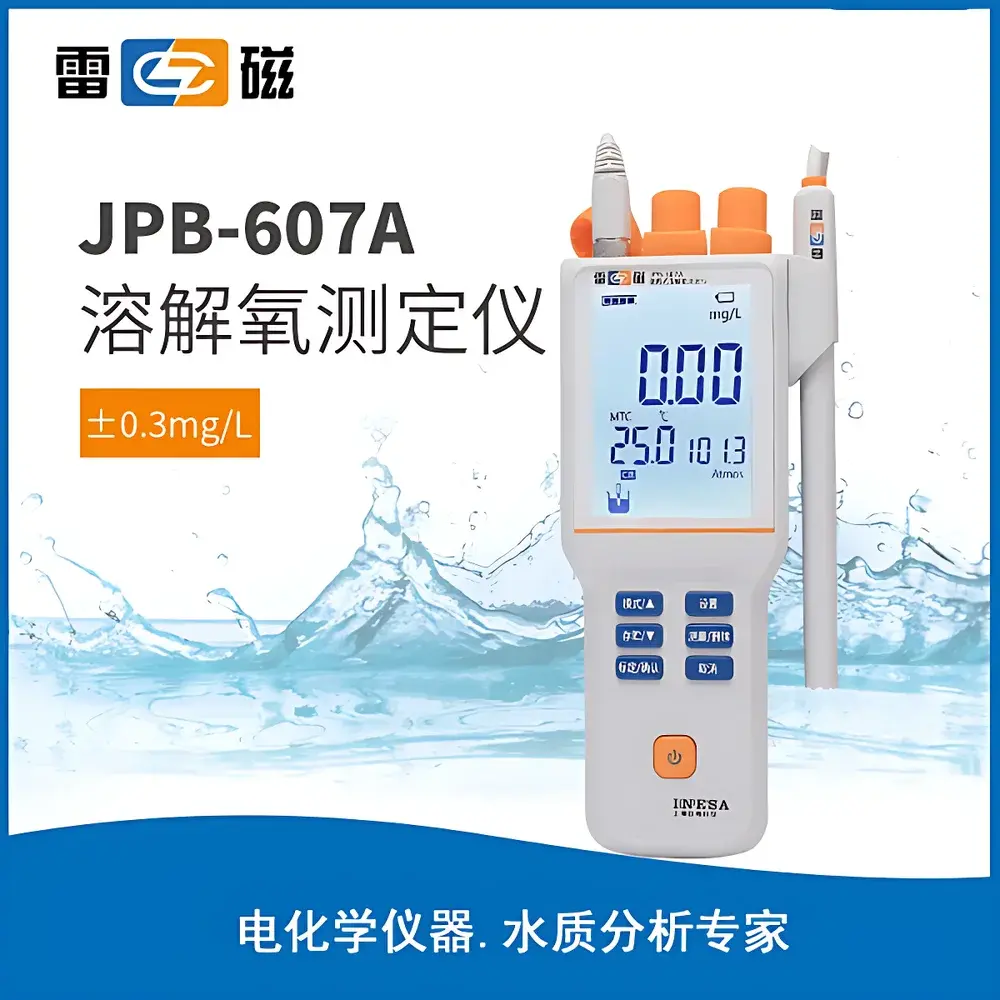
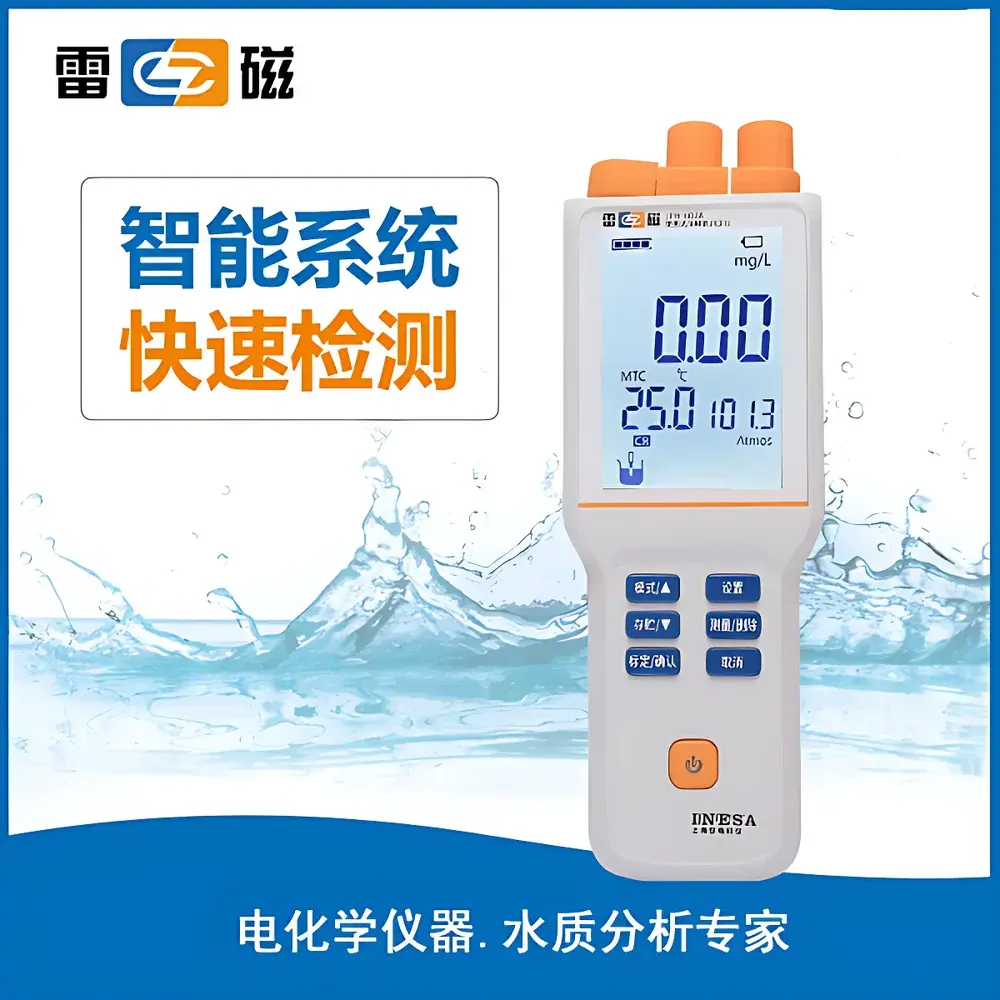
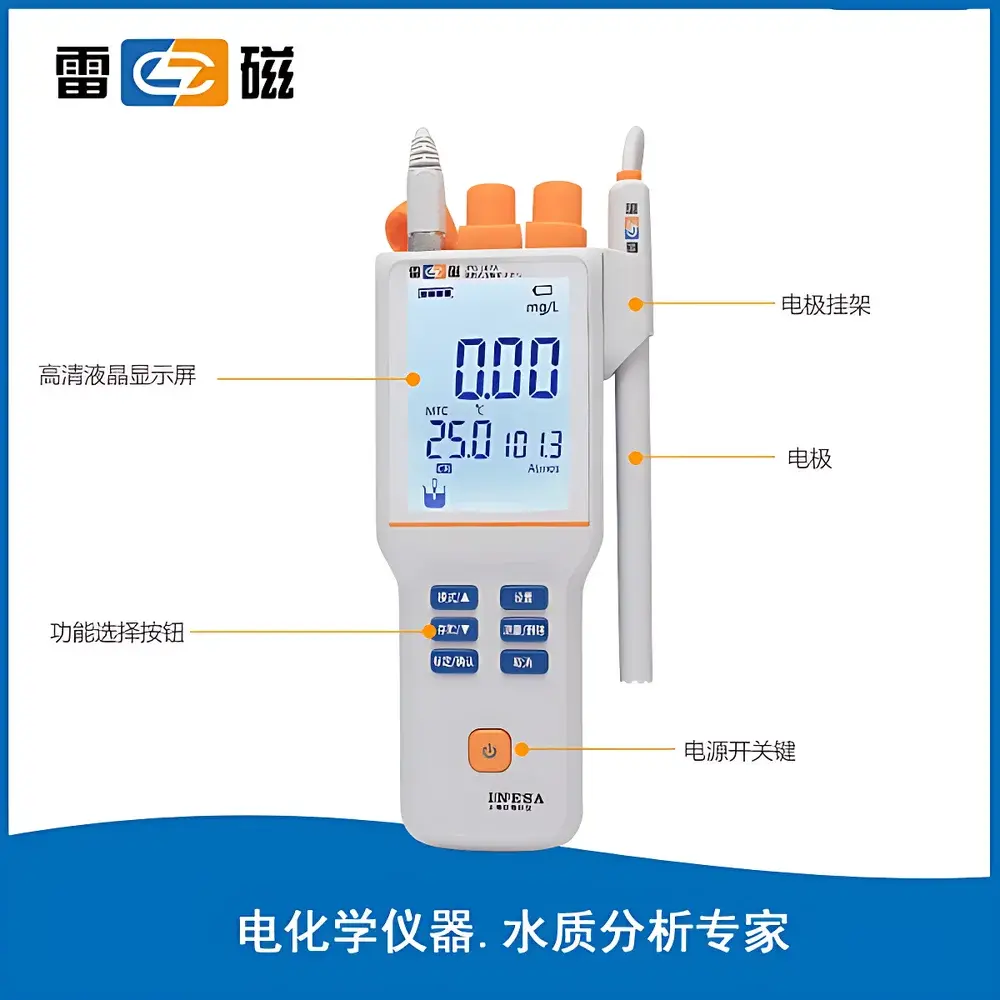
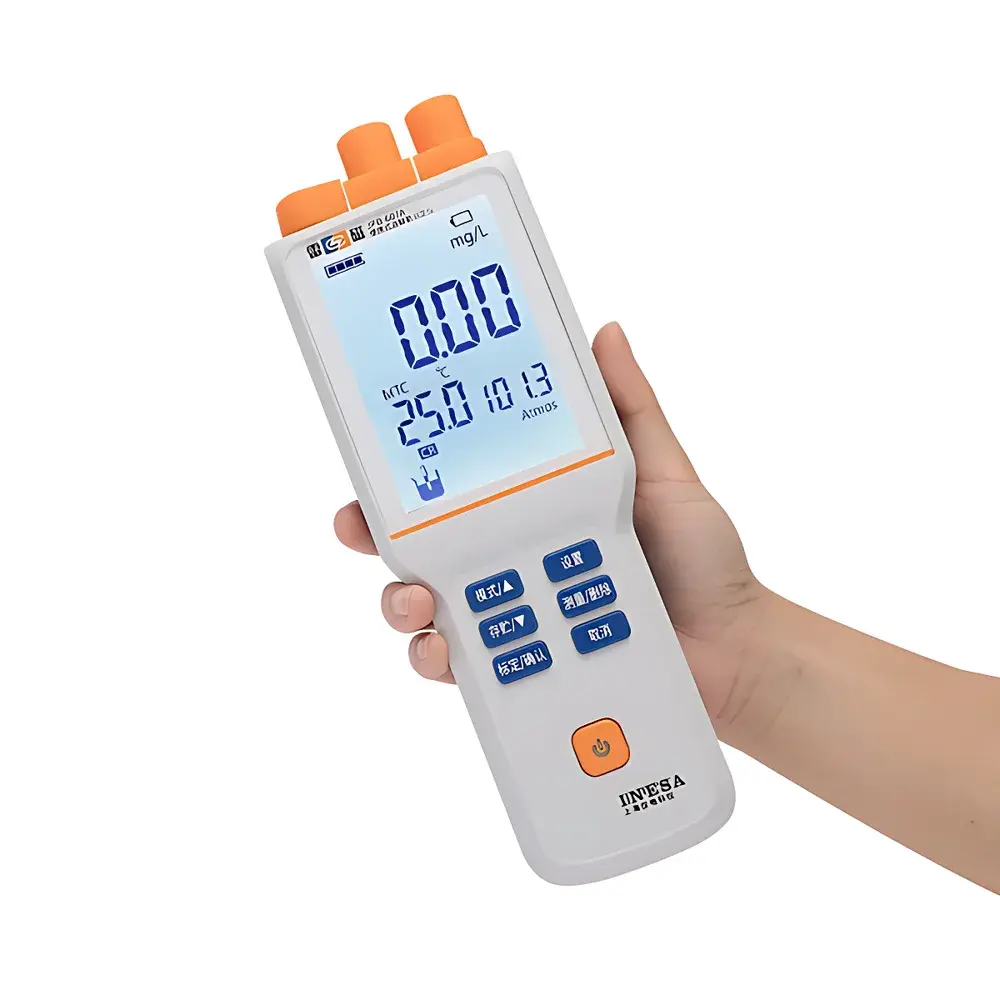
Leici JPB-607A Portable Dissolved Oxygen Meter
| Brand | Leici |
|---|---|
| Origin | Shanghai, China |
| Model | JPB-607A |
| Instrument Type | Portable |
| Measurement Principle | Electrochemical (Clark-type Polarographic Sensor) |
| Measurement Range | (0.0–20.0) mg/L DO |
| Accuracy | ±0.30 mg/L |
| Repeatability | ±0.10 mg/L over 3 h |
| Temperature Range | (0.0–40.0) °C |
| Temperature Compensation | Automatic (0.0–40.0) °C |
| Resolution | 0.1 mg/L (DO), 0.1 °C (temperature) |
| Basic Error | ±0.1 mg/L (DO), ±0.5 °C (temperature) |
| Power Supply | Two AA alkaline batteries |
| Dimensions | 165 × 75 × 30 mm |
| Weight | 0.3 kg |
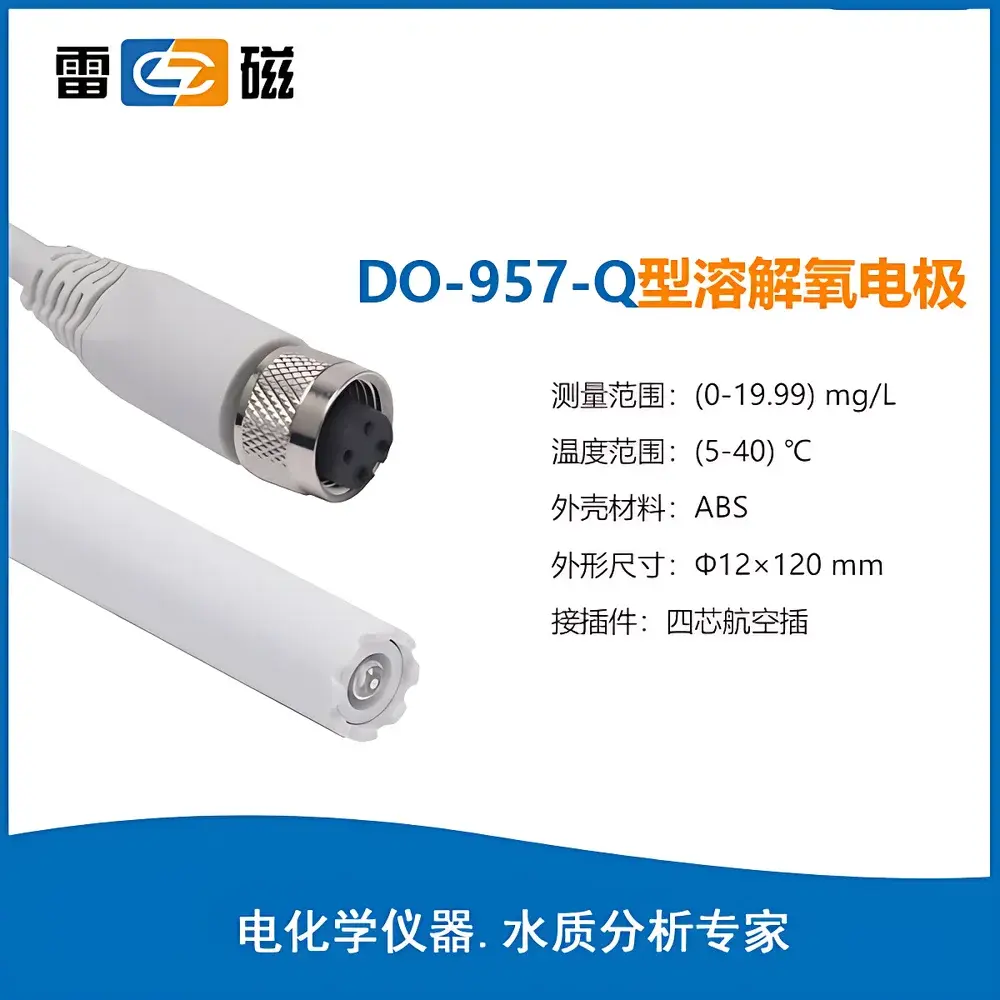
| Standard Electrode | DO-957 Polarographic Dissolved Oxygen Sensor |
Overview
The Leici JPB-607A Portable Dissolved Oxygen Meter is an engineered field-deployable instrument designed for reliable, on-site measurement of dissolved oxygen (DO) concentration in aqueous samples using the Clark-type polarographic electrode principle. This method relies on electrochemical reduction of molecular oxygen at a noble metal cathode (typically gold or platinum) under a fixed applied potential, generating a diffusion-limited current proportional to the partial pressure of oxygen in solution. The sensor incorporates a gas-permeable membrane and internal electrolyte, ensuring selective response to dissolved O2 while minimizing interference from redox-active species. Designed for ambient temperature operation (0.0–40.0 °C), the JPB-607A features automatic temperature compensation based on integrated thermistor readings, correcting for both oxygen solubility changes and electrode kinetics. Its compact form factor, low power consumption, and robust mechanical design support extended battery-powered operation in uncontrolled environmental conditions—making it suitable for routine monitoring in surface water, wastewater effluents, aquaculture systems, and drinking water distribution networks.
Key Features
- Portable handheld configuration with ergonomic housing and IP65-rated enclosure for dust and water resistance during field use
- Backlit LCD display with high-contrast blue illumination for readability under low-light or outdoor conditions
- Integrated automatic temperature compensation (ATC) across the full 0.0–40.0 °C range, eliminating manual correction steps
- Three-point calibration protocol supporting zero-oxygen (sodium sulfite solution), full-scale air-saturation (100% air equilibrium), and salinity adjustment for marine or brackish applications
- Dedicated DO-957 polarographic sensor with Teflon-based gas-permeable membrane, optimized for rapid response (t90 < 60 s) and long-term stability
- Low-power architecture powered by two standard AA alkaline cells, delivering >200 hours of continuous operation per set
- Non-volatile memory storing up to 200 measurement records with timestamp and temperature annotation
Sample Compatibility & Compliance
The JPB-607A is validated for use with natural waters (freshwater, estuarine, and seawater), treated effluents, aquaculture ponds, potable water supplies, and process streams in food and beverage facilities. It complies with fundamental metrological requirements outlined in ISO 5814:2012 (Water quality — Determination of dissolved oxygen — Electrochemical probe method) and supports laboratory and field practices aligned with EPA Method 360.1 and ASTM D888-12. While not certified for regulated GMP/GLP environments without additional validation, its documented accuracy (±0.30 mg/L), repeatability (±0.10 mg/L over 3 h), and traceable calibration procedures enable use in QA/QC workflows where documented uncertainty budgets are maintained. The DO-957 electrode meets material compatibility standards for contact with potable water (NSF/ANSI 61) and exhibits minimal fouling in low-turbidity samples.
Software & Data Management
The JPB-607A operates as a standalone instrument with no proprietary PC software dependency. All calibration parameters, measurement history, and user settings are retained in onboard memory without requiring external connectivity. Data export is performed manually via recorded values or optional IR interface accessories (sold separately). For integration into larger environmental data management systems, users may log measurements directly into LIMS or spreadsheet templates using standardized units (mg/L DO, °C). The device supports audit-ready documentation through printed calibration logs and timestamped field notes. Though lacking 21 CFR Part 11-compliant electronic signatures or encrypted data transfer, its operational simplicity and deterministic behavior make it appropriate for non-regulated monitoring programs governed by internal SOPs.
Applications
- Field verification of DO levels in river, lake, and reservoir sampling campaigns
- Real-time assessment of aeration efficiency in municipal and industrial wastewater treatment plants
- Monitoring dissolved oxygen dynamics in fish hatcheries and shrimp farming operations to prevent hypoxic stress
- Quality control checks during bottling and distribution of carbonated and non-carbonated beverages
- Educational demonstrations of aquatic respiration, photosynthetic oxygen production, and biochemical oxygen demand (BOD) incubation protocols
- Baseline surveys for environmental impact assessments and regulatory compliance reporting under national water quality standards
FAQ
What type of sensor does the JPB-607A use, and how often does it require maintenance?
The instrument employs a Clark-type polarographic DO sensor (model DO-957) with a replaceable Teflon membrane and liquid electrolyte. Membrane replacement and electrolyte refill are recommended every 3–6 months under typical field use, or after exposure to high-solids or sulfide-rich waters.
Can the JPB-607A measure dissolved oxygen in seawater?
Yes—provided salinity compensation is performed using the built-in salt correction function (0–35 g/kg range) during calibration. Accuracy in high-salinity matrices remains within ±0.30 mg/L when calibrated against saturated air at known temperature and salinity.
Is temperature measurement independent of the DO sensor?
No—the temperature reading is derived from a thermistor embedded within the DO-957 electrode body, ensuring spatially co-located thermal sensing for precise compensation.
Does the instrument support GLP-compliant data logging?
It maintains basic timestamped storage but lacks electronic signature, user access controls, or audit trail functionality required for formal GLP or FDA-regulated applications.
How is zero-oxygen calibration performed?
Using freshly prepared sodium sulfite (Na2SO3) solution (1–2% w/v) in deionized water, which chemically scavenges residual oxygen; the sensor is immersed until stable sub-zero reading is achieved (typically <0.05 mg/L).
Related Products







