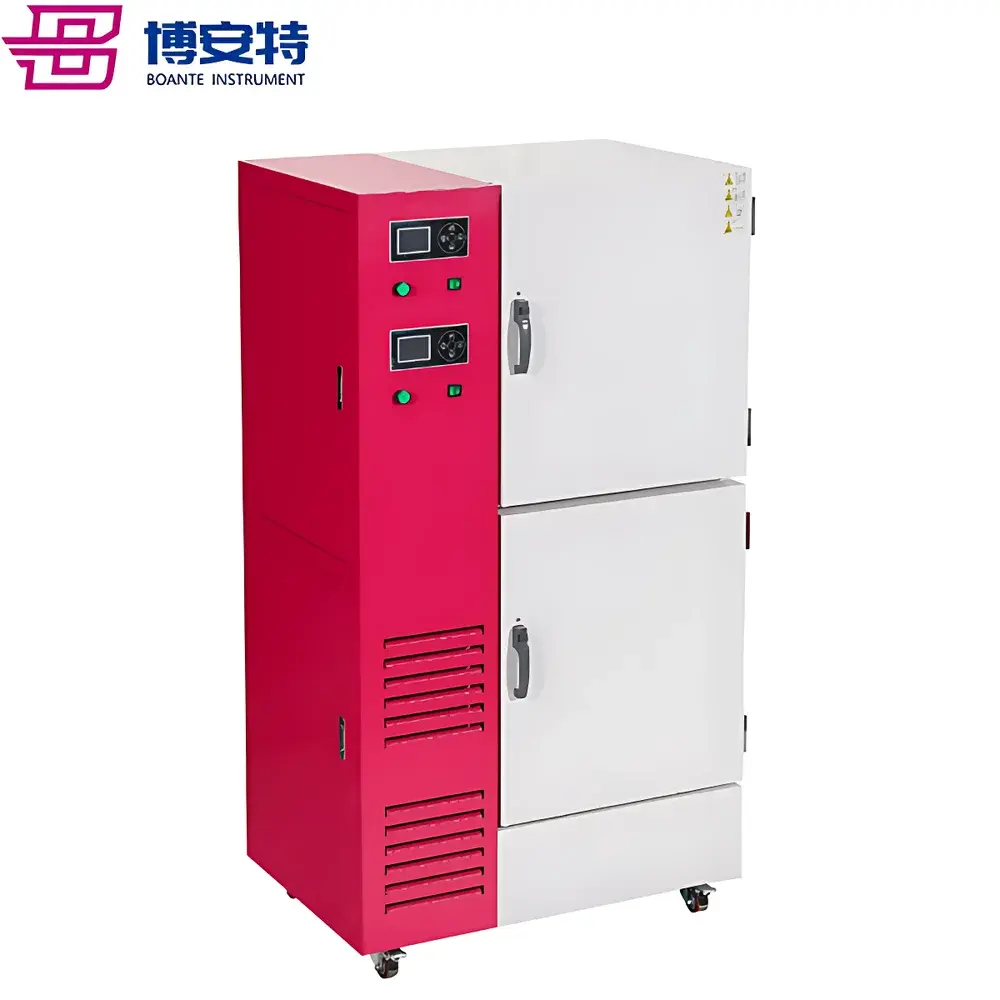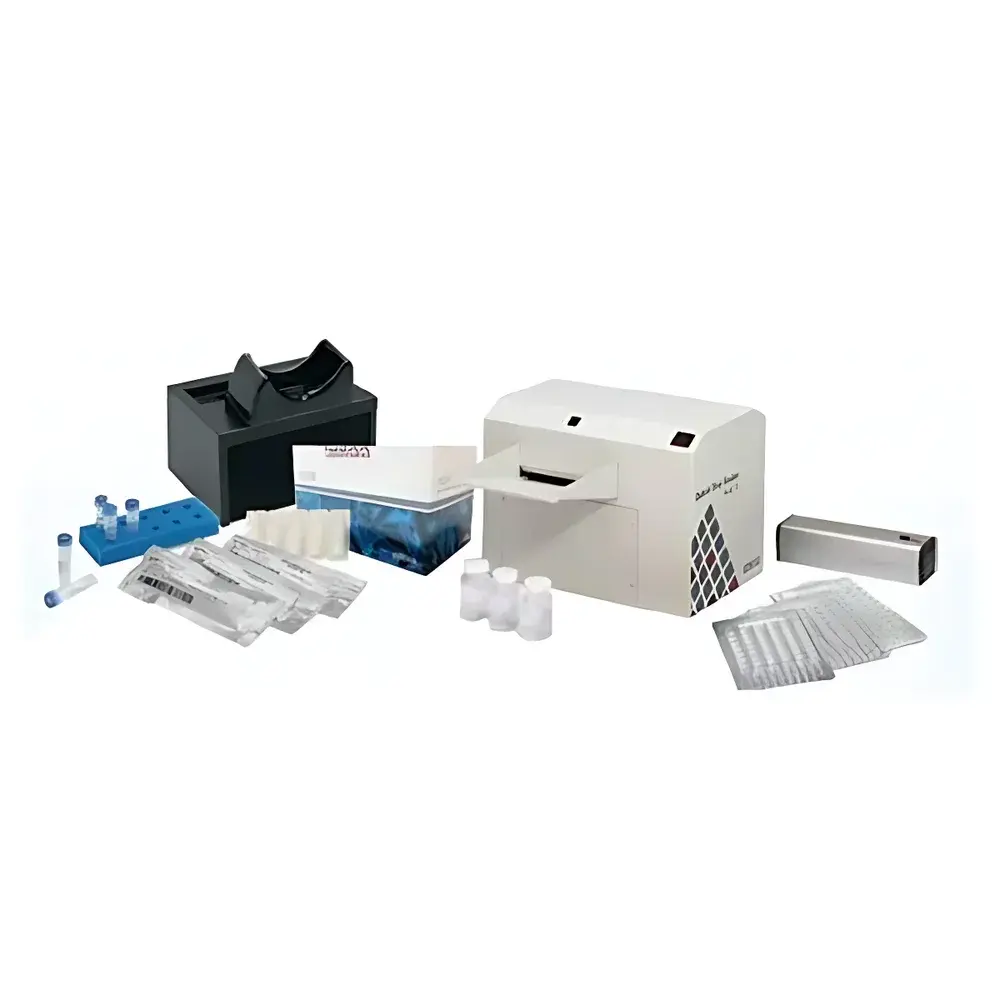
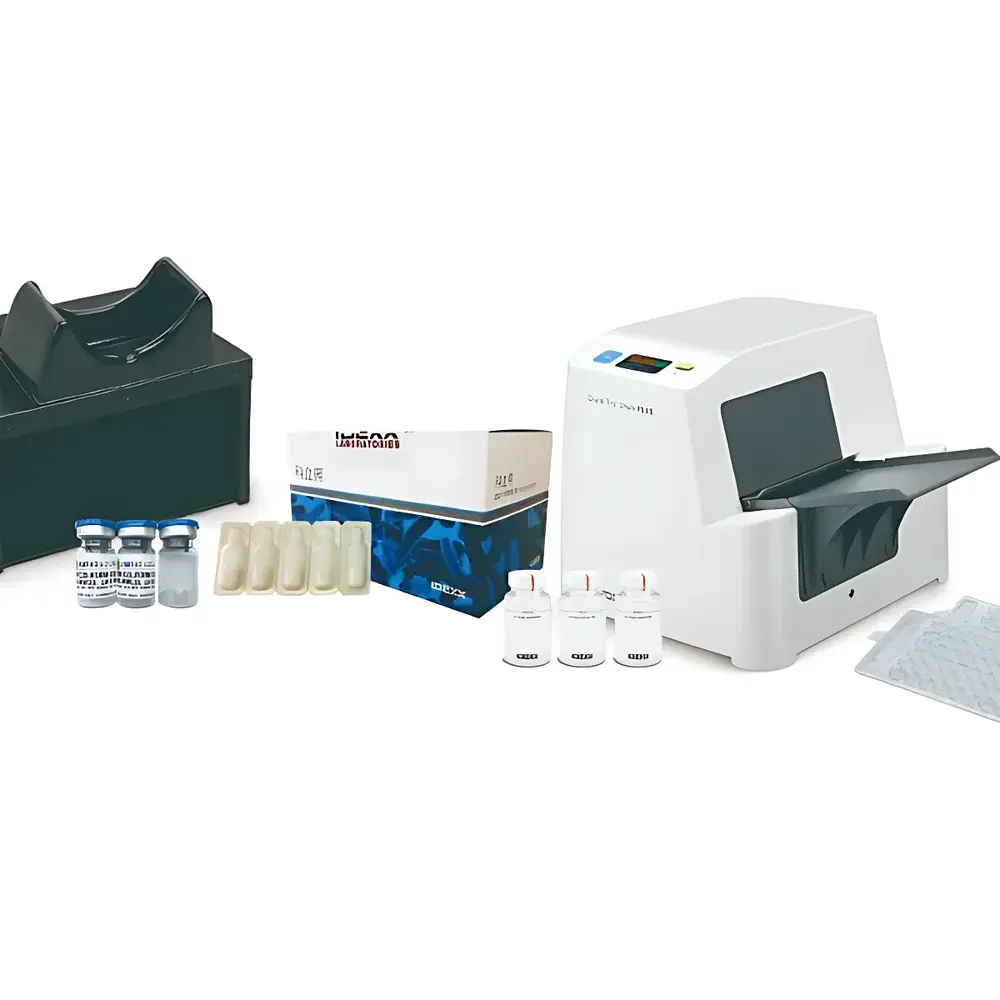
IDEXX CHQC-24 Automated Microbial Detection System
| Brand | IDEXX |
|---|---|
| Origin | Shanghai, China |
| Manufacturer Type | Authorized Distributor |
| Country of Origin | China |
| Model | CHQC-24 |
| Instrument Type | Benchtop |
| Detection Principle | Defined Substrate Technology (DST) Enzyme-Substrate Method |
| Sample Types | Total Coliforms, Fecal Coliforms, Escherichia coli |
| Detection Range | Drinking water, non-potable water, surface water, groundwater, medical wastewater, sewage, source water |
| Detection Time | 24–28 hours |
| Sample Volume | 100 mL per test |
| Sensitivity | 1 MPN/100 mL |
| Regulatory Compliance | GB/T 5750.12–2023, US EPA Method 1603, Standard Methods 9223B, HJ 1001–2018 |
| Certifications | CE-marked sealer |
| Reagent Shelf Life | 12 months (DST reagents), 36 months (Quanti-Tray plates), 18 months (QC standards) |
| Detection Output | Colorimetric (yellow) + fluorometric (UV-induced blue fluorescence at 366 nm) confirmation |
Overview
The IDEXX CHQC-24 Automated Microbial Detection System is a benchtop, standardized platform engineered for rapid, quantitative detection of total coliforms, fecal coliforms, and Escherichia coli in diverse water matrices using Defined Substrate Technology (DST)—a validated enzyme-substrate method grounded in biochemical specificity. Unlike conventional membrane filtration or multiple-tube fermentation, the CHQC-24 leverages chromogenic and fluorogenic substrates (e.g., ortho-nitrophenyl-β-D-galactopyranoside [ONPG] and 4-methylumbelliferyl-β-D-glucuronide [MUG]) to selectively detect β-galactosidase and β-glucuronidase activities—enzymatic markers universally expressed by coliforms and E. coli, respectively. Upon enzymatic cleavage, ONPG yields a yellow chromophore (ortho-nitrophenol), while MUG releases a fluorescent compound detectable under 366 nm UV light. This dual-readout system enables unambiguous differentiation between total coliforms (yellow only) and E. coli (yellow + fluorescence), minimizing subjective interpretation and inter-operator variability. The system implements the Most Probable Number (MPN) statistical framework via Quanti-Tray® technology, delivering regulatory-grade quantification without culture isolation or subculturing.
Key Features
- Automated sample partitioning and sealing using integrated Quanti-Tray® sealing technology—supports both 51-well and 97-well trays for flexible dynamic range (1–200 MPN/100 mL and 1–2,419 MPN/100 mL, respectively)
- Full compliance with GB/T 5750.12–2023, US EPA Method 1603, Standard Methods 9223B, and HJ 1001–2018 for drinking water and environmental water testing
- Benchtop footprint (30 × 39 × 27 cm) with low operational noise (<50 dBA) and thermal safety design (external housing <40°C, internal roller 200 ± 10°C)
- Sealing cycle completed in ≤17 seconds per tray; auto-stop function prevents over-sealing and ensures consistent weld integrity
- Integrated QC traceability: includes NSI-QC certified reference materials for drinking water (MIC-DWCOL) and wastewater (MIC-WWCOL), plus positive control verification via 97-well color standard (WQT2KC)
- No requirement for laminar flow hoods or sterile workspaces—reagents are pre-sterilized and sealed in single-use formats
- Robust mechanical architecture rated for ≥40,000 consecutive seal cycles with minimal maintenance intervals
Sample Compatibility & Compliance
The CHQC-24 system accepts raw, filtered, or chlorinated water samples—including potable supplies, recreational waters, wastewater effluents, groundwater, and hospital discharge streams—without pre-enrichment or dilution in most cases. Its DST-based chemistry tolerates moderate levels of chlorine residual (≤2 mg/L free chlorine) and turbidity (<10 NTU), reducing false-negative risk associated with inhibitor interference. All consumables—including WCHN200 DST reagent vials, WV120SBST-200 sterile sampling bottles (with sodium thiosulfate neutralizer), and WQT100/WQT-2K Quanti-Trays—are manufactured under ISO 13485-aligned quality systems and supplied with lot-specific CoA documentation. The entire workflow meets GLP audit requirements and supports 21 CFR Part 11-compliant data integrity when paired with validated LIMS integration protocols.
Software & Data Management
While the CHQC-24 operates as a hardware-centric platform, its quantitative output is fully digitizable: each sealed tray is interpreted manually or via optional image-capture modules that log well-by-well color/fluorescence status. MPN values are derived from standardized statistical tables embedded in the user manual (based on ISO 7827 and ASTM D5465), and all results—including QC pass/fail status, seal timestamp, operator ID, and environmental conditions—can be recorded in laboratory notebooks or electronic lab notebooks (ELNs) compliant with ALCOA+ principles. Reagent lot numbers, tray batch IDs, and instrument usage logs are retained for full traceability across regulatory inspections (e.g., EPA audits, CNAS accreditation assessments).
Applications
- Routine monitoring of municipal drinking water distribution systems per national regulatory mandates
- Emergency response screening during flood or infrastructure failure events
- Environmental surveillance of bathing beaches, shellfish harvesting zones, and watershed health assessments
- Validation of point-of-use (POU) and point-of-entry (POE) water treatment devices
- Compliance testing for healthcare facility water systems (e.g., dialysis units, surgical sinks) per HTM 04-01 and ASHRAE Guideline 12
- Research applications requiring reproducible, culture-independent enumeration of indicator organisms in ecological or epidemiological studies
FAQ
What regulatory standards does the CHQC-24 system validate against?
It is explicitly validated to GB/T 5750.12–2023, US EPA Method 1603, Standard Methods 9223B, and HJ 1001–2018 for total coliforms and E. coli detection.
Can the system detect other microorganisms beyond coliforms?
Yes—the same platform supports optional DST formulations for Pseudomonas aeruginosa and enterococci when used with corresponding reagent kits and validated protocols.
Is UV illumination required for final interpretation?
Fluorescence confirmation of E. coli requires a 366 nm UV lamp (e.g., WEA160F); however, total coliform enumeration is possible via visual yellow color alone.
How is instrument performance verified daily?
Each assay must include NSI-QC reference standards (MIC-DWCOL or MIC-WWCOL) and a 97-well positive control comparator (WQT2KC) to verify substrate activity, sealing integrity, and reader consistency.
What is the maximum throughput capacity per operator per day?
Assuming parallel processing and standard workflow, one trained technician can prepare, seal, and incubate up to 40 samples (100 mL each) within an 8-hour shift—with hands-on time under 10 minutes per batch.