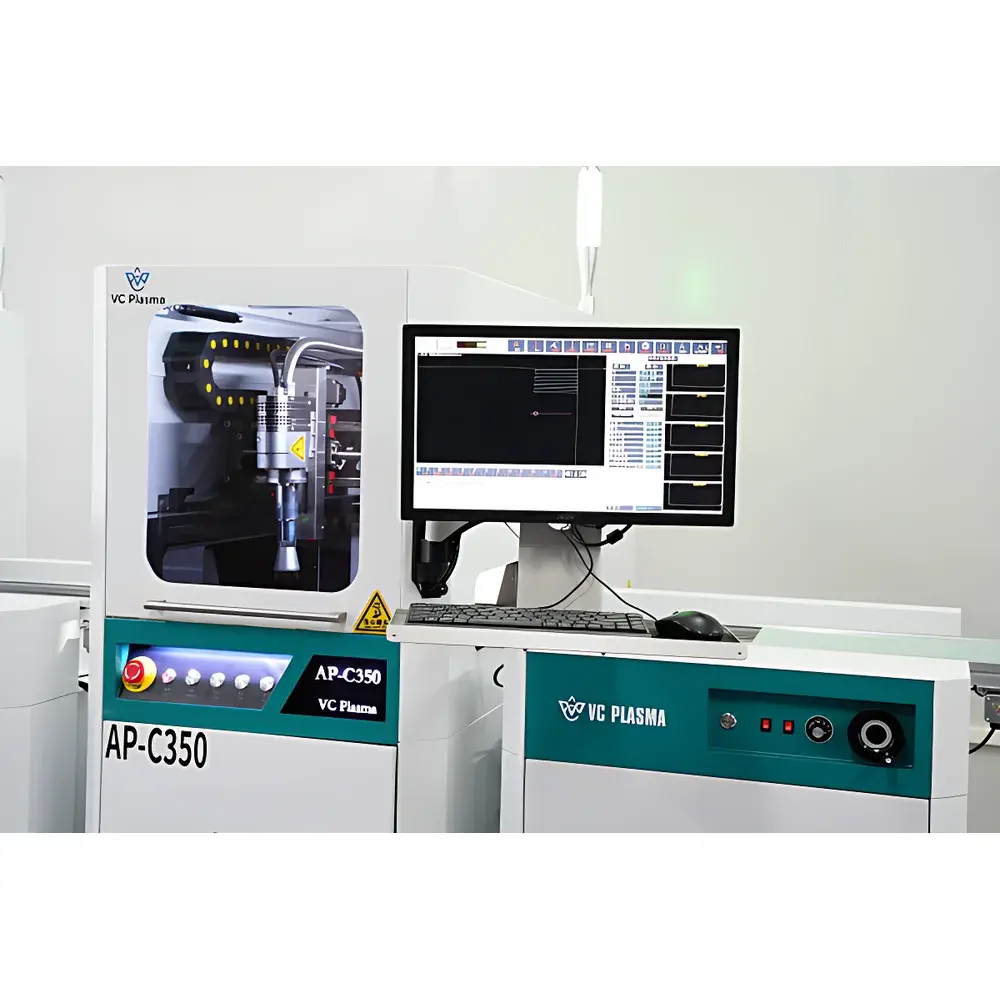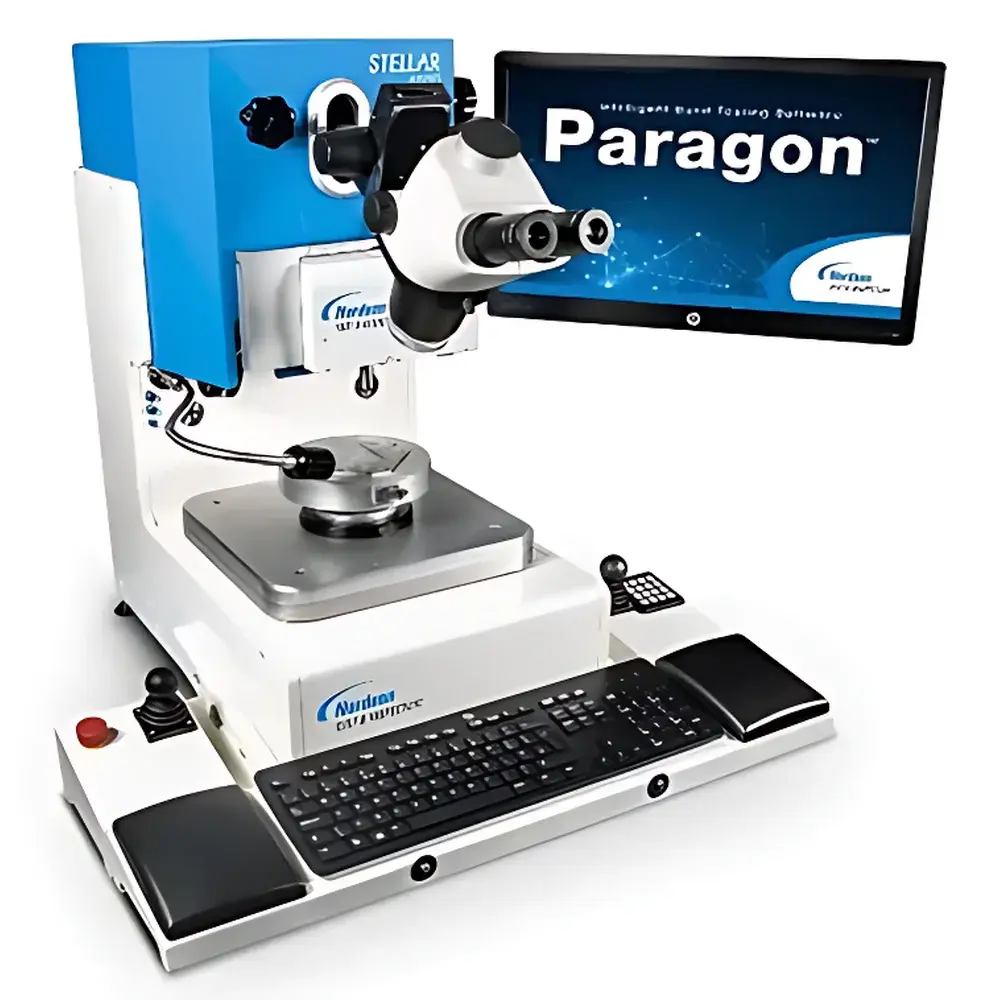
Nordson Dage STELLAR 4000 Bond Strength Tester
| Brand | Nordson Dage |
|---|---|
| Origin | Jiangsu, China |
| Manufacturer Type | Authorized Distributor |
| Origin Category | Domestic (China-manufactured under Nordson Dage OEM/assembly partnership) |
| Model | STELLAR 4000 |
| Quotation | Upon Request |
| Force Measurement Principle | Electro-mechanical Load Cell with Frictionless Transduction |
| Positioning Accuracy | ±1 µm |
| System Force Accuracy | ±0.25 % FS |
| XYZ Travel Range | 100 mm × 100 mm × 65 mm |
| XY Speed | Up to 2 mm/s |
| XY Resolution | 500 nm |
| Footprint (W×D×H) | 705 mm × 562 mm × 675 mm |
| Weight | 86 kg |
| Power Supply | 100–240 VAC, Single-phase |
| Pneumatic Supply | ≥4.0 bar |
Overview
The Nordson Dage STELLAR 4000 Bond Strength Tester is a precision-engineered, manually operated mechanical test platform designed specifically for bond integrity verification in semiconductor packaging and microelectronics manufacturing environments. It operates on the principle of controlled force application—via calibrated electro-mechanical transduction—to quantify interfacial strength between bonded structures, including wire bonds, die attach interfaces, solder bumps, and flip-chip interconnects. Unlike generic tensile testers, the STELLAR 4000 integrates metrology-grade motion control, sub-micron positioning repeatability, and load-cell-based force measurement traceable to national standards. Its architecture complies with the mechanical and environmental requirements defined in JEDEC JESD22-B116 (Wire Bond Pull Test), JESD22-B117 (Die Shear Test), and IPC-9701A (Performance Requirements for Solder Attachments), making it suitable for qualification, process validation, and in-line quality control within ISO 9001 and IATF 16949-certified facilities.
Key Features
- Modular test configuration: Supports wire pull, ball shear, chip push, ball lift (ball pull), and tweezer pull modes via interchangeable tooling fixtures—enabling full coverage of standard semiconductor interconnect failure modes.
- Frictionless load cell technology: Eliminates mechanical hysteresis and stiction effects, ensuring high reproducibility (<0.5 % RSD across repeated measurements) and long-term calibration stability.
- High-resolution XYZ stage: 500 nm positional resolution and ±1 µm repeatability over 100 mm × 100 mm × 65 mm travel range, enabling precise alignment under optical magnification.
- Ergonomic workstation design: Adjustable microscope height, cushioned armrests, anti-vibration optical baseplate, and fully controllable coaxial LED illumination reduce operator fatigue during extended shift operation—validated per ISO 11228-1 (Manual handling — Lifting and carrying).
- Rugged monolithic frame construction: Cast aluminum chassis with reinforced linear guides ensures mechanical stability under dynamic loading, minimizing thermal drift and vibration coupling during high-speed testing.
- Paragon™ Lite software interface: Intuitive Windows-based GUI supporting real-time force-displacement curve acquisition, pass/fail threshold definition, batch reporting, and export to CSV or PDF formats compliant with internal QA documentation workflows.
Sample Compatibility & Compliance
The STELLAR 4000 accommodates substrates ranging from bare silicon wafers (2″ to 12″) to molded packages (QFN, BGA, SOIC, WLCSP), discrete power devices, and hybrid modules. Tooling supports both thermosonic and ultrasonic wire bonding configurations (gold, copper, aluminum), as well as solder bump shear evaluation per IPC-J-STD-001 and JEDEC J-STD-020. All force calibration procedures follow ISO/IEC 17025 requirements and are supported by factory-issued NIST-traceable certificates. The system meets CE marking directives for machinery safety (2006/42/EC) and electromagnetic compatibility (2014/30/EU). Optional audit trail logging and electronic signature modules enable alignment with FDA 21 CFR Part 11 and EU Annex 11 expectations where required for regulated production environments.
Software & Data Management
Paragon™ Lite provides deterministic data capture at up to 1 kHz sampling rate, synchronized with stage position feedback. Each test record includes timestamp, operator ID, sample ID, fixture type, test mode, peak force, displacement at failure, and curve metadata. Reports are structured to support SPC analysis (X̄-R charts, Cp/Cpk calculation) and can be integrated into MES or LIMS platforms via ODBC or REST API (available in Paragon Pro upgrade path). Raw .DAT files retain full waveform fidelity for root-cause failure mode analysis—including ductile vs. brittle fracture identification based on slope inflection and energy absorption metrics.
Applications
- Qualification of wire bond parameters (loop height, bond force, ultrasonic energy) during new product introduction (NPI).
- Process capability assessment of die attach adhesives and eutectic solders in power module assembly.
- Reliability screening of flip-chip interconnects post-temperature cycling or humidity storage (JEDEC JESD22-A101).
- Failure analysis correlation between mechanical test results and cross-sectional SEM imaging.
- Supplier incoming inspection for automotive-grade ICs requiring AEC-Q100 stress test compliance evidence.
- Training and certification of operators in standardized bond strength methodology per IPC-A-610 and IPC-J-STD-001.
FAQ
Is the STELLAR 4000 compatible with automated data logging for GMP environments?
Yes—when equipped with Paragon™ Pro software and optional 21 CFR Part 11 compliance package, it supports electronic signatures, audit trails, and role-based access control.
Can the system perform both static and dynamic shear testing?
It performs quasi-static shear per JEDEC standards; dynamic shear (e.g., high-strain-rate) requires the Nordson Dage 4600 series or specialized add-on modules.
What calibration frequency is recommended for production use?
Annual calibration is standard; however, daily verification using certified reference weights and stage calibration artifacts is advised per ISO 10012.
Does the instrument support third-party tooling integration?
Yes—mechanical and electrical interfaces comply with SEMI E10 and E30 standards, allowing validated custom tooling development under Nordson Dage engineering review.
Is pneumatic supply mandatory for all test modes?
Pneumatics are required only for actuated tooling (e.g., auto-clamping chucks); manual fixtures operate without compressed air.