
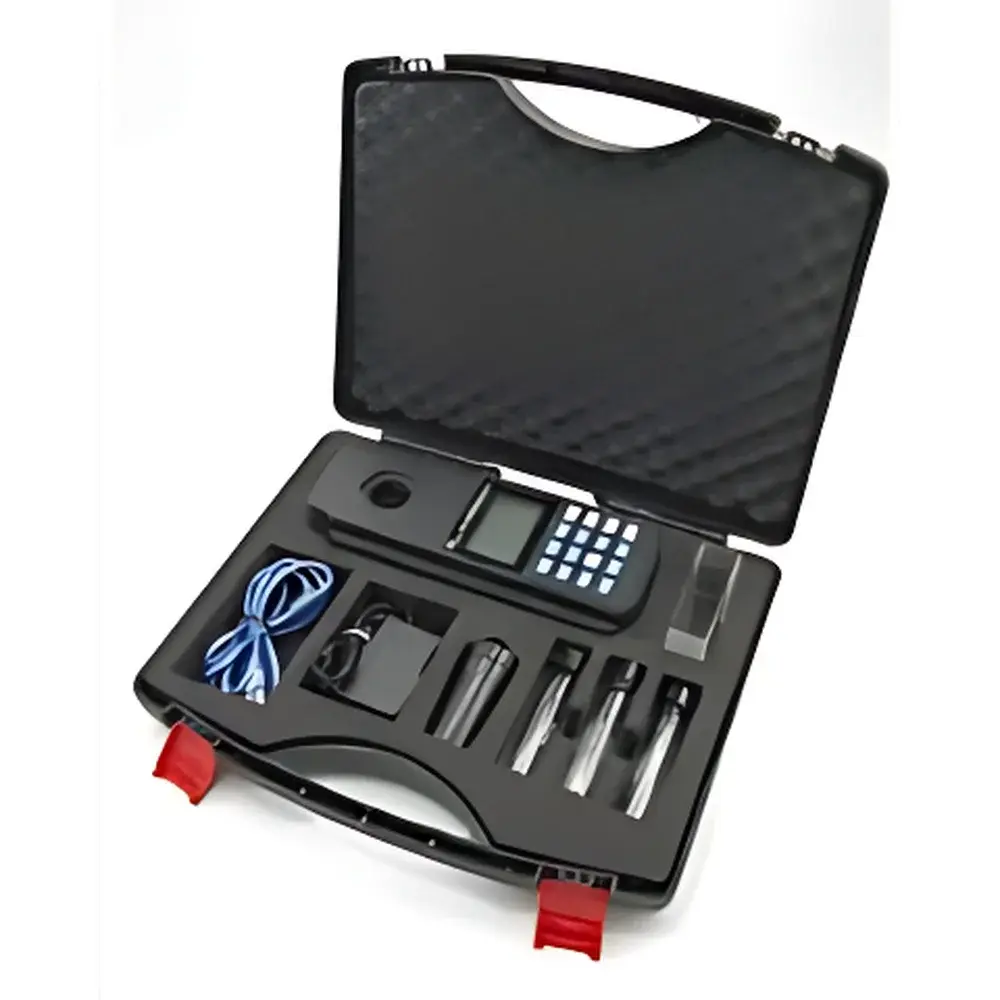
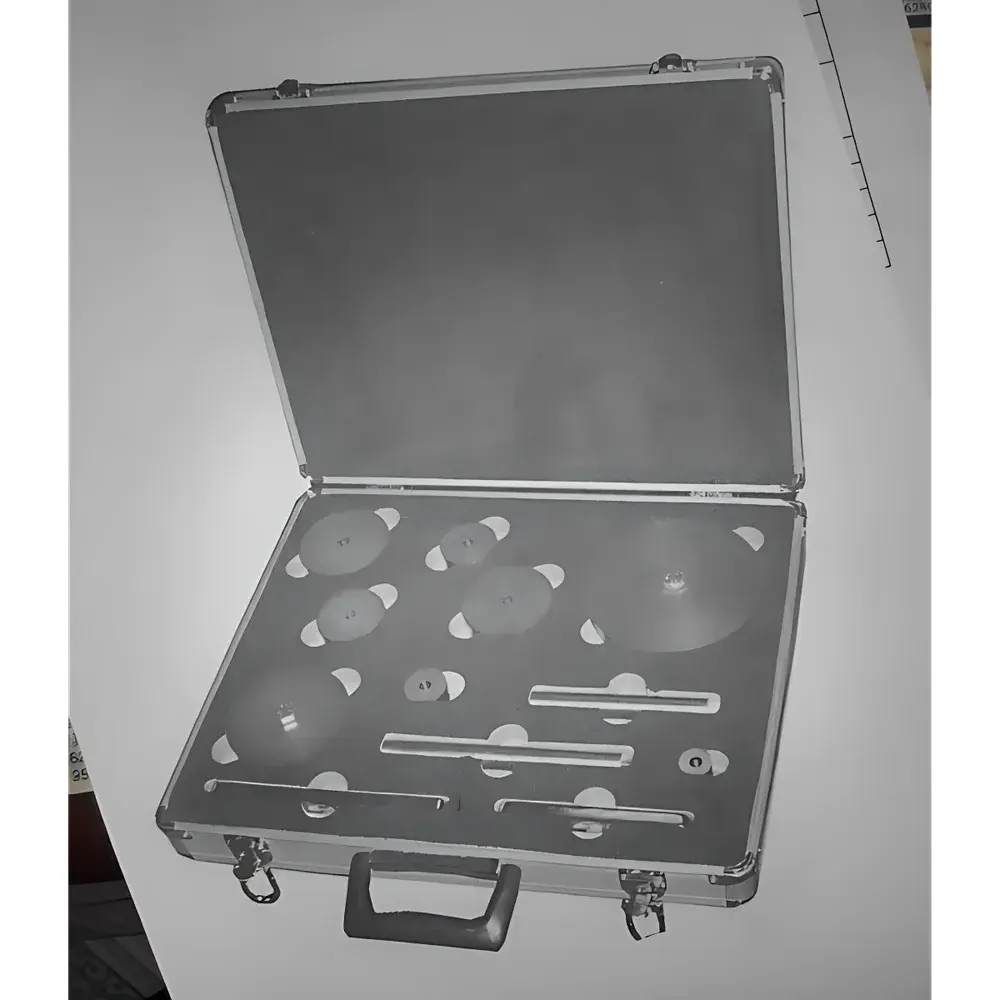
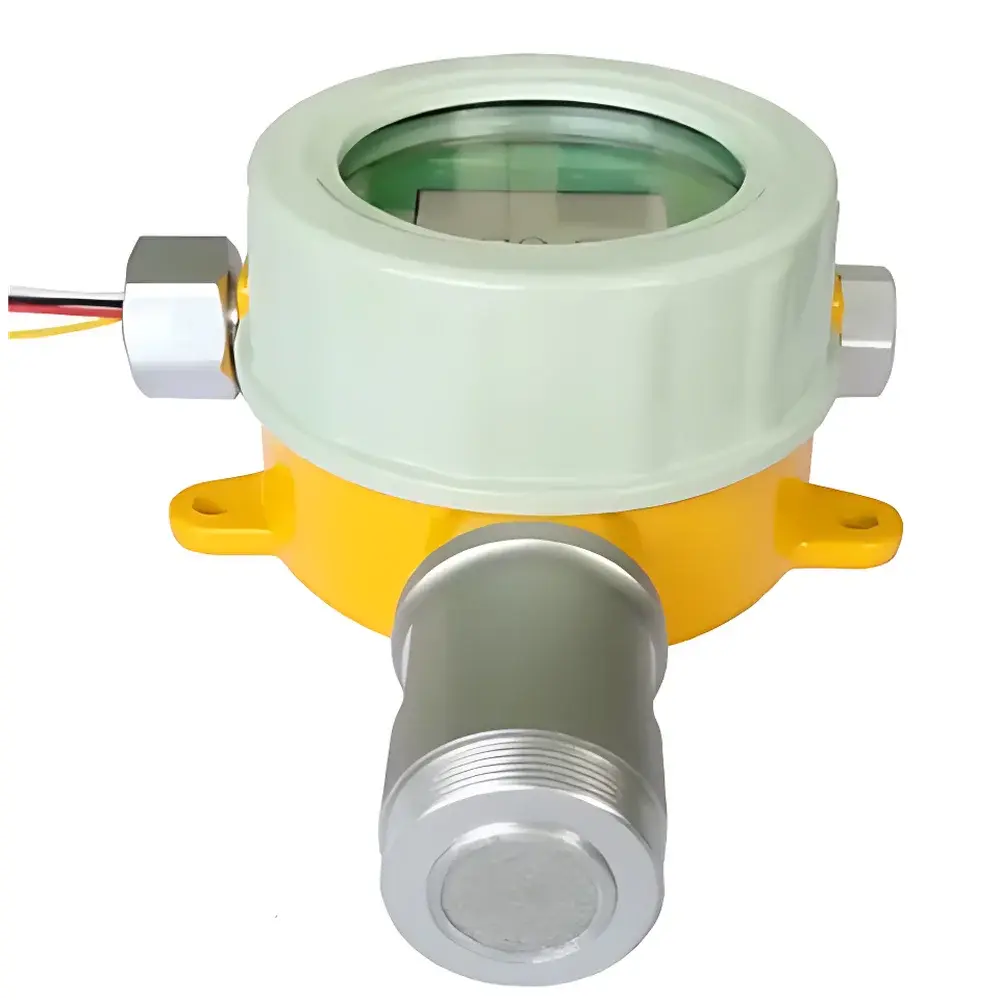
Hengaode HAD-3N Portable Tri-Nitrogen Analyzer (Ammonia Nitrogen / Nitrite Nitrogen / Nitrate Nitrogen)
| Brand | Hengaode |
|---|---|
| Origin | Beijing, China |
| Model | HAD-3N |
| Measurement Range | NH₃-N: 0.02–6.00 mg/L |
| NO₂⁻-N | 0.02–1.00 mg/L |
| NO₃⁻-N | 0.20–10.00 mg/L |
| Accuracy | ≤±3% ±0.01 mg/L |
| Resolution | 0.01 mg/L |
| Repeatability | ≤2% |
| Optical Drift | <0.002 A in 20 min |
| Dimensions | 80 × 230 × 55 mm |
| Power Supply | Rechargeable Li-ion battery |
| Weight | 1.0 kg |
Overview
The Hengaode HAD-3N Portable Tri-Nitrogen Analyzer is a field-deployable photometric instrument engineered for rapid, on-site quantification of three critical nitrogen species in aqueous matrices: ammonia nitrogen (NH₃-N), nitrite nitrogen (NO₂⁻-N), and nitrate nitrogen (NO₃⁻-N). It operates on the principle of colorimetric analysis using stable monochromatic cold-light sources and pre-calibrated reaction chemistries compliant with standard methods (e.g., ISO 7150-1 for ammonia, ISO 6777 for nitrite, and ISO 7890-3 for nitrate). The integrated microprocessor performs automatic zero correction, blank subtraction, and concentration calculation in real time, eliminating manual interpolation and minimizing operator error. Designed for environmental monitoring workflows, the HAD-3N delivers laboratory-grade data integrity under non-laboratory conditions—supporting regulatory compliance in drinking water safety (WHO Guidelines, EPA Method 350.1), wastewater discharge verification (ISO 15681), and surface water quality assessment (EU WFD parameters). Its compact form factor and battery-powered operation enable uninterrupted use during mobile surveys, emergency response deployments, or routine utility inspections.
Key Features
- Triple-parameter capability: Simultaneous measurement of NH₃-N, NO₂⁻-N, and NO₃⁻-N using dedicated reagent kits and wavelength-specific optical channels.
- High-precision photometry: Monochromatic cold-light source ensures minimal thermal drift and spectral interference; optical stability maintained at <0.002 A over 20 minutes.
- Microcomputer-controlled data processing: Automatic calibration curve application, temperature compensation, and outlier rejection per ASTM D5117 protocols.
- Robust field design: IP65-rated enclosure, shock-absorbing housing, and low-power consumption (≤1.2 W average) support extended operation on a single lithium-ion charge cycle.
- Trace-level resolution: 0.01 mg/L minimum detectable concentration across all three analytes, meeting detection limit requirements for oligotrophic water bodies and treated effluent verification.
- Compliance-ready output: Direct digital display of concentration values (mg/L) with unit auto-selection; supports GLP-compliant record keeping via optional USB data export.
Sample Compatibility & Compliance
The HAD-3N is validated for use with raw and treated potable water, groundwater, surface water (rivers, lakes, reservoirs), municipal and industrial wastewater, and process water in food/beverage and pharmaceutical manufacturing. Sample turbidity up to 5 NTU does not require pretreatment; higher turbidity necessitates filtration via 0.45 µm membrane prior to analysis. All assay chemistries conform to internationally recognized standard methods—including APHA 4500-NH₃ B (ammonia), APHA 4500-NO₂⁻ B (nitrite), and APHA 4500-NO₃⁻ E (nitrate)—and are compatible with ISO/IEC 17025-accredited laboratory workflows. Instrument performance meets the repeatability (≤2%) and accuracy (≤±3% ±0.01 mg/L) criteria specified in ISO 8466-1 for calibration validation. No hazardous reagents (e.g., cadmium reduction columns) are required for nitrate analysis, reducing disposal liability and enabling safer field use.
Software & Data Management
While the HAD-3N operates as a standalone instrument with embedded firmware, its architecture supports traceable data governance. Internal memory logs up to 500 test records—including date/time stamp, sample ID, measured value, operator code, and method identifier—retained for ≥12 months without power. Optional PC connectivity (via USB-C interface) enables secure transfer of CSV-formatted datasets compliant with FDA 21 CFR Part 11 audit trail requirements when used with validated third-party software. Firmware updates preserve calibration coefficients and user-defined method settings. All displayed results include uncertainty indicators derived from built-in precision checks, supporting ISO/IEC 17025 Clause 7.7 reporting obligations. No cloud synchronization or remote telemetry is implemented—ensuring full data sovereignty and alignment with ITAR and GDPR boundary constraints.
Applications
- Drinking water utilities: Routine verification of ammonia breakpoint chlorination efficiency and nitrite/nitrate levels post-filtration.
- Wastewater treatment plants: Monitoring nitrification/denitrification kinetics in activated sludge systems and tertiary denitrification filters.
- Environmental agencies: Field screening of agricultural runoff, eutrophication hotspots, and wetland nutrient loading assessments.
- Industrial hygiene: Verification of cooling tower water quality per ASHRAE 12-2022 biocide efficacy protocols.
- Educational laboratories: Undergraduate and graduate instruction in environmental chemistry, limnology, and water resource engineering.
- Emergency response: Rapid triage of contamination events involving fertilizer spills, septic system failures, or livestock waste lagoons.
FAQ
Does the HAD-3N require daily recalibration?
No. Factory-applied calibration curves remain stable for ≥6 months under normal storage and usage conditions. Verification against NIST-traceable standards is recommended before each sampling campaign or after exposure to extreme temperatures (>45°C or <0°C).
Can the instrument measure seawater samples?
Not directly—high chloride concentrations interfere with nitrite and nitrate assays. Dilution with deionized water and matrix-matched calibration are required; salinity correction factors must be applied per ISO 5667-3 Annex C.
Is the reagent kit certified for regulatory reporting?
Yes. Each batch of HAD-3N reagents undergoes lot-specific validation per ISO 17034 and includes CoA documentation verifying shelf-life, LOD/LOQ, and inter-batch consistency.
What maintenance is required beyond reagent replacement?
Quarterly optical path cleaning with lint-free swabs and isopropyl alcohol; annual verification of light source intensity using built-in diagnostic mode (accessible via service menu).
How is data integrity ensured during battery depletion?
The instrument implements write-protected memory buffering: all active measurements complete and commit to flash storage prior to shutdown, even during sudden power loss.







