
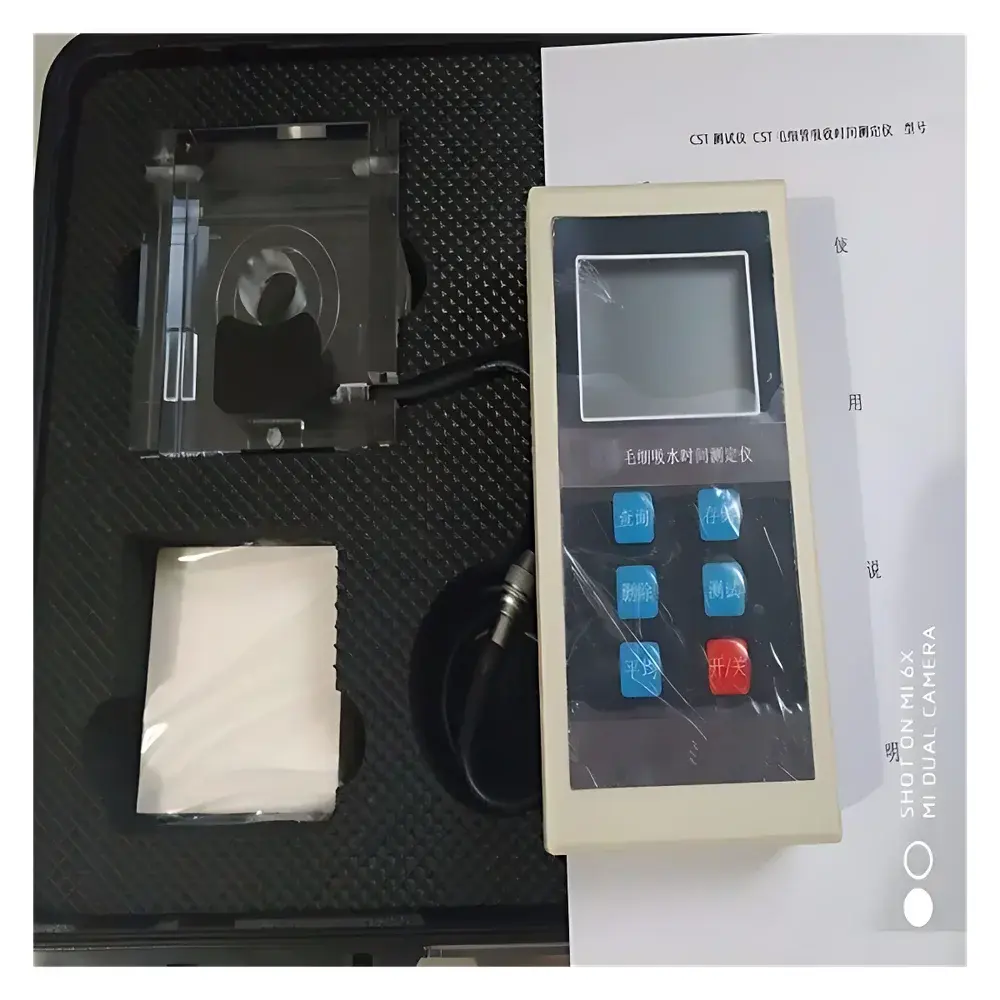
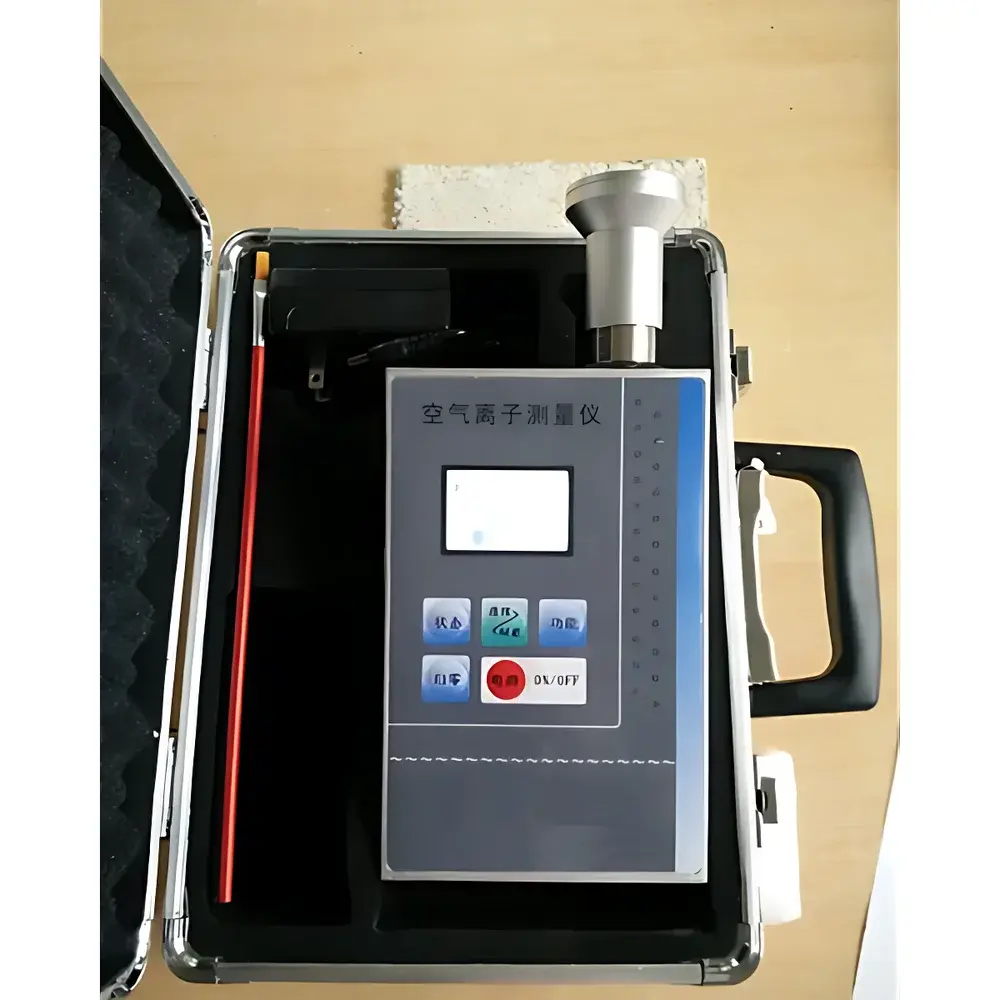
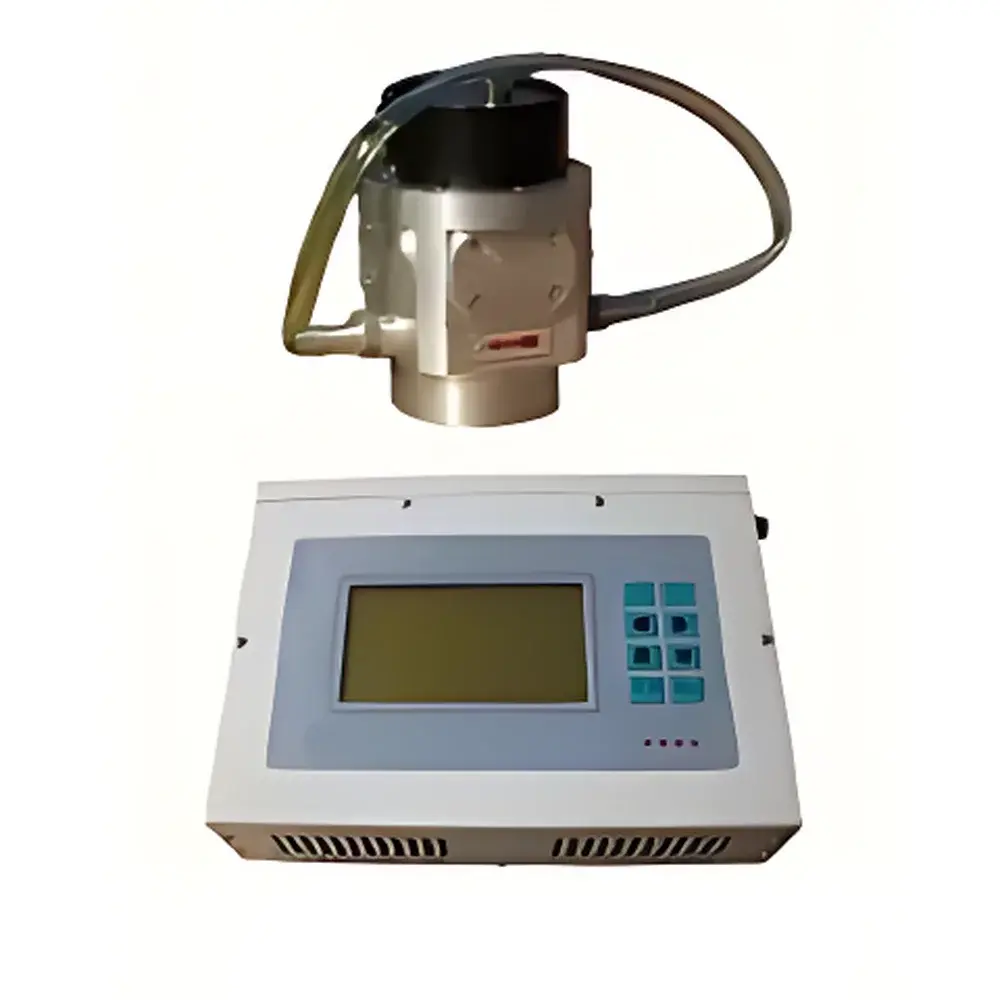
Hengao De HDFC-10A Capillary Suction Time (CST) Analyzer for Sludge Dewaterability and Drilling Fluid Inhibition Assessment
| Brand | Hengao De |
|---|---|
| Origin | Beijing, China |
| Manufacturer Type | Authorized Distributor |
| Country of Origin | China |
| Model | HDFC-10A |
| Price | USD 138 (FOB Beijing) |
| Dimensions (Instrument) | 82 × 152 × 35 mm |
| Dimensions (Carrying Case) | 310 × 286 × 98 mm |
| Weight (Total) | 1.2 kg |
| Power Supply | 3 V DC (2 × AA alkaline batteries) |
| Operating Temperature | −10 to 55 °C |
| Relative Humidity | 0–95 % RH (non-condensing) |
| Measurement Range | 0–999 s |
| Resolution | 0.1 s |
| Data Storage | Up to 30 sequential readings per test session |
Overview
The Hengao De HDFC-10A Capillary Suction Time (CST) Analyzer is a precision field- and laboratory-grade instrument engineered for rapid, reproducible quantification of sludge dewaterability and colloidal stability in aqueous suspensions. Based on the standardized capillary suction principle—first introduced internationally in the early 1970s—the device measures the time required for a defined volume of filtrate to be drawn by capillary action through a filter paper under constant pressure differential. This time value (in seconds) correlates directly with the specific resistance to filtration (SRF), surface charge density, and polymer conditioning efficiency of municipal, industrial, or anaerobic digested sludges. In oilfield applications, CST serves as a validated proxy for clay dispersion inhibition, shale hydration suppression, and drilling fluid rheological stabilization—enabling objective comparison of inhibitor performance across formulations. The analyzer employs a Microchip PIC-based embedded controller for timing accuracy ±0.1 s, eliminating operator-dependent variability inherent in manual stopwatch methods.
Key Features
- High-resolution timing engine with 0.1-second resolution and automatic 30-cycle data logging per test sequence
- Compact, battery-powered design (2 × AA cells) enabling portable operation in wastewater treatment plants, field laboratories, and drilling rig sites
- Robust mechanical architecture with calibrated capillary test chamber, precision-machined sample holder, and standardized Whatman Grade 17 filter paper compatibility
- Integrated ambient temperature and humidity monitoring (−10 to 55 °C / 0–95 % RH) to support ASTM D2492 and ISO 16269-6 environmental correction protocols
- Compliance-ready design: All measurement logic adheres to the principles outlined in EPA Method 1680 (Sludge Dewatering Evaluation) and API RP 13B-1 (Drilling Fluid Rheology)
Sample Compatibility & Compliance
The HDFC-10A accepts raw, conditioned, or chemically treated sludges (primary, secondary, and digested), activated carbon suspensions, bentonite slurries, and synthetic drilling fluids. It accommodates solids concentrations from 0.5 % to 12 % w/w without dilution. Filter paper selection follows ISO 4002 and ASTM E128 standards; standard testing uses 90-mm-diameter Grade 17 filter paper (12.5 µm nominal pore size). For regulatory traceability, the instrument supports GLP-compliant documentation workflows when paired with external lab notebooks or LIMS-integrated reporting tools. While not FDA 21 CFR Part 11 certified as a standalone unit, its deterministic timing algorithm and non-volatile memory storage meet audit requirements for routine process control in municipal water utilities operating under ISO 9001 and ISO/IEC 17025 frameworks.
Software & Data Management
The HDFC-10A operates autonomously without PC dependency; however, raw CST values (0–999 s) and timestamped test sequences are exportable via optional RS-232 serial interface (TTL-level) for integration into SCADA systems or Excel-based trend analysis. Each test session stores up to 30 consecutive measurements with automatic averaging, min/max deviation flags, and pass/fail threshold alerts (configurable via front-panel button interface). No proprietary software is required—data files conform to ASCII CSV format with headers: “Test_ID, Timestamp, CST_s, Temp_C, RH_pct”. For quality assurance, the device retains calibration history and battery voltage logs accessible via diagnostic mode, supporting internal QA/QC review per ISO/IEC 17025 clause 7.7.
Applications
- Municipal Wastewater Treatment: Optimization of cationic polyacrylamide (PAM) dosage prior to belt filter presses, centrifuges, or drying beds; correlation with cake solids content and specific energy consumption
- Industrial Sludge Management: Evaluation of lime, ferric chloride, or enzymatic conditioning efficacy for electroplating, food processing, or pharmaceutical waste streams
- Oilfield Chemistry: Benchmarking shale inhibitors (e.g., KCl, glycols, amine-based polymers) against reactive clays (smectite, illite); validation of fluid loss additive synergies
- Research & Development: Screening novel flocculants, nanocellulose dispersants, or bio-based coagulants using standardized CST–SVI–CST ratio matrices
- Regulatory Reporting: Generation of repeatable, auditable dewaterability indices for permit compliance under EU Directive 86/278/EEC and US EPA 503 Rule Annex A
FAQ
What is the physical principle underlying CST measurement?
CST relies on capillary-driven flow through a fixed-porosity filter medium. The time required for a 0.5 mL filtrate front to traverse a 10-mm radial distance reflects the combined effects of particle size distribution, zeta potential, and interstitial water viscosity—quantified as an empirical dewaterability index.
Can the HDFC-10A be used for non-sludge samples such as drilling muds?
Yes. The instrument is routinely deployed in upstream oilfield labs to assess inhibition performance of water-based muds (WBM) and synthetic-based muds (SBM) per API RP 13B-1 Annex B protocols.
Is filter paper included with the instrument?
No. Users must procure certified Whatman Grade 17 or equivalent ISO 4002-compliant filter paper separately to ensure inter-laboratory comparability.
How often does the instrument require calibration verification?
Annual verification against NIST-traceable timing standards is recommended. Internal clock drift is <±0.05 s/month at 25 °C; no user-accessible calibration constants are exposed.
Does the device comply with ASTM D2492 or ISO 16269-6?
It implements the core methodology of both standards but is not formally certified. Laboratories must validate method equivalence per ISO/IEC 17025 clause 7.2.2 prior to accredited use.







