
Hengao De HAD-ST121 GB1410-Compliant Digital High-Resistance Meter for Volume & Surface Resistivity and Microcurrent Measurement
| Brand | Hengao De |
|---|---|
| Model | HAD-ST121 |
| Origin | Beijing, China |
| Resistance Range | 1×10⁴ Ω to 1×10¹⁸ Ω |
| Current Range | 1×10⁻¹⁶ A to 2×10⁻⁴ A |
| Test Voltages | 10 V / 50 V / 100 V / 250 V / 500 V / 1000 V (selectable) |
| Basic Accuracy | ±2% |
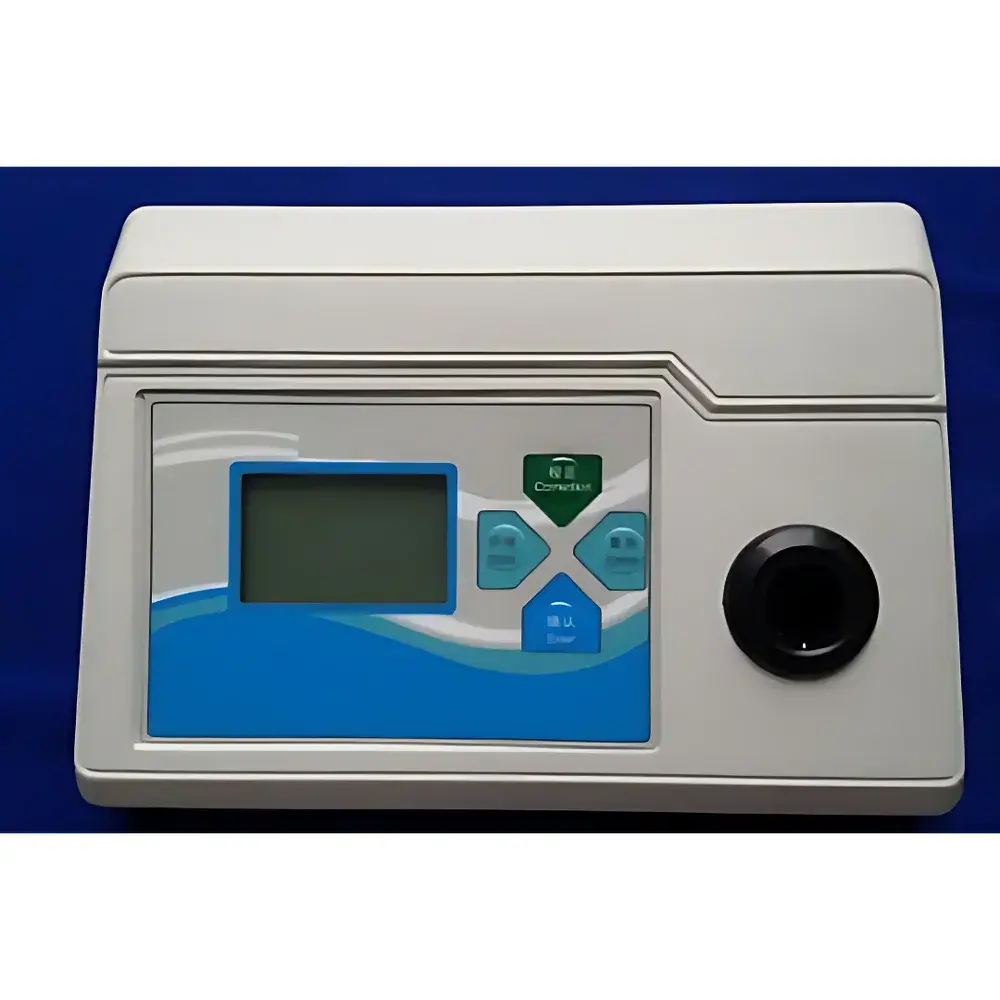
| Display | Dual LCD (resistance + current) |
| Dimensions | 285 mm × 245 mm × 120 mm |
| Weight | ~5 kg |
| Power Supply | AC 220 V, 50 Hz, ~5 W |
| Operating Environment | 0–40 °C, RH < 80% |
Overview
The Hengao De HAD-ST121 Digital High-Resistance Meter is an engineered solution for precise, traceable measurement of volume resistivity, surface resistivity, and electrical conductivity of solid, powdered, and liquid insulating materials — fully compliant with GB 1410–2006 and ASTM D257. Based on the guarded two-terminal and three-terminal (electrode-guarded) DC voltage-current method, the instrument applies a stable, calibrated high-voltage source across standardized electrode configurations (e.g., concentric ring, parallel plate, or liquid cell) and measures resulting leakage current with sub-femtoamp resolution. This principle enables direct calculation of resistivity (ρ, in Ω·cm) and surface resistance (Rs, in Ω/sq) using geometric correction factors defined in IEC 60093 and ISO 3915. Designed for QC laboratories, R&D facilities, and materials certification bodies, the HAD-ST121 delivers metrologically sound data suitable for regulatory submissions, internal quality audits, and comparative material qualification under GLP and ISO/IEC 17025 frameworks.
Key Features
- Wide dynamic range: 1×10⁴ Ω to 1×10¹⁸ Ω for resistance; 1×10⁻¹⁶ A to 2×10⁻⁴ A for current — enabling characterization from conductive polymers to ultra-high-purity ceramics.
- Multi-step DC test voltages (10 V, 50 V, 100 V, 250 V, 500 V, 1000 V) with automatic range selection and real-time resistance readout — eliminating manual scaling or coefficient corrections.
- Dual-parameter LCD display showing simultaneous resistance and current values — critical for verifying Ohmic behavior and detecting dielectric breakdown onset.
- Integrated shielding and guarded input architecture minimizes stray capacitance and triboelectric noise, ensuring stability during long-duration measurements (>60 s integration).
- Compact benchtop form factor (285 × 245 × 120 mm) with low power consumption (~5 W) — suitable for shared lab spaces and mobile testing carts.
- Compliance-ready design: All test procedures align with mandatory clauses in GB 1410–2006 (including electrode geometry, conditioning time, humidity control), and support traceable calibration per JJG 1005–2019 (Chinese national verification regulation for high-resistance meters).
Sample Compatibility & Compliance
The HAD-ST121 supports standardized electrode fixtures for solids (ASTM D257 Type A/B/C electrodes), powders (compressed pellet cells with guard rings), and liquids (guarded coaxial cell per IEC 60247). It meets requirements for electrical insulation testing of rubber compounds, epoxy resins, silicone gels, polymer films, ceramic substrates, and battery separator membranes. Regulatory alignment includes: GB 1410–2006 (China), ASTM D257–14 (US), IEC 60093:1980 (international), and ISO 3915:1991. For GMP-regulated environments, the instrument’s fixed voltage steps, non-volatile memory for test parameters, and dual-display verification support audit trails under FDA 21 CFR Part 11 when paired with documented SOPs and external calibration certificates.
Software & Data Management
While the HAD-ST121 operates as a standalone bench instrument, its analog output interface (optional) allows integration into SCADA or LIMS systems via 0–5 V or 4–20 mA signal conversion. All measurements are manually recorded per test log sheets conforming to ISO/IEC 17025 clause 7.7. The device retains no internal data storage; however, its consistent full-scale readability and repeatable voltage switching enable reproducible manual logging. Calibration intervals follow JJG 1005–2019 recommendations (typically annually), with accredited third-party calibration reports including uncertainty budgets at key points (10⁹ Ω, 10¹² Ω, 10¹⁵ Ω). Traceability is maintained to NIM (National Institute of Metrology, China) standards.
Applications
- Quality control of elastomeric seals and insulating gaskets in automotive and aerospace manufacturing.
- Resistivity mapping of printed circuit board (PCB) substrate laminates pre- and post-moisture conditioning.
- Development screening of antistatic additives in polymeric packaging films (e.g., HDPE, PET).
- Validation of cleanroom flooring and ESD-safe work surfaces per ANSI/ESD S20.20.
- Research on ion-conducting ceramics for solid-state batteries (e.g., LLZO, LATP).
- Verification of purity in high-performance optical glasses and fused silica blanks.
FAQ
Does the HAD-ST121 meet international calibration traceability requirements?
Yes — when calibrated by an ISO/IEC 17025-accredited laboratory against NIM-traceable standards, it satisfies metrological requirements for ISO 9001 and IATF 16949 audits.
Can it measure surface resistivity of curved or irregular samples?
No — surface resistivity requires planar, parallel-electrode contact per GB 1410. Curved surfaces must be evaluated via volume resistivity using appropriate sample geometry and correction factors.
Is temperature compensation built-in?
No — ambient temperature control (0–40 °C, RH < 80%) is required per GB 1410. For temperature-dependent studies, external environmental chambers and manual correction per ASTM D257 Annex A3 are recommended.
What electrode configurations are supported out-of-the-box?
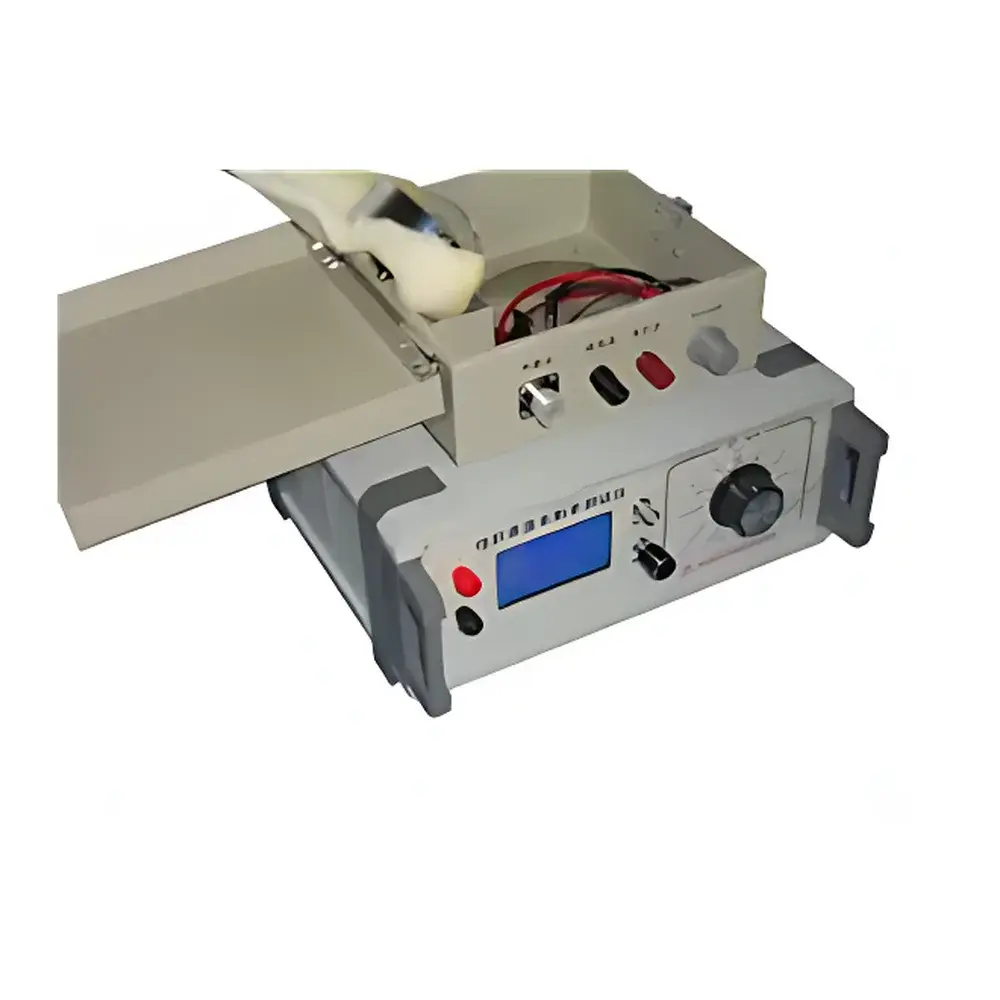
The standard kit includes a shielded test chamber with parallel-plate electrodes (for solids/films) and a liquid immersion cell. Optional accessories include concentric-ring electrodes (for surface resistivity) and powder compression dies.
How is measurement uncertainty estimated for a given reading?
Uncertainty derives from three components: basic accuracy (±2%), voltage source stability (±0.5% over 1 hour), and current measurement repeatability (±1.5% at 10⁻¹³ A). Combined expanded uncertainty (k=2) is typically ≤±3.2% for readings above 10¹⁰ Ω.




