
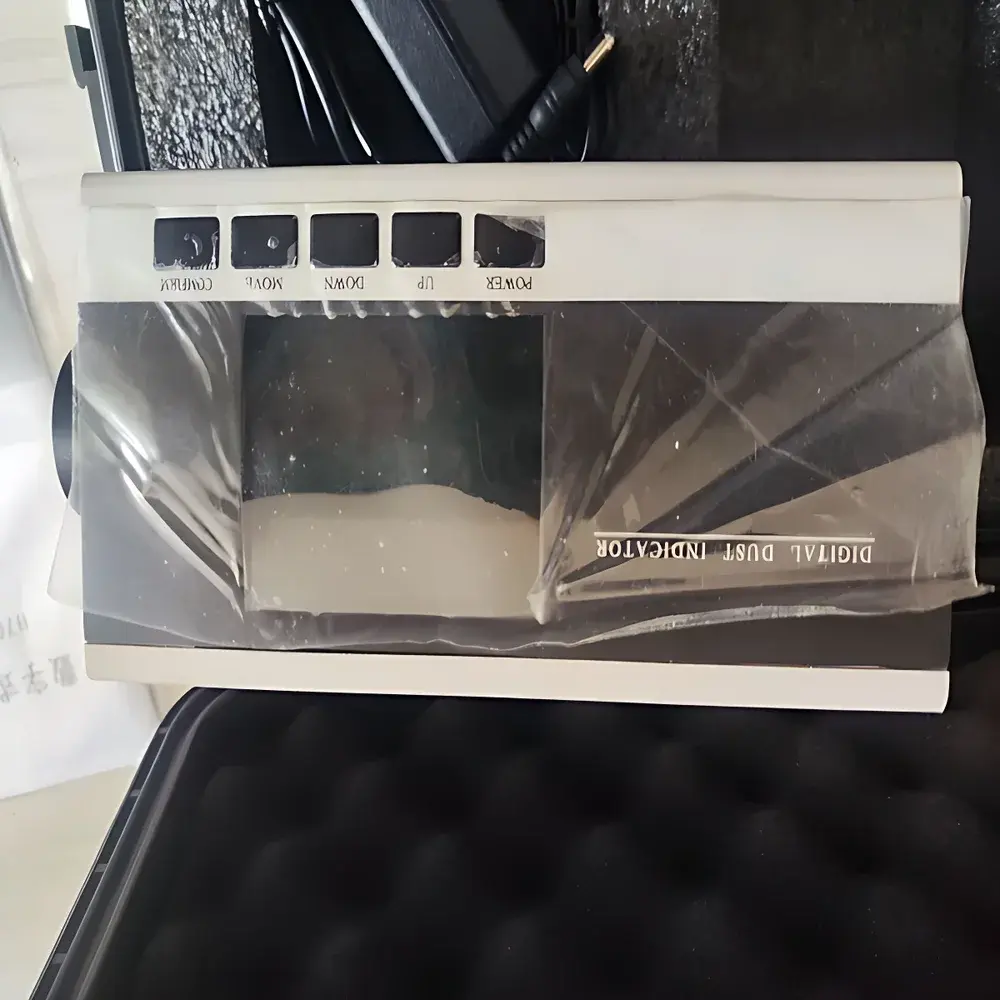
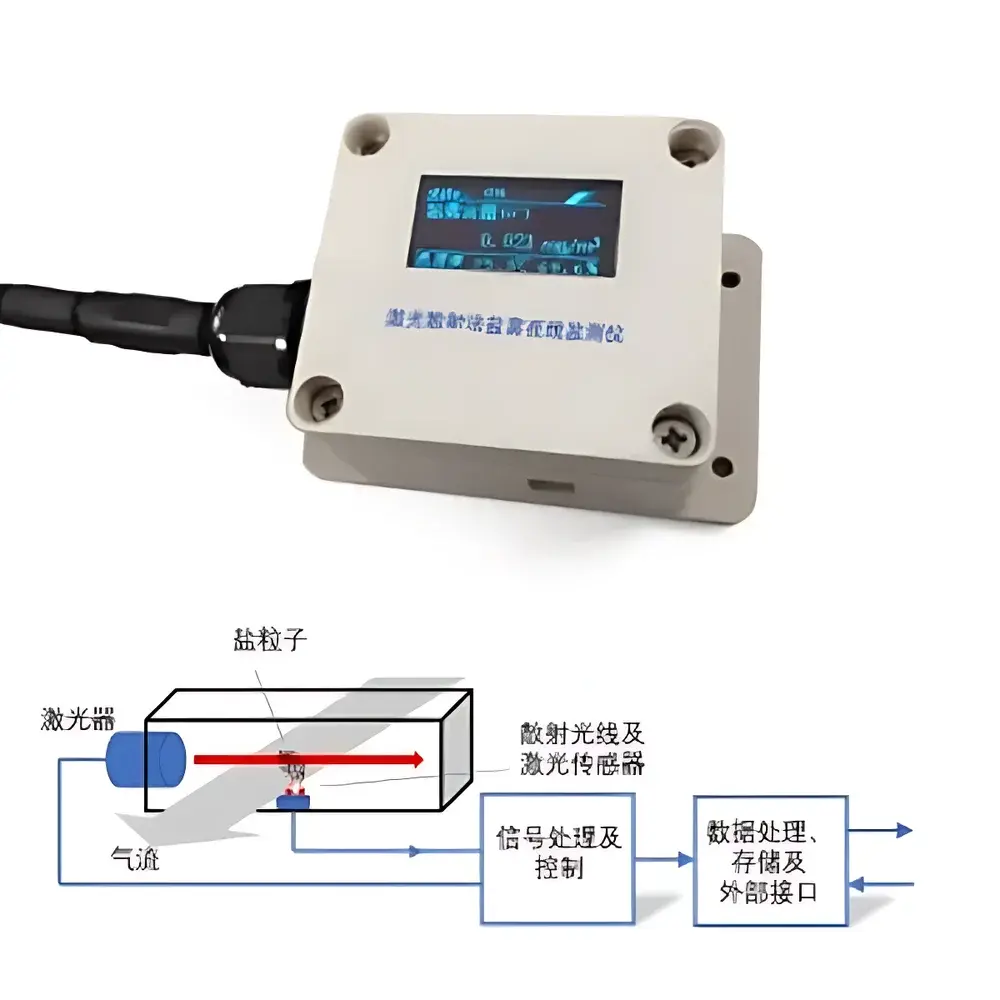
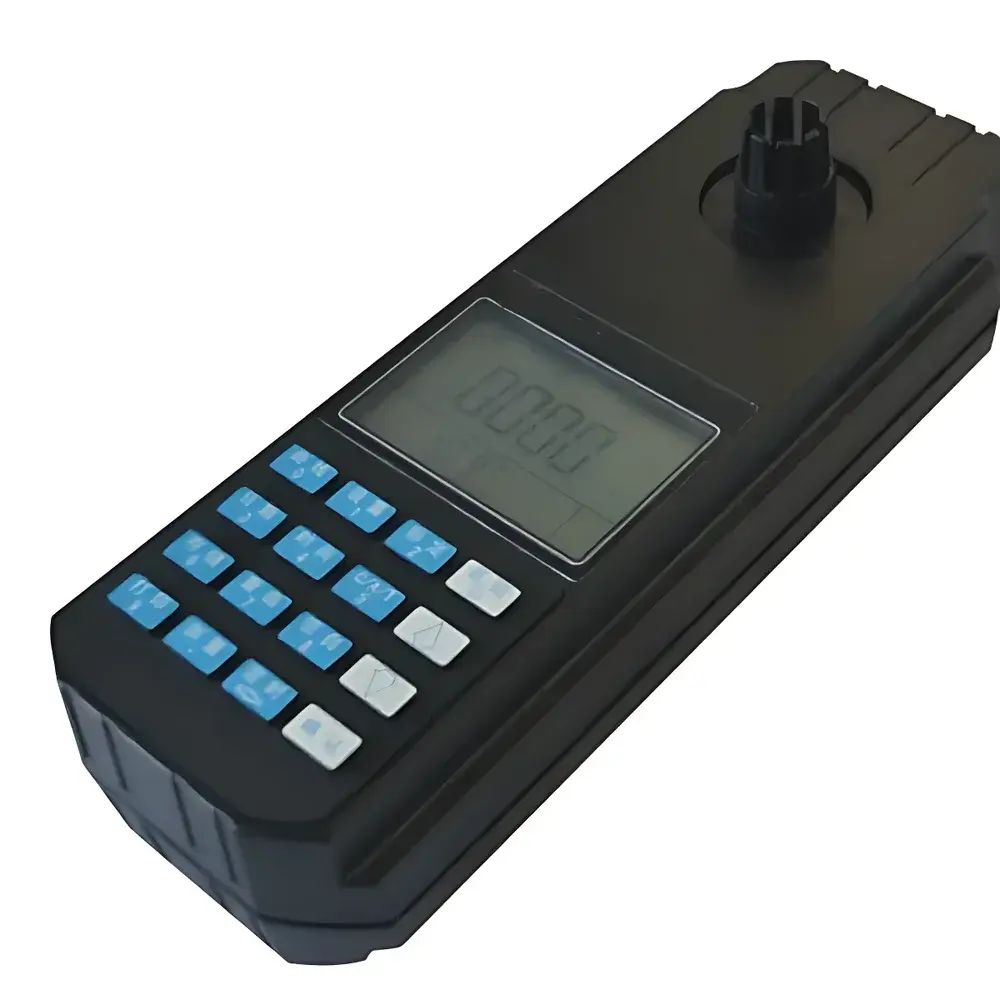
HengaoDe HAD-P5L2C Portable Laser Scattering Particulate Matter Analyzer for PM10 Monitoring in Public Places
| Brand | HengaoDe |
|---|---|
| Origin | Beijing, China |
| Manufacturer Type | Authorized Distributor |
| Country of Origin | China |
| Model | HAD-P5L2C |
| Price | Upon Request |
Overview
The HengaoDe HAD-P5L2C is a portable, microprocessor-controlled laser scattering particulate matter analyzer engineered for rapid, on-site determination of inhalable suspended particulates—specifically PM10—in public indoor environments and occupational settings. It operates on the principle of Mie light scattering, where a collimated laser beam interacts with airborne particles; the intensity and angular distribution of scattered light are quantitatively correlated to particle size distribution and mass concentration via calibrated optical detection algorithms. Designed in strict compliance with GB/T 18204.2–2014 (Public Health Inspection Methods – Part 2: Chemical Pollutants), Sections 5.2 and 6.1, the instrument satisfies metrological verification requirements defined in JJG 846–2015 (Verification Regulation for Light Scattering Dust Meters). Its measurement architecture supports real-time reporting of PM10 mass concentration (mg/m³) alongside simultaneous display of PM2.5 and TSP values, enabling multi-fractional aerosol assessment without sample collection or gravimetric post-processing.
Key Features
- Integrated dual-channel optical sensor with temperature- and humidity-compensated signal processing to minimize environmental drift
- High-sensitivity photodetector system with detection limit of 0.01 mg/m³ (relative to calibration aerosol)
- Three operational modes: general survey, continuous logging (1–60 min intervals), and occupational hygiene mode aligned with GBZ 2.1–2007 exposure assessment protocols
- Onboard data storage capacity for up to 5,000 measurement records, timestamped with date, time, and environmental conditions
- 3.5-digit LCD display showing real-time CPM (counts per minute) and converted mass concentration (mg/m³) simultaneously
- Rechargeable lithium-ion battery supporting ≥12 hours of continuous field operation; includes 220 VAC/12 VDC universal charger
- USB interface and Bluetooth-enabled printer compatibility for direct data export and report generation
- Compact ergonomic housing (160 × 72 × 115 mm; 950 g) with IP54-rated enclosure for dust and splash resistance
Sample Compatibility & Compliance
The HAD-P5L2C is validated for direct measurement of respirable dust, total suspended particulates (TSP), and inhalable PM10 in diverse air matrices—including ventilation ducts, hotel lobbies, subway stations, factory floors, and office buildings. It conforms to multiple national regulatory frameworks: WS/T 206–2001 (Determination of PM10 in Public Indoor Air by Light Scattering Method), LD 98–1996 (Light Scattering Method for Airborne Dust Concentration), TB/T 2323–92 (Conversion Method for Relative and Mass Concentrations of Dust in Railway Environments), and WS 394–2012 (Hygiene Specifications for Central Air Conditioning Ventilation Systems). Instrument performance meets repeatability ≤±2% and accuracy ±10% (vs. reference gravimetric method), fulfilling GLP-aligned field validation criteria for routine environmental monitoring programs.
Software & Data Management
Data acquisition and reporting are managed through embedded firmware compliant with ISO/IEC 17025 traceability principles. All measurements include automatic metadata tagging (ambient temperature, relative humidity, operator ID, location code). USB-exported CSV files contain full audit trails—including sensor calibration timestamps, zero-check logs, and user-initiated verification events. Optional PC software supports statistical analysis (mean, SD, percentile distributions), trend visualization over time, and automated generation of reports compliant with Chinese CDC reporting templates. The system does not implement FDA 21 CFR Part 11 electronic signature functionality but maintains immutable internal event logs suitable for internal QA audits.
Applications
- Routine surveillance of PM10 levels in hotels, shopping malls, schools, and hospitals per GB/T 18204.2–2014
- Workplace exposure assessment in mining, construction, and metal fabrication per GBZ 2.1–2007
- Pre-commissioning verification of HVAC filtration efficiency in centralized air systems (WS 394–2012)
- Emergency response screening during dust-emitting incidents (e.g., renovation, demolition, fire aftermath)
- Educational demonstrations of aerosol physics and indoor air quality principles in university laboratories
FAQ
What calibration standards are required for routine verification?
The instrument must be verified using NIST-traceable PSL (polystyrene latex) monodisperse aerosols at 10 µm diameter, following JJG 846–2015 procedures. Field zero checks should be performed daily using clean HEPA-filtered air.
Can the HAD-P5L2C measure PM2.5 independently of PM10?
Yes—the optical scattering algorithm applies size-selective weighting functions derived from Mie theory to compute PM2.5 and PM10 concentrations concurrently from the same raw scattering signal.
Is the device suitable for outdoor ambient air monitoring?
It is designed primarily for indoor and semi-enclosed environments. Extended outdoor use requires protection from precipitation and direct solar radiation to maintain optical path stability.
Does the unit support external data logging via RS485 or Modbus?
No—data export is limited to USB mass storage mode and Bluetooth serial output; RS485/Modbus interfaces are not implemented in this model.
How frequently must the optical chamber be cleaned?
Under typical indoor use (≤8 hr/day), visual inspection and dry-air purge every 72 hours is recommended; cleaning with lens-grade isopropyl alcohol is advised if contamination is observed on the laser window or detector lens.







