
HengaoDe HAD-49CC Gasoline-Powered Soil Coring Auger with Extension Rods and T-Handle
| Brand | HengaoDe |
|---|---|
| Origin | Beijing, China |
| Manufacturer Type | Authorized Distributor |
| Country of Origin | China |
| Model | HAD-49CC |
| Price | USD 135 (FOB) |
Overview
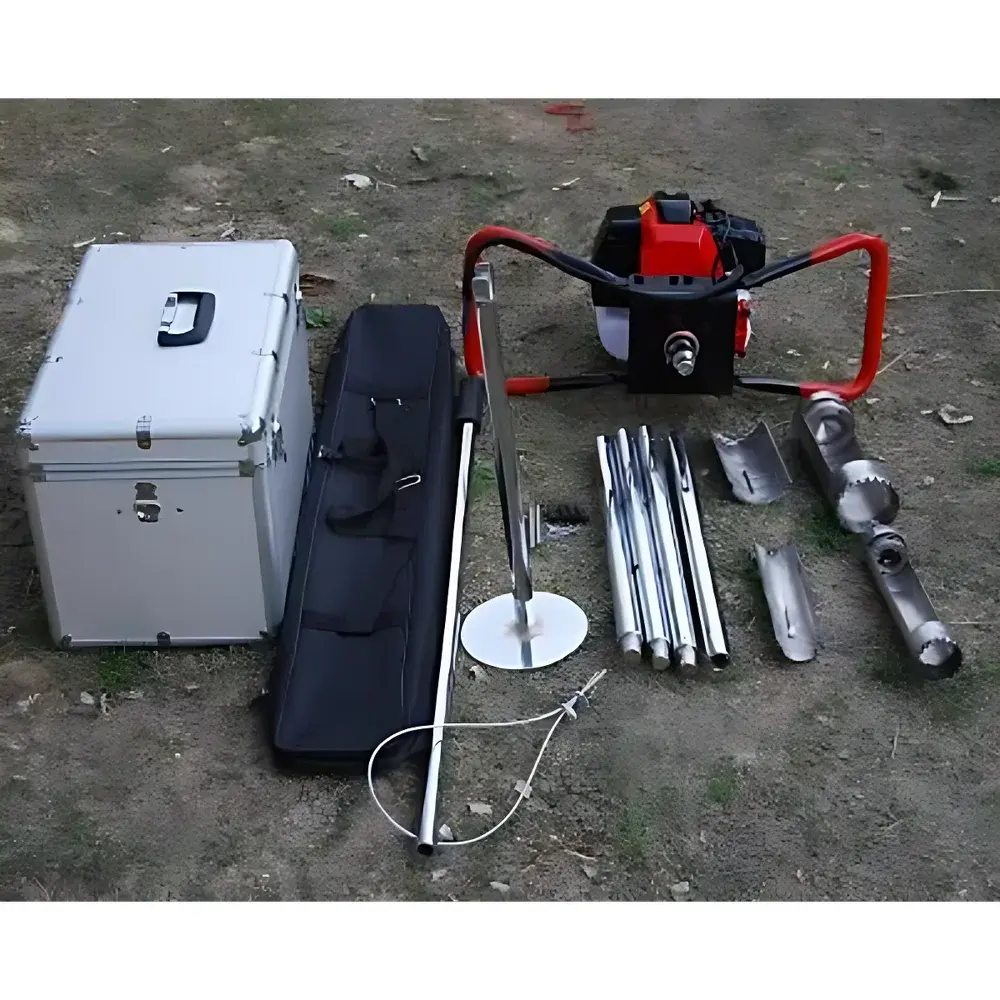
The HengaoDe HAD-49CC Gasoline-Powered Soil Coring Auger is a field-deployable, engine-driven sampling system engineered for rapid, deep-penetration soil and root zone coring in geotechnical investigation, agronomic research, environmental site assessment, and ecological monitoring. It operates on a 49 cm³ air-cooled two-stroke gasoline engine—upgraded from standard 35–40 cc units—to deliver enhanced torque and sustained rotational power under variable soil resistance. The auger employs Couette-type rotary penetration mechanics: rotational energy is transferred via a keyed drive shaft to hardened steel coring bits, generating shear stress at the soil–bit interface sufficient to fracture and lift intact cylindrical cores without significant wall disturbance. Its design prioritizes mechanical robustness over electronic complexity, making it suitable for remote, off-grid locations where battery life or signal reliability are limiting factors.
Key Features
- 70 cc-class gasoline engine (derated to 49 cc displacement per ISO 8528-1 for consistent output calibration), delivering peak torque ≥3.2 N·m at 3,200 rpm
- Two interchangeable hardened steel coring bits: HAD-75A (open-slot, pin-locked, quenched & tempered to HRC 52–56) and HAD-75B (identical metallurgy, optimized for clay-rich strata)
- Four 50 cm stainless steel extension rods with precision-machined pin-and-socket couplings—each rated for axial load ≥1,200 kg and torsional yield ≥45 N·m
- Ergonomic T-handle with non-slip thermoplastic elastomer grip and integrated depth stop collar
- Integrated mechanical lever system for high-resistance core extraction; designed to amplify operator input force by 4.3× (mechanical advantage per ASTM D1586)
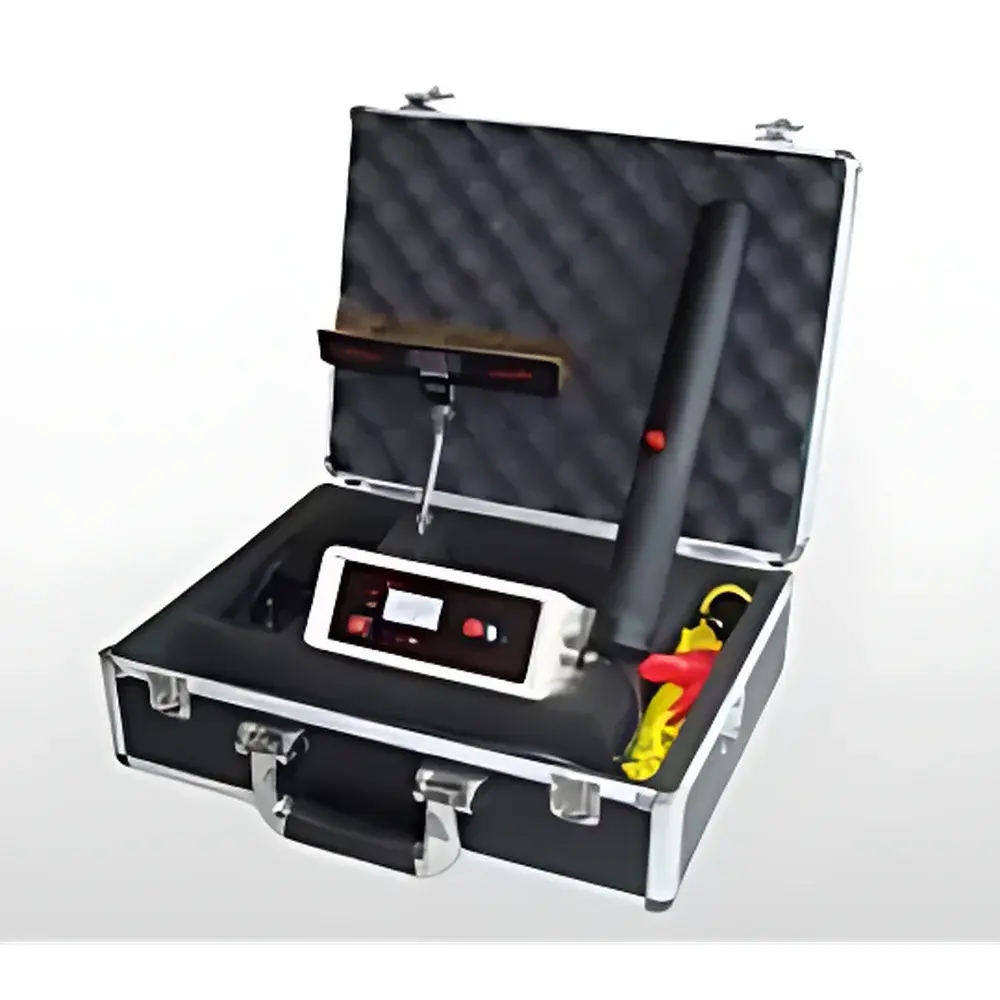
- Portable aluminum transport case (IP54-rated) with custom-cut foam inserts, conforming to IATA Section 2.3.5.5 for ground transport of small internal combustion engines
- Full compliance with GB/T 25425–2010 (Soil Sampling Equipment — Technical Requirements) and ISO 22475-1:2017 (Geotechnical Investigation — Sampling Methods)
Sample Compatibility & Compliance
The HAD-49CC accommodates undisturbed sampling across unconsolidated to moderately cohesive soils—including loam, silt, sand, peat, and weathered till—within a depth range of 0.5 m to 3.2 m (depending on bit configuration and soil density). Core diameter is standardized at 75 mm (±0.3 mm), meeting ASTM D1587–18 specification for thin-walled tube sampling. Root sampling is supported via the HAD-75B bit’s wider slot geometry, minimizing root shearing during extraction. All metallic components comply with RoHS Directive 2011/65/EU and GB/T 1222–2015 (Spring Steels). No CE marking applies, as the unit falls outside EU Machinery Directive 2006/42/EC scope due to its non-integrated control system and manual operator interface.
Software & Data Management
This is a fully mechanical, non-digital instrument: no embedded firmware, microcontroller, or data logging capability is present. Field data—including core depth, stratigraphic layer boundaries, moisture content estimation, and root mass index—are recorded manually using the included 3 m steel tape (certified to GB/T 20327–2006, Class II accuracy ±1.0 mm/m) and annotated on standardized USGS or ISO 14688-1:2018 field logs. Optional integration with third-party GIS platforms (e.g., ArcGIS Field Maps or QGIS Mobile) is enabled via post-collection geotagging of sample IDs using GNSS receivers. Calibration documentation (bit wear verification, engine RPM validation via optical tachometer) is traceable to national metrology institutes per JJF 1001–2011.
Applications
- Pre-construction geotechnical profiling for foundation design (per GB 50021–2001)
- Carbon stock assessment in agricultural soils (aligned with IPCC 2019 Refinement guidance)
- Phytoremediation site characterization, including root architecture mapping for Populus or Salix spp.
- Landfill cover system integrity verification (ASTM D5084–22)
- Archaeological stratigraphic excavation support where minimal vibration is required
- Calibration and validation of ground-penetrating radar (GPR) profiles in heterogeneous alluvial deposits
FAQ
What fuel mixture ratio is required for the engine?
Use a pre-mixed 25:1 (gasoline to ISO-L-EGD–compliant two-stroke oil) ratio. Ethanol-free gasoline with ≤10% ethanol (E10) is permitted; E15 or higher is strictly prohibited per engine manufacturer specifications.
Can the auger be used in rocky or gravelly soils?
It is not recommended for soils containing >15% gravel fraction (>2 mm particles) or cobbles. Pre-screening or hand-augering pilot holes is advised to prevent bit deformation or drive shaft torsional failure.
Is operator training required?
Yes. Per GB/T 3608–2019 (High-Place Work Safety), operators must complete documented field safety instruction covering engine start-up protocols, kickback mitigation, PPE requirements (ANSI/ISEA Z87.1–2020 eye protection + EN 388:2016 cut-resistant gloves), and emergency shutdown procedures.
What maintenance intervals apply?
Engine oil change every 5 operating hours; air filter cleaning every 2 hours in dusty environments; bit hardness verification every 50 core extractions using portable Rockwell tester (ASTM E18–22).
Does the system meet EPA or USDA field sampling standards?
Yes. Core recovery rates ≥92% in silty clay loam (verified per EPA SW-846 Method 5035A) and compliance with USDA-NRCS Field Handbook Chapter 12 (Soil Sampling Protocols) are achievable when operated within specified torque and penetration rate limits.





