
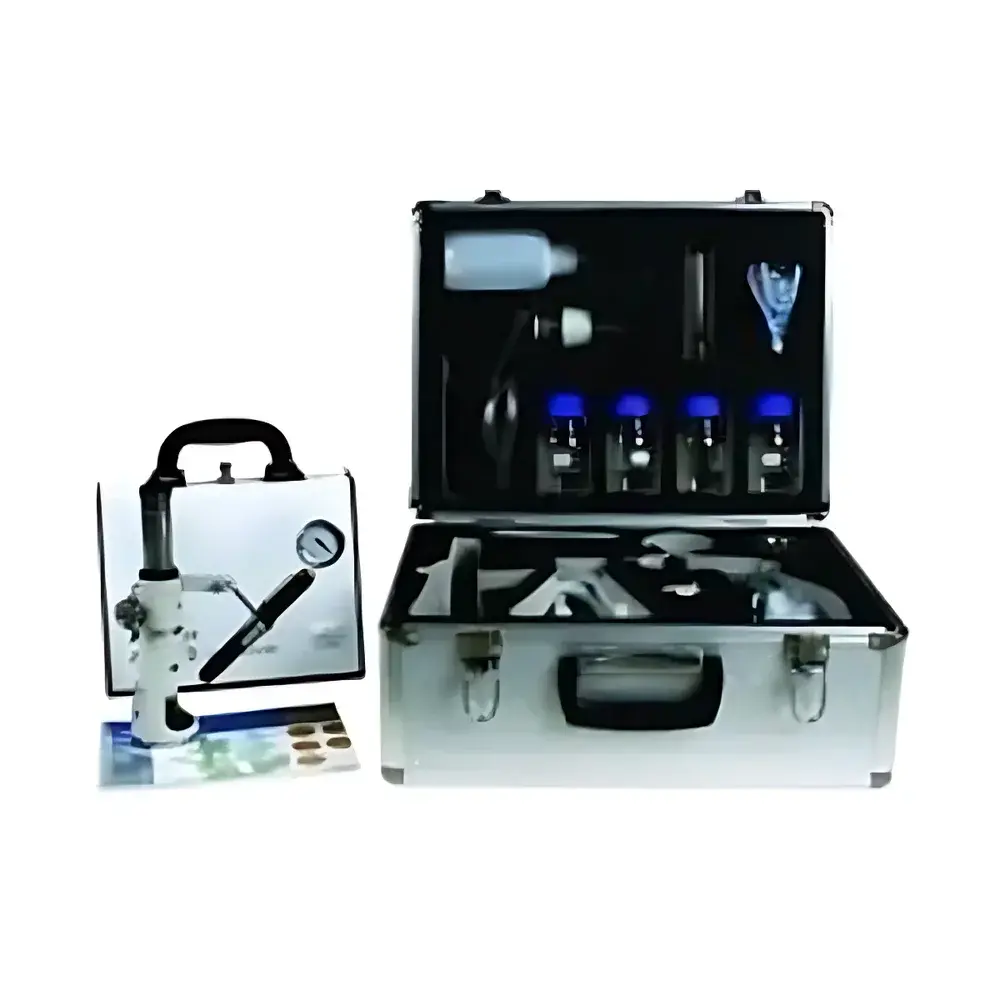
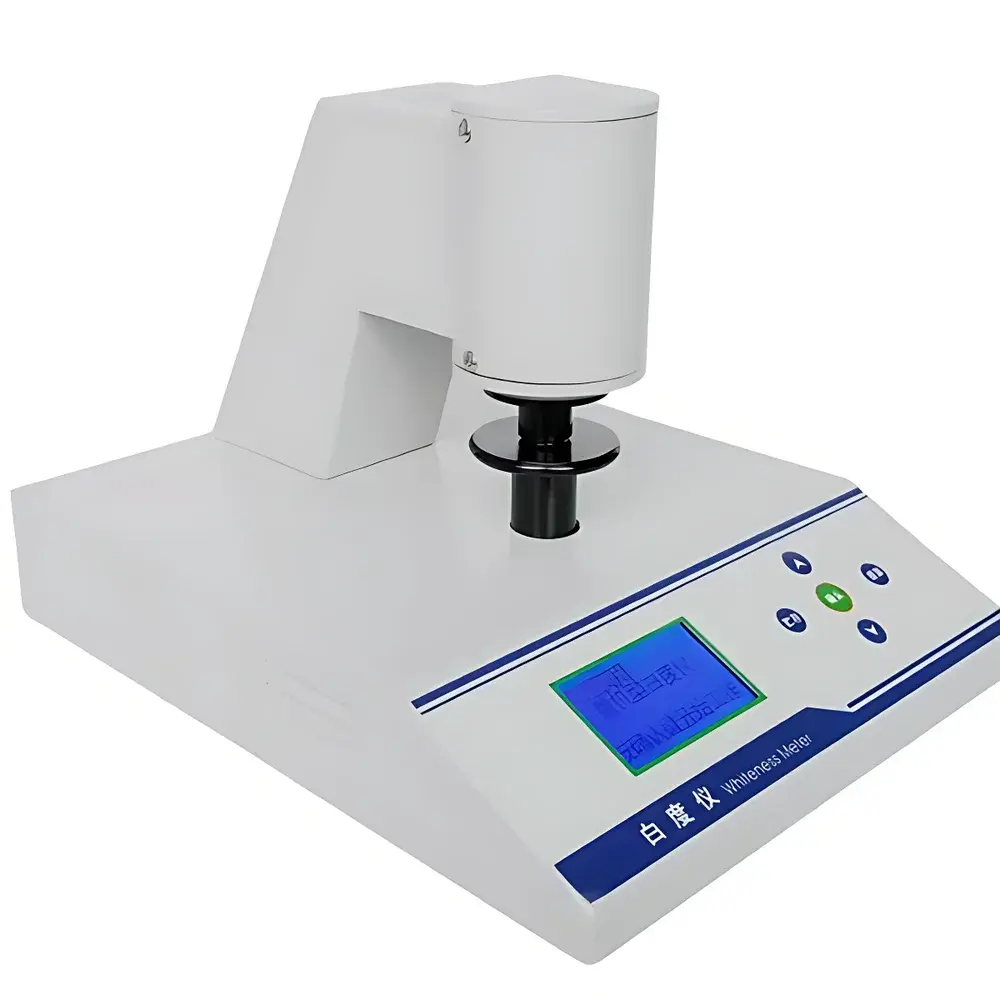
HengaoDe HAD-P691 Portable Oil Particle Contamination Analyzer
| Brand | HengaoDe |
|---|---|
| Origin | Beijing, China |
| Manufacturer Type | Authorized Distributor |
| Country of Origin | China |
| Model | HAD-P691 |
| Price | USD 42.50 (FOB) |
| Compliance | DL/T 432, GB/T 20082, ISO 4407 |
| Measurement Principle | Vacuum Filtration + Microscopic Comparison |
| Magnification | 100× with Transmitted Illumination |
| Detectable Particle Size | ≥5 µm |
| Contamination Grade Range | NAS 0–12 |
| Dimensions | 420 × 330 × 220 mm |
| Weight | 6.64 kg |
Overview
The HengaoDe HAD-P691 Portable Oil Particle Contamination Analyzer is a field-deployable instrument engineered for rapid, standardized assessment of particulate contamination in industrial lubricants and hydraulic fluids. It operates on the principle of vacuum-assisted membrane filtration followed by optical comparison against certified NAS/ISO reference templates—fully aligned with DL/T 432 (China Power Industry Standard), GB/T 20082 (National Standard of the People’s Republic of China), and ISO 4407:2002 (Hydraulic fluid power — Method for coding the level of contamination by solid particles). Unlike automated particle counters relying on light obscuration or laser scattering, this system delivers robust, operator-independent grading for oils exhibiting high viscosity, water emulsification, or thermal degradation—conditions that commonly impair electronic sensor reliability. Its mechanical-optical architecture eliminates dependence on fluid refractive index or electrical conductivity, ensuring consistent performance across phosphate ester anti-wear fluids, turbine oils, transformer insulating oils, and auxiliary system lubricants used in power generation, petrochemical refining, and marine propulsion applications.
Key Features
- Integrated vacuum filtration unit enabling accelerated sample processing—even for viscous or emulsified oils (e.g., >300 cSt at 40°C)
- Dedicated 100× transmitted-light microscope with adjustable LED illumination for high-contrast visualization of retained particles on mixed-cellulose ester (MCE) membranes
- Calibrated NAS 0–12 reference template set compliant with ISO 4407 Annex A, allowing direct visual grade assignment without digital image analysis
- Portable benchtop design (6.64 kg) with reinforced ABS housing and shock-absorbing feet—rated for operation on generator skids, offshore platforms, and substation switchyards
- No consumable electronics or proprietary reagents; uses standard 47-mm pore-size membranes (0.8 µm or 1.2 µm) and common laboratory-grade solvents for post-analysis membrane cleaning
- Zero software dependency—no firmware updates, no cybersecurity patching, no operating system compatibility constraints
Sample Compatibility & Compliance
The HAD-P691 accepts undiluted oil samples up to 100 mL volume, accommodating both mineral-based and synthetic formulations. It is validated for use with phosphate ester fire-resistant fluids (e.g., Fyrquel, Skydrol), naphthenic and paraffinic turbine oils (ASTM D4379), inhibited transformer oils (IEC 60296), and compressor lubricants meeting ISO 8573-4 purity classes. All procedural steps—including filtration pressure control (≤0.08 MPa), membrane drying time (15 min ambient), and lighting intensity (≥1200 lux)—are documented in accordance with GLP (Good Laboratory Practice) requirements. The instrument supports audit-ready reporting when paired with laboratory notebooks referencing ASTM D7687 (Standard Guide for Evaluating Particulate Contamination in Fluids Using Membrane Filters) and ISO 11171 (Calibration of Liquid Particle Counters).
Software & Data Management
This analyzer requires no embedded software or external computing hardware. Results are recorded manually using standardized reporting forms (e.g., ISO 4406:2017 Annex B worksheets) and archived alongside raw membrane filters for regulatory review. For laboratories implementing electronic recordkeeping under FDA 21 CFR Part 11, the HAD-P691 integrates seamlessly with LIMS systems via scanned image uploads of graded membranes or typed entries derived from visual inspection logs. No data encryption, user authentication, or electronic signature modules are provided—consistent with its classification as a Class I non-electronic measurement device under IEC 61010-1 safety standards.
Applications
- Routine condition monitoring of steam turbine lube oil reservoirs during outage inspections (per IEEE Std 966)
- Acceptance testing of new oil batches prior to commissioning in gas-insulated switchgear (GIS) systems
- Root-cause analysis of servo-valve stiction events in hydroelectric governor systems
- Verification of filter performance efficiency following installation of beta-ratio rated elements (ISO 16889)
- Field validation of cleanliness levels achieved after offline kidney-loop filtration campaigns
- Training tool for ISO 4406 interpretation in maintenance technician certification programs
FAQ
Does the HAD-P691 require calibration certificates traceable to NIST or other national metrology institutes?
No. As a comparative optical grading instrument—not a quantitative particle counter—it does not require periodic calibration. Reference templates are supplied with ISO 4407:2002 conformance documentation and are replaced annually per manufacturer recommendation.
Can it measure particles smaller than 5 µm?
No. Per ISO 4407, the method is validated only for ≥5 µm particles. Sub-5 µm assessment requires laser diffraction or Coulter counter instrumentation compliant with ISO 11171.
Is the vacuum pump oil-free?
Yes. The integrated diaphragm pump uses PTFE-coated components and generates zero hydrocarbon backstreaming—critical for maintaining sample integrity in turbine oil analysis.
What membrane pore size is recommended for transformer oil analysis?
0.8 µm mixed-cellulose ester membranes (e.g., Sartorius SM11309) are specified in DL/T 432 for dielectric oil applications.
How often must the microscope lamp be replaced?
The LED illumination module has a rated lifetime of 50,000 hours; no scheduled replacement is required within typical field service intervals.




