
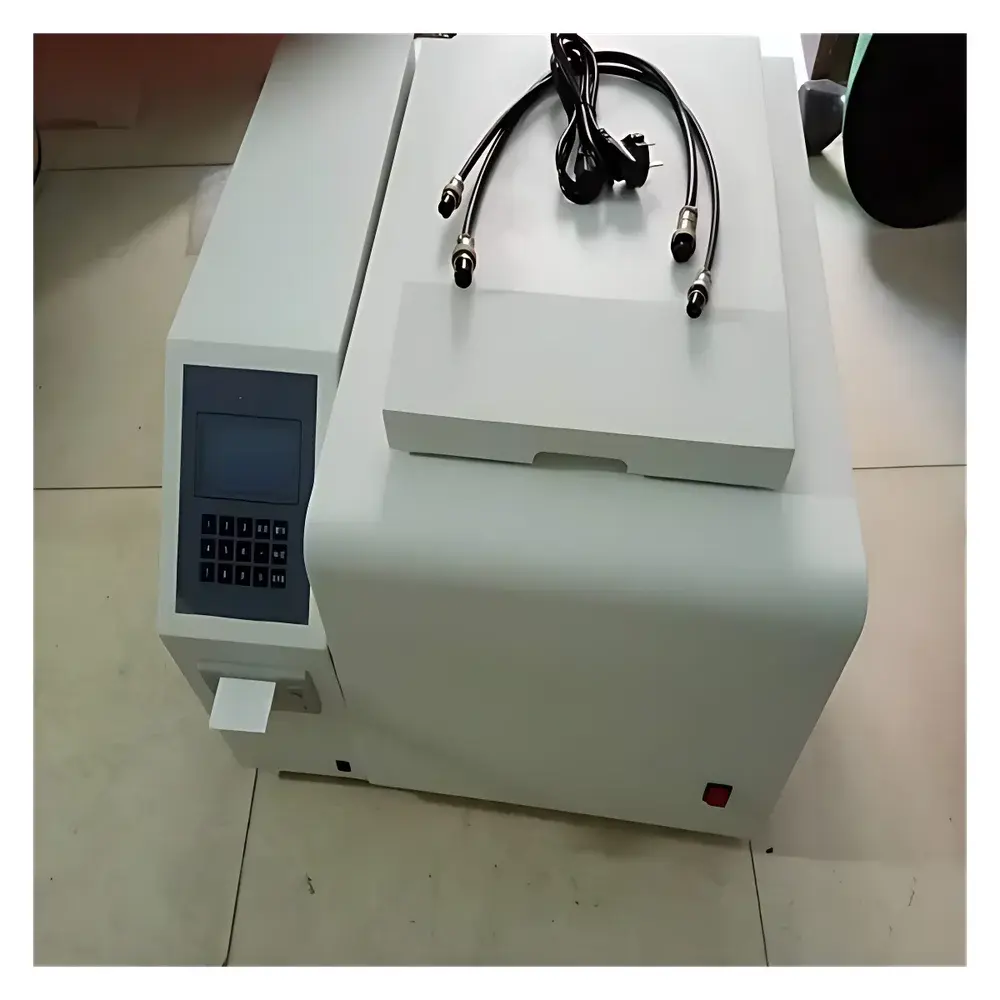
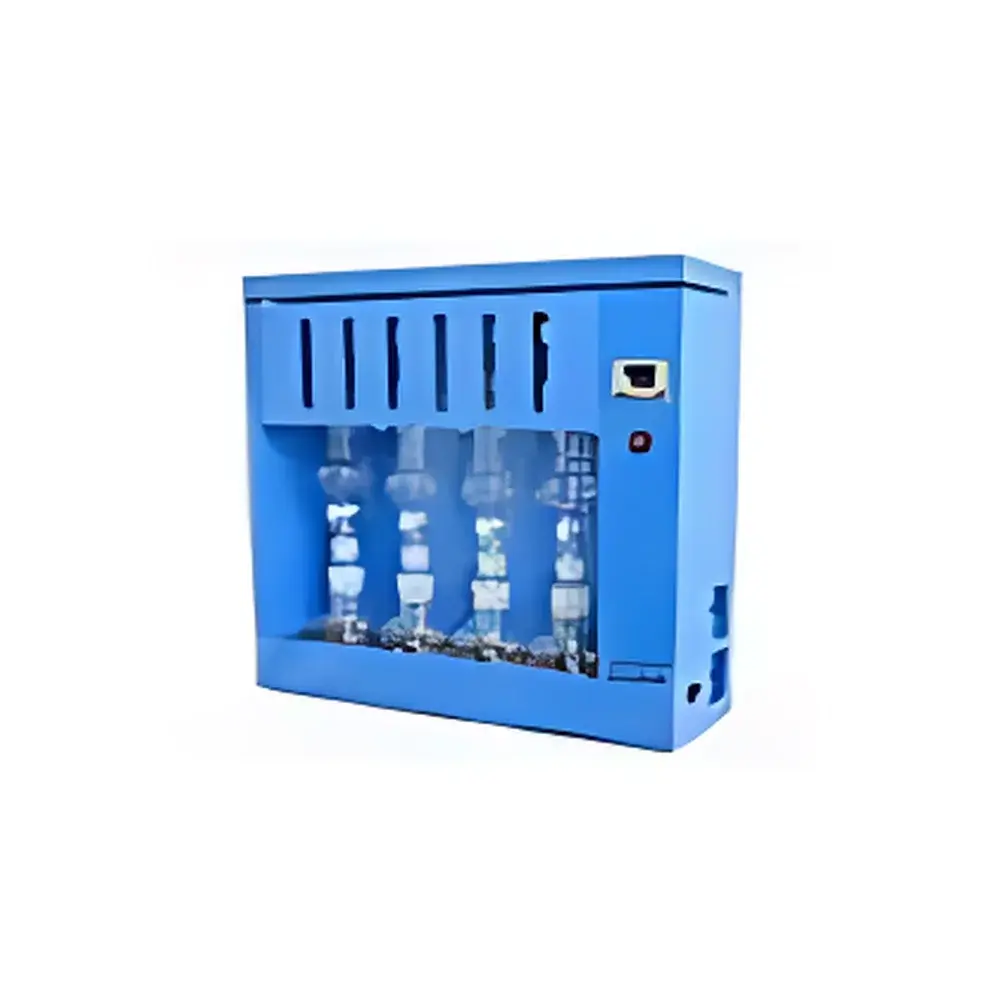
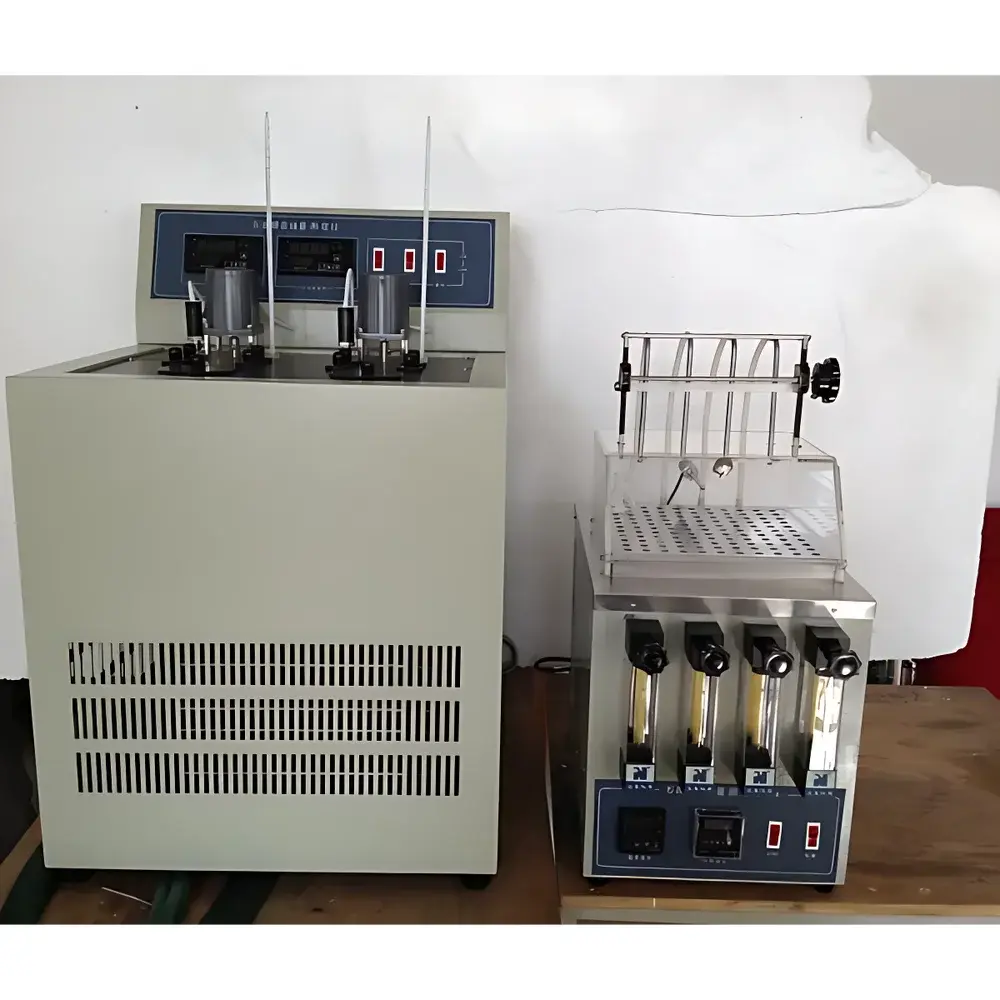
Hengao De HAD-Z6000 Automated Oxygen Bomb Calorimeter for Gross Calorific Value Determination per GB/T 213 and GB/T 384
| Brand | Hengao De |
|---|---|
| Origin | Beijing, China |
| Manufacturer Type | Authorized Distributor |
| Country of Origin | China |
| Model | HAD-Z6000 |
| Price | Upon Request |
| Heat Capacity | ~10,500 J/K |
| Oxygen Bomb Volume | ~300 mL |
| Charging Pressure | 2.8–3.0 MPa |
| Hydrostatic Test Pressure | 20 MPa |
| Inner Water Bucket Volume | ~2.1 L |
| Outer Jacket Volume | 51 L |
| Temperature Range | 0.000–40.000 °C |
| Resolution | 0.001 °C (optional 0.0001 °C) |
| Thermal Stability | <0.003 °C error per 5 °C rise |
| Ignition Voltage | AC 24 V |
| Ignition Duration | 5 s |
| Power Supply | AC 220 V ±10%, 50 Hz |
| Power Consumption | 30 W |
| Operating Humidity | ≤80% RH |
| Test Duration | <18 min per sample |
Overview
The Hengao De HAD-Z6000 Automated Oxygen Bomb Calorimeter is a precision instrument engineered for the accurate determination of gross calorific value (GCV) — also known as higher heating value (HHV) — of solid and liquid combustible materials. It operates on the principle of adiabatic or near-adiabatic bomb calorimetry, in accordance with internationally aligned national standards including GB/T 213–2008 (Determination of Calorific Value of Coal) and GB/T 384–1988 (Determination of Calorific Value of Petroleum Products). The system employs a high-pressure stainless-steel oxygen bomb to fully oxidize precisely weighed samples (to 0.0001 g) under 3.0 MPa O₂, ensuring complete combustion. Released thermal energy is absorbed by a thermally isolated water jacket; temperature rise is measured using a high-resolution platinum resistance thermometer (±0.003 °C accuracy per 5 °C interval), and GCV is calculated based on the calibrated heat capacity (~10,500 J/K) of the entire calorimetric system. Real-time cooling correction algorithms compensate for thermal exchange between inner and outer water jackets, enabling robust performance across variable ambient conditions without requiring strict laboratory climate control.
Key Features
- Fully automated measurement cycle: auto-filling, auto-draining, stirring, ignition, temperature acquisition, data calculation, and thermal correction — eliminating manual intervention and associated operator variability.
- Integrated microcontroller-based architecture with enhanced electromagnetic interference (EMI) immunity, ensuring stable operation in shared analytical lab environments.
- No manual water weighing or pre-temperature equilibration required — water volume and initial temperature are automatically managed, reducing procedural complexity and improving repeatability.
- Real-time dynamic cooling correction applied during each test, supporting long-term calibration stability and inter-day reproducibility.
- Complete test execution in under 18 minutes — including heat capacity calibration and sample analysis — significantly increasing throughput for QC laboratories handling high-volume fuel or biomass testing.
- Compliant with ISO 1928:2020 (Solid mineral fuels — Determination of gross calorific value by the bomb calorimeter) methodology principles, facilitating alignment with international reporting frameworks.
Sample Compatibility & Compliance
The HAD-Z6000 supports a broad range of organic and energy-dense materials, including but not limited to coal, petroleum distillates (gasoline, diesel, kerosene), biofuels (ethanol, biodiesel, methanol), foodstuffs, wood pellets, explosives, and pharmaceutical excipients. Sample mass range: 0.5–1.5 g (optimized for homogeneity and complete combustion). All operational protocols conform to statutory requirements for accredited testing labs, including traceability of calibration standards (benzoic acid certified reference material), documented thermal correction procedures, and audit-ready test logs. While not inherently 21 CFR Part 11 compliant out-of-the-box, the instrument’s deterministic measurement sequence and non-editable raw data output support GLP/GMP-aligned documentation practices when integrated into validated laboratory information management systems (LIMS).
Software & Data Management
The embedded firmware provides full-cycle control without external PC dependency. Measurement data — including ignition time, peak temperature, delta-T, calculated GCV (kJ/kg or kcal/g), and calibration coefficients — are stored internally and printed via integrated thermal printer. Optional RS-232 interface enables export of ASCII-formatted results to LIMS or spreadsheet applications. All critical parameters (e.g., oxygen pressure, stirrer RPM, ambient temperature drift) are logged at 1-second intervals during active measurement, permitting post-hoc diagnostic review. Calibration records retain user ID, date/time stamp, and benzoic acid certificate number — satisfying minimum documentation requirements for ISO/IEC 17025:2017 Clause 7.7 (Ensuring validity of results).
Applications
This calorimeter serves quality assurance and R&D workflows across multiple regulated sectors:
- Fuel Production & Trading: Verification of ASTM D240 / ISO 1928-compliant HHV specifications for coal, bunker fuel, and renewable diesel blends.
- Bioenergy Research: Comparative energy density evaluation of lignocellulosic feedstocks, algae biomass, and pyrolysis oils.
- Food Science: Nutritional labeling compliance per GB 28050 (food energy calculation using Atwater factors).
- Academic & Government Labs: Teaching thermodynamics principles and conducting inter-laboratory proficiency testing under CNAS accreditation scopes.
- Military & Defense: Energetic material characterization for propellant and explosive formulation development.
FAQ
Does the HAD-Z6000 comply with ASTM D5865 or ISO 1928?
While designed to implement the same fundamental bomb calorimetry principles, the HAD-Z6000 is certified to Chinese national standards GB/T 213 and GB/T 384. Its hardware architecture and correction algorithms meet the technical intent of ASTM D5865–22 and ISO 1928:2020; however, formal conformance certification requires third-party validation per those standards’ specific procedural audits.
Can it measure net calorific value (NCV)?
No — the HAD-Z6000 reports gross calorific value only. NCV calculation requires additional input of hydrogen, moisture, and ash content, which must be performed externally using standardized proximate and ultimate analysis methods.
What maintenance is required for the oxygen bomb?
The bomb assembly must undergo hydrostatic pressure testing at 20 MPa every 2 years per GB/T 213 Annex B. Seals should be inspected and replaced after every 500 firings or if visible wear or leakage is observed. Internal bomb surfaces require cleaning with acetone after each use to prevent residue buildup.
Is external calibration verification possible?
Yes — certified benzoic acid (e.g., NIST SRM 39j) is used for daily calibration verification. Laboratories performing accredited testing must maintain a traceable chain to national metrology institutes (e.g., NIM China) and document all calibration events per ISO/IEC 17025 requirements.
How is data integrity ensured during power interruption?
The system incorporates non-volatile memory that retains all active test parameters and partial temperature curves. Upon power restoration, it resumes from the last stable acquisition point — no data loss occurs during transient outages under 3 seconds.






