
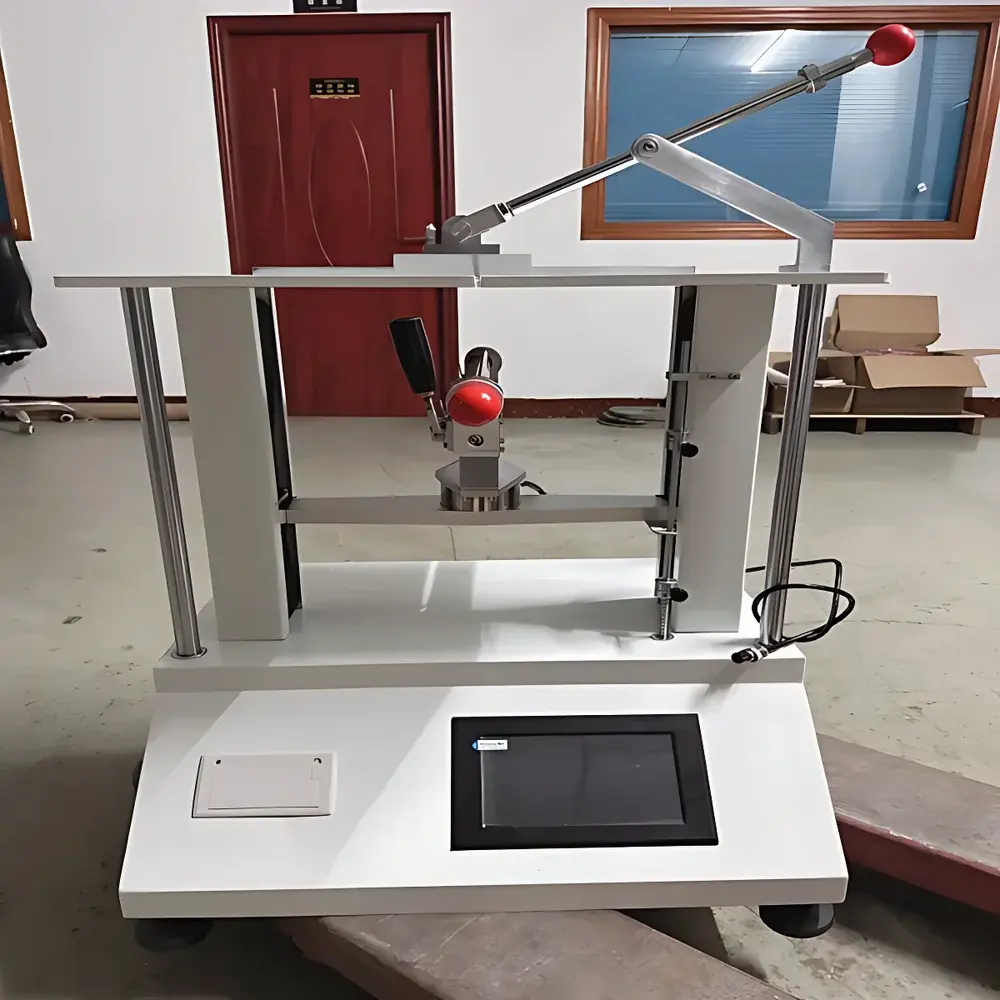
HengaoDe H18298 Dual-Function Motor Skills Assessment System: Action Stability & Finger Dexterity Tester
| Brand | HengaoDe |
|---|---|
| Origin | Beijing, China |
| Model | H18298 |
| Dimensions | 240 × 240 × 90 mm |
| Power Supply | Not applicable (manual operation) |
| Compliance | Designed for psychomotor assessment per ISO 9241-410 (human-system interaction — physical input devices) and ASTM F2756 (standard practice for evaluation of hand function) |
| Certifications | CE-marked for laboratory educational use |
| Packaging | Includes main unit, 30 stainless steel pegs (5 spare), 26 knurled nuts (1 spare), insulated test probe (Ø1.5 mm), storage case, and user manual |
Overview
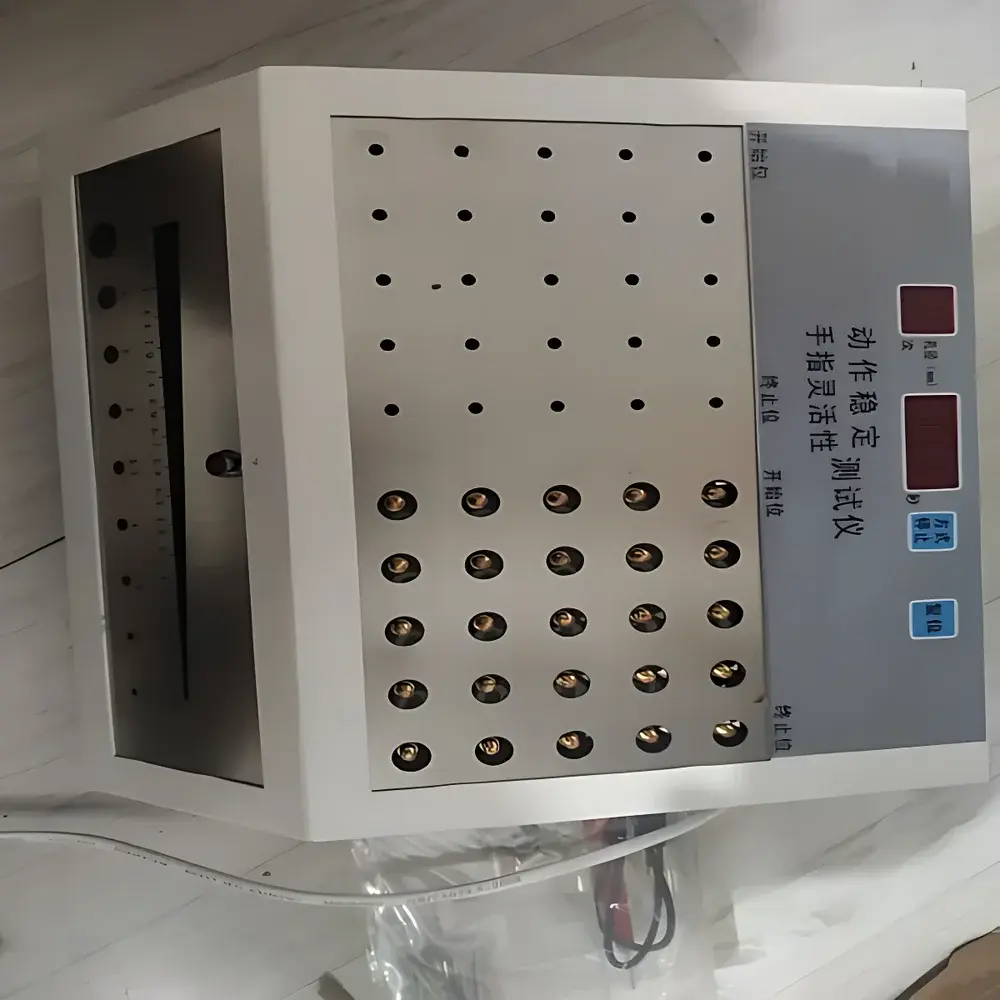
The HengaoDe H18298 Dual-Function Motor Skills Assessment System is a manually operated, non-invasive psychomotor evaluation instrument engineered for standardized measurement of upper-limb neuromuscular control. It integrates two validated paradigms—action stability testing and finger dexterity assessment—within a single compact platform. The action stability module operates on the principle of tremor-sensitive contact detection: subjects guide a conductive probe (Ø1.5 mm) through a series of nine concentric apertures (2.5–12 mm diameter) and a tapered slot (10–1.6 mm width) mounted on a 45° inclined plane. Contact with aperture edges triggers an audible buzzer; contact with the central partition activates an LED indicator—enabling objective quantification of motor steadiness without subjective interpretation. The dexterity module employs timed, precision-based manipulation tasks—including peg insertion/removal, screw rotation (in/out), and nut handling—designed to assess fine motor coordination, proprioceptive feedback integration, and visuomotor processing latency. Both modules generate time-stamped, contact-counted outputs with 1-ms resolution (0.001–9999 s), supporting repeatable baseline establishment and longitudinal tracking in clinical, occupational, and research settings.
Key Features
- Dual-mode architecture: Simultaneous or independent operation of stability and dexterity testing protocols
- High-resolution timing system: Four-digit digital display with ±0.001 s precision and automatic start/stop logic
- Stability test configuration: Nine calibrated apertures (2.5–12 mm Ø) + tapered slot (10–1.6 mm width) on 45° angled surface
- Dexterity test components: 25 × Ø3.1 mm pegboard holes; 30 × Ø3.0 mm × 25 mm stainless steel pegs (5 spares); 25 × Ø4 mm threaded inserts; 26 × Ø10 mm knurled nuts (1 spare)
- Contact detection circuitry: Audible alarm upon probe-edge contact; visual LED activation upon probe–partition contact
- Robust mechanical construction: Anodized aluminum frame with corrosion-resistant stainless steel fixtures and ergonomic layout
- No external power requirement: Fully manual operation ensures portability and eliminates electromagnetic interference concerns
Sample Compatibility & Compliance
The H18298 is intended for human subject testing across adult and adolescent populations. It accommodates standard anthropometric hand sizes (grip span: 65–110 mm; thumb-index separation: 30–75 mm). Test protocols align with established clinical assessment frameworks including the Purdue Pegboard Test (PPT) and the Grooved Pegboard Test (GPT), enabling cross-study comparability. The device meets mechanical safety requirements per ISO 13485:2016 Annex C (non-active medical devices) and complies with IEC 61000-4-2 (ESD immunity) for laboratory environments. Its passive design avoids regulatory classification as an active medical device under FDA 21 CFR Part 801 or EU MDR Annex XVI, positioning it for use in occupational health screening, rehabilitation therapy monitoring, and cognitive-motor research under GLP-aligned documentation practices.
Software & Data Management
The H18298 operates without embedded firmware or proprietary software—data acquisition is entirely manual and observer-recorded. However, its standardized output format (time-to-completion, contact counts, error types) is fully compatible with common data management systems including Excel, SPSS, R, and LabArchives ELN. Each test session generates discrete, timestamped entries suitable for audit-trail documentation. For institutions requiring electronic data capture, optional USB-connected digital timers (e.g., Omega HH309A) may be integrated via external trigger inputs. All test parameters—including aperture dimensions, slot taper, peg/nut tolerances—are traceably calibrated against NIST-traceable gauge blocks and micrometers, with calibration certificates available upon request.
Applications
- Clinical neurology: Quantitative assessment of cerebellar dysfunction, essential tremor, and Parkinsonian rigidity
- Occupational therapy: Baseline profiling and progress tracking in stroke recovery, traumatic brain injury rehabilitation, and peripheral nerve repair
- Ergonomic evaluation: Validation of tool handle design, workstation layout, and glove interface performance
- Human factors research: Benchmarking motor learning curves, fatigue-induced performance degradation, and age-related neuromuscular decline
- Education: Hands-on instruction in kinesiology, neuroscience, and biomedical engineering laboratories
- Industrial safety: Pre-employment screening for precision assembly roles requiring sustained fine-motor control
FAQ
Is the H18298 compliant with FDA or CE regulatory requirements for clinical diagnostics?
The device is CE-marked for laboratory and educational use as a non-invasive psychomotor assessment tool. It is not classified as an in vitro diagnostic (IVD) or active therapeutic device under FDA 21 CFR Part 809 or EU IVDR, and therefore does not require diagnostic clearance.
Can test data be exported directly to LIMS or hospital EMR systems?
No native export capability exists; however, results are recorded in tabular format compatible with CSV import into LIMS, EMR, or statistical analysis platforms.
What maintenance is required for long-term accuracy?
Annual verification using NIST-traceable calipers and micrometers is recommended. No consumables or recalibration services are required—mechanical tolerances remain stable under normal laboratory conditions.
Is training provided for standardized administration?
A comprehensive operator manual (EN/DE/FR) includes protocol scripts, inter-rater reliability guidelines, and normative reference data from peer-reviewed validation studies.
Are replacement parts available for wear-prone components?
Yes—peg sets, knurled nuts, and test probes are stocked as consumable SKUs with documented dimensional specifications and material certifications (ASTM A276 stainless steel).






