
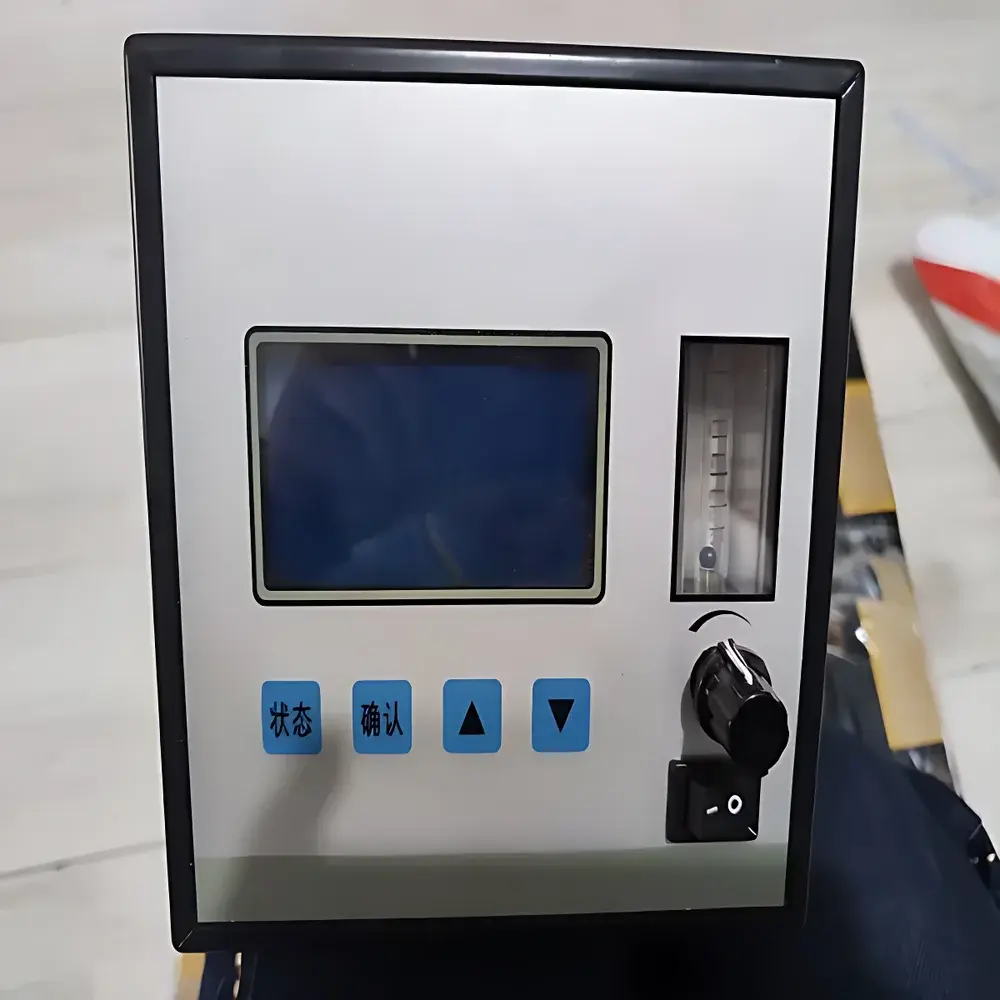
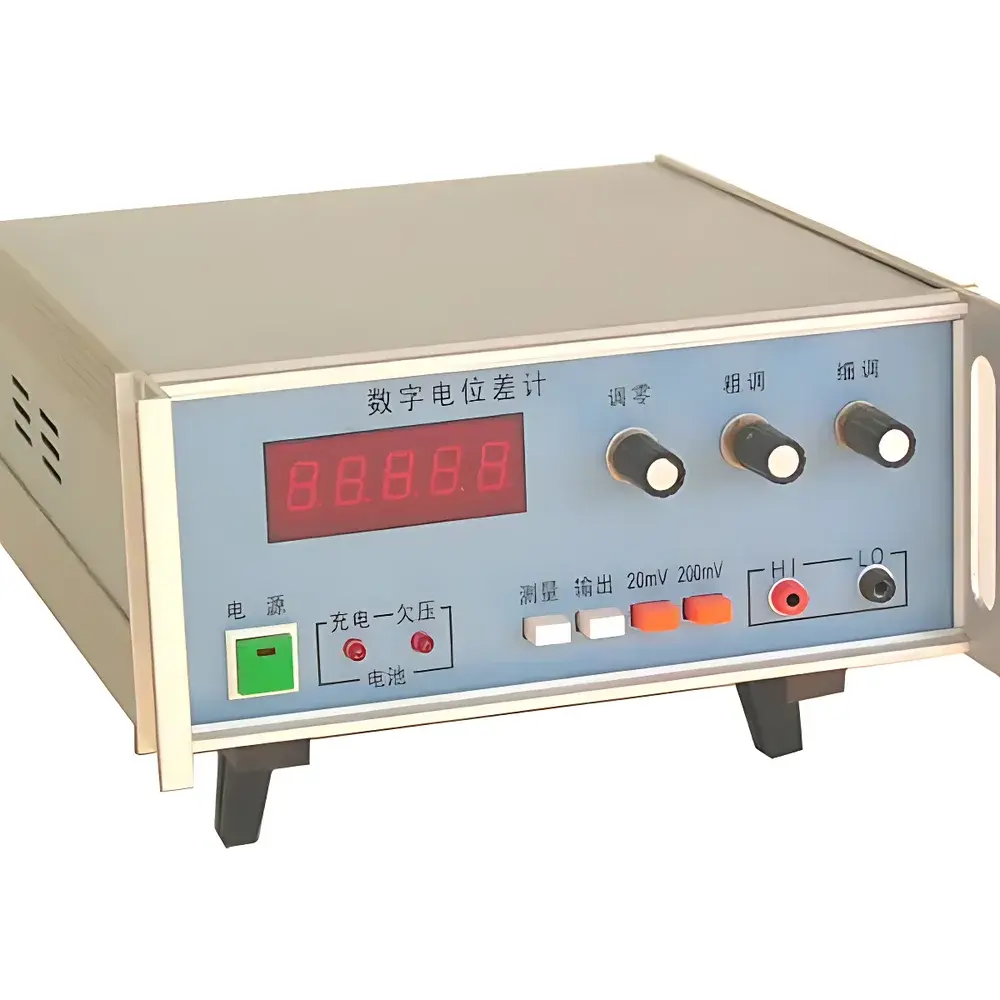
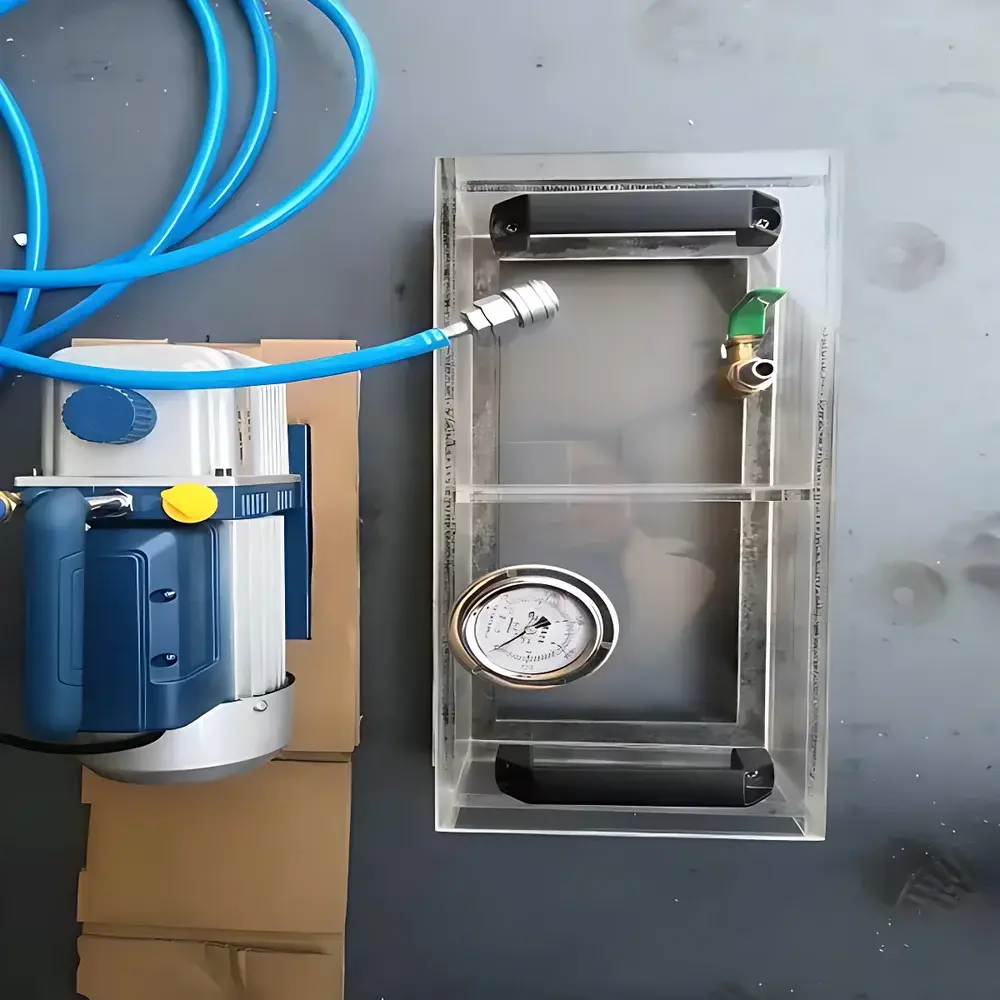
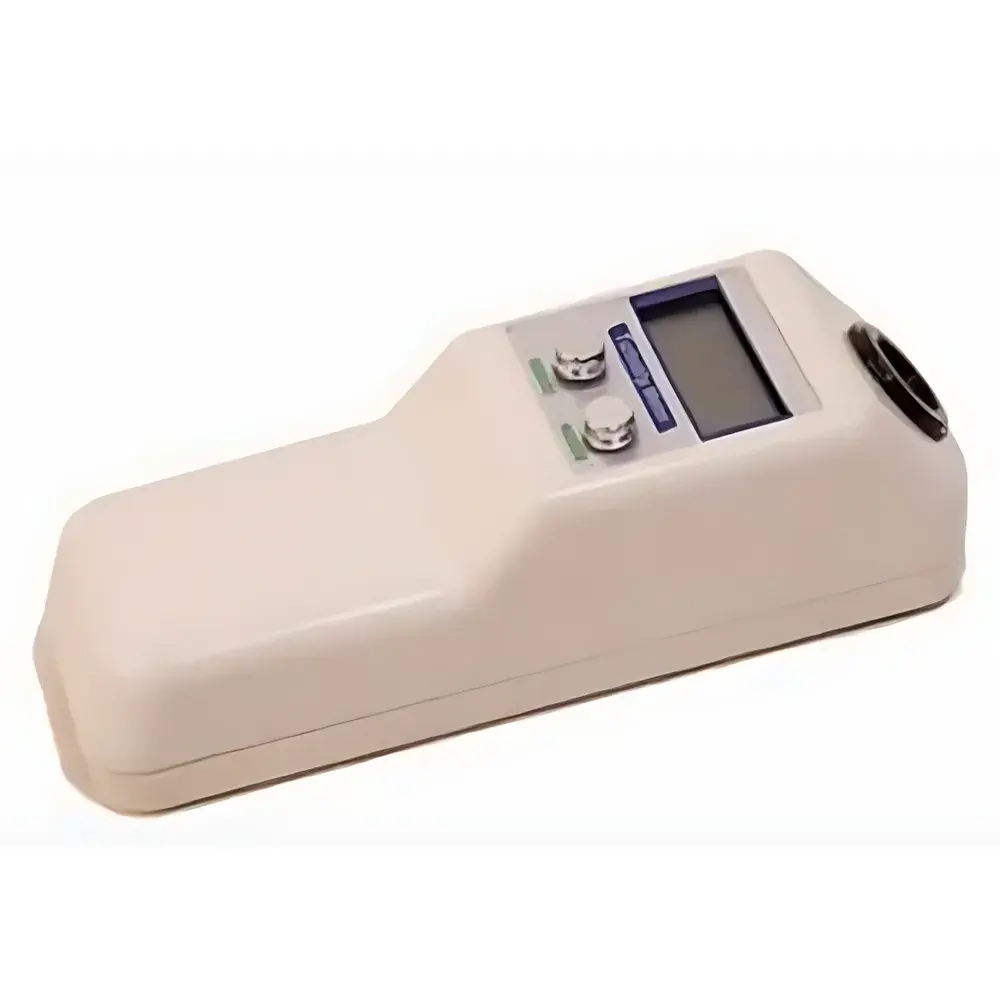
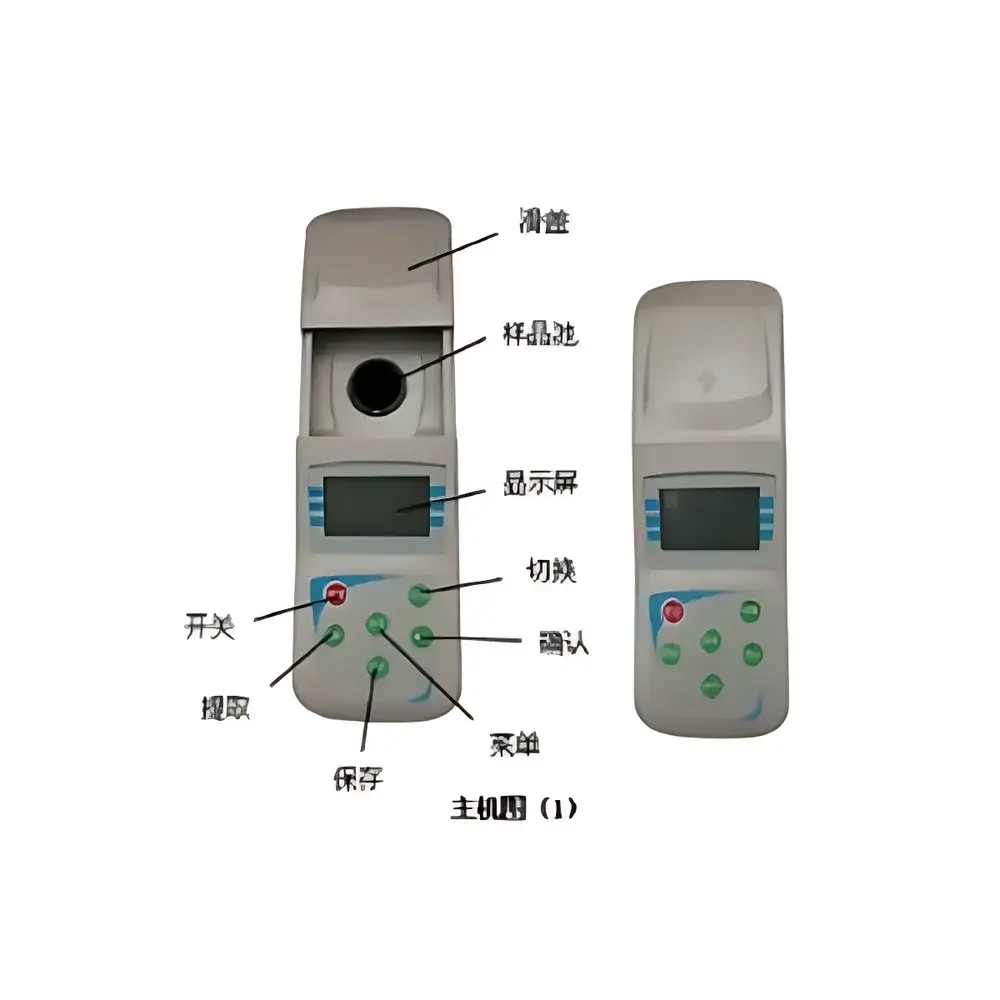
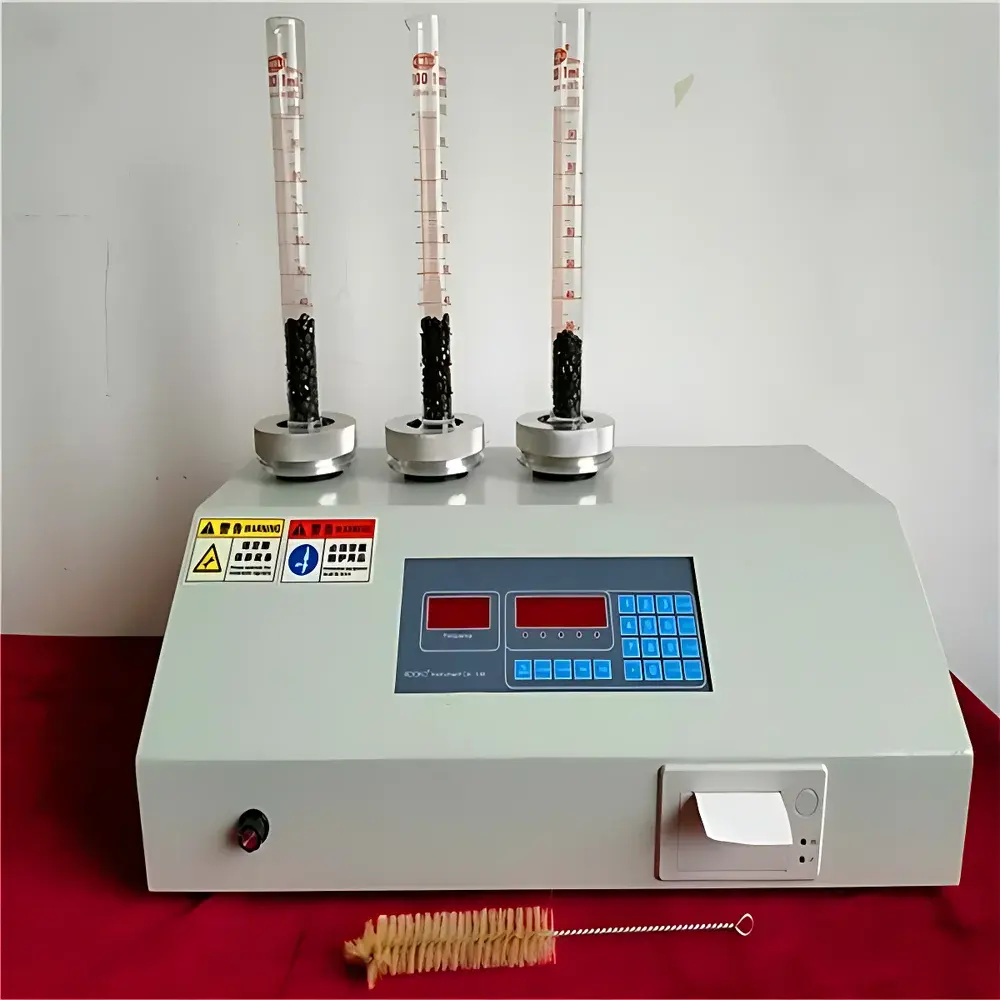
HengaoDe H15397 Portable Dew Point Analyzer
| Brand | HengaoDe |
|---|---|
| Origin | Beijing, China |
| Manufacturer Type | Authorized Distributor |
| Country of Origin | China |
| Model | H15397 |
| Price | USD 28.50 (FOB) |
| Measurement Range | −30 °C to +30 °C (dew point), 0–100% RH |
| Accuracy | ±3 °C (10–95% RH) |
| Output Signal | 4–20 mA (corresponding to −50 °C to +30 °C dew point range) |
| Stability | <0.5% RH/year |
| Temperature Coefficient | <0.1% RH/°C (10–50 °C) |
| Response Time | 5 s (33% → 76% RH) |
| Sample Flow Rate | 1600 ± 50 mL/min |
| Operating Temperature | −30 °C to +60 °C |
| Dimensions | 150 × 150 × 330 mm (W × H × D) |
| Panel Cutout | 139 × 139 mm |
Overview
The HengaoDe H15397 Portable Dew Point Analyzer is a field-deployable, capacitance-based hygrometer engineered for high-reproducibility moisture measurement in compressed gases and process air streams. It operates on the principle of capacitive polymer sensing, where water vapor absorption induces a dielectric constant shift in a humidity-sensitive polymer film—transduced into a stable, temperature-compensated electrical signal. This architecture delivers rapid equilibration, low hysteresis, and resistance to chemical contamination—critical for applications demanding trace-level water monitoring under dynamic flow conditions. Designed for integration into quality-critical workflows—including SF6 gas handling in high-voltage switchgear, semiconductor purge gas validation, and pharmaceutical compressed air qualification—the instrument meets foundational requirements for ISO 8573-1 Class 2–4 air purity verification and supports audit-ready documentation when paired with compliant data logging protocols.
Key Features
- Capacitive polymer humidity sensor with proven long-term stability (<0.5% RH/year drift) and minimal temperature coefficient (<0.1% RH/°C over 10–50 °C)
- Dual-range analog output (4–20 mA) scalable across −50 °C to +30 °C dew point span, enabling seamless interface with PLCs, DCS systems, and SCADA networks
- Optimized sample flow path (1600 ± 50 mL/min) ensuring laminar, pressure-stabilized delivery to the sensing element—minimizing condensation risk and response lag
- Rugged industrial enclosure rated for operation from −30 °C to +60 °C ambient, with IP54-rated front panel and corrosion-resistant internal components
- Panel-mount design with standardized 139 × 139 mm cutout; includes integrated mounting hardware and gasketed rear cable entry
Sample Compatibility & Compliance
The H15397 is validated for use with non-aggressive, non-condensing gas matrices including dry air, nitrogen, argon, oxygen, and SF6. It is not suitable for direct measurement in corrosive, solvent-laden, or aerosol-laden streams without upstream filtration (e.g., coalescing filter + desiccant trap). While not intrinsically safe, it complies with CE marking directives (EMC Directive 2014/30/EU, Low Voltage Directive 2014/35/EU) and conforms to IEC 60751 for RTD interface compatibility. For regulated environments—such as pharmaceutical manufacturing (cGMP Annex 1), medical gas production (ISO 8573-7), or power utility maintenance—the unit supports traceable calibration via NIST-traceable dew point references and satisfies prerequisite instrumentation control criteria outlined in ASTM D2013 and ISO 8573-3.
Software & Data Management
As a standalone analog transmitter, the H15397 does not incorporate embedded firmware or digital communication protocols (e.g., Modbus, HART). However, its 4–20 mA output is fully compatible with third-party data acquisition systems supporting 16-bit ADC resolution and cold-junction compensation. When integrated into validated systems, the device supports 21 CFR Part 11-compliant data integrity through external historian platforms that enforce electronic signatures, audit trails, and user access controls. Calibration records—including date, standard used (e.g., chilled mirror reference), technician ID, and post-calibration error verification—must be retained per GLP/GMP documentation standards.
Applications
- SF6 gas moisture monitoring in GIS substations and circuit breakers per IEC 60480 and IEEE C37.122.1
- Compressed air quality assurance in food processing lines (ISO 8573-1 Class 2) and sterile pharmaceutical manufacturing
- Dryer exit stream verification in plastic resin drying, lithium battery electrode coating, and powder metallurgy sintering furnaces
- Process gas dew point verification in semiconductor fab nitrogen purges and photomask storage cabinets
- Field validation of desiccant dryer performance in offshore oil & gas separation trains
FAQ
What is the recommended calibration interval?
Annual calibration is advised for routine industrial use; semi-annual calibration is required in GMP-regulated environments or when operating near specification limits.
Can the sensor be exposed to condensation?
No. Prolonged exposure to liquid water or supersaturated vapor will degrade sensor response time and accuracy. Always install upstream particulate and coalescing filters.
Is the unit suitable for natural gas pipeline monitoring?
Not without additional conditioning: hydrocarbon vapors and glycol carryover may poison the polymer sensor. Use only after multi-stage filtration and dehydration.
Does the device include temperature compensation?
Yes—built-in Pt100 RTD measures sensor block temperature and applies real-time correction per ISO 11170 algorithms.
What maintenance is required?
Visual inspection of inlet filter every 3 months; full sensor replacement recommended every 24 months in continuous operation or after exposure to >80% RH for >100 hours.





