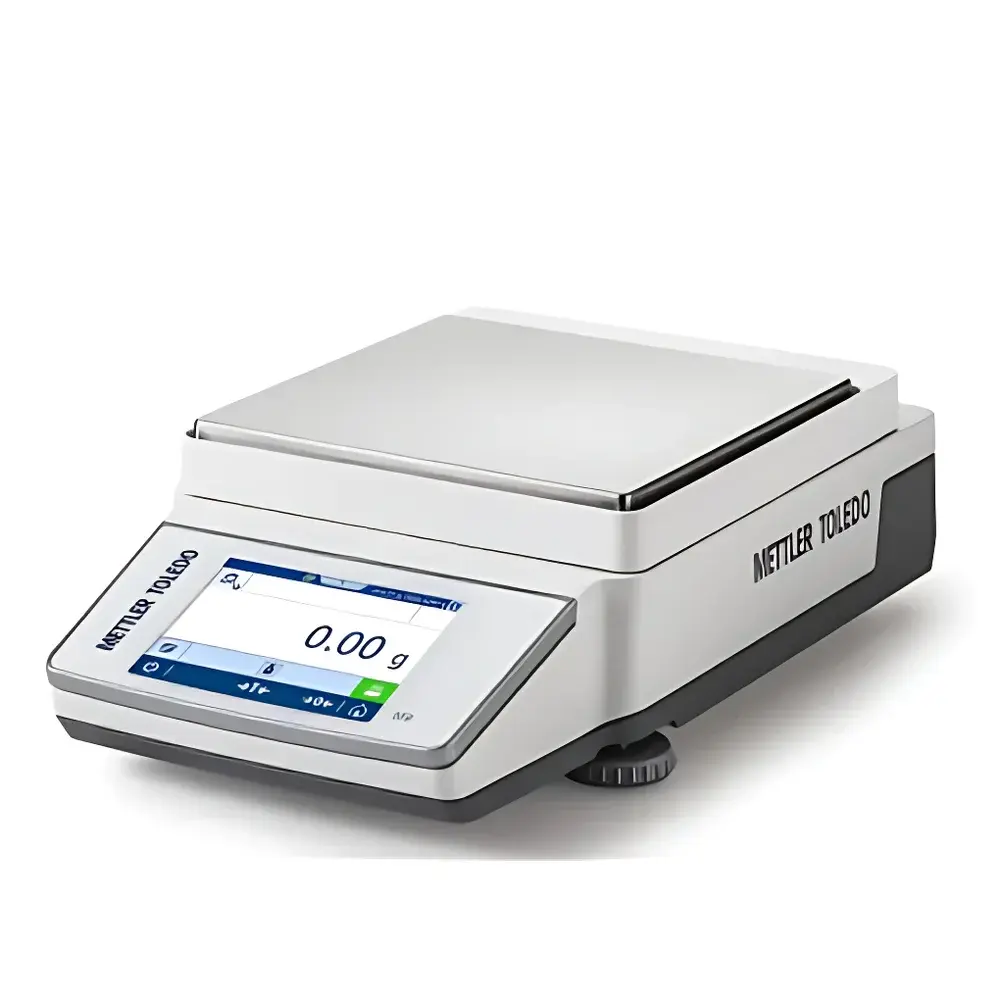
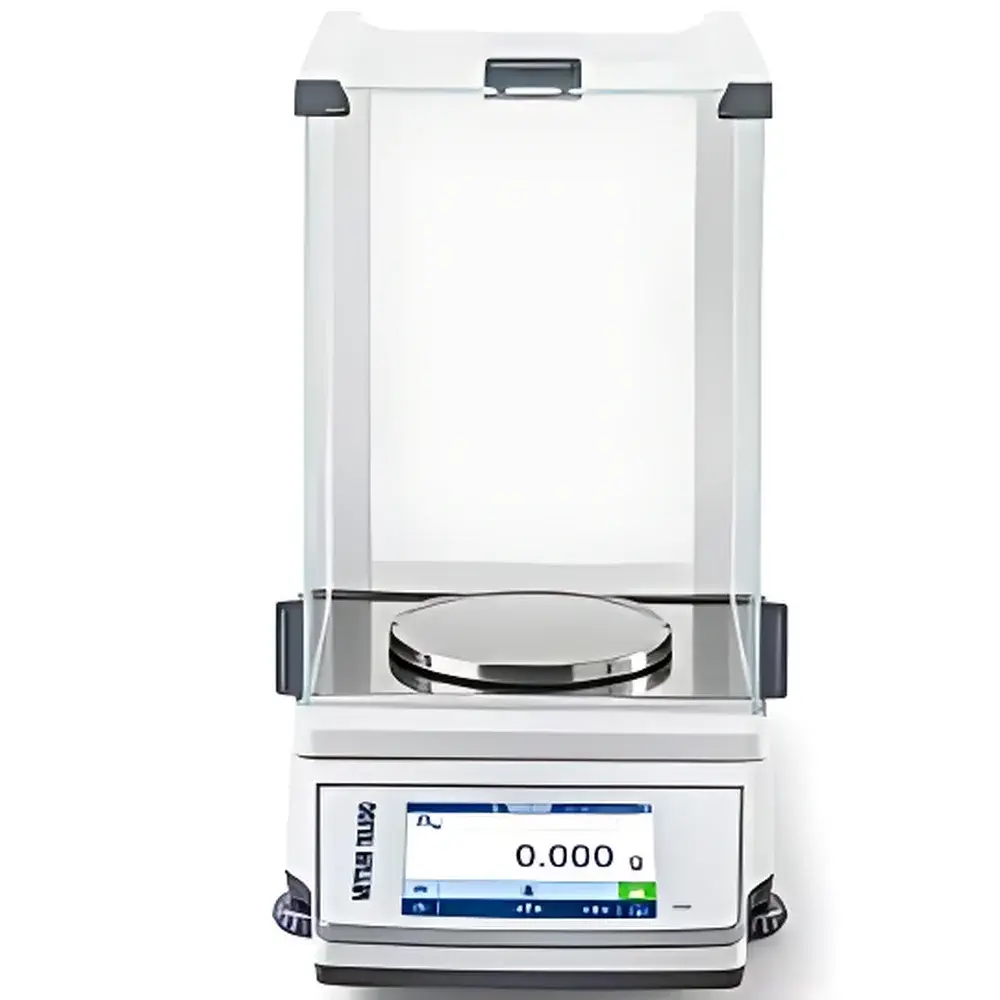
METTLER TOLEDO MR203 Precision Balance
| Brand | METTLER TOLEDO |
|---|---|
| Origin | Shanghai, China |
| Model | MR203 Precision Balance |
| IP Rating | IP43 |
| Construction | Full-metal housing with dust- and chemical-resistant components |
| Overload Protection | Integrated sensor protection against mechanical shock and pan drop |
| Power Management | Configurable energy-saving mode |
| Connectivity | RS232, USB, Ethernet (optional), MT-SICS command protocol compliant |
| User Management | Role-based access control with customizable user profiles |
| Compliance | Designed for GLP/GMP environments |
Overview
The METTLER TOLEDO MR203 Precision Balance is an industrial-grade analytical weighing instrument engineered for high reproducibility, long-term stability, and operational resilience across demanding laboratory and production floor environments. Built upon METTLER TOLEDO’s proven electromagnetic force compensation (EMFC) weighing principle, the MR203 delivers precise mass determination through real-time feedback control of a coil-suspended weighing pan—ensuring linearity, minimal drift, and immunity to environmental thermal gradients. With a robust full-metal chassis, IP43 ingress protection, and reinforced load cell architecture, this balance is validated for continuous use in settings where dust, incidental liquid splashes, vibration, and temperature fluctuations are routine. Its design philosophy centers on functional reliability—not just accuracy—making it suitable for QC laboratories, formulation stations, raw material receiving, and in-process manufacturing checks where traceability, repeatability, and system integration are critical.
Key Features
- Electromagnetic force compensation (EMFC) transducer technology for high linearity and <0.001% repeatability under controlled conditions
- IP43-rated enclosure—protects internal electronics from solid objects ≥1 mm and water spray at angles up to 60° from vertical
- Integrated overload protection system safeguards the load cell from mechanical overloads and accidental pan impact
- AutoCal™ internal calibration with motor-driven weight deployment—eliminates manual calibration artifacts and ensures traceable adjustment at user-defined intervals
- Guided leveling system with dual bubble indicators and adjustable feet—reduces setup time and minimizes tilt-induced measurement error
- Configurable power management mode reduces standby energy consumption by up to 70%, supporting sustainability objectives without compromising readiness
- Ruggedized stainless-steel weighing pan and spill-resistant keypad—designed for frequent cleaning and compatibility with common lab disinfectants
Sample Compatibility & Compliance
The MR203 accommodates a wide range of sample types—from powders and granules to packaged components and small assemblies—within its 210 g maximum capacity and 1 mg readability specification (model-dependent; verify datasheet for exact configuration). Its sealed housing and chemically inert surfaces meet requirements for non-sterile pharmaceutical weighing, food ingredient batching, and polymer additive dosing. From a regulatory standpoint, the balance supports Good Laboratory Practice (GLP) and Good Manufacturing Practice (GMP) workflows when deployed with compliant data handling systems. While the MR203 itself does not embed 21 CFR Part 11-compliant electronic signatures, its MT-SICS command set enables seamless integration with validated LIMS or MES platforms that provide full audit trail, user authentication, and electronic record retention capabilities.
Software & Data Management
Data acquisition and export are facilitated via standard serial (RS232), USB virtual COM port, and optional Ethernet interfaces—all natively supporting METTLER TOLEDO’s MT-SICS (Standard Interface Command Set). This ASCII-based protocol ensures interoperability with PLCs, SCADA systems, ERP modules, and third-party laboratory software—including LabX, WinCT, and custom Python/C# applications. Real-time weight streaming, tare synchronization, and status polling are supported without proprietary drivers. The balance stores no raw data internally; instead, it functions as a deterministic peripheral—transferring only validated, timestamped weight values and status flags (e.g., stable, unstable, under draft shield, out-of-tolerance) to external systems. User profile management allows administrators to assign role-specific permissions—restricting access to calibration, configuration, or print functions per operator group—thereby reducing procedural deviation risk.
Applications
- Raw material verification and lot release testing in pharmaceutical and chemical manufacturing
- In-process quality control during tablet coating, capsule filling, and lyophilization batch monitoring
- Formulation support in R&D labs requiring consistent mass addition across iterative experiments
- Inventory reconciliation and component counting in electronics and automotive assembly lines
- Environmental monitoring sample preparation—filter weighing, soil moisture analysis, and particulate collection
- Education and training environments where durability, intuitive interface, and safety-critical overload protection are prioritized
FAQ
What is the typical readability and capacity of the MR203 Precision Balance?
The standard MR203 configuration offers 210 g maximum capacity with 1 mg readability; alternative configurations (e.g., MR203E) may differ—consult official METTLER TOLEDO technical documentation for certified specifications.
Does the MR203 support automatic internal calibration?
Yes—it features AutoCal™, an automated internal calibration system using a built-in reference weight and motorized actuation, triggered manually or on a scheduled basis.
Can the MR203 be integrated into a 21 CFR Part 11–compliant workflow?
The balance itself is not Part 11–certified, but its MT-SICS output and deterministic behavior enable integration with validated software systems that implement electronic signatures, audit trails, and access controls.
Is the MR203 suitable for use inside a fume hood or near corrosive vapors?
Its IP43 rating provides limited protection against splashes and particulates, but prolonged exposure to aggressive vapors (e.g., HCl, HF) is not recommended; consult METTLER TOLEDO’s chemical resistance guide before deployment.
How is user access controlled on the MR203?
Through hierarchical user profiles: administrators define groups with granular permissions—such as “Operator” (weigh-only), “Technician” (calibration + diagnostics), and “Admin” (full configuration access)—enforced at boot-up and session level.