
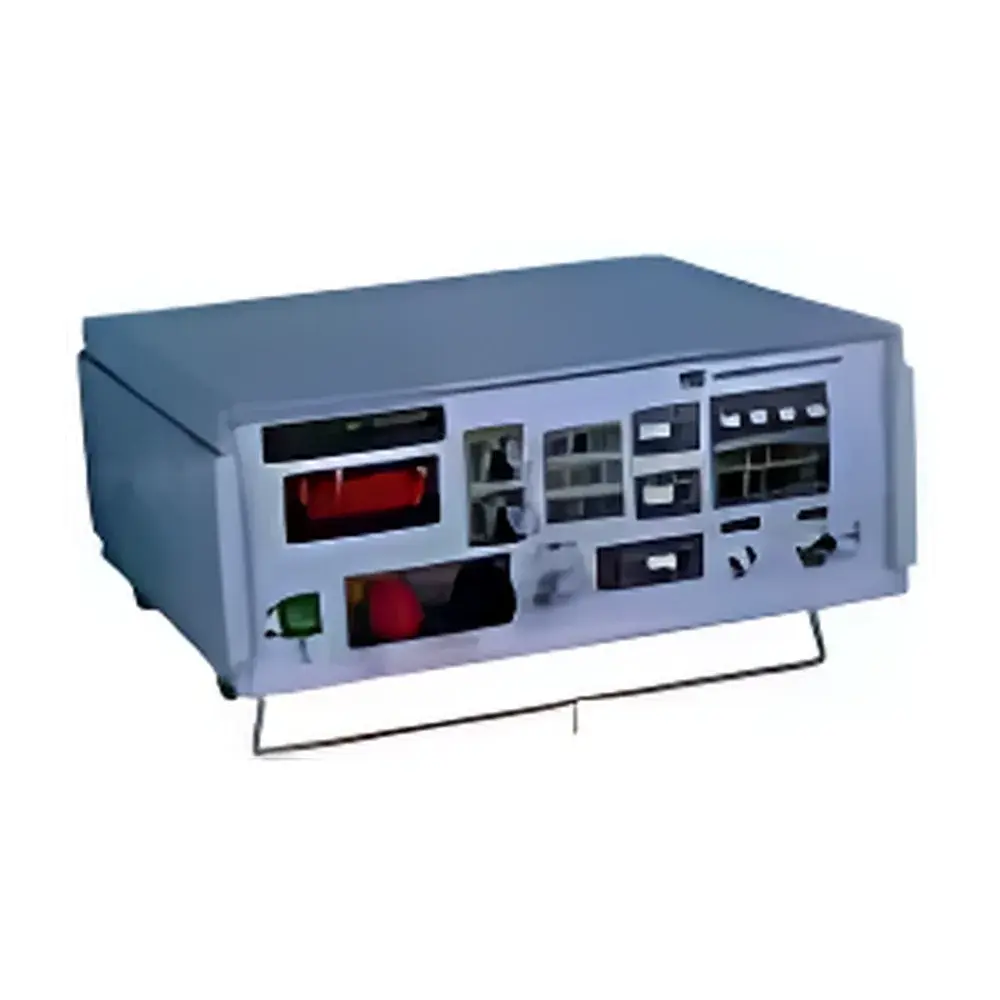
HengaoDe HFTLF-5 Dynamic Crack Monitoring System for Long-Term Structural Health Monitoring
| Brand | HengaoDe |
|---|---|
| Origin | Jiangsu, China |
| Manufacturer Type | Authorized Distributor |
| Country of Origin | China |
| Model | HFTLF-5 |
| Price | USD 138 (FOB) |
| Measurement Range | ±5 mm / ±10 mm / ±20 mm / ±30 mm (customizable) |
| Crack Displacement Accuracy | ±0.01 mm |
| Temperature Accuracy | ±0.5 °C |
| Data Storage Capacity | 65,536 records |
| Minimum Sampling Interval | 1 minute |
| Maximum Sampling Interval | 24 hours |
| Standby Duration | >3 months (at 24-h interval) |
| Ingress Protection Rating | IP65 |
| Cable Length | 10 m / 15 m / 30 m (customizable) |
| Power Supply | 6 × 1.5 V AA alkaline batteries |
| Operating Temperature | −30 °C to +80 °C |
Overview
The HengaoDe HFTLF-5 Dynamic Crack Monitoring System is an autonomous, battery-powered structural health monitoring instrument engineered for long-term, unattended measurement of crack width evolution in civil infrastructure—including bridges, tunnels, retaining walls, and historical masonry structures. It operates on the principle of high-resolution linear displacement transduction via precision resistive or LVDT-based sensing elements, coupled with integrated thermistor-based ambient temperature logging. Designed for deployment in hard-to-access or elevated locations—such as bridge soffits, dam abutments, or seismic retrofit zones—the system enables continuous, time-synchronized recording of dimensional changes over extended periods without manual intervention. Its embedded microcontroller architecture ensures deterministic sampling scheduling, real-time data integrity checks, and non-volatile flash memory retention compliant with IEC 60751 and ISO 13374-1 standards for condition monitoring systems.
Key Features
- Integrated dual-sensor module: high-stability crack displacement sensor (±0.01 mm resolution) and calibrated NTC thermistor (±0.5 °C accuracy) co-located at the measurement point.
- Self-contained power management: six standard AA alkaline cells support >6 months of continuous operation at default 15-minute sampling intervals; low-power sleep mode extends standby life to >3 months when configured for 24-hour intervals.
- Ruggedized outdoor enclosure rated IP65: corrosion-resistant aluminum alloy housing with silicone-sealed connectors, tested per IEC 60529 for dust ingress resistance and water jet protection.
- Modular cable architecture: detachable sensor head connects via shielded, UV-stabilized coaxial cable (standard lengths: 10/15/30 m), enabling remote mounting of the data logger unit at ground level for maintenance access.
- USB 2.0 interface compliant with USB-IF specifications: direct plug-and-play connectivity to Windows/Linux PCs or industrial handheld PDAs for secure firmware updates and encrypted data extraction.
Sample Compatibility & Compliance
The HFTLF-5 is compatible with both static and dynamic crack geometries in concrete, reinforced masonry, precast segments, and post-tensioned tendons. It meets ASTM C1383-22 requirements for long-term crack width monitoring in service-life prediction models and aligns with EN 1992-1-1 Annex B recommendations for deformation-based durability assessment. The device’s mechanical mounting kit accommodates standard expansion joint profiles and surface-bonded crack gauges. All electronic components are RoHS 2011/65/EU compliant, and the firmware supports GLP-compliant audit trails including timestamped configuration logs, battery voltage history, and sensor calibration metadata—essential for regulatory submissions under ISO/IEC 17025-accredited laboratories.
Software & Data Management
The included HengaoData Logger Suite (v3.2+) provides a validated, standalone Windows application for parameter configuration, real-time telemetry visualization, and post-processing analysis. Key capabilities include: automatic generation of time-series plots with dual Y-axes (crack width vs. temperature), statistical trend analysis (linear regression, moving average filters), export to CSV/Excel/JSON formats, and PDF report generation with embedded digital signatures. The software enforces 21 CFR Part 11-compliant user authentication, electronic signature workflows, and immutable record archiving. Data files are stored in a proprietary binary format with CRC-32 checksums and optional AES-128 encryption to prevent tampering during field download.
Applications
- Long-term performance evaluation of repaired cracks in highway overpasses subjected to cyclic thermal loading and traffic-induced vibration.
- Monitoring settlement-induced fissures in deep excavation shoring systems during adjacent metro tunneling projects.
- Validation of finite element model predictions for creep and shrinkage behavior in high-performance concrete elements.
- Corrosion-induced cracking surveillance in marine-exposed reinforced concrete piers under chloride ingress conditions.
- Seismic retrofit verification—tracking opening/closing dynamics of controlled-joint interfaces during aftershock sequences.
FAQ
What is the maximum recommended cable length between sensor and logger unit?
Standard configurations support up to 30 m of shielded cable; custom lengths up to 100 m are available with signal conditioning upgrades to maintain ±0.01 mm accuracy.
Can the HFTLF-5 be integrated into a centralized SCADA or IoT platform?
Yes—optional RS-485 Modbus RTU or LoRaWAN modules enable seamless integration with third-party building management systems (BMS) or cloud-based structural monitoring platforms.
Is recalibration required after battery replacement?
No. The system retains factory calibration coefficients in non-volatile memory; only a zero-offset verification routine is recommended upon reinstallation.
How is data integrity ensured during prolonged outdoor exposure?
All stored records include embedded timestamps, CRC-32 validation codes, and temperature-compensated sensor drift correction algorithms per ISO 16063-11.
Does the device comply with EU CE marking directives?
Yes—the HFTLF-5 carries CE marking under the EMC Directive 2014/30/EU and Low Voltage Directive 2014/35/EU, with test reports issued by TÜV Rheinland (Report No. RHE/2023/XXXXX).







