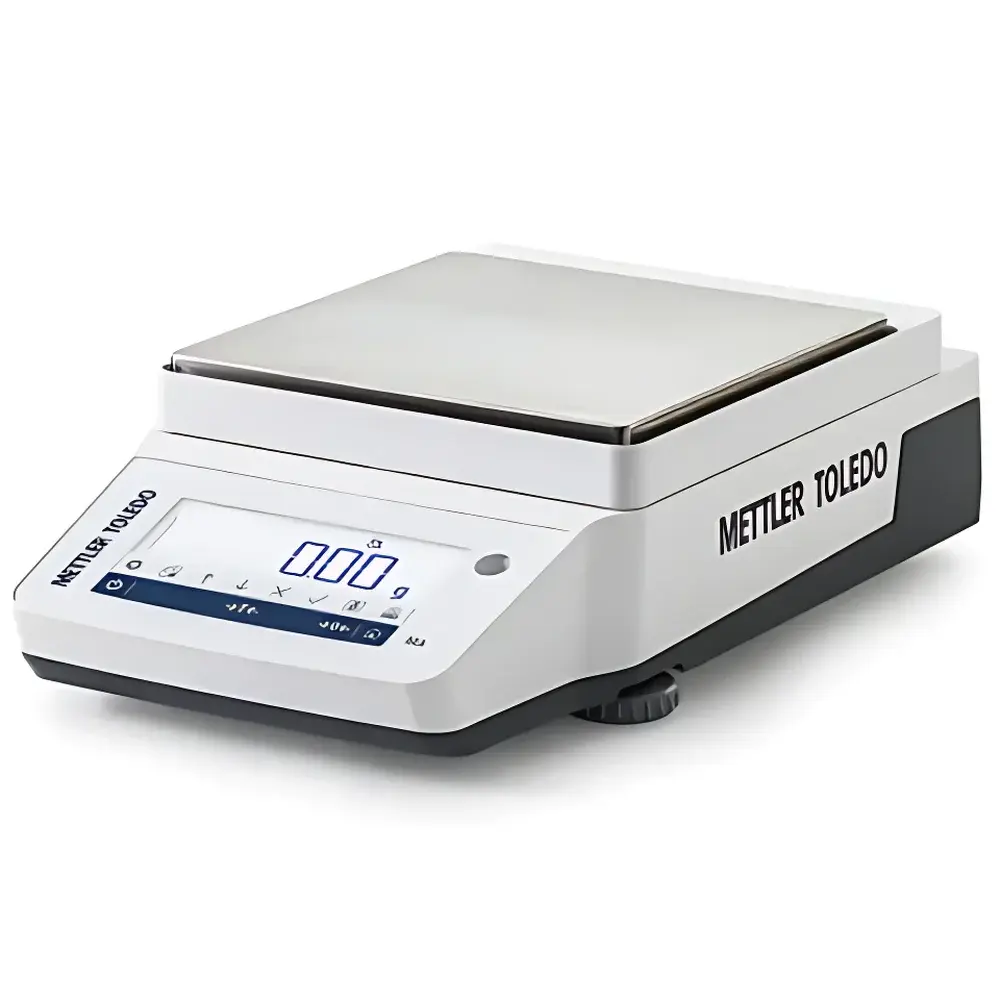
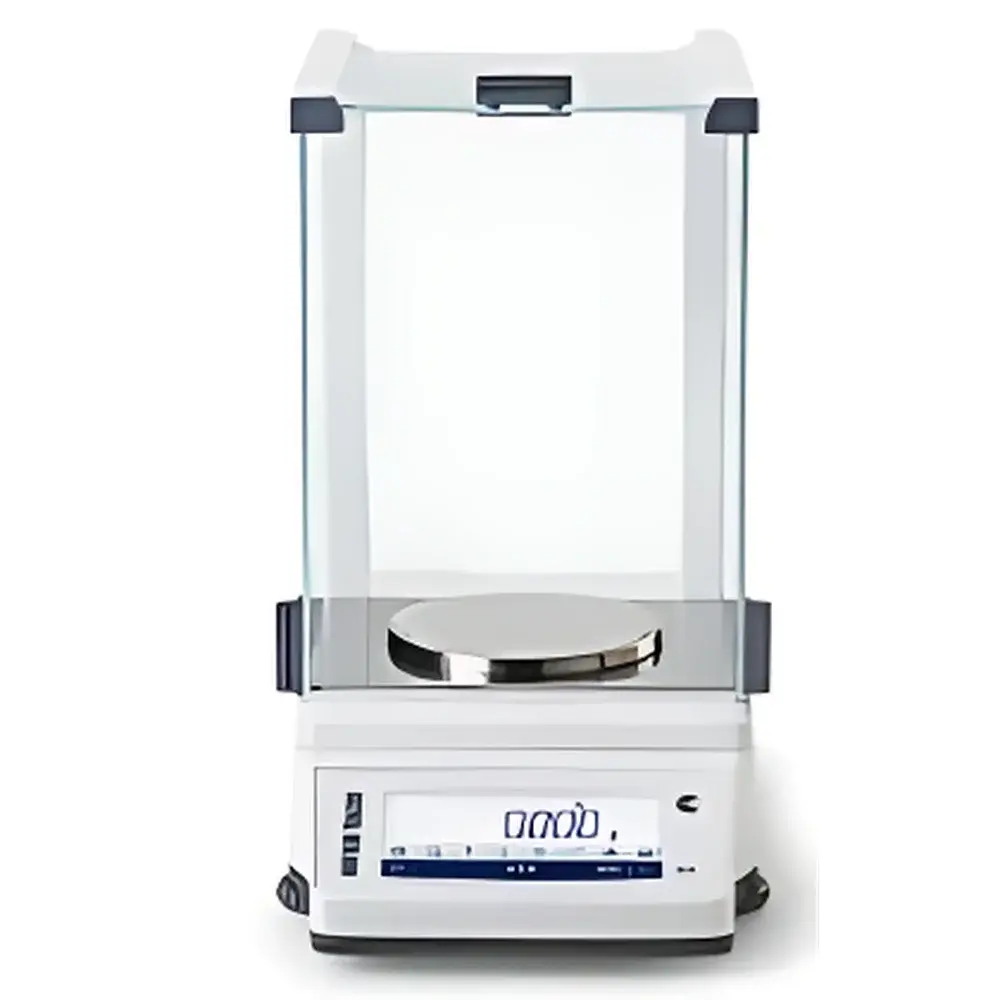
METTLER TOLEDO MA503 Precision Balance
| Brand | METTLER TOLEDO |
|---|---|
| Origin | Shanghai, China |
| Model | MA503 Precision Balance |
| Maximum Capacity | 500 g |
| Readability | 1 mg |
| Repeatability | ±0.001 g |
| Calibration | Internal automatic calibration with built-in test weight |
| Display | High-contrast LCD with backlight |
| Interface | USB-A, RS232 |
| Operating Temperature Range | 10–30 °C |
| Weighing Pan Dimensions | 120 mm diameter stainless steel |
| Compliance | ISO/IEC 17025, GLP/GMP-ready, FDA 21 CFR Part 11 compatible (via optional software) |
Overview
The METTLER TOLEDO MA503 Precision Balance is an entry-level analytical-grade weighing instrument engineered for reproducible mass determination in routine laboratory, quality control, and educational environments. It operates on electromagnetic force compensation (EMFC) principle — a core technology employed across METTLER TOLEDO’s precision balance portfolio — ensuring high stability, low drift, and minimal temperature sensitivity under standard ambient conditions (10–30 °C). With a maximum capacity of 500 g and readability of 1 mg, the MA503 delivers metrologically traceable results aligned with ISO/IEC 17025 requirements for accredited testing laboratories. Its robust mechanical architecture features a monolithic aluminum base, reinforced stainless-steel weighing pan (120 mm diameter), and sealed load cell housing — all designed to mitigate mechanical shock, dust ingress, and thermal convection effects during extended daily use.
Key Features
- Electromagnetic force compensation (EMFC) sensor system with internal automatic calibration triggered by time, temperature change, or user command — eliminating manual recalibration dependency.
- High-contrast backlit LCD display (128 × 64 pixels) with intuitive icon-based navigation and real-time contextual guidance for each weighing step (e.g., tare, sample placement, stabilization confirmation).
- Integrated application library including percentage weighing, density determination, parts counting, and formulation modes — all preconfigured without requiring external software installation.
- Touch-sensitive front-panel keys with tactile feedback and anti-smudge glass overlay — optimized for frequent operation in glove-compatible or hygienic settings.
- Dual communication interface: native RS232 serial port for legacy printers and LIMS integration; USB-A host port supporting direct connection to USB flash drives (FAT32 formatted) and USB-to-serial adapters.
- GLP/GMP-compliant data handling: timestamped weight records with operator ID input, automatic print/log export, and audit trail support when paired with METTLER TOLEDO LabX Lite or standalone EasyDirect software.
Sample Compatibility & Compliance
The MA503 accommodates a broad range of solid and granular samples — from pharmaceutical powders and chemical reagents to metallurgical specimens and food ingredients — within its 500 g capacity limit. Its open-top design and shallow draft pan allow rapid loading/unloading while minimizing air current interference. The stainless-steel pan surface resists corrosion from common solvents and cleaning agents (e.g., 70% ethanol, isopropanol), complying with ISO 8549-2 for balance hygiene standards. All firmware and hardware configurations meet the essential performance criteria outlined in OIML R76-1 (2021) for Class II non-automatic weighing instruments. When operated in controlled environments per ISO 17025 Clause 6.4, the MA503 supports documented uncertainty budgets for routine mass measurement tasks.
Software & Data Management
Data integrity is maintained through bidirectional communication protocols compliant with ASTM E2500-13 (Standard Guide for Specification, Design, and Verification of Pharmaceutical and Biopharmaceutical Manufacturing Systems). The MA503 natively exports ASCII-formatted weight logs via RS232 or USB, enabling seamless ingestion into Excel, LIMS, or ELN platforms. Optional integration with METTLER TOLEDO’s LabX Lite software provides full 21 CFR Part 11 compliance — including electronic signatures, role-based access control, and immutable audit trails for all calibration, weighing, and configuration events. Raw data files retain metadata such as date/time stamp, environmental temperature reading (via optional external probe), and internal calibration status — critical for regulatory submissions and internal QA audits.
Applications
- Pharmaceutical QC labs: raw material identity verification, tablet weight uniformity testing (USP ), and excipient dispensing prior to blend homogeneity analysis.
- Chemistry teaching laboratories: stoichiometric calculations, molar mass determination, and gravimetric titration preparation.
- Food safety testing: moisture content analysis (AOAC 950.46), ash residue quantification (AOAC 923.03), and nutritional labeling compliance checks.
- Materials science: powder density profiling, catalyst loading consistency, and additive manufacturing feedstock batch verification.
- Environmental testing: filter paper mass differential for particulate matter (PM2.5/PM10) gravimetric analysis per EPA Method 201A.
FAQ
Does the MA503 support external temperature or humidity sensors?
Yes — it accepts analog inputs from optional METTLER TOLEDO environmental probes (e.g., FP2000 series), enabling simultaneous recording of ambient conditions alongside weight values.
Can the MA503 be validated for GxP environments?
Yes — its internal calibration function, traceable to NIST-traceable weights, combined with LabX Lite software, satisfies IQ/OQ/PQ documentation requirements per Annex 11 and EU GMP guidelines.
Is the USB-A port capable of connecting to a network printer?
No — the USB-A port operates in host mode only for storage devices and USB-to-serial adapters; network printing requires RS232-to-Ethernet gateway integration.
What is the warm-up time required before first-use calibration?
Minimum 30 minutes at stable room temperature (±2 °C/hour variation) is recommended to ensure thermal equilibrium of the EMFC sensor assembly.
How often should internal calibration be performed?
METTLER TOLEDO recommends initiating internal calibration after power-on, following significant ambient temperature shifts (>2 °C), and at least once per shift in regulated production environments.