
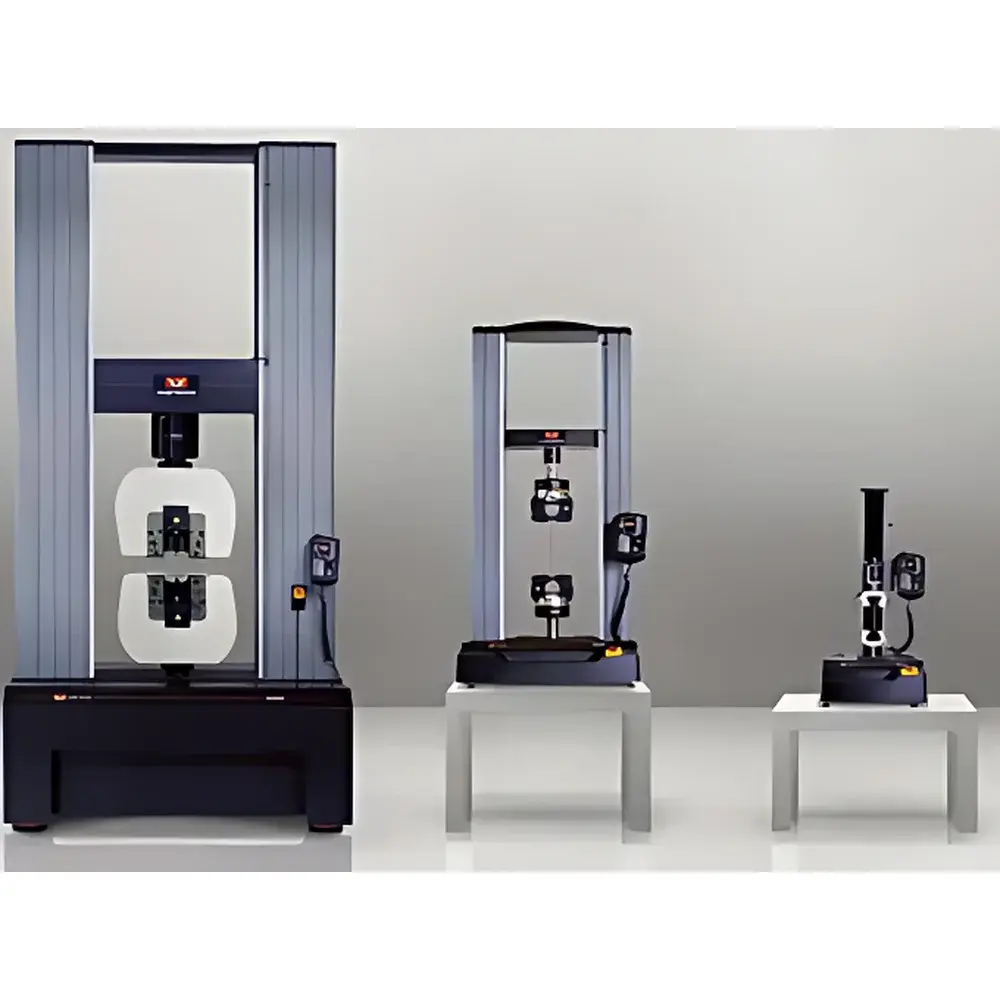
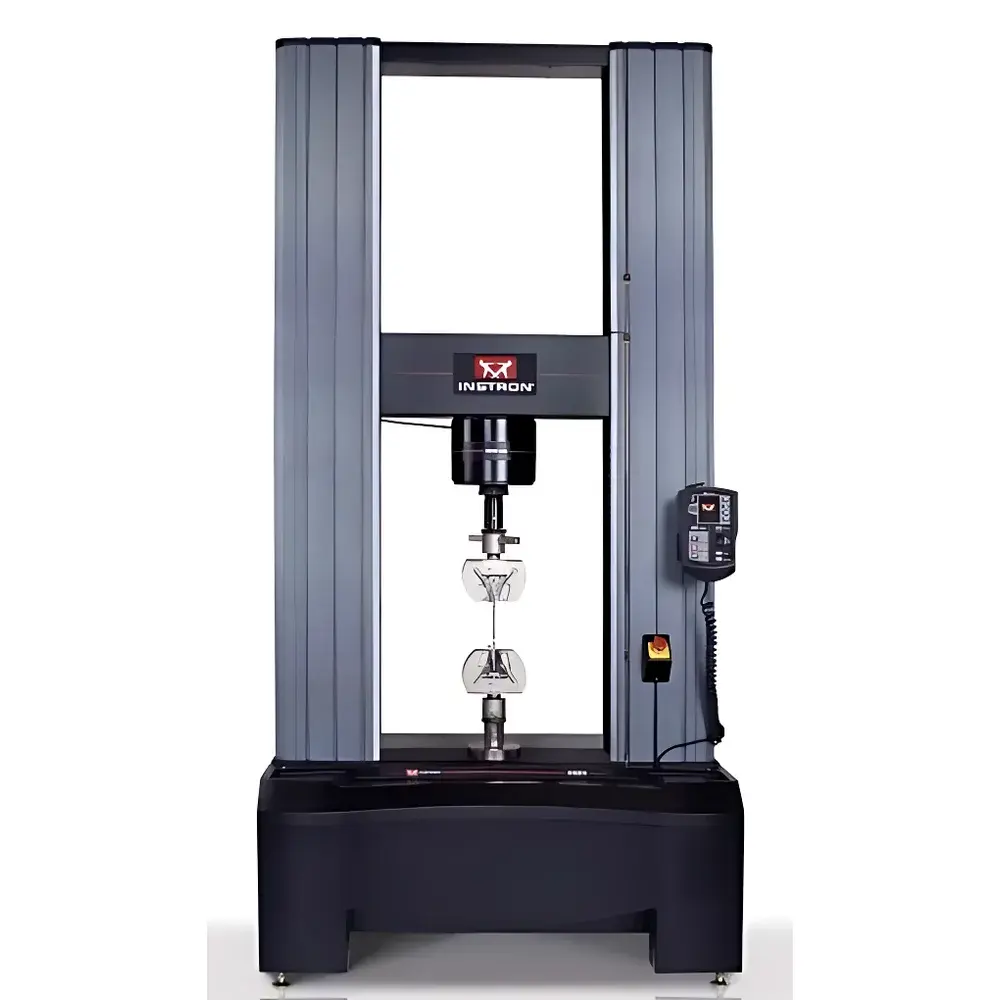
INSTRON 5980 Series Dual-Column Floor-Mounted Universal Testing System
| Brand | INSTRON |
|---|---|
| Origin | USA |
| Model | 5980 Series (5982/5984/5985/5988/5989) |
| Load Capacity | 100–600 kN |
| Vertical Test Space | 1430–2050 mm |
| Control Interface | Built-in Ethernet |
| Sensor Channels | Up to 4 integrated channels |
| Compliance | ASTM E4, E8, E9, E21, ISO 7500-1, ISO 527, ISO 6892-1, EN 10002-1, USP <1041>, FDA 21 CFR Part 11 (via Bluehill software) |
| Type | Electromechanical Universal Testing Machine |
Overview
The INSTRON 5980 Series is a high-performance, dual-column floor-mounted universal testing system engineered for precision mechanical characterization of advanced engineering materials under static and quasi-static loading conditions. Based on electromechanical actuation with servo-controlled AC motor drive, the system delivers exceptional force accuracy, positional repeatability, and speed stability across its full operational range. Designed for structural integrity validation and mechanical property quantification—including tensile, compression, flexure, shear, and cyclic testing—the 5980 platform supports rigorous compliance with international standards such as ASTM E8/E9 (metals), ISO 6892-1 (tensile testing), ISO 527 (plastics), and EN 10002-1 (metallic materials). Its rigid frame architecture, preloaded precision bearings, and real-time closed-loop control ensure minimal deflection and optimal alignment—critical for high-fidelity stress–strain curve generation and fracture behavior analysis in aerospace alloys, carbon-fiber composites, high-strength steels, and automotive structural components.
Key Features
- High-rigidity dual-column frame with optimized load train geometry and preloaded linear motion bearings for superior axial alignment and reduced parasitic bending moments
- Integrated Ethernet interface enabling deterministic communication with host PCs; compatible with standard TCP/IP networks without proprietary adapters
- Digital controller with up to four synchronized sensor input channels—supporting simultaneous acquisition of load, displacement, strain (via extensometers), and environmental feedback (e.g., temperature)
- Enhanced dynamic performance: improved speed accuracy (±0.1% of setpoint), extended speed range (0.001–1000 mm/min), and increased data sampling rate (up to 5 kHz)
- Real-time operator interface with tactile soft-keys, intuitive graphical display, and programmable specimen protection logic to prevent over-travel or overload damage
- Modular base configuration with T-slot table for rapid fixture integration and customizable test zone illumination for high-contrast imaging of small specimens
Sample Compatibility & Compliance
The 5980 Series accommodates specimens ranging from thin foils (<0.1 mm thickness) to large-scale structural assemblies (e.g., bolted joints, composite laminates, welded frames). Standard configurations support specimen widths up to 400 mm and vertical test spaces from 1430 mm (5982/5984/5985) to 2050 mm (5988/5989), with optional height extensions available. All models comply with ISO 7500-1 Class 0.5 force calibration requirements and meet or exceed ASTM E4 verification criteria for force measurement systems. When operated with Bluehill Universal software, the system supports audit-ready electronic records, user access controls, and full 21 CFR Part 11 compliance—including electronic signatures, change tracking, and secure data archiving aligned with GLP/GMP workflows.
Software & Data Management
Controlled exclusively via INSTRON’s Bluehill Universal software, the 5980 Series enables method-driven test execution, automated sequence programming, and real-time data visualization. The software provides built-in test methods compliant with ASTM, ISO, and EN standards, with customizable pass/fail criteria and automatic report generation (PDF, Excel, XML). Advanced features include multi-channel synchronization, digital video integration (with optional high-speed camera), extensometer auto-calibration, and seamless export to LIMS or enterprise QA databases. Audit trails record all user actions, parameter modifications, and calibration events—ensuring full traceability for regulatory submissions and internal quality audits.
Applications
- Mechanical qualification of aerospace-grade titanium alloys and aluminum-lithium sheet metal per AMS and MIL-STD specifications
- Tensile and compression testing of fiber-reinforced polymer composites (e.g., CFRP, GFRP) in accordance with ASTM D3039 and D6641
- Structural validation of automotive crash components—including B-pillars, cross-members, and battery enclosures—under quasi-static loading
- Fastener evaluation (bolts, rivets, threaded inserts) per ASTM F606 and ISO 898-1, including proof load, yield, and ultimate strength determination
- Medical device component testing (e.g., orthopedic implants, stent substrates) meeting ISO 5832 and ASTM F2503 requirements
- Quality control of rolled steel plates, welded joints, and castings per ASTM A370 and EN 10002-1
FAQ
What load capacities are available within the 5980 Series?
The series includes five models: 5982 (100 kN), 5984 (150 kN), 5985 (250 kN), 5988 (400 kN), and 5989 (600 kN), each optimized for distinct application classes and specimen geometries.
Is the system compatible with extensometers and other third-party sensors?
Yes—the controller supports analog and digital inputs from INSTRON’s AutoX750, Video Extensometer (AVE2), and certified third-party strain measurement devices via standard ±10 V or LVDT interfaces.
Can Bluehill Universal software be validated for regulated environments?
Yes—INSTRON provides IQ/OQ documentation packages, 21 CFR Part 11 configuration guides, and on-site validation support for pharmaceutical, biotech, and medical device laboratories operating under GxP frameworks.
What maintenance intervals are recommended for long-term reliability?
Annual calibration verification and biannual mechanical inspection (guide rail lubrication, bearing preload check, drive belt tension) are recommended; full service intervals depend on usage frequency and environmental conditions.
Does the system support high-speed imaging integration during testing?
Yes—via Bluehill’s synchronized video capture module, users can time-align high-resolution video streams (up to 1080p at 60 fps) with force-displacement data for deformation mapping and failure mode analysis.



