
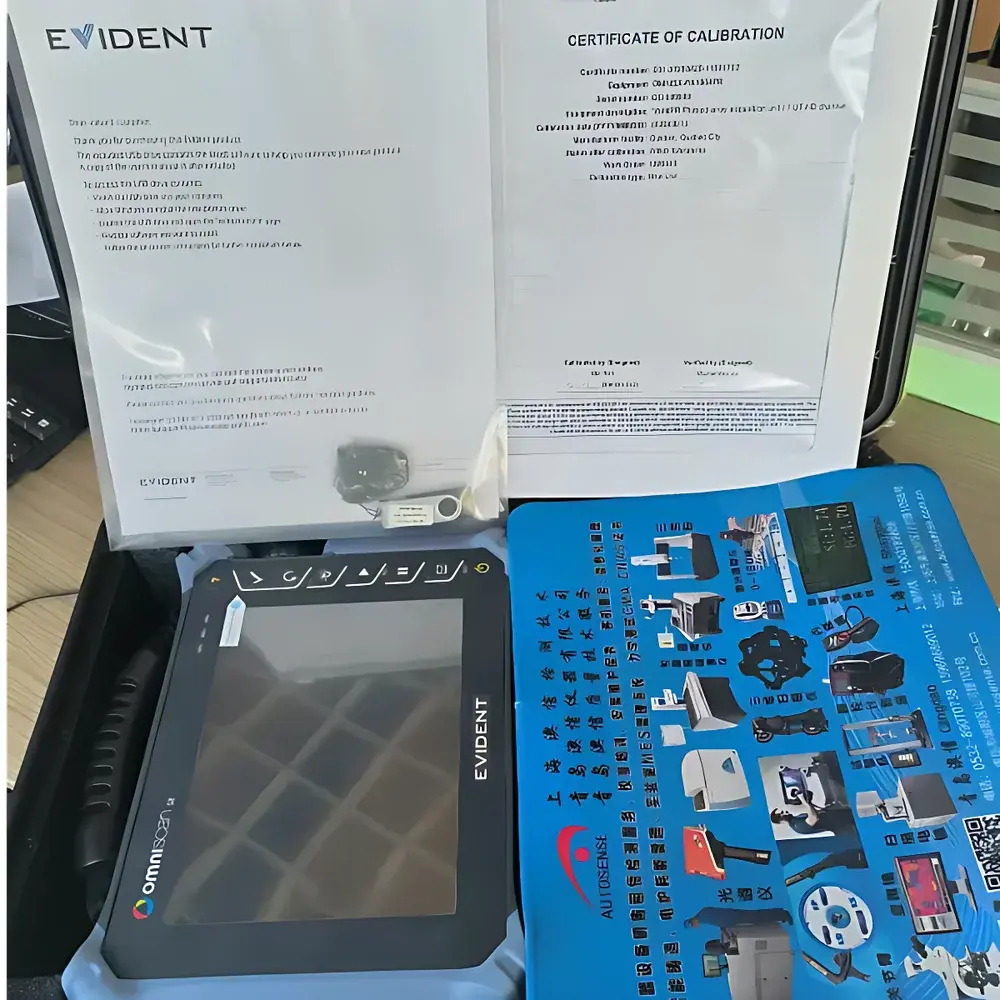
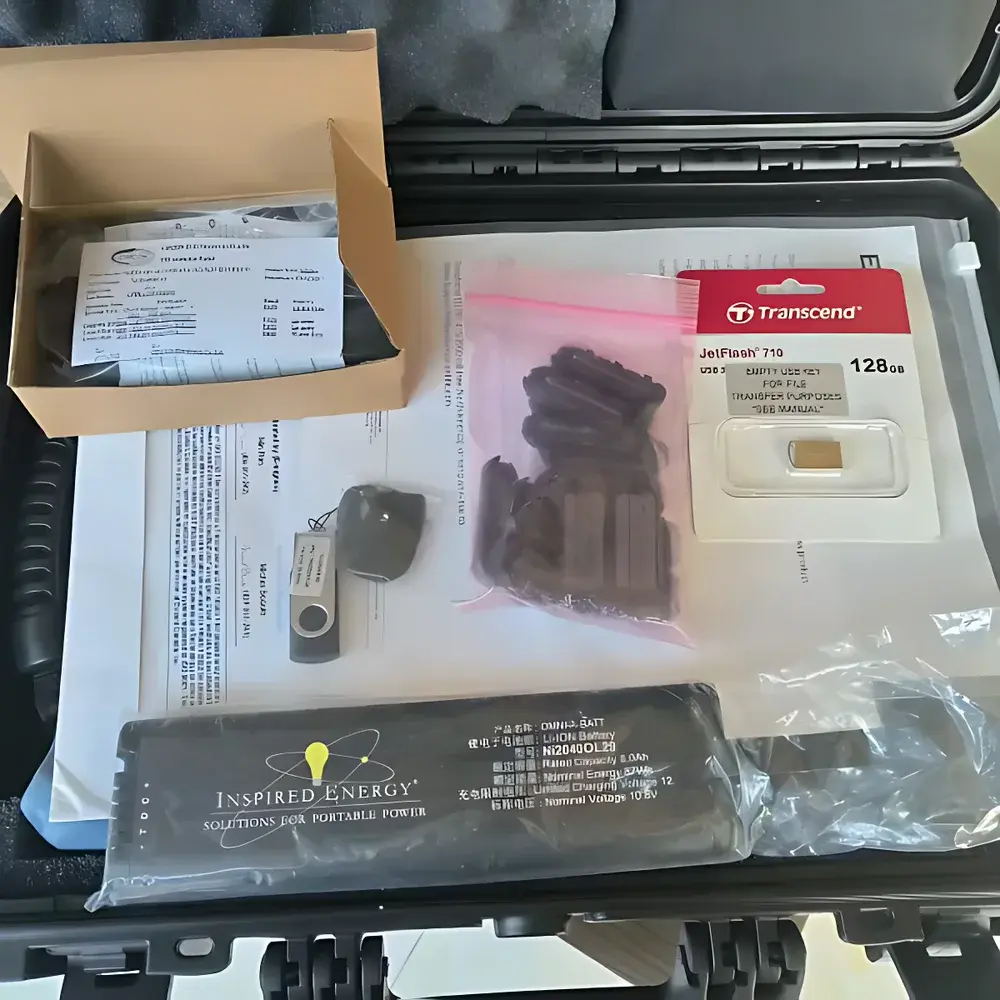
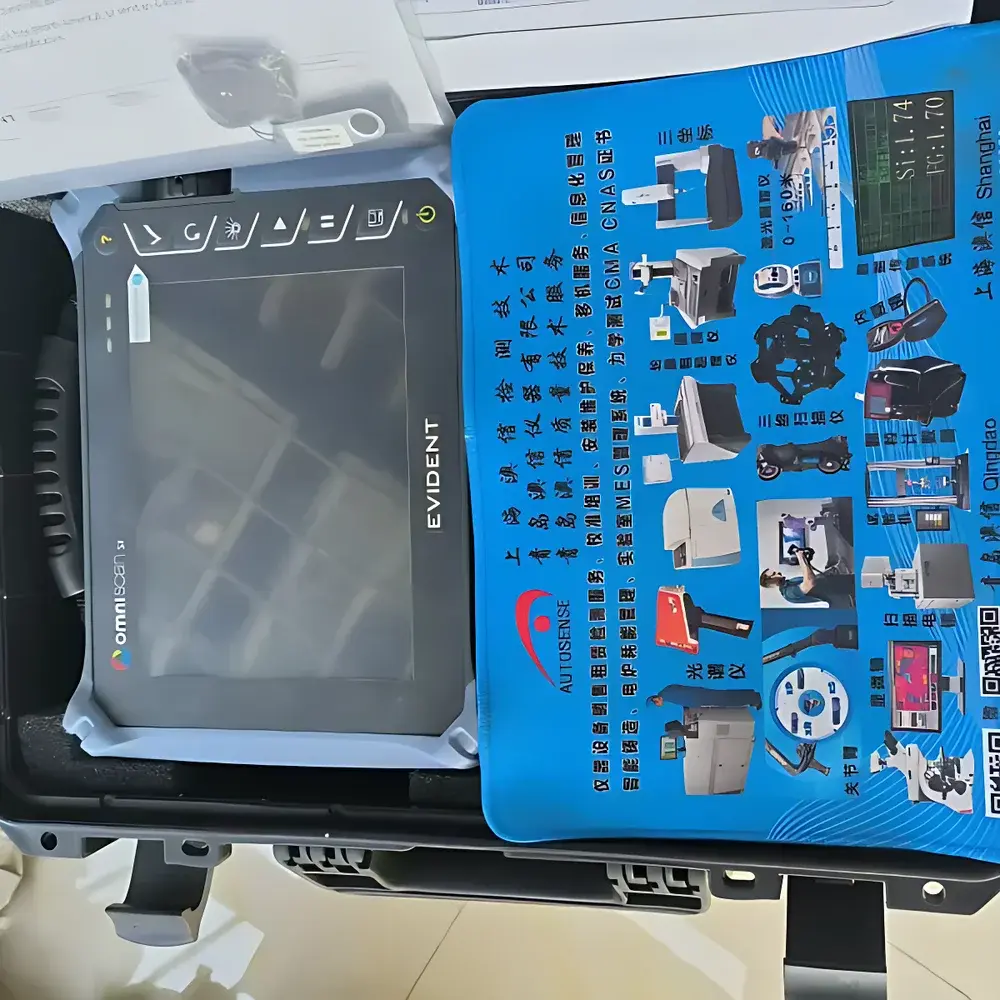
Olympus QMNISX-PA1664PR Phased Array & TOFD Flaw Detector
| Brand | Olympus |
|---|---|
| Origin | Canada |
| Model | QMNISX-PA1664PR |
| Portability | Portable |
| Primary Application Domain | Aerospace |
| Regulatory Origin | Imported Instrument |
| Distribution Status | Authorized Distributor |
Overview
The Olympus QMNISX-PA1664PR is a high-performance, portable phased array ultrasonic testing (PAUT) and time-of-flight diffraction (TOFD) flaw detector engineered for precision weld inspection, structural integrity assessment, and critical component verification in demanding aerospace and advanced manufacturing environments. Built upon Olympus’ legacy in ultrasonic NDT instrumentation, the QMNISX-PA1664PR integrates dual-mode acquisition architecture—supporting simultaneous or independent PAUT and TOFD operation—to deliver comprehensive volumetric inspection capabilities without hardware reconfiguration. Its measurement principle relies on controlled electronic beam steering and focusing via programmable delay laws applied to 16:64 active channel matrix (16 elements fired, up to 64 elements received), enabling real-time sectorial scanning (S-scan), linear scans (L-scan), and depth-encoded TOFD B-scan imaging. The system complies with core ultrasonic inspection standards including ASTM E2700 (PAUT), ASTM E2373 (TOFD), ISO 13588, and EN 1330-4, ensuring data traceability and method validity for AS9100-compliant quality systems.
Key Features
- 16:64 fully programmable phased array architecture with integrated TOFD channel support for concurrent dual-method inspection
- Ruggedized, IP65-rated magnesium alloy enclosure designed for field deployment in hangars, assembly lines, and outdoor maintenance facilities
- 10.1-inch capacitive multi-touch display with glove-compatible interface and anti-reflective coating for daylight readability
- Onboard A-scan, S-scan, C-scan, and TOFD B-scan visualization with real-time dynamic depth calibration and gate-based amplitude analysis
- Integrated battery system providing ≥4.5 hours of continuous operation under typical PAUT+TOFD mixed-mode usage
- Support for encoded positional data acquisition via rotary encoders or linear position sensors, enabling full scan reproducibility and automated reporting
- Pre-loaded inspection setups compliant with ASTM E2734 (weld mapping), AWS D1.1, and NAS 410 Level II/III procedural requirements
Sample Compatibility & Compliance
The QMNISX-PA1664PR accommodates a broad range of metallic and composite structures common in aerospace applications—including aluminum 2024/7075 alloys, titanium Ti-6Al-4V, Inconel 718, carbon-fiber reinforced polymer (CFRP) laminates, and welded nickel-based superalloy joints. Probe compatibility spans standard 5–10 MHz PAUT wedges (e.g., 0°, 45°, 60°, 70°), dual-element TOFD transducers (5 MHz, 10 mm diameter), and custom bi-modal arrays. All firmware and calibration routines adhere to ISO/IEC 17025-accredited laboratory practices. Device firmware includes audit trail logging per FDA 21 CFR Part 11 requirements, supporting GLP/GMP-aligned documentation workflows where required by OEM quality departments.
Software & Data Management
Olympus NDT SetupBuilder v4.2 and OmniPC v6.1 software suite enables full offline setup design, simulation-based validation (using CIVA modeling engine), and post-processing of acquired datasets. Raw RF data is stored in industry-standard .udx format, preserving full waveform fidelity for re-analysis, amplitude correction, and synthetic aperture focusing (SAFT). Reporting modules generate PDF/HTML inspection reports containing embedded images, dimensional annotations, defect characterization tables (depth, length, height, orientation), and compliance statements against referenced standards. Data export supports CSV, XML, and DICOM-RT formats for integration into enterprise quality management systems (QMS) such as ETQ Reliance or Siemens Teamcenter.
Applications
- Aerospace fuselage and wing spar weld inspection per Boeing D6-17487 and Airbus AITM 6-1001
- Turbine disk bore inspection using phased array sectorial scans combined with TOFD for subsurface crack sizing
- Composite-to-metal bondline evaluation in hybrid airframe assemblies
- Field verification of additive-manufactured (AM) titanium components for porosity and lack-of-fusion defects
- Periodic in-service inspection (ISI) of landing gear components under FAA AC 120-115B guidelines
- Qualification of repair patches on aging aircraft structures using phased array + TOFD correlation methodology
FAQ
Does the QMNISX-PA1664PR support automated scanning with robotic arms or encoded scanners?
Yes—it features native Ethernet/IP and RS-422 interfaces for synchronization with third-party motion controllers, including FARO, API, and Nikon metrology platforms.
Is calibration traceable to NIST or equivalent national metrology institutes?
All factory calibrations are performed against NIST-traceable ultrasonic reference standards (e.g., IIW Type 1, BS 3811), with certificates issued per ISO/IEC 17025 requirements.
Can the instrument store and recall multiple inspection procedures for different part numbers?
Yes—up to 500 user-defined setups can be saved onboard, each with unique probe definitions, wedge delays, gate configurations, and acceptance criteria.
What level of operator certification is required to operate this device in regulated aerospace environments?
Operators must hold NAS 410 Level II or III certification in both PAUT and TOFD methods, with documented training on the QMNISX platform per employer-specific procedure qualification.
Is firmware update capability available over-the-air or only via USB?
Firmware updates require secure USB installation using Olympus-signed packages; no remote OTA functionality is implemented to maintain cybersecurity compliance per DO-326A/ED-202A guidelines.



