
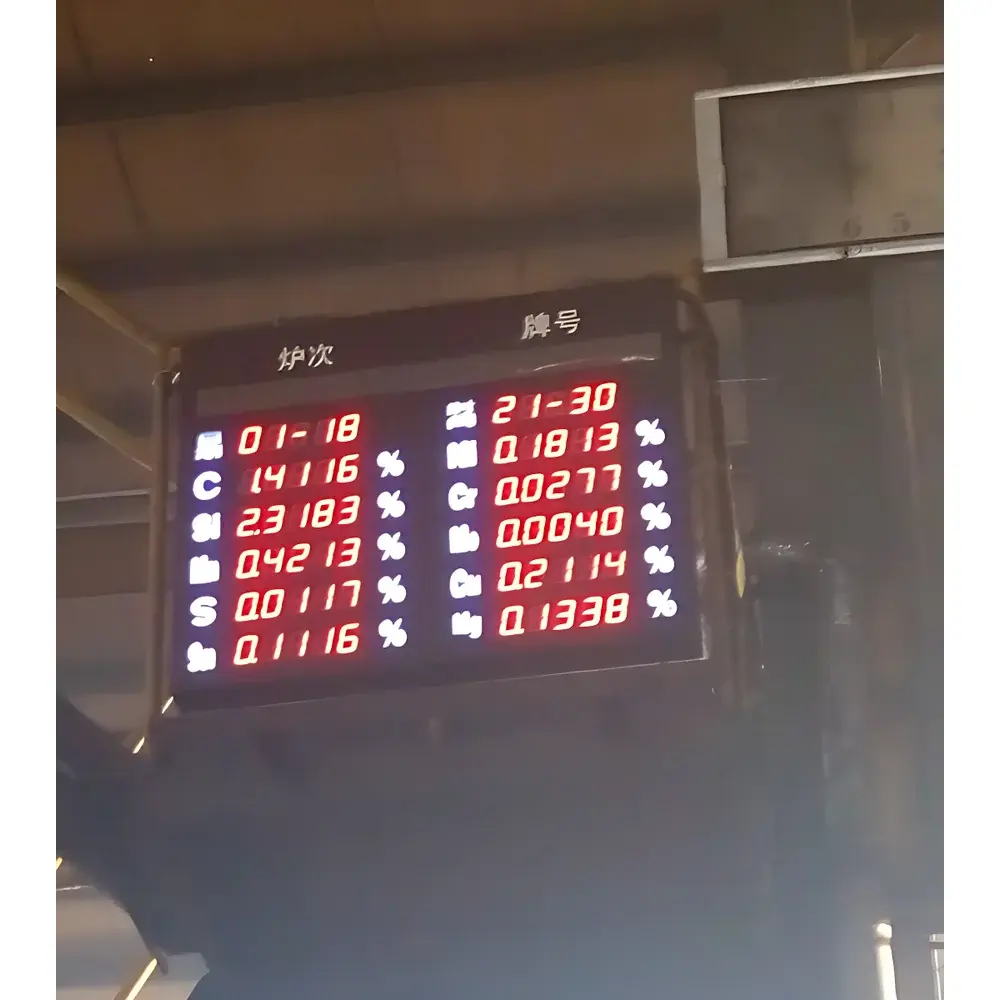
ATD-3-11 Portable Arc-Emission Direct-Reading Spectrometer with On-Furnace Display System
| Origin | Shandong, China |
|---|---|
| Manufacturer Type | Authorized Distributor |
| Model | ATD-3-11 |
| Price Range | USD 28,000 – 35,000 |
| Instrument Type | Portable |
| Excitation Method | Arc |
| Detector Type | Photomultiplier Tube (PMT)-Based Multi-Channel Array |
| Focal Length | 750 mm |
| Grating Grooves | 3600 lines/mm |
| Wavelength Range | 120–300 nm |
| Number of Analytical Channels | 128 |
Overview
The ATD-3-11 Portable Arc-Emission Direct-Reading Spectrometer with On-Furnace Display System is an integrated metallurgical analysis solution engineered for real-time elemental composition monitoring in foundry environments. Unlike conventional laboratory-bound optical emission spectrometers (OES), this system combines a compact arc-excited spectrometer with a ruggedized, furnace-side LED display unit to close the critical data latency gap between spectral analysis and casting process control. The core optical architecture employs a Czerny-Turner monochromator with a 750 mm focal length and a high-resolution 3600 lines/mm holographic grating, enabling precise separation of atomic emission lines across the vacuum UV to near-UV range (120–300 nm). Arc excitation provides rapid, matrix-tolerant vaporization of solid metal samples—particularly suited for ferrous and non-ferrous alloys including cast iron, carbon steel, stainless steel, aluminum, and copper-based alloys. By eliminating manual transcription and enabling direct digital transmission from spectrometer to production floor, the system supports ISO/IEC 17025-aligned traceability and reduces human error in compositional reporting.
Key Features
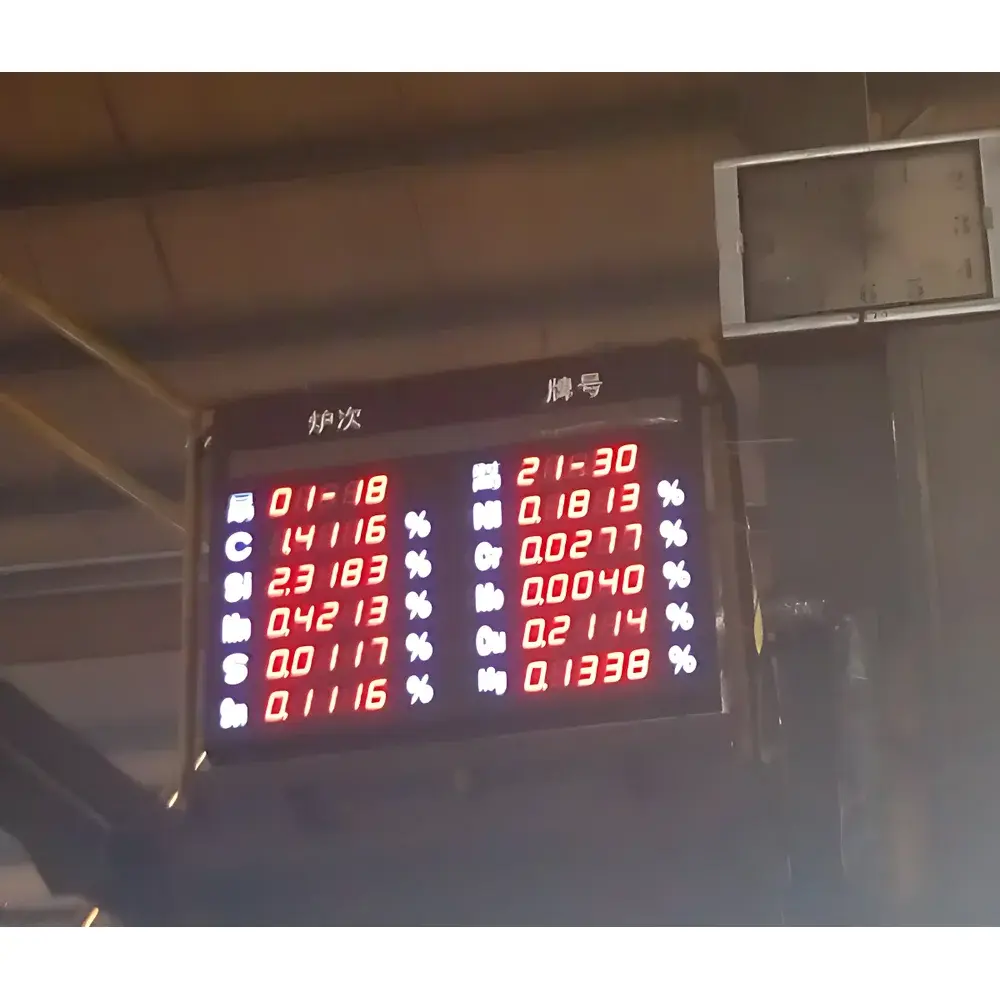
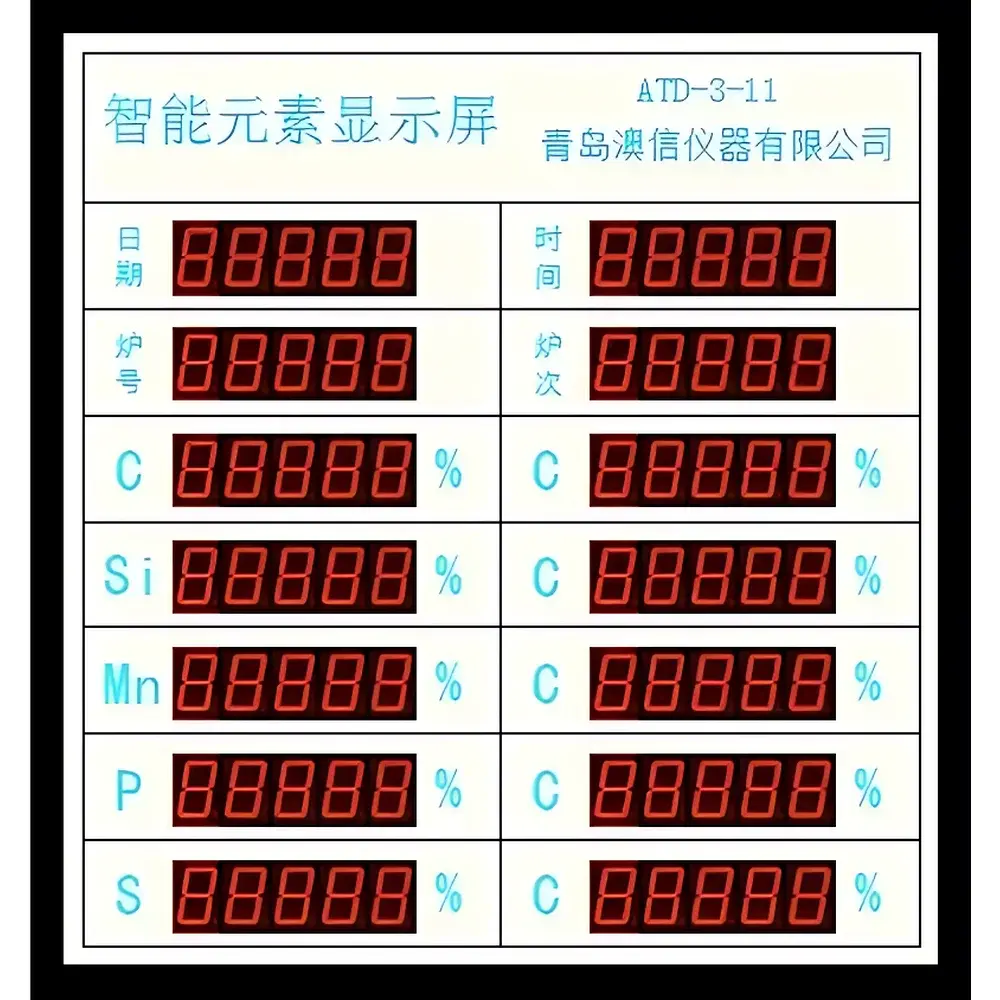
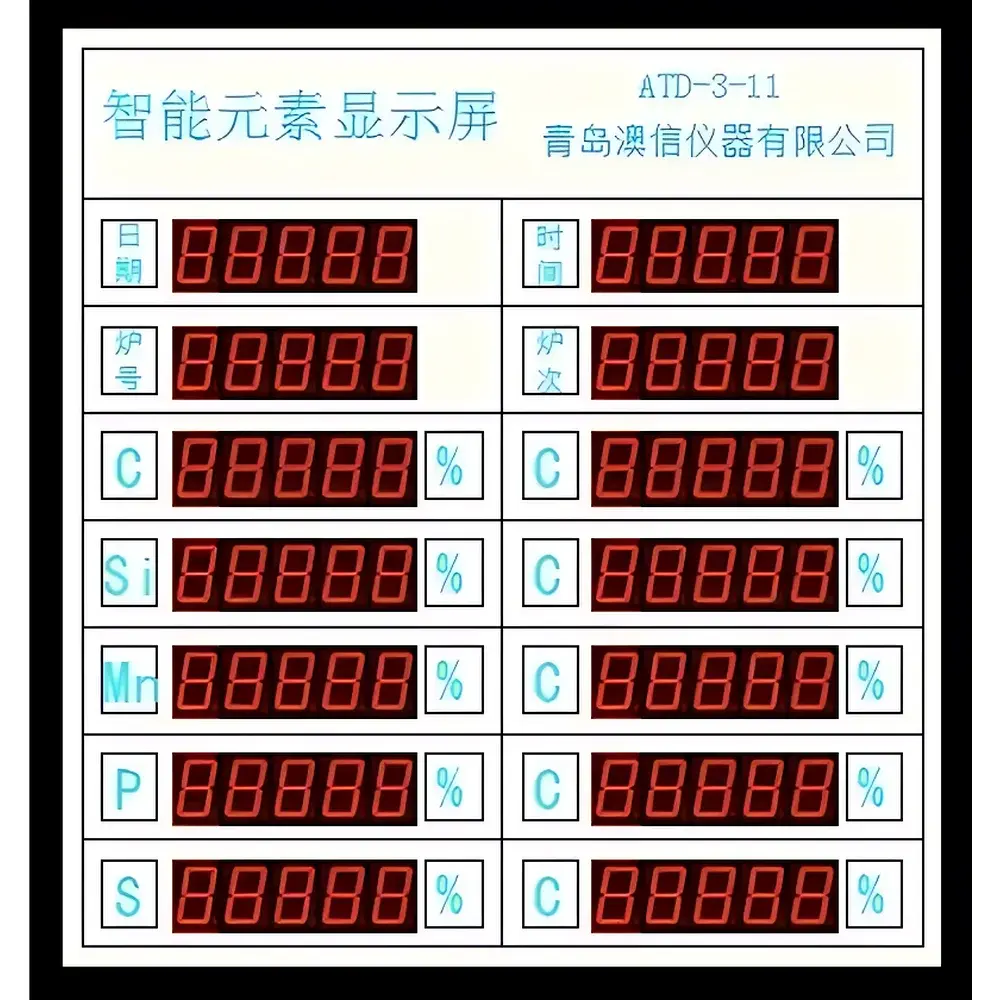
- Integrated dual-unit architecture: portable OES analyzer + intelligent on-furnace LED display panel
- RS-485 industrial bus communication with up to 1200 m cable reach; optional wireless RF transceiver module available for flexible deployment
- High-visibility LED display with customizable element windows—each channel rendered via 5-digit numeric display supporting up to four decimal places
- Multi-lamp address configuration: individual displays can be assigned to specific furnace numbers via DIP-switch addressing
- Real-time audio-visual alerting: sustained 10-second tone for new result arrival; 20-second intermittent tone (1 s on / 1 s off) with simultaneous digit flashing for out-of-specification element values
- Local data retention: stores the latest 50 analytical records with non-volatile memory—data preserved for ≥30 days without power
- Onboard self-diagnostic function: verifies LED segment integrity and communication handshake status for proactive maintenance
- Robust power management: wide-input AC supply (220 V ±15%, 50 Hz) with overvoltage, overcurrent, and thermal protection circuits
Sample Compatibility & Compliance
The ATD-3-11 is optimized for solid metallic samples prepared per ASTM E415 (Standard Test Method for Analysis of Carbon and Low-Alloy Steel by Spark or Arc Atomic Emission Spectrometry) and ISO 11577 (Metallic materials — Optical emission spectrometric analysis). Sample geometry conforms to standard 10–12 mm diameter cylindrical pins or flat discs. The arc excitation source delivers stable plasma conditions suitable for low-melting-point alloys (e.g., Al-Si, Zn-Al) as well as high-carbon steels and nickel-based superalloys. All hardware and firmware comply with CE electromagnetic compatibility (EMC) directives and IEC 61000-6-2/6-4 standards. The display unit meets IP54 ingress protection rating for dust and splash resistance in foundry ambient conditions. Data handling protocols support audit-ready operation under GLP and GMP frameworks, with timestamped records suitable for FDA 21 CFR Part 11-compliant documentation when integrated with validated LIMS interfaces.
Software & Data Management
The system operates without proprietary PC software dependency—the spectrometer generates ASCII-formatted spectral data packets compliant with ASTM E1357 (Standard Practice for Digital Data Exchange in Spectrochemical Analysis). Each packet includes furnace ID, sample ID, analysis timestamp, elemental concentrations (wt%), and QC flags. The display unit parses incoming data using embedded firmware with CRC-16 error checking. Stored historical results are accessible via front-panel navigation keys and exportable via RS-232 serial dump (optional). For enterprise integration, the system supports Modbus RTU protocol mapping to enable direct SCADA connectivity. No cloud upload or remote telemetry is performed by default—ensuring full data sovereignty within the customer’s operational network.
Applications
- Real-time melt chemistry verification during ladle transfer and tapping operations
- Final composition check prior to mold pouring in gray iron and ductile iron foundries
- Alloy grade confirmation for secondary aluminum remelting lines
- In-process adjustment feedback for scrap charge blending and alloying additions
- Quality gate enforcement at heat release points in automotive and rail component manufacturing
- Statistical process control (SPC) data feed for X-bar/R charting systems
FAQ
Can the display unit show multiple furnace IDs simultaneously?
Yes—the system supports both single-furnace dedicated mode and multi-furnace multiplexed mode. In the latter, one display cycles through preconfigured furnace IDs with user-defined dwell time per screen.
Is calibration transfer possible between different ATD-3-11 units?
Calibration coefficients are stored in non-volatile memory and can be exported/imported via serial interface using standardized .CAL file format compatible with all ATD-3 series instruments.
What environmental conditions does the display unit tolerate?
Operating temperature: −10 °C to +60 °C; relative humidity: 20–90% RH non-condensing; vibration resistance: 2 g RMS per IEC 60068-2-6.
Does the system meet any international metrological standards?
The optical train is aligned and verified against NIST-traceable Fe/Cu/Al reference standards (SRM 1250a, 1251, 1252); wavelength accuracy is certified to ±0.01 nm across the 120–300 nm range per factory calibration report.
How is firmware updated?
Firmware upgrades are delivered via USB-to-serial adapter and executed through a terminal-based bootloader interface—no internet connection required.





