
Kibron G1 Langmuir-Blodgett Trough Analyzer
| Brand | Kibron |
|---|---|
| Origin | Finland |
| Model | G1 |
| Compliance | ASTM D3719, ISO 9001-certified manufacturing |
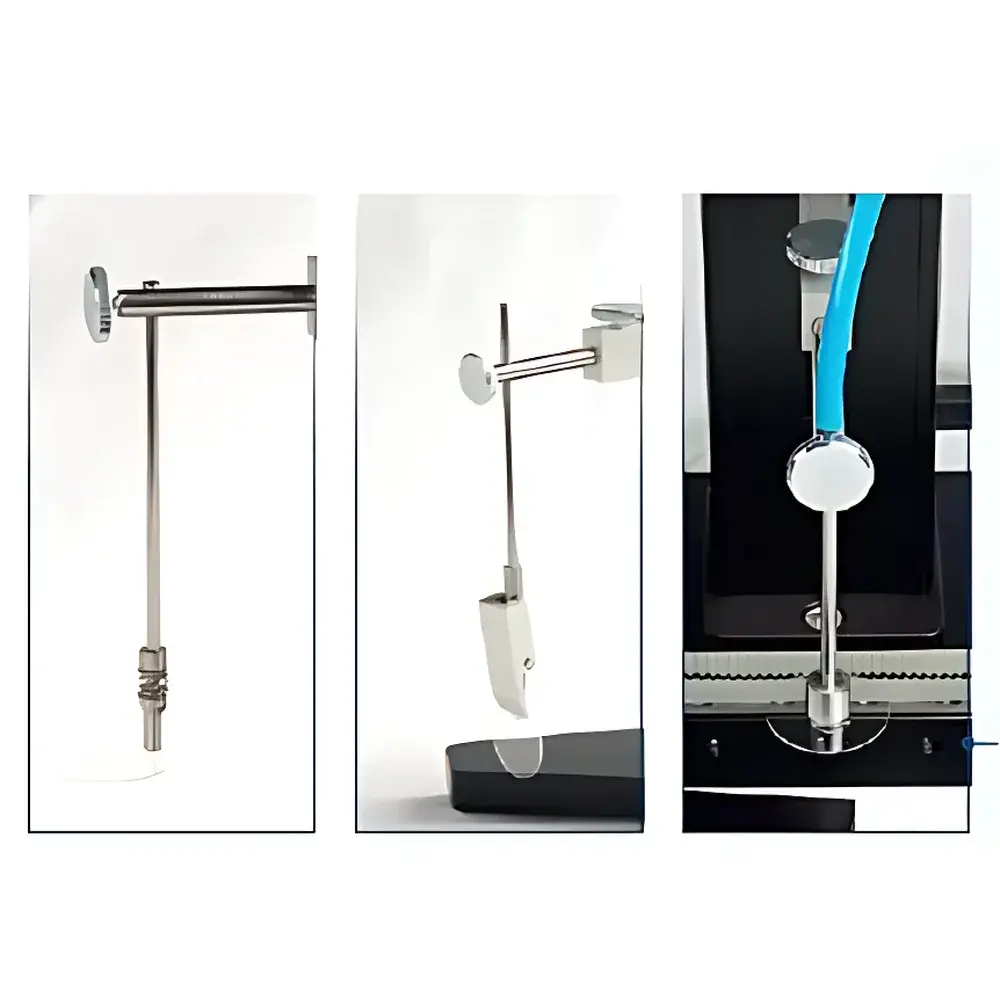
| Operating Principle | Surface pressure-area isotherm measurement via Wilhelmy plate or Du Noüy–Padday probe |
| Temperature Control | Compatible with external recirculating chiller (±0.1 °C stability) |
| Substrate Handling | Vertical dip-coating (LB) and horizontal transfer (LS), accommodates substrates up to 100 mm × 50 mm |
| Material Construction | Monolithic PTFE trough and immersion well |
| Software Interface | FilmWare 4.0 with GLP-compliant audit trail, FDA 21 CFR Part 11 optional module |
| Optical Integration | Optional quartz optical windows for in situ microscopy or Brewster angle microscopy (BAM) |
Overview
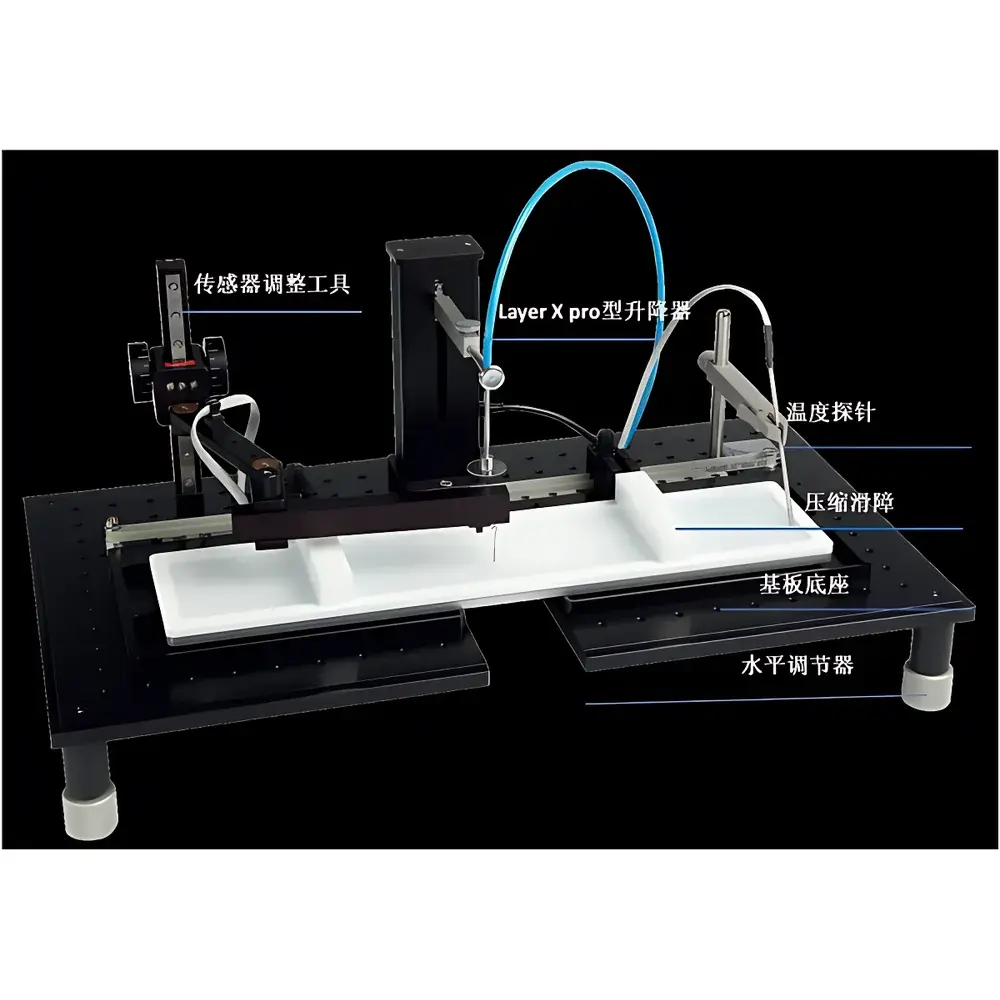
The Kibron G1 Langmuir-Blodgett Trough Analyzer is a precision-engineered platform for quantitative monolayer characterization at the air-water interface. Based on the classical Langmuir trough principle, it measures surface pressure (π) as a function of molecular area (A) to generate π–A isotherms—fundamental thermodynamic descriptors of amphiphilic film behavior. The system employs Kibron’s proprietary micro-probe technology, eliminating mechanical hysteresis and signal lag commonly observed in conventional barrier-driven systems. Its modular architecture separates the Langmuir compression stage from the Langmuir-Blodgett (LB) or Langmuir-Schaefer (LS) deposition unit, enabling independent optimization of film formation and transfer processes. Designed and manufactured in Finland under ISO 9001 quality management protocols, the G1 meets the metrological rigor required for academic research, pharmaceutical formulation development, and advanced materials R&D where reproducibility across laboratories is critical.
Key Features
- Monolithic PTFE trough and immersion well—machined from a single block to ensure dimensional stability, chemical inertness, and zero interfacial leakage.
- Modular LB/LS deposition head with dual-axis motorized control: enables precise vertical dipping (LB mode) and horizontal contact transfer (LS mode) with programmable speed (0.01–10 mm/s) and acceleration profiles.
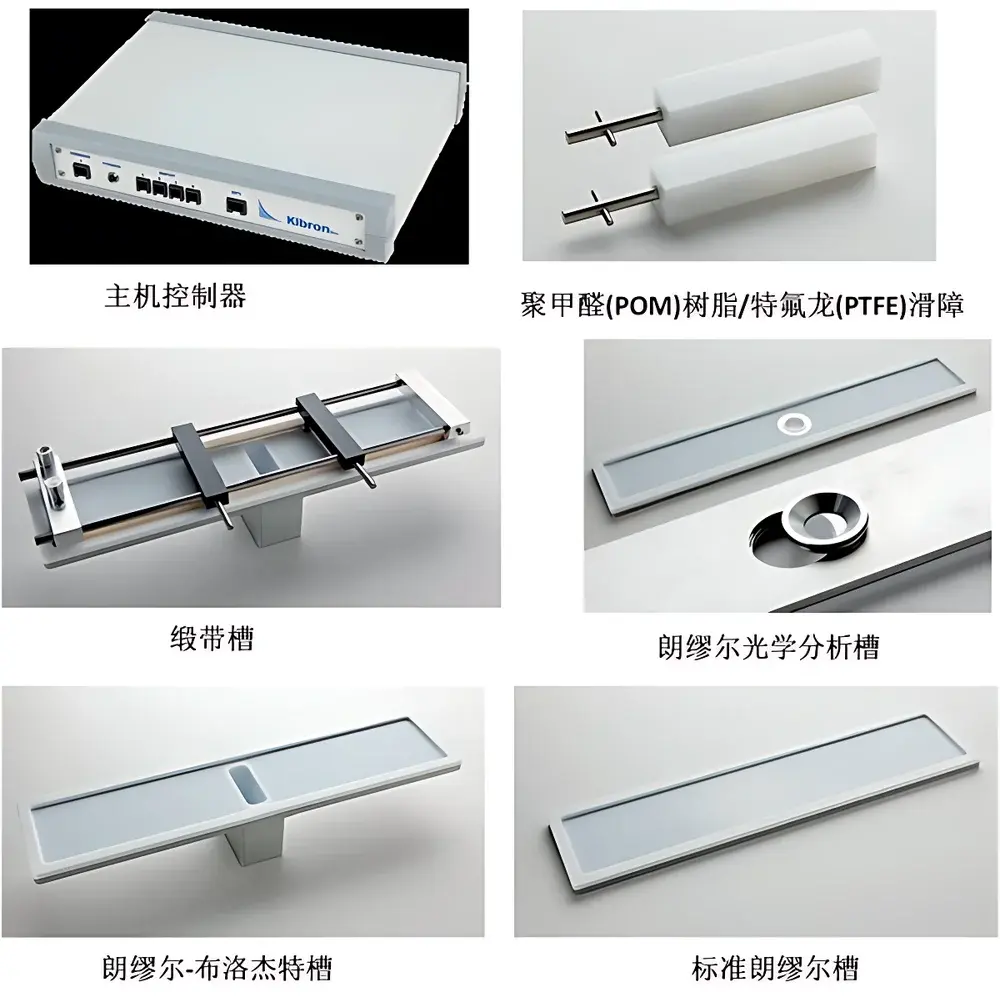
- Interchangeable barrier options: standard POM (polyoxymethylene) or high-purity PTFE compression barriers, both engineered for low friction, minimal surface contamination, and long-term dimensional retention.
- Ribbon Trough option for ultra-high surface pressure measurements (>70 mN/m), utilizing a continuous PTFE band as a sealed rectangular barrier—ideal for rigid lipid or polymer monolayers.
- Optical-grade quartz window integration (optional) for real-time, in situ observation via reflected-light microscopy, Brewster angle microscopy (BAM), or fluorescence imaging during compression or transfer.
- FilmWare 4.0 software suite with deterministic motion scripting, multi-step deposition protocols, and timestamped parameter logging compliant with GLP documentation standards.
Sample Compatibility & Compliance
The G1 supports a broad range of amphiphilic systems—including phospholipids, block copolymers, nanoparticles, graphene oxide dispersions, and conjugated polymers—across aqueous subphases (pure water, buffered saline, Ca²⁺-containing solutions). All wetted components are chemically resistant to organic solvents (chloroform, chloroform/methanol mixtures) and aggressive surfactants. The system conforms to ASTM D3719 (“Standard Test Method for Surface Tension of Solutions Using the Du Noüy Ring Method”) for probe calibration traceability and supports ISO/IEC 17025-aligned uncertainty budgets when used with certified reference materials. Optional FDA 21 CFR Part 11 compliance package provides electronic signature capability, role-based access control, and immutable audit trails for regulated environments.
Software & Data Management
FilmWare 4.0 operates as a standalone controller for the deposition module and integrates seamlessly with all Kibron Langmuir trough variants (MicroTrough, MiniTrough, MacroTrough). It delivers deterministic motion sequencing, real-time isotherm visualization, and synchronized data acquisition from pressure sensors, barrier position encoders, and optional surface potential modules. Raw data files (.kdf) store metadata including environmental temperature, subphase composition, probe calibration date, and operator ID. Export formats include CSV, Excel, and HDF5 for downstream analysis in MATLAB, Python (NumPy/Pandas), or OriginLab. Audit logs record every parameter change, script execution, and user login—fully searchable and exportable for internal QA review or regulatory inspection.
Applications
- Quantitative phase transition analysis of lipid bilayer mimics for membrane biophysics and drug delivery vector design.
- Controlled fabrication of ultrathin functional films for organic electronics, including pentacene and P3HT monolayers with defined molecular orientation.
- Stability assessment of protein-lipid interactions at interfaces under varying pH or ionic strength conditions.
- Deposition of hybrid nanostructured monolayers (e.g., AuNP–phospholipid composites) for biosensor platforms requiring sub-nanometer thickness control.
- High-throughput screening of surfactant efficiency and interfacial rheology in formulation science (cosmetics, agrochemicals, enhanced oil recovery).
- In situ correlation of surface pressure dynamics with optical anisotropy using integrated BAM or fluorescence lifetime imaging (FLIM).
FAQ
What subphase temperature stability can be achieved with the G1 system?
The G1 itself does not include an integrated heater/chiller; it interfaces with external recirculating baths. When paired with a high-precision bath (e.g., Julabo F25), temperature stability of ±0.1 °C over 24 hours is routinely attainable.
Can the G1 accommodate non-standard substrate geometries?
Yes—the deposition stage accepts custom mounting fixtures. Standard holders support flat substrates up to 100 mm × 50 mm; cylindrical or curved substrates require bespoke adapter plates, available upon request.
Is surface potential measurement supported natively?
The G1 is compatible with Kibron’s plug-and-play MicroPoint surface potential module (noise floor <1 mV), which mounts directly onto the trough frame without recalibration.
How is barrier synchronization validated between compression and deposition phases?
FilmWare 4.0 includes a built-in barrier position verification routine that cross-checks encoder feedback against absolute linear scale readings—performed automatically during system initialization.
Are PTFE troughs suitable for long-term use with aggressive solvents?
Monolithic PTFE construction resists swelling, cracking, or leaching even after repeated exposure to chloroform, THF, or hexane; cleaning is performed with ethanol/water rinses—no ultrasonication required.



