
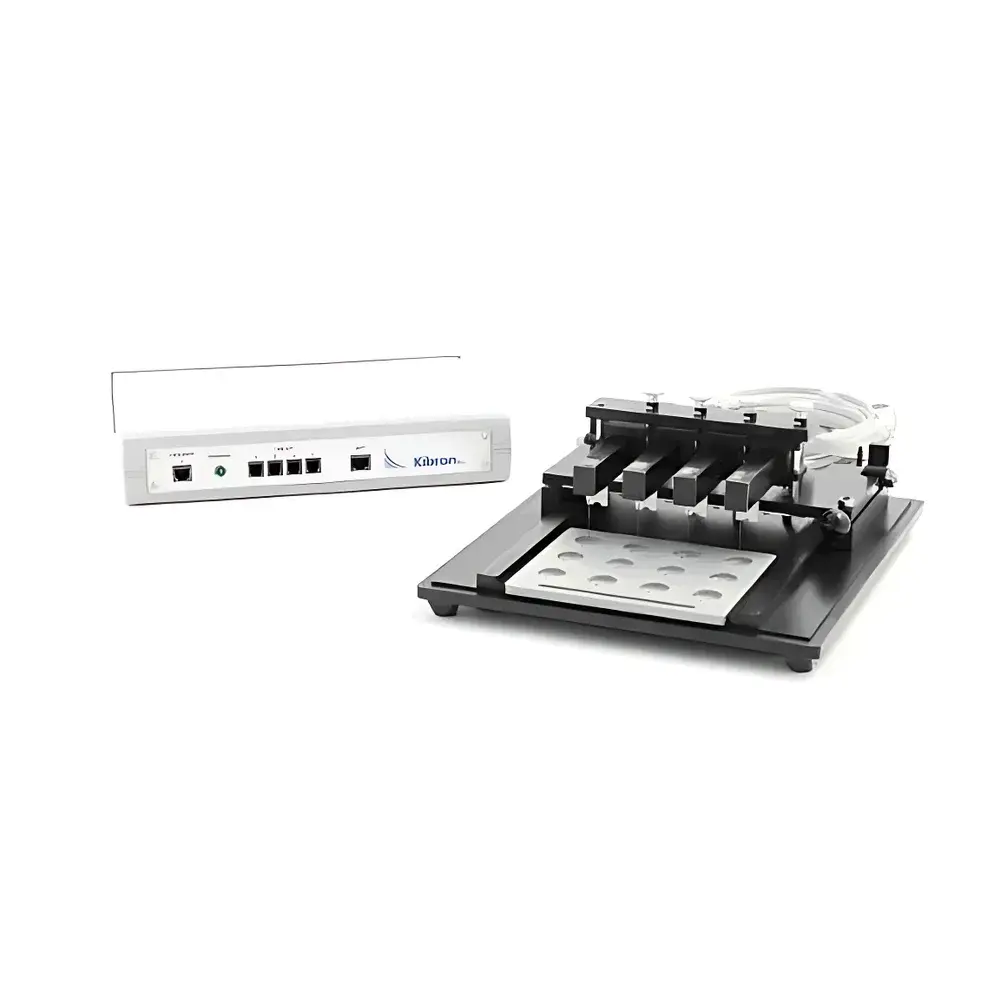
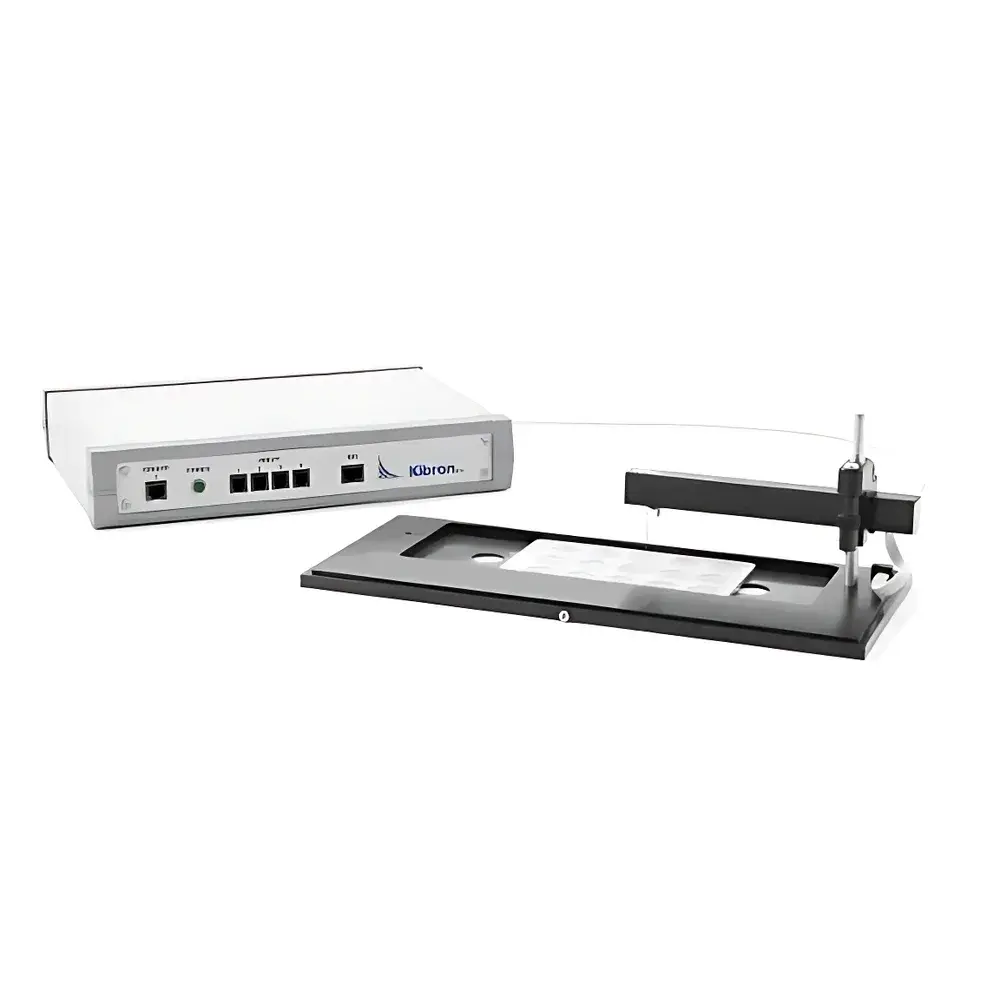
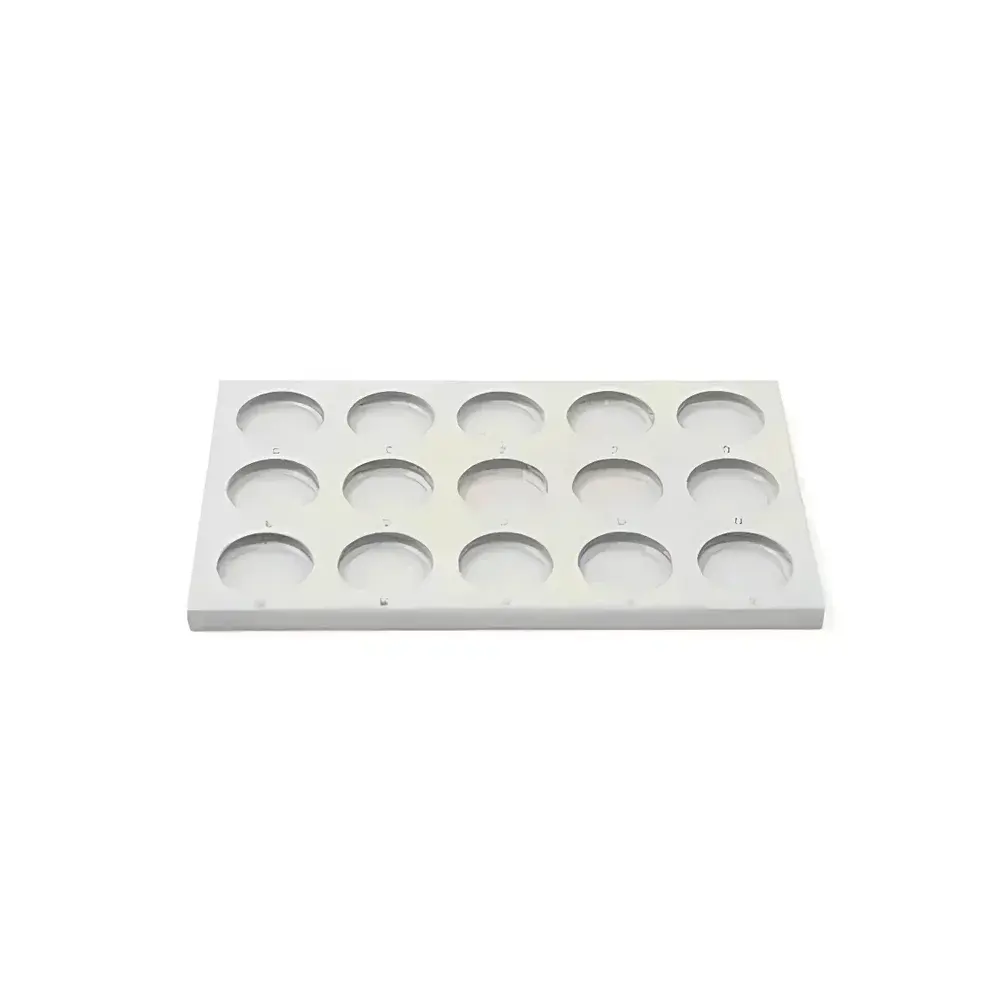
Kibron DeltaPi Langmuir Tensiometer
| Brand | Kibron |
|---|---|
| Origin | Finland |
| Model | DeltaPi |
| Measurement Principle | Wilhelmy Plate Method (Alloy Wire, 0.51 mm diameter) |
| Dynamic Range | 0–300 mN/m |
| Resolution | 10 µN/m |
| Temperature Sensor | Integrated, ±0.1 °C resolution |
| Sample Volume (Subphase) | 300 µL (standard), down to 150 µL with magnetic stirring |
| Dimensions | 33 × 14 × 6 cm (H) |
| Weight | 0.85 kg |
| Construction Materials | High-purity PTFE (Teflon®) and corrosion-resistant alloy |
| Probe Technology | Du Noüy–Padday-compatible, chemically inert alloy wire |
| Compliance | Designed for GLP/GMP-aligned workflows |
Overview
The Kibron DeltaPi Langmuir Tensiometer is a precision-engineered instrument designed for quantitative analysis of interfacial behavior at the air–water interface using the Wilhelmy plate method—implemented here with a high-stability 0.51 mm diameter corrosion-resistant alloy wire probe. Unlike conventional platinum plates or filter paper probes, this wire-based configuration eliminates hysteresis, salt accumulation, and drying artifacts, delivering superior baseline stability and measurement reproducibility across repeated compression–expansion cycles. The DeltaPi operates within a dynamic surface pressure range of 0–300 mN/m with a resolution of 10 µN/m, enabling sensitive detection of molecular insertion, monolayer phase transitions, and lipid–ligand binding events. Its compact footprint (33 × 14 × 6 cm, 0.85 kg) and low subphase volume requirement (as little as 150 µL with optional magnetic stirring) make it ideal for precious biological samples—including antimicrobial peptides, therapeutic proteins, siRNA–lipid complexes, and neurotoxic amyloidogenic peptides—where material conservation and experimental throughput are critical.
Key Features
- Wilhelmy wire geometry with 0.51 mm alloy probe ensures minimal mechanical lag and zero capillary drift during continuous surface pressure monitoring.
- Integrated high-resolution temperature sensor (±0.1 °C) enables real-time thermal correction and thermodynamic parameter derivation (e.g., compressibility modulus, phase transition temperatures).
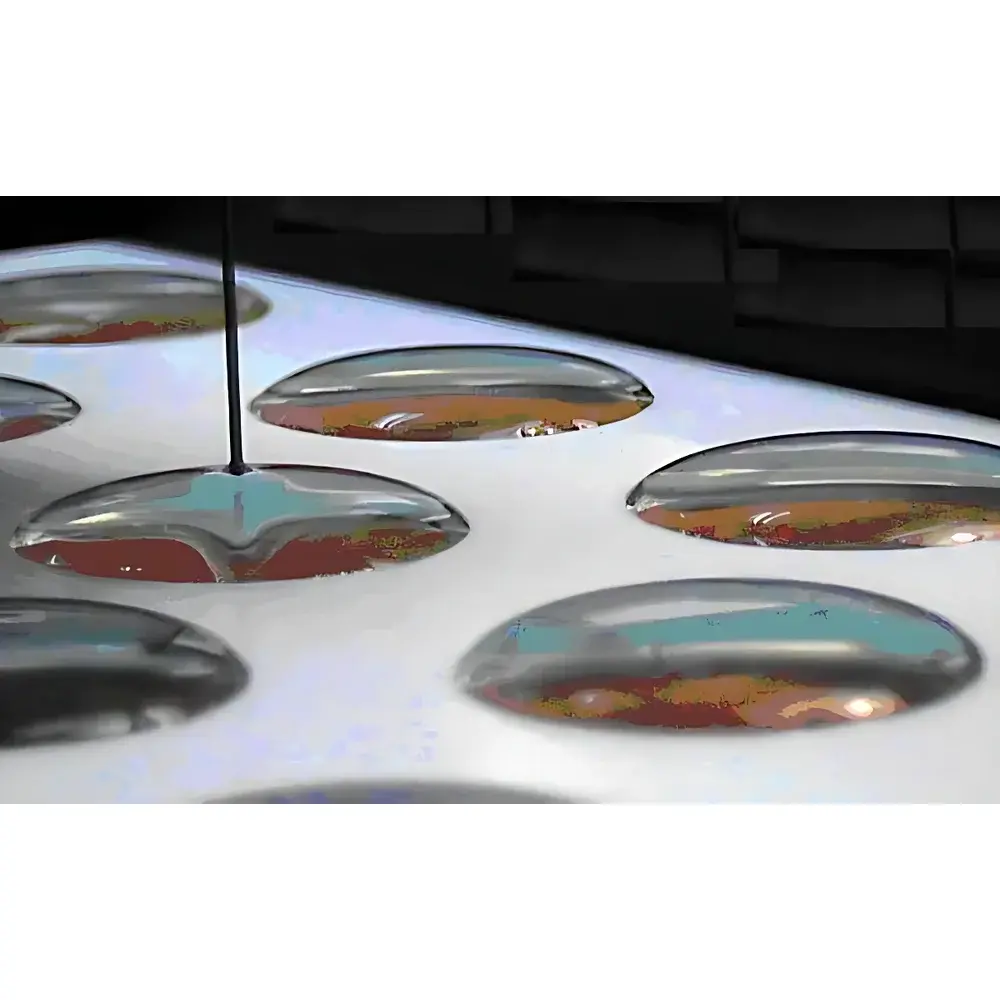
- Modular trough system compatible with three interchangeable PTFE-coated multiwell plates: Type A (glass-bottom, 300 µL capacity), Type B (aluminum-PTFE hybrid, 1.3 mL), and Type C (fully PTFE, inlet port-equipped for controlled ligand injection).
- Chemically inert construction—high-purity PTFE and corrosion-resistant alloys—ensures compatibility with aggressive solvents, acidic/basic subphases, and detergent-containing formulations.
- Single-channel architecture optimized for method development, calibration validation, and high-fidelity kinetic profiling under controlled environmental conditions.
- Fully compliant with traceable calibration protocols aligned with ISO 1409 and ASTM D971 standards for surface tension measurement.
Sample Compatibility & Compliance
The DeltaPi supports diverse monolayer-forming materials—including synthetic phospholipids (e.g., DPPC, POPC), sphingolipids, cholesterol analogs, glycolipids, and functionalized lipopolymers—across physiologically relevant surface pressures (5–40 mN/m). It accommodates subphase compositions ranging from pure water and buffered saline (e.g., PBS, HEPES) to complex media containing Ca²⁺/Mg²⁺ ions, serum albumin, or low-concentration detergents. All hardware components meet EU RoHS and REACH directives. When operated with Kibron’s MX software suite, the system supports electronic signatures, user access control, and immutable audit trails—meeting essential criteria for GLP-compliant studies and regulatory submissions under FDA 21 CFR Part 11 and ICH M7 guidelines.
Software & Data Management
Data acquisition and analysis are performed via Kibron’s MX software platform, a Windows-based application engineered for scientific rigor and workflow integration. MX provides synchronized control of barrier speed, temperature logging, and real-time surface pressure plotting with customizable smoothing and derivative functions. Raw data files (.kib) are stored in ASCII-readable format, facilitating third-party analysis in MATLAB, Python (NumPy/Pandas), or OriginLab. Batch processing tools enable automated calculation of collapse pressure, limiting molecular area, compressibility modulus (Cs⁻¹), and Gibbs free energy of adsorption. Export options include CSV, PNG, and PDF—structured to align with journal submission requirements (e.g., Biophysical Journal, Langmuir, ACS Nano).
Applications
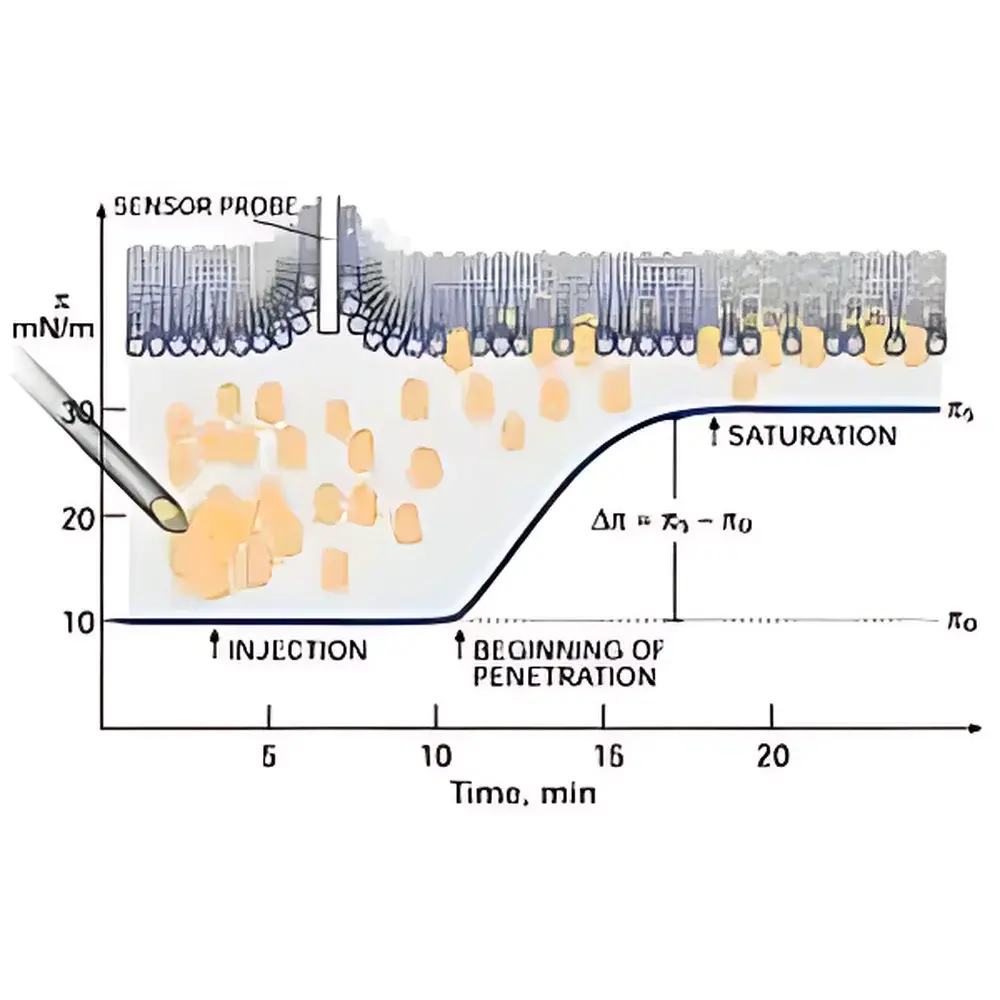
- Quantitative characterization of peptide–lipid binding affinity and insertion kinetics, including membrane-active antimicrobials and cell-penetrating peptides.
- Mechanistic studies of amyloidogenic protein oligomerization (e.g., Aβ, α-synuclein, IAPP) at model membranes mimicking neuronal or pancreatic β-cell surfaces.
- Screening of drug candidates targeting lipid rafts or phosphoinositide-rich domains (e.g., PIP₂, PIP₃) involved in cytoskeletal remodeling and signal transduction.
- In situ monitoring of enzymatic activity (e.g., phospholipase A₂ hydrolysis) through time-resolved changes in monolayer surface pressure and compressibility.
- Two-dimensional crystallization of membrane proteins via controlled lateral pressure tuning and subphase composition gradients.
- Formulation optimization of cationic lipid–nucleic acid complexes (e.g., LNP–siRNA) for gene delivery efficiency assessment.
FAQ
What is the minimum subphase volume required for stable measurements?
The DeltaPi achieves reliable operation with as little as 150 µL when combined with the optional magnetic stirrer—ideal for scarce biomolecules such as synthetic peptides or purified membrane proteins.
Can the DeltaPi be used with organic solvents or acidic subphases?
Yes—the alloy wire probe and PTFE trough components exhibit broad chemical resistance, supporting use with chloroform/methanol lipid solutions, pH 2–12 aqueous buffers, and surfactant-laden systems.
How does the DeltaPi differ from traditional Langmuir–Blodgett troughs?
It omits mechanical barriers and film deposition capability, focusing exclusively on high-precision, real-time surface pressure quantification—reducing complexity, cost, and maintenance while maximizing sensitivity and repeatability.
Is calibration traceable to national standards?
Yes—Kibron provides NIST-traceable calibration certificates for both force and temperature modules, with documented uncertainty budgets per ISO/IEC 17025 requirements.
Does the system support automated multi-cycle hysteresis analysis?
Yes—MX software enables programmable compression–expansion ramp sequences with automatic loop identification, area-under-curve integration, and hysteresis index calculation.



