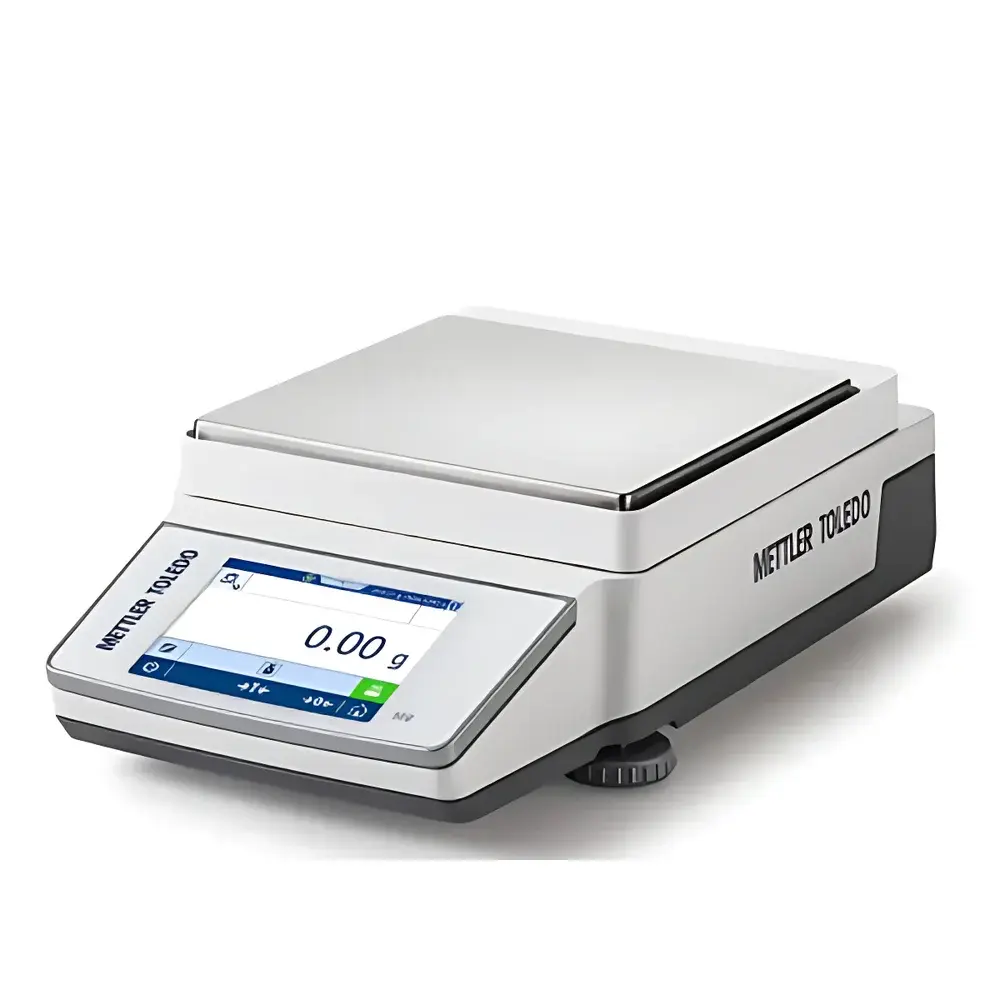
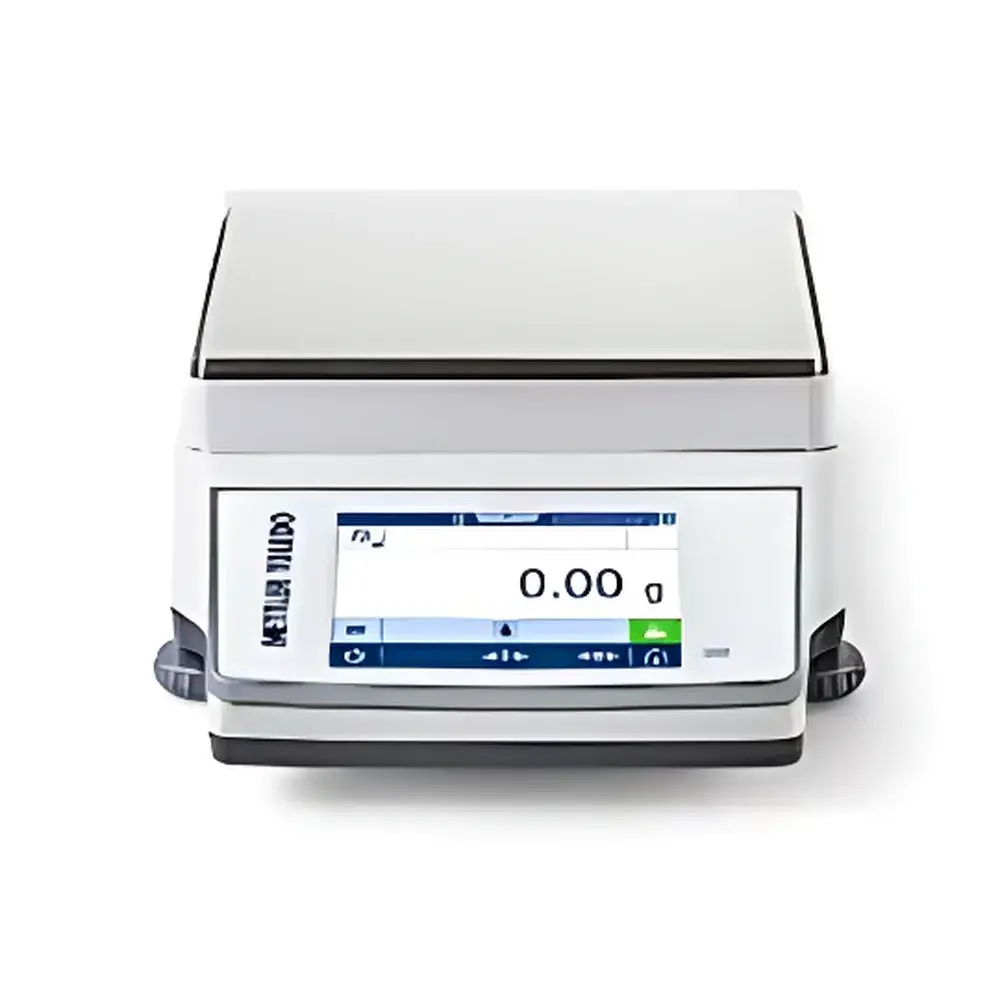
METTLER TOLEDO MR1002 Precision Balance
| Brand | METTLER TOLEDO |
|---|---|
| Origin | Shanghai, China |
| Model | MR1002 Precision Balance |
| Protection Rating | IP43 |
| Construction | Full-metal housing with chemically resistant components |
| Overload Protection | Integrated sensor protection against mechanical shock and pan drop |
| Power Management | Configurable energy-saving mode |
| Connectivity | RS232, USB, Ethernet (optional), MT-SICS command protocol compliant |
| User Management | Role-based access control with customizable profiles |
| Compliance | Designed for GLP/GMP environments |
Overview
The METTLER TOLEDO MR1002 Precision Balance is an industrial-grade analytical weighing instrument engineered for high reproducibility, long-term stability, and operational resilience in demanding laboratory and production environments. Utilizing electromagnetic force compensation (EMFC) technology, the MR1002 delivers precise mass determination across its full capacity range with inherent linearity and minimal drift under variable thermal or mechanical stress. Its robust mechanical architecture—featuring a monolithic metal housing, reinforced load cell mount, and sealed internal electronics—ensures consistent metrological performance even under elevated ambient dust levels, intermittent humidity exposure, or incidental chemical splashes. Designed for seamless deployment in both regulated and non-regulated settings, the MR1002 meets foundational requirements for traceable weighing in quality control laboratories, manufacturing line checkweighing, raw material verification, and routine sample preparation workflows.
Key Features
- IP43-rated enclosure providing protection against solid objects ≥1 mm (e.g., dust ingress) and water droplets directed at angles up to 60° from vertical—validated per IEC 60529 standards.
- Integrated overload protection system safeguards the electromagnetic force transducer from mechanical overloads and accidental pan impacts, extending sensor service life and reducing calibration frequency.
- AutoCal™ automatic internal calibration with temperature-triggered recalibration ensures continuous accuracy without manual intervention; supported by guided leveling via built-in bubble level and tilt sensor feedback.
- Configurable power management enables scheduled sleep modes and adaptive brightness control, reducing standby power consumption by up to 40% compared to legacy models—aligned with ISO 50001 energy efficiency principles.
- Dual-interface connectivity (standard RS232 + USB Device/Host) with optional Ethernet module supports deterministic data transmission to PLCs, MES platforms, LIMS, and ERP systems using industry-standard MT-SICS (METTLER TOLEDO Standard Interface Command Set) protocol.
- Role-based user management with up to 10 configurable profiles allows administrators to restrict interface visibility, disable non-essential functions (e.g., tare history, calibration logs), and enforce password-protected access tiers—critical for FDA 21 CFR Part 11–compliant environments when paired with validated software layers.
Sample Compatibility & Compliance
The MR1002 accommodates standard weighing vessels—including stainless-steel pans, glass beakers, and polymer containers—up to its maximum pan diameter specification (180 mm). Its open-access design facilitates rapid cleaning and decontamination between samples, supporting cross-contamination mitigation strategies required under ISO/IEC 17025 and GMP Annex 11. While not certified for hazardous area use (ATEX/IECEx), its IP43 rating qualifies it for installation in non-classified industrial zones where particulate or light liquid exposure is anticipated. All firmware and hardware revisions undergo periodic metrological review per OIML R76-1 and NIST Handbook 44 guidelines, ensuring conformity with national legal-for-trade frameworks where applicable.
Software & Data Management
Data output adheres to ASCII-based MT-SICS v2.3 syntax, enabling plug-and-play integration with third-party automation platforms including Siemens SIMATIC, Rockwell FactoryTalk, and Thermo Fisher SampleManager LIMS. Optional LabX® Lite software provides local data logging, statistical process control (SPC) charting, and PDF report generation with embedded digital signatures. When deployed in fully validated configurations, the MR1002 supports electronic record integrity through time-stamped audit trails, user action logging, and immutable export archives—meeting core ALCOA+ (Attributable, Legible, Contemporaneous, Original, Accurate, Complete, Consistent, Enduring, Available) data governance criteria.
Applications
- Raw material receipt inspection in pharmaceutical and chemical manufacturing facilities.
- In-process weight verification during tablet compression, capsule filling, and powder blending operations.
- Calibration standard handling and reference weight verification in metrology labs.
- Environmental testing sample preparation requiring stable readings under HVAC-induced air currents.
- Educational laboratories requiring durable, low-maintenance instrumentation for undergraduate chemistry and materials science curricula.
FAQ
Does the MR1002 support external calibration weights?
Yes—the balance accepts Class M1 or better external weights for manual calibration verification, though AutoCal™ is recommended for routine maintenance.
Is the MR1002 suitable for use in cleanrooms?
It is not ISO 14644-certified for cleanroom classification, but its smooth, non-porous housing and absence of ventilation grilles make it compatible with Grade C/D environments when installed outside laminar flow hoods.
Can the MR1002 be connected to a Windows-based SCADA system?
Yes—via RS232 or Ethernet using MT-SICS ASCII commands; drivers are available for Ignition SCADA, WinCC, and custom .NET applications.
What is the typical warm-up time before achieving full accuracy?
Less than 30 minutes under ambient conditions (20–25°C); stabilization time may extend to 60 minutes following large thermal gradients or power cycling.
Does the MR1002 include built-in GLP/GMP documentation features?
Hardware-level features (user log, calibration history, time/date stamp) are present; full compliance requires integration with validated software such as LabX or third-party QMS platforms.