
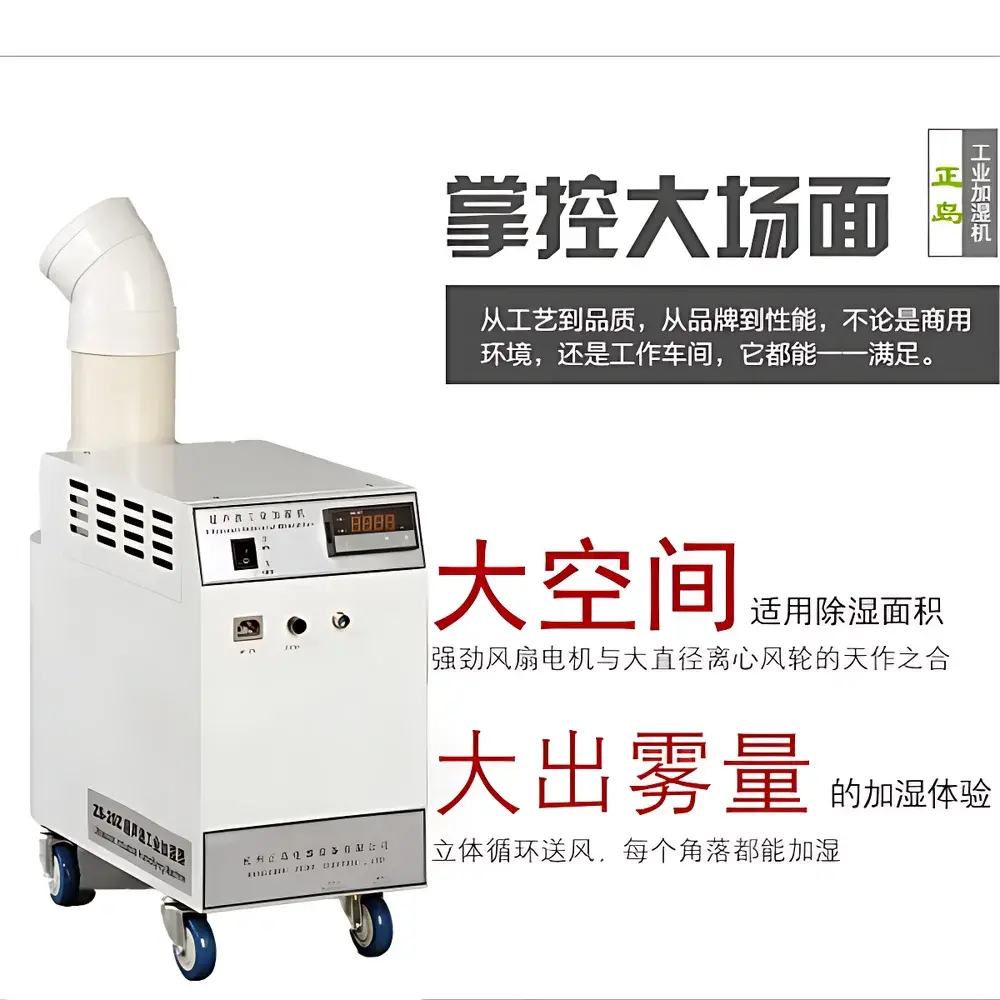
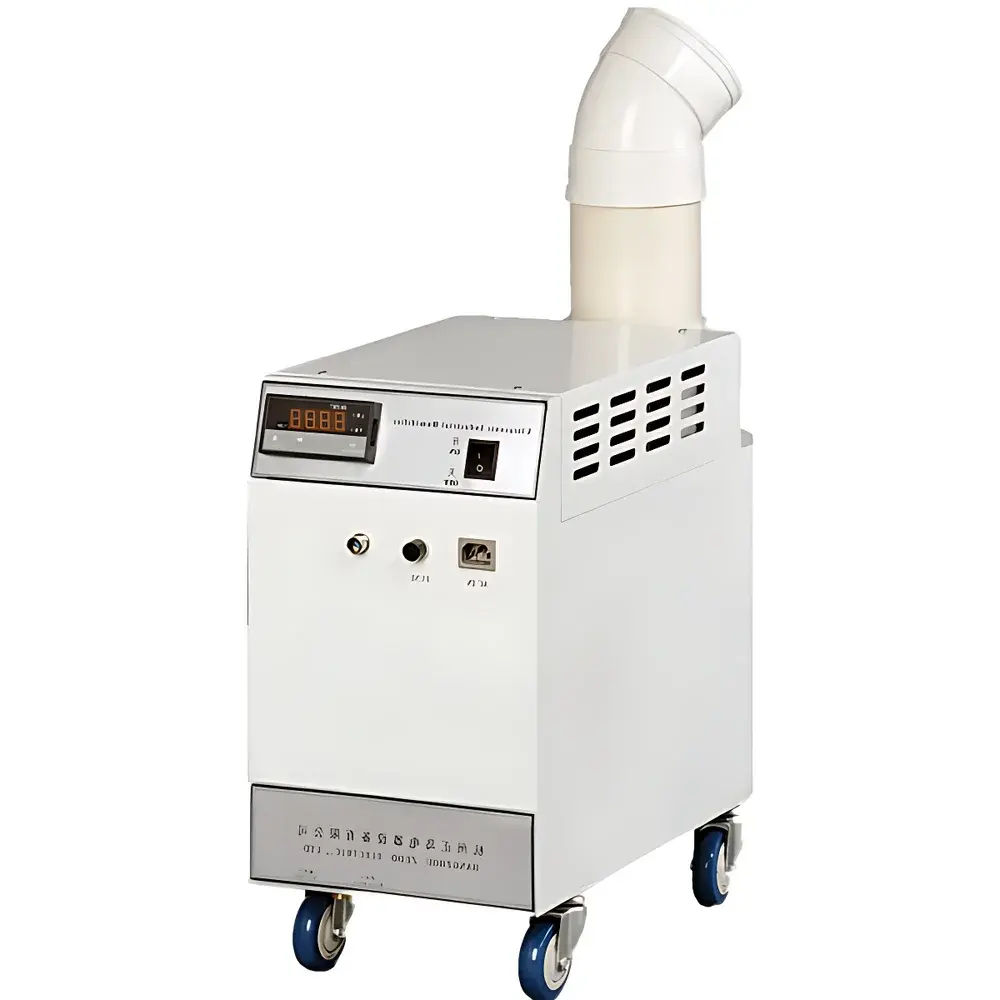
ZEDO ZS-20S Concrete Standard Curing Room Humidifier
| Brand | ZEDO |
|---|---|
| Origin | Zhejiang, China |
| Manufacturer Type | Direct Manufacturer |
| Product Category | Domestic |
| Model | ZS-20S |
| Humidification Capacity | 6 kg/h |
| Power Consumption | 600 W |
| Net Weight | 22 kg |
| Control Mode | Humidity-Controlled (with RH sensor feedback) |
| 雾化方� | �: Ultrasonic Atomization |
| Enclosure Material | Full Stainless Steel (304) |
| IP Rating | IP68 (Power Supply & Fan) |
| 雾化片 | Alkaline/Acid-Resistant Ceramic Transducer (3000–5000 h lifespan) |
| Sensor | High-Accuracy Japanese Shinyo RH Sensor |
| Applicable Space at ≥95% RH | 200 m³ |
| Compliance | Designed to meet GB/T 50081–2019 (formerly GBJ 81–85) requirements for concrete standard curing conditions |
Overview
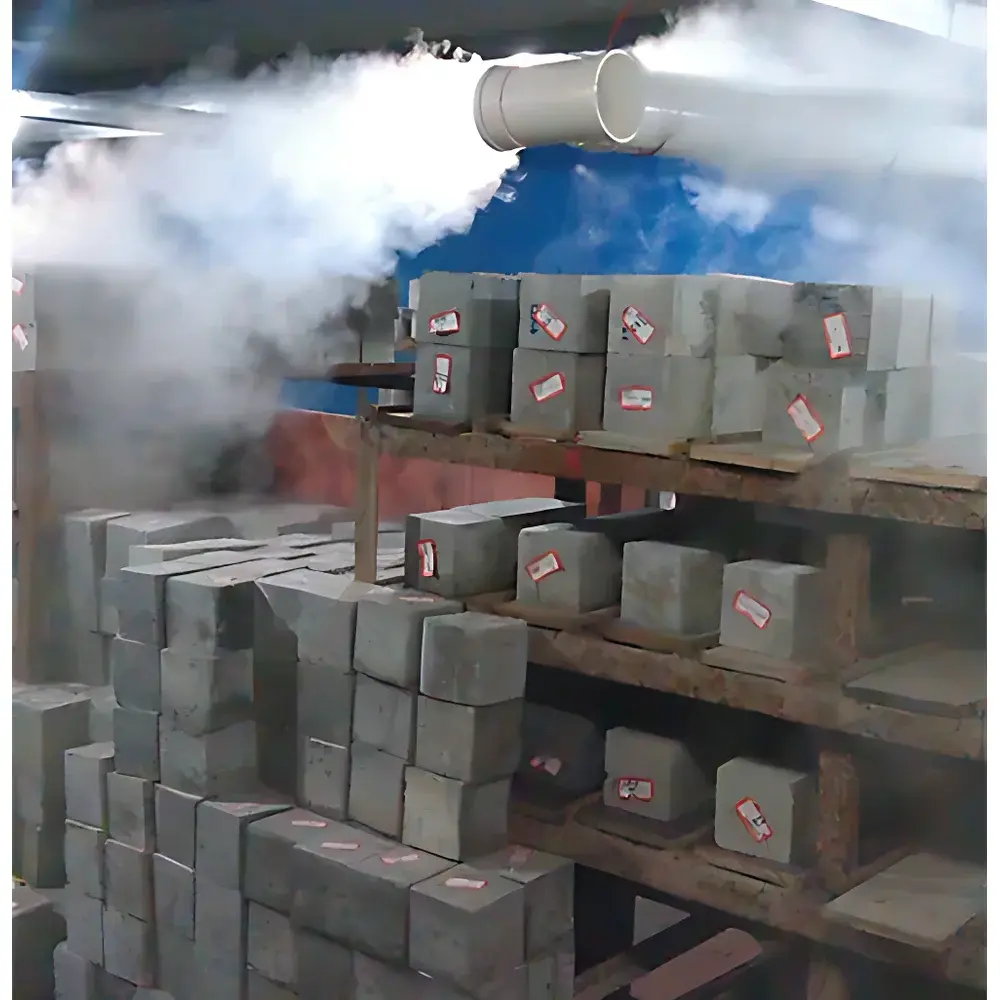
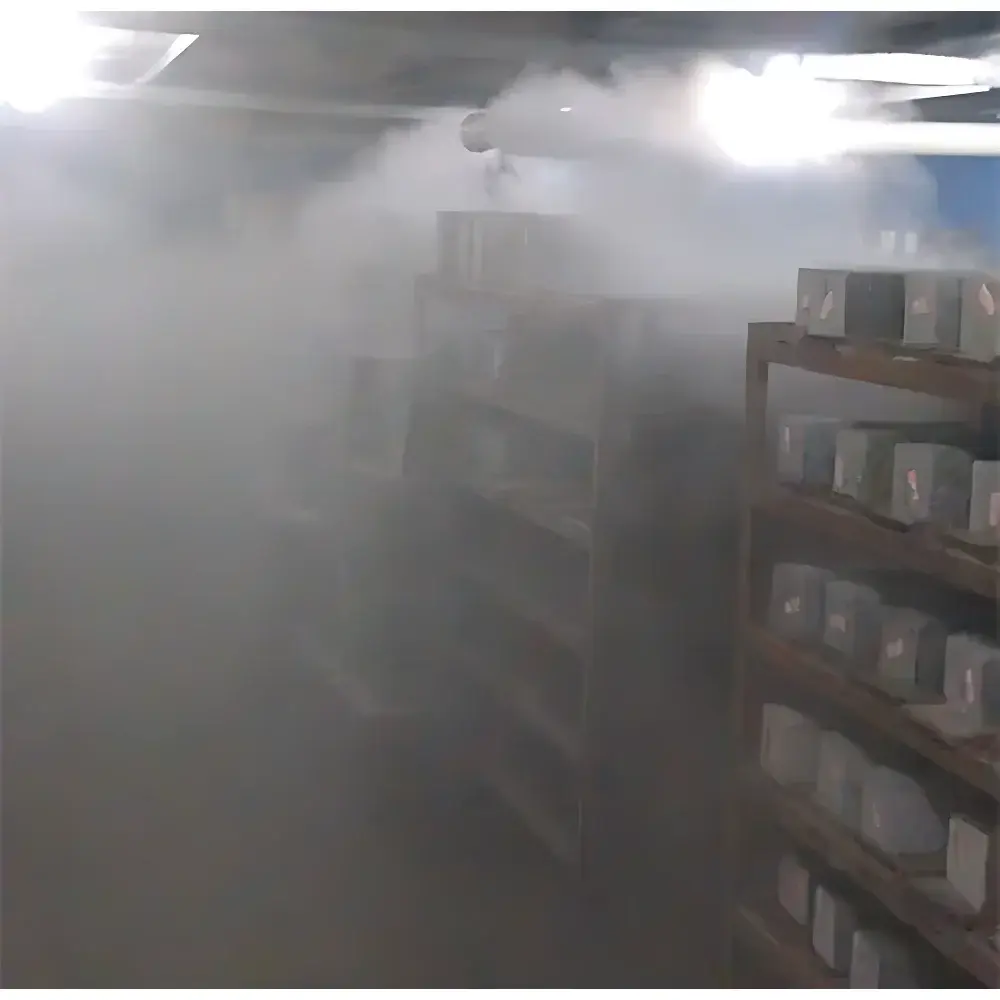
The ZEDO ZS-20S Concrete Standard Curing Room Humidifier is an industrial-grade ultrasonic humidification system engineered specifically to maintain stringent environmental conditions required for compliant concrete strength testing and quality assurance. Per GB/T 50081–2019 (Standard for Test Methods of Mechanical Properties of Ordinary Concrete), concrete specimens must be cured under controlled conditions of 20 ± 3 °C and relative humidity ≥95% RH for 28 days. Conventional misting or manual watering methods fail to achieve stable, uniform, and traceable humidity control—introducing variability in hydration kinetics, microstructural development, and compressive strength outcomes. The ZS-20S addresses this gap through high-frequency ultrasonic atomization (1.7 MHz), generating sub-10 µm water droplets that rapidly evaporate without surface wetting or condensation on specimens or chamber walls. Its closed-loop humidity control architecture ensures continuous, autonomous regulation within ±2% RH accuracy—critical for GLP-aligned laboratory operations and accredited testing facilities.
Key Features
- Full 304 stainless steel enclosure with electrophoretic coating—resistant to alkaline leachates, chloride ingress, and long-term exposure to saturated curing environments.
- Integrated ultrasonic transducer module with ceramic diaphragm rated for >3,000 hours under hard-water conditions (up to 300 ppm CaCO₃ equivalent); replaceable without tools in <90 seconds.
- IP68-rated sealed variable-frequency power supply and 36 V DC waterproof fan—certified for submersion at 1 m depth; eliminates corrosion-induced failure modes common in standard HVAC-grade humidifiers.
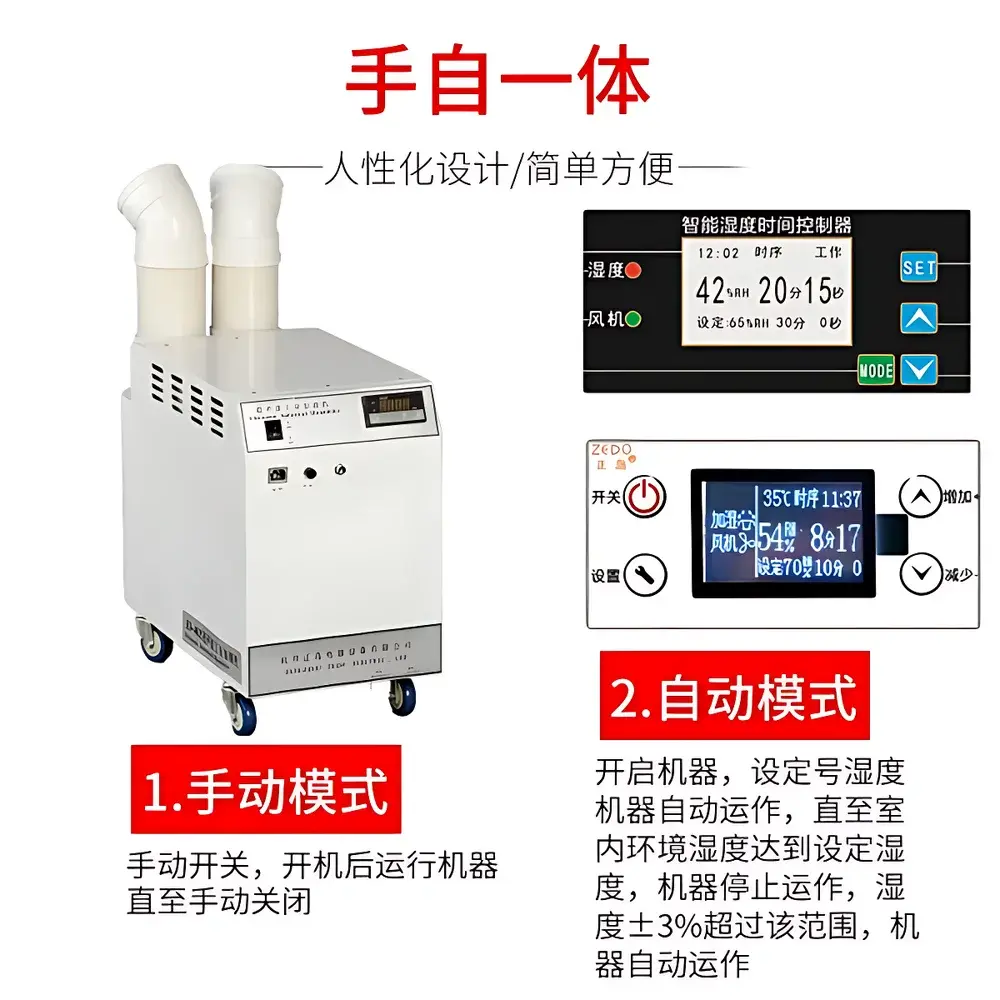
- Microprocessor-based controller with Shinyo (Japan) capacitive RH sensor (±1.5% RH accuracy, 10–95% RH range), real-time PID adjustment, and programmable setpoint hysteresis.
- Auto-fill system with float-switch-controlled solenoid valve and overflow safety cutoff—prevents dry-run operation and overfilling during unattended 24/7 operation.
- Modular ducted outlet configuration (single-tube design optimized for vertical dispersion) enabling uniform vapor distribution across typical 20 m² (≈200 m³) curing chambers without recirculation fans or air turbulence.
Sample Compatibility & Compliance
The ZS-20S is validated for use with standard concrete test specimens per ISO 23925:2012 and ASTM C511–22 (Standard Specification for Moist Cabinets, Moist Rooms, and Water Storage Tanks Used in the Testing of Hydraulic Cements). It maintains ≥95% RH continuously across spatial volumes up to 200 m³—sufficient for simultaneous conditioning of ≥120 standard 150 mm cubes or 60 cylindrical specimens (150 × 300 mm). No chemical additives, steam, or compressed air are required; only deionized or municipal tap water (TDS ≤ 500 ppm) is used. The unit complies with CE electromagnetic compatibility directives (2014/30/EU) and meets structural safety requirements under IEC 60335-1 for Class II appliances. Data logging capability (via optional RS485 interface) supports audit readiness for CNAS, ILAC, and A2LA-accredited laboratories operating under ISO/IEC 17025:2017.
Software & Data Management
While the base ZS-20S operates via embedded firmware with local touch-panel interface, optional firmware upgrade enables Modbus RTU communication (RS485) for integration into centralized BMS or LIMS platforms. Humidity setpoints, real-time RH readings, runtime hours, and fault logs (e.g., low-water, transducer timeout, sensor drift alert) are exportable as CSV. All parameter changes are timestamped and user-ID tagged—supporting FDA 21 CFR Part 11 compliance when paired with validated electronic signature modules. The controller stores ≥30 days of 5-minute interval RH history internally, eliminating dependency on external data loggers for routine QA verification.
Applications
- Primary humidity maintenance in ISO/GB-compliant concrete standard curing rooms (temperature-stabilized chambers ≥20 m³).
- Supplemental local humidification in walk-in environmental test chambers where dew-point control alone cannot sustain >95% RH at 20 °C.
- Pre-conditioning zones for pre-cast element storage prior to compression testing.
- Calibration support for hygrometer validation protocols requiring stable ≥95% RH reference environments.
- Research applications involving cementitious material hydration kinetics under controlled RH gradients (e.g., 85–98% RH step-change studies).
FAQ
What is the minimum water quality requirement for reliable long-term operation?
Deionized water is recommended for maximum transducer lifespan; however, the ceramic diaphragm tolerates TDS up to 500 ppm without scaling—validated using ASTM D1129 water hardness standards.
Can the ZS-20S be integrated into an existing building management system (BMS)?
Yes—via optional RS485 Modbus RTU interface (ZS-20S-MB variant), supporting read/write access to all operational parameters and alarms.
Does the unit require regular descaling or chemical cleaning?
No—ceramic transducers eliminate mineral buildup; periodic wipe-down of the water reservoir with diluted acetic acid (5%) every 6 months suffices for hard-water regions.
How is calibration traceability maintained for the RH sensor?
The Shinyo sensor is factory-calibrated against NIST-traceable humidity standards; field recalibration is supported using dual-point (33% & 75% RH) saturated salt solutions per ISO 17025 Clause 6.5.
Is the ZS-20S suitable for use in corrosive environments such as marine exposure testing labs?
Yes—the full stainless steel construction (ASTM A240 Type 304), IP68-rated electronics, and non-ferrous internal components ensure resistance to NaCl-laden atmospheres per ASTM B117 salt-spray testing protocols.



