
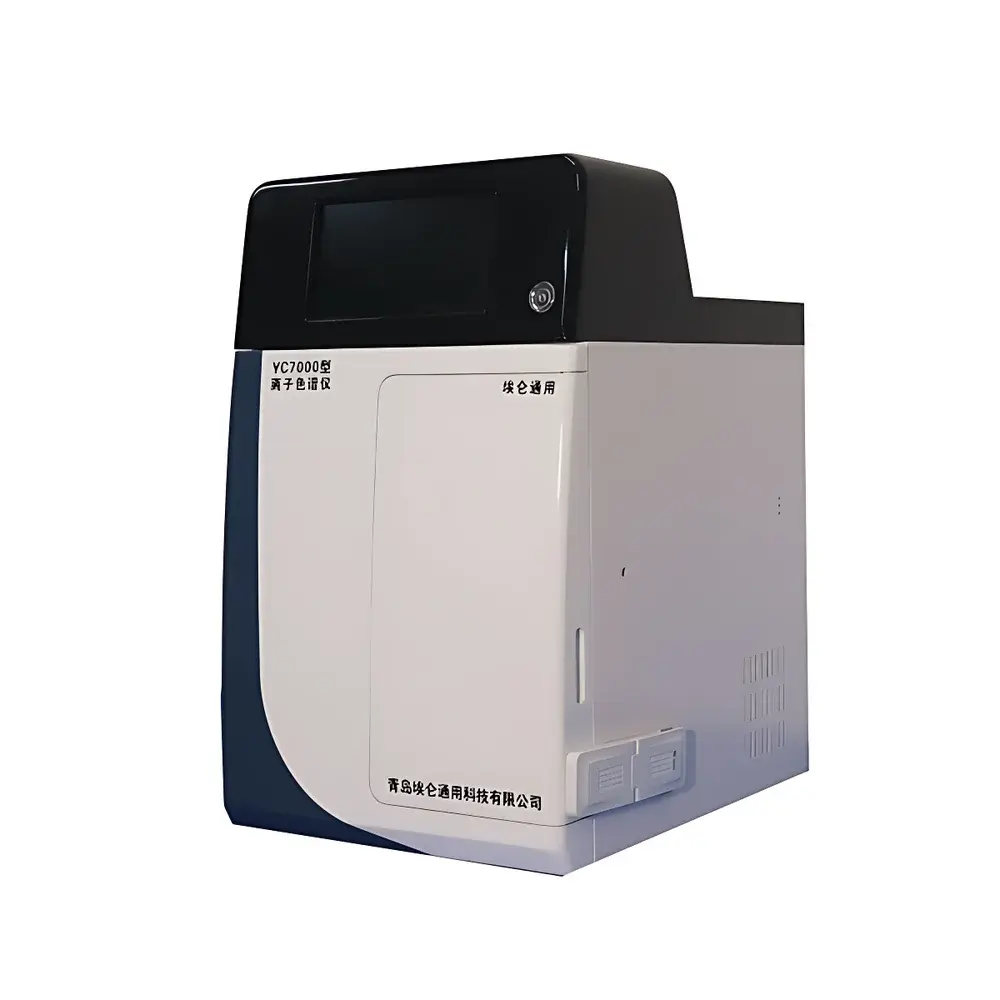
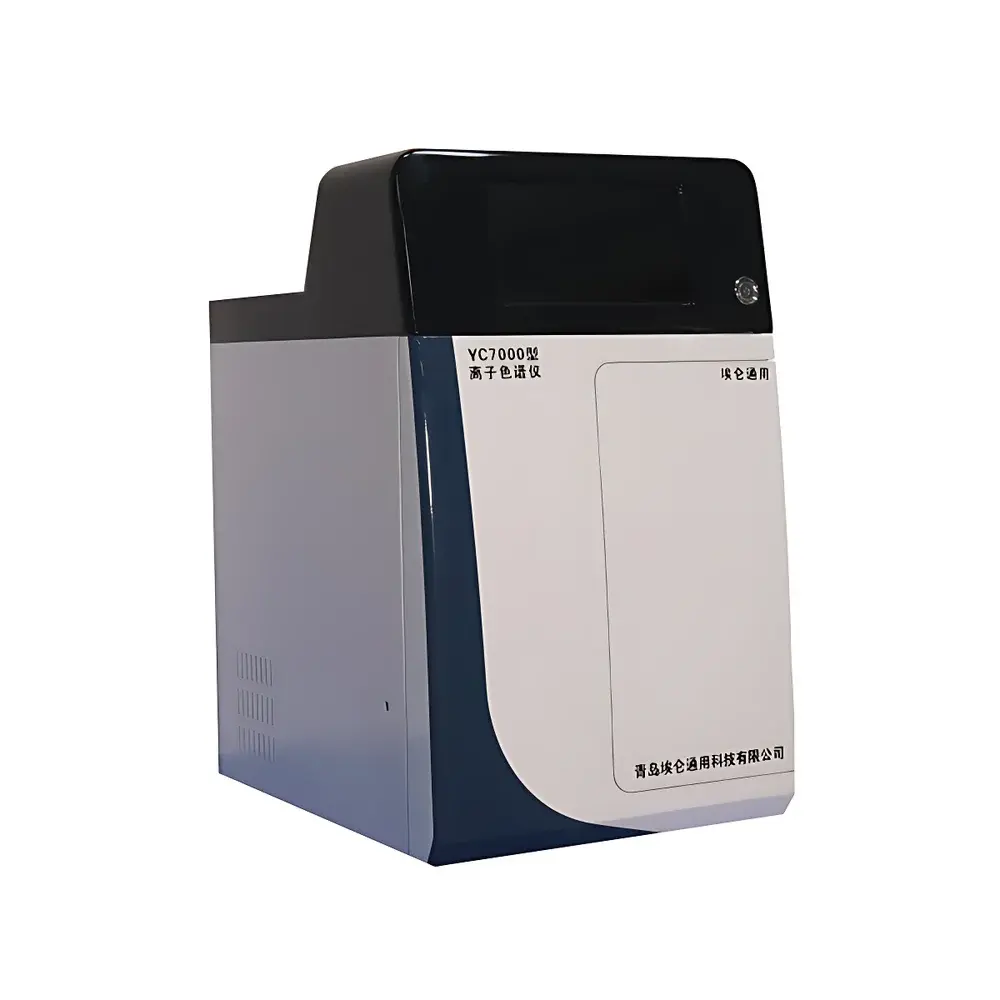
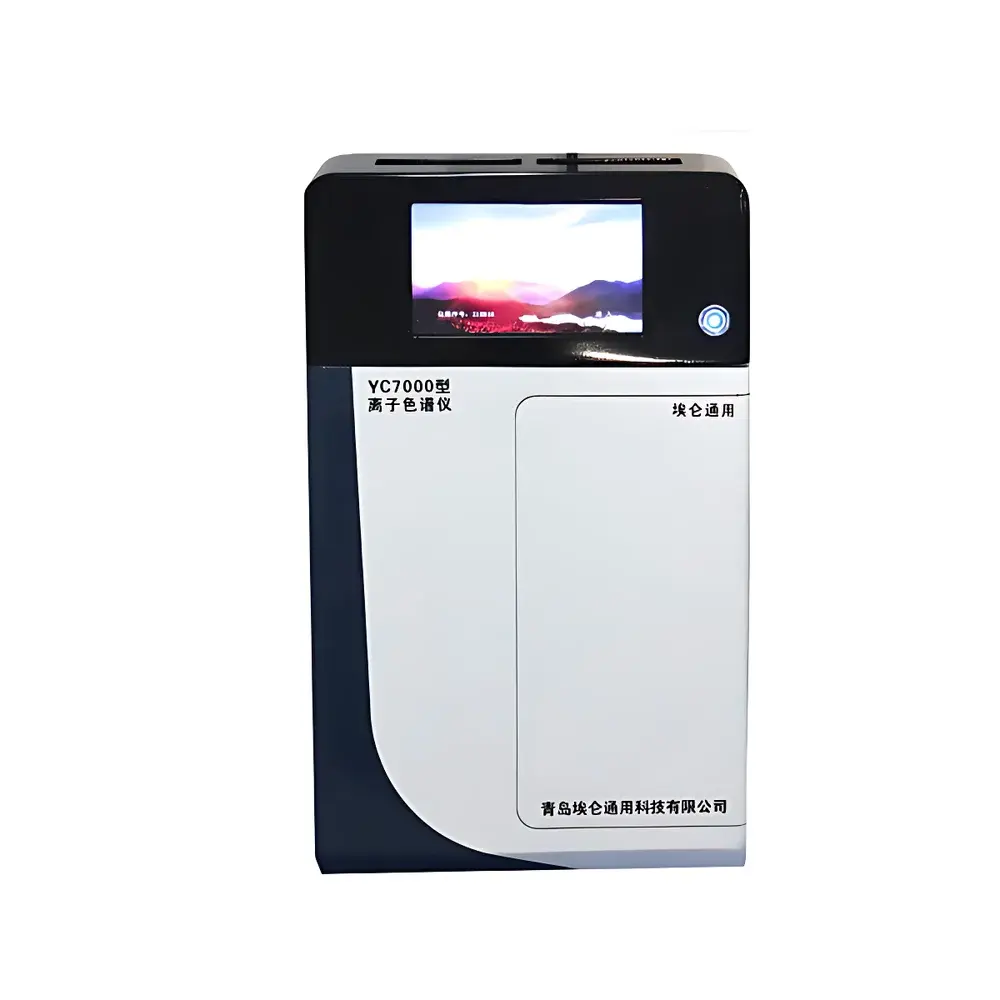
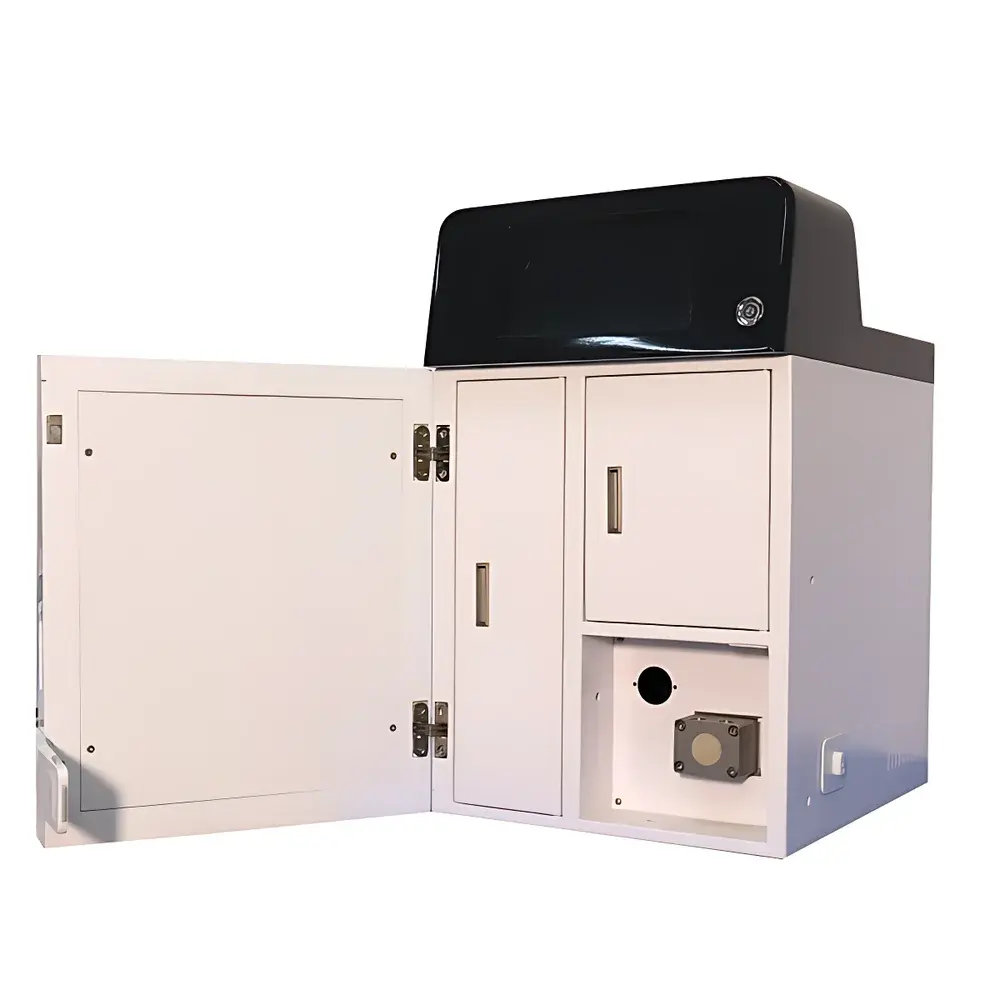
Ailun YC7060 Ion Chromatograph
| Brand | Ailun |
|---|---|
| Origin | Shandong, China |
| Manufacturer Type | Authorized Distributor |
| Region | Domestic (China) |
| Model | YC7060 |
| Instrument Type | Laboratory Benchtop |
| Application Scope | General-Purpose Ion Analysis |
| Pump Pressure Range | 0–42 MPa |
| Flow Rate Range | 0.001–9.999 mL/min |
| Eluent Flow Rate | 0.7–1.5 mL/min |
| Max Operating Pressure | 42 MPa |
| Column Oven Temperature Range | 5–65 °C |
| Temperature Reproducibility | ±0.2 °C |
| Eluent Concentration Range | 1.92–4.8 mM |
| Detector Options | Conductivity, UV, Electrochemical |
| Sample Introduction Modes | Manual, Motorized, Autosampler-Integrated |
Overview
The Ailun YC7060 Ion Chromatograph is a laboratory-grade, general-purpose analytical system engineered for high-precision separation and quantification of inorganic anions, organic acids, and low-molecular-weight cations in aqueous matrices. It operates on the principle of suppressed conductivity detection following ion-exchange chromatography—where analytes are separated on high-efficiency, pellicular or microparticulate anion-exchange columns under precisely controlled eluent composition and flow conditions. The instrument integrates a patented dual-piston, pulseless electronic suppression pump capable of delivering stable, low-pulsation flow across its full operational range (0.001–9.999 mL/min), ensuring baseline stability and retention time reproducibility essential for regulated environments. Its column compartment maintains temperature uniformity within ±0.2 °C across a 5–65 °C operating range, minimizing thermal drift during extended sequence runs. All fluidic pathways—including the pump head, injection valve, detector cell, and connecting capillaries—are constructed from PEEK (polyether ether ketone), providing exceptional chemical resistance to strong acids, bases, and oxidizing eluents commonly used in ion chromatography (e.g., KOH, NaOH, methanesulfonic acid).
Key Features
- Patented dual-piston, electronically suppressed high-pressure pump with zero pulsation output up to 42 MPa, eliminating need for mechanical dampeners.
- Modular detector architecture supporting interchangeable conductivity, UV-VIS (190–400 nm), and electrochemical detection modules—enabling method flexibility without hardware replacement.
- Three selectable sample introduction modes: manual loop injection, motorized loop actuation, and integrated autosampler with full-tube aspiration—each compliant with ISO 17025 traceability requirements when configured with audit trail logging.
- Positive-pressure degassing module continuously removes dissolved gases (O₂, CO₂) from eluent streams, reducing baseline noise and preventing bubble-induced pressure fluctuations.
- Nanofiltration inline filter (sub-20 nm pore rating) installed upstream of the pump and column to retain colloidal particulates and prevent column fouling or check valve blockage.
- Monolithic titanium-alloy chassis with EMI/RFI-shielded enclosure housing all critical electronics—designed for electromagnetic compatibility in shared laboratory infrastructure.
- Hot-swappable column cartridge system with standardized fittings (1/16″ Swagelok-compatible), enabling rapid column exchange without tools or system depressurization.
Sample Compatibility & Compliance
The YC7060 supports direct injection of clarified aqueous samples—including drinking water, wastewater, soil extracts, pharmaceutical excipient solutions, and food digestates—without derivatization. It complies with key international method standards including ASTM D4327 (anions in water), ISO 10304-1 (determination of dissolved anions), and USP <645> (conductivity of purified water). When equipped with optional 21 CFR Part 11-compliant software configuration, the system supports electronic signatures, user access levels, and immutable audit trails required for GLP and GMP-regulated laboratories. All wetted materials meet USP Class VI biocompatibility criteria; PEEK components are certified per ASTM F2129 for corrosion resistance in chloride-containing environments.
Software & Data Management
WIN-LAN CHDP SYSTEM is a Windows-based acquisition and processing platform developed specifically for ion chromatographic workflows. It provides real-time chromatogram visualization, automated peak detection (including solvent front, tailing, shoulder, and co-eluting peaks), and customizable integration parameters per compound class. The software supports method templating, sequence scheduling, report generation (PDF/CSV/XLSX), and automatic calibration curve fitting using linear, quadratic, or weighted regression models. It natively imports and exports standard chromatographic data formats (e.g., .cdf, .dx), enabling cross-platform compatibility with third-party LIMS and enterprise data systems. Optional modules include electronic lab notebook (ELN) linkage, remote monitoring via HTTPS API, and validation documentation packages aligned with IQ/OQ/PQ protocols.
Applications
The YC7060 serves routine and research-level analysis across multiple sectors: environmental labs quantify F⁻, Cl⁻, NO₃⁻, SO₄²⁻, BrO₃⁻, and ClO₃⁻ in compliance with EPA Method 300.0 and EU Directive 2020/2184; clinical and pharmaceutical QA/QC labs monitor counterions in APIs and excipients per ICH Q5C guidelines; food safety laboratories detect preservative anions (e.g., sorbate, benzoate) and nitrite/nitrate in processed meats; and geological survey labs analyze major anions in brine and leachate samples for hydrogeochemical modeling. Its broad eluent concentration range (1.92–4.8 mM KOH) and programmable gradient capability support both isocratic and multi-step elution methods for complex matrices.
FAQ
Does the YC7060 support gradient elution?
Yes—the system enables binary or ternary gradient formation via high-precision proportioning valves, allowing dynamic adjustment of eluent strength during a single run to resolve co-eluting species.
Can it be validated for regulated pharmaceutical use?
When deployed with the 21 CFR Part 11 software option and documented IQ/OQ/PQ protocols, the YC7060 meets core validation requirements for release testing in GMP environments.
What maintenance intervals are recommended for the nanofilter and suppressor?
The inline nanofilter should be replaced every 6 months or after 1,000 injections; the electrolytic suppressor module has a typical service life of 2–3 years under continuous operation at ≤20 µS/cm background conductivity.
Is remote diagnostics supported?
Standard Ethernet connectivity allows secure remote access via TLS-encrypted VNC or vendor-provided diagnostic portal for firmware updates and error log retrieval.
Are column heating and cooling capabilities included?
The column oven provides active heating only; ambient cooling occurs passively. For sub-ambient operation, external chillers may be interfaced via analog temperature control signal.




