
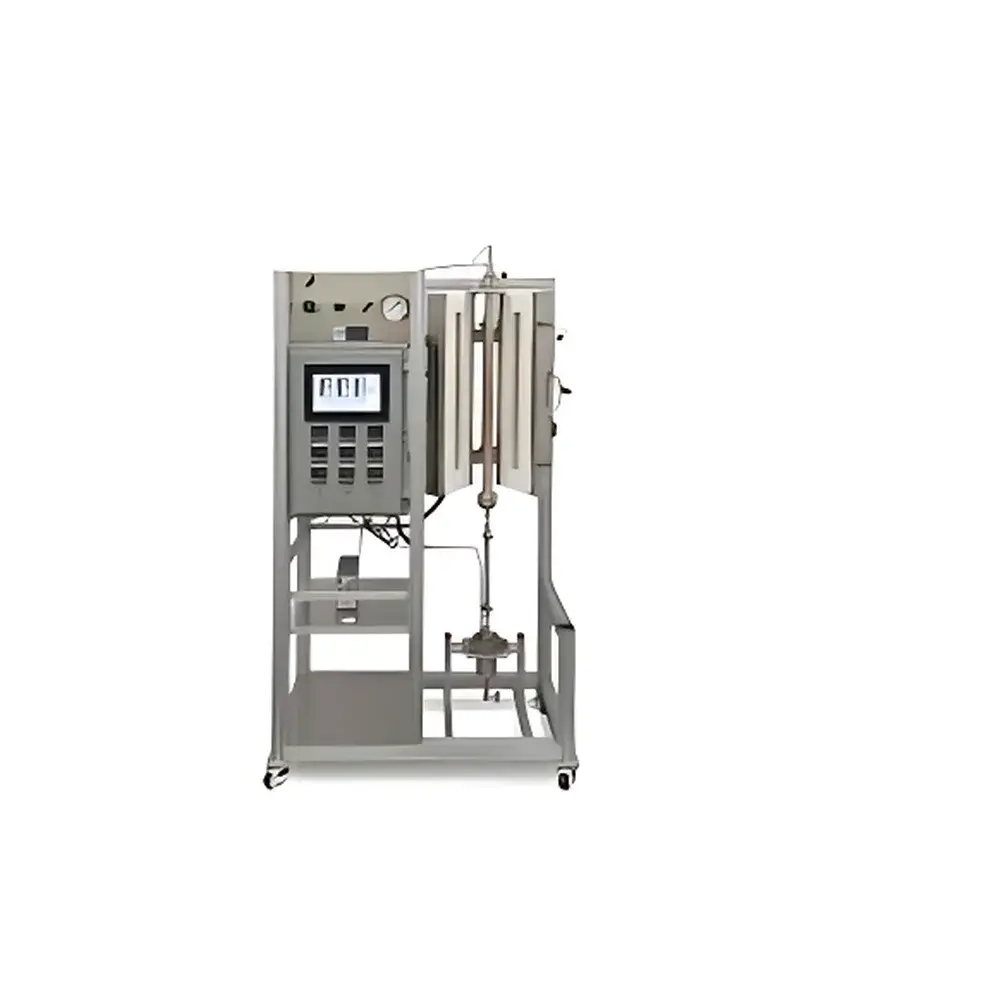
Parr Touchscreen Tubular Reactor
| Brand | Parr |
|---|---|
| Origin | USA |
| Manufacturer Type | Authorized Distributor |
| Origin Category | Imported |
| Model | Tubular Reactor |
| Price Range | USD 70,000 – 140,000 |
| Usable Volume | Small-scale |
| Construction Material | Stainless Steel (316 SS standard) |
| Operating Pressure | High-pressure, up to 5,000 psi (34.5 MPa) |
| Capacity Range | 11 mL – 440 mL |
| Vacuum/Pressure Rating | 3,000 – 5,000 psi (20.7 – 34.5 MPa) |
Overview
The Parr Touchscreen Tubular Reactor is a precision-engineered high-pressure flow-through reaction system designed for controlled, scalable laboratory-scale synthesis under extreme thermodynamic conditions. Unlike batch-type autoclaves, this tubular configuration enables continuous or semi-continuous operation with precise residence time control, making it especially suitable for kinetic studies, catalyst screening, and process intensification in catalytic hydrogenation, supercritical fluid reactions, esterification, polymerization initiation, and hydrothermal synthesis. Built upon Parr Instrument Company’s century-long legacy in pressure vessel engineering, the reactor integrates seamless stainless steel (ASTM A240 316 SS) construction with ASME BPVC Section VIII Div. 1–certified design principles. Its core measurement and control architecture relies on real-time pressure transduction, PID-regulated temperature profiling, and programmable flow dynamics—ensuring reproducibility across multi-day runs at sustained pressures up to 5,000 psi and temperatures up to 500 °C (dependent on configuration and seal selection).
Key Features
- Monolithic pressure vessel construction: One-piece forged body and head eliminate weld seams, ensuring uniform stress distribution and eliminating potential leak paths per ASTM E2922 and ISO 15848-1 leakage class A requirements.
- Multi-layer safety architecture: Includes rupture disc (ASME-certified), adjustable pressure relief valve (settable from 1,000–5,000 psi), thermal cut-off (configurable setpoint), and redundant pressure interlock logic embedded in the controller firmware.
- Optimized sealing geometry: Patented open-loop flange design with recessed O-ring groove prevents extrusion under high axial load; bolt preloading force is distributed uniformly over the flange surface via hardened washers and calibrated torque sequence.
- Fixed-head modular layout: Reaction tube slides vertically into a stationary head assembly containing all instrumentation ports (thermocouple, pressure transducer, gas inlet/outlet, sampling valve), minimizing disassembly time and reducing cross-contamination risk between experiments.
- Integrated magnetic drive system: Hermetically sealed, water-cooled magnetic coupling rated for continuous operation at 30 MPa (4,350 psi); incorporates dual-seal arrangement (graphite + PTFE-faced elastomer) and spherical bearing alignment to maintain torque transmission integrity under thermal expansion gradients.
- Touchscreen control interface: Based on Parr’s 4870 Advanced Process Controller—compliant with FDA 21 CFR Part 11 for audit trail, electronic signatures, and user-level access control; supports recipe-based operation, data logging at 1 Hz resolution, and Ethernet-enabled remote monitoring.
Sample Compatibility & Compliance
The reactor accommodates heterogeneous, homogeneous, and multiphase systems—including slurries, gaseous reagents (H₂, CO, NH₃), supercritical CO₂, and corrosive media (e.g., HF, HCl under controlled concentration limits). All wetted surfaces are electropolished 316 stainless steel (Ra ≤ 0.4 µm), compatible with USP Class VI and EP 3.2.9 extractables testing protocols. Pressure containment complies with PED 2014/68/EU, ASME BPVC Section VIII Div. 1, and ISO 4126-1 for pressure relief devices. Electrical components meet UL 61010-1 and CE/EMC Directive 2014/30/EU standards. Validation documentation includes Factory Acceptance Test (FAT) reports, hydrostatic test certificates (1.3× design pressure), and material traceability (MTR) per ASTM A480/A480M.
Software & Data Management
The 4870 controller features an embedded Linux OS with web-accessible HMI, enabling secure HTTPS-based remote operation via desktop or mobile browser. All process variables (T, P, flow rate, stir speed) are timestamped and stored locally on industrial-grade SD card with optional RAID-1 backup. Data export formats include CSV, PDF report templates (customizable per GLP lab SOPs), and direct integration with LIMS via OPC UA (IEC 62541). Audit trails record operator ID, parameter changes, alarm events, and calibration actions—with immutable hashing (SHA-256) applied to log entries to satisfy ALCOA+ data integrity criteria. Firmware updates follow GAMP 5-compliant change control procedures.
Applications
- Catalyst deactivation and lifetime assessment under realistic process conditions
- Kinetic modeling of Fischer–Tropsch, methanation, and ammonia synthesis reactions
- Supercritical water oxidation (SCWO) of organic waste streams
- Continuous-flow hydrogenation of pharmaceutical intermediates (ICH Q5C-compliant)
- Hydrothermal carbonization and biomass liquefaction studies
- High-pressure gas–liquid mass transfer coefficient determination (kLa)
- Accelerated aging tests for battery electrolyte formulations
FAQ
What is the maximum allowable operating temperature for the standard configuration?
Standard models support up to 450 °C with Inconel 600 thermowells and graphite gaskets; higher temperatures require custom quartz liner and metal-C seals.
Can the reactor be integrated with external GC or FTIR for inline analysis?
Yes—dedicated 1/4″ VCR sampling ports and pressure-regulated side-stream connections enable seamless coupling to analytical instrumentation without compromising system integrity.
Is validation support available for regulated environments (e.g., FDA, EMA submissions)?
Parr provides IQ/OQ protocol templates, calibration certificates traceable to NIST standards, and on-site PQ assistance—fully aligned with Annex 15 and ASTM E2500-13 guidelines.
How is maintenance handled for the magnetic drive under extended high-pressure operation?
Preventive maintenance intervals are defined by cumulative pressure-hours; routine inspection includes eddy-current testing of coupling magnets and helium leak testing of secondary containment shroud per ISO 10648-2.
Does the system support automated sequential experimentation?
Via the 4870’s scripting engine (Python-compatible API), users can define cascaded reaction sequences with conditional branching based on real-time pressure deviation or temperature ramp rate thresholds.



