
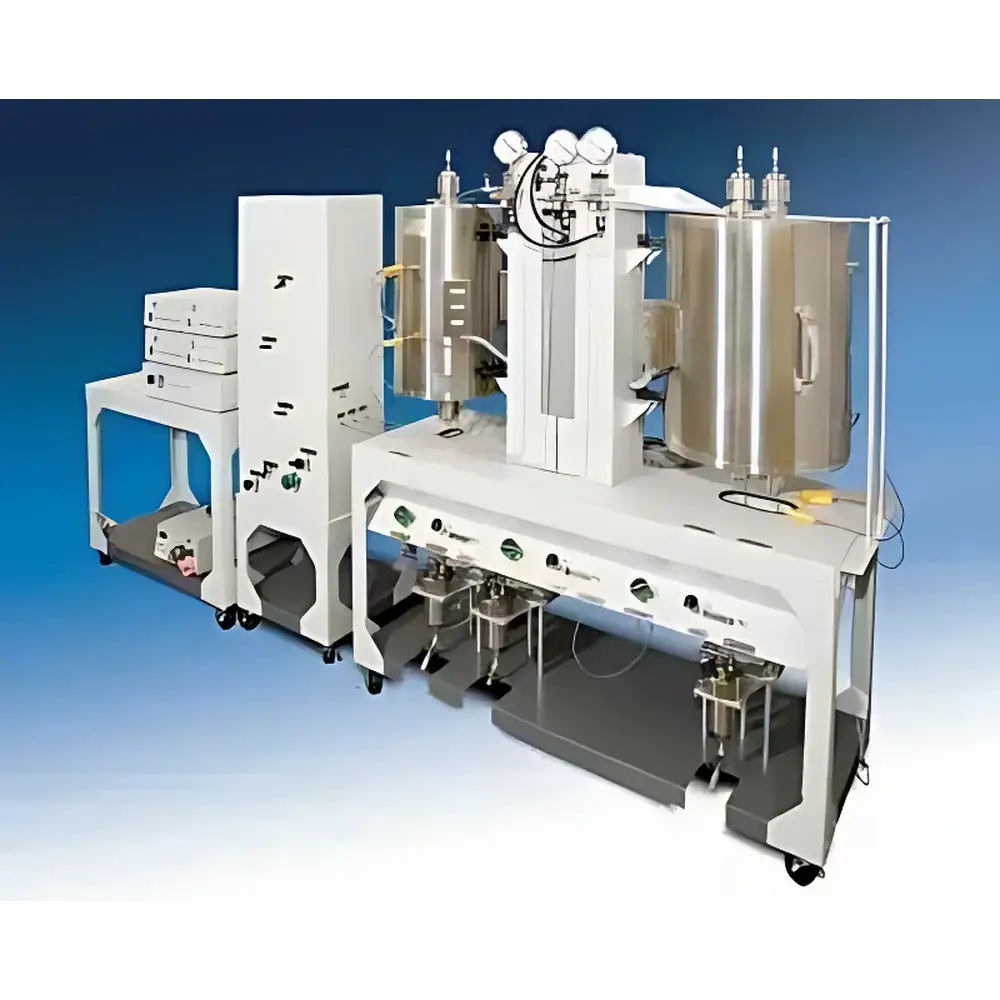
PARR G-T-O Gas-to-Gasoline Synthesis System
| Brand | PARR |
|---|---|
| Origin | USA |
| Manufacturer Status | Authorized Distributor |
| Origin Category | Imported |
| Model | G-T-O |
| Pricing | Upon Request |
Overview
The PARR G-T-O Gas-to-Gasoline Synthesis System is a fully integrated, high-pressure catalytic reaction platform engineered for laboratory-scale investigation of gas-phase heterogeneous catalytic processes—particularly Fischer–Tropsch (FT) synthesis, methanation, steam reforming, and related syngas conversion pathways. Based on fixed-bed tubular reactor architecture, the system operates under precisely controlled temperature, pressure, and stoichiometric gas composition to enable reproducible kinetic studies, catalyst screening, and process optimization. Its core function is the catalytic transformation of synthesis gas (CO + H₂) into liquid hydrocarbon products—including naphtha-range and diesel-range aliphatics—using Fe- or Co-based catalysts supported on alumina, silica, or carbon carriers. The system supports both thermodynamically limited and kinetically driven reaction regimes, with operational flexibility across 1–10 MPa pressure and 150–450 °C temperature ranges. All reactors are constructed from high-alloy stainless steel (e.g., Inconel 600 or 316L) with trace-metal-controlled wetted surfaces to ensure compatibility with sulfur-sensitive catalysts and prevent unintended metal leaching.
Key Features
- Triple-tubular fixed-bed reactor configuration—reconfigurable in parallel or series via modular high-pressure manifold valves for cascade reaction studies or comparative catalyst testing.
- Four-channel precision gas mixing subsystem with independent mass flow controllers (MFCs) per line (±0.8% full-scale accuracy), enabling dynamic blending of up to four gases (e.g., CO, H₂, CO₂, N₂, CH₄, Ar) prior to distribution to individual reactors.
- Integrated downstream train per reactor: shell-and-tube heat exchanger (water-cooled), high-efficiency gas–liquid coalescing separator (with sight glass and level monitoring), and programmable back-pressure regulator (BPR) maintaining ±0.02 MPa stability over extended runs.
- Automated liquid feed capability via high-pressure diaphragm metering pump (0.01–10 mL/min range, pulseless delivery), compatible with alcohols (methanol, ethanol), water, or aqueous catalyst precursors.
- Centralized control via PARR 4871 Process Controller: 24-channel PID loop management, real-time data logging (1 Hz sampling), alarm sequencing, and configurable ramp/soak profiles with hardware interlocks for overpressure, overtemperature, and flow loss conditions.
Sample Compatibility & Compliance
The G-T-O system accommodates solid catalysts in pellet, extrudate, or powder form (particle size 0.25–3 mm), with reactor tubes accommodating 1–10 g catalyst loads. It supports corrosive feedstocks including H₂S-containing syngas (with optional Hastelloy C-276 lining), halogenated intermediates, and condensable oxygenates. All pressure components comply with ASME BPVC Section VIII Div. 1 certification requirements; electrical enclosures meet NEMA 4X and ATEX Zone 2/Class I Div. 2 standards. The system design facilitates adherence to ASTM D7213 (Fischer–Tropsch catalyst activity testing), ISO 14520 (gas fire suppression compatibility for lab safety integration), and GLP-compliant audit trails when paired with validated 4871 firmware (v3.2+ with electronic signature support per FDA 21 CFR Part 11).
Software & Data Management
The 4871 controller hosts embedded firmware with native CSV export, timestamped event logging, and dual SD card redundancy. Optional PARR SynthSoft™ (v5.1) provides advanced visualization: real-time multi-parameter overlay (T, P, Fgas, Fliquid, ΔTexch), automated carbon balance calculation, and stoichiometric yield mapping against theoretical FT product distributions (Anderson–Schulz–Flory modeling). All data files include SHA-256 checksums and metadata headers (operator ID, batch tag, calibration timestamps) to satisfy ISO/IEC 17025 documentation requirements. Remote monitoring is supported via Ethernet/IP with TLS 1.2 encryption; no cloud storage or third-party telemetry is enabled by default.
Applications
- Fischer–Tropsch kinetics and selectivity profiling under variable H₂/CO ratios (0.5–2.5), space velocity (100–10,000 h⁻¹), and pressure gradients.
- Catalyst deactivation studies under accelerated aging conditions (e.g., sulfur poisoning, sintering, coke formation).
- Steam methane reforming (SMR) and autothermal reforming (ATR) feedstock flexibility testing with biomass-derived syngas simulants.
- Green diesel pathway development using CO₂ hydrogenation routes (e.g., reverse water-gas shift + FT coupling).
- Reaction network elucidation for tandem catalysis—e.g., methanol synthesis followed by methanol-to-hydrocarbons (MTH) in serial reactor mode.
FAQ
What catalyst forms are compatible with the G-T-O reactor tubes?
Standard configurations accept 1/8″ OD stainless steel tubes packed with pellets, extrudates, or granules (0.25–3 mm diameter); custom liners (quartz, SiC, or Hastelloy) are available for highly corrosive or high-temperature applications.
Can the system operate in true continuous-flow mode with online product analysis?
Yes—each reactor outlet can be plumbed to external GC or GC-MS via heated transfer lines (up to 250 °C); optional integrated micro-GC module (Agilent 490-PRO) is available as a factory-installed option.
Is catalyst reduction under H₂ possible inside the reactor tubes?
Absolutely—the system includes dedicated pre-reduction protocols in the 4871 controller, supporting temperature-programmed reduction (TPR) from ambient to 500 °C at controlled ramp rates (0.1–10 °C/min) under pure H₂ or dilute H₂/N₂ mixtures.
How is safety managed during high-pressure syngas operation?
Multiple redundant safeguards: rupture disc + spring-loaded PSV setpoints, hydrogen leak detection (catalytic bead sensors), automatic N₂ purge sequence on shutdown, and hardwired emergency venting to dedicated flare stack interface.
Does PARR provide catalyst loading and reactor conditioning services?
Yes—factory commissioning includes inert gas leak testing, thermal profiling, baseline performance validation with reference catalyst (Fe/K/Al₂O₃), and operator training on SOP development for GLP-aligned execution.



