
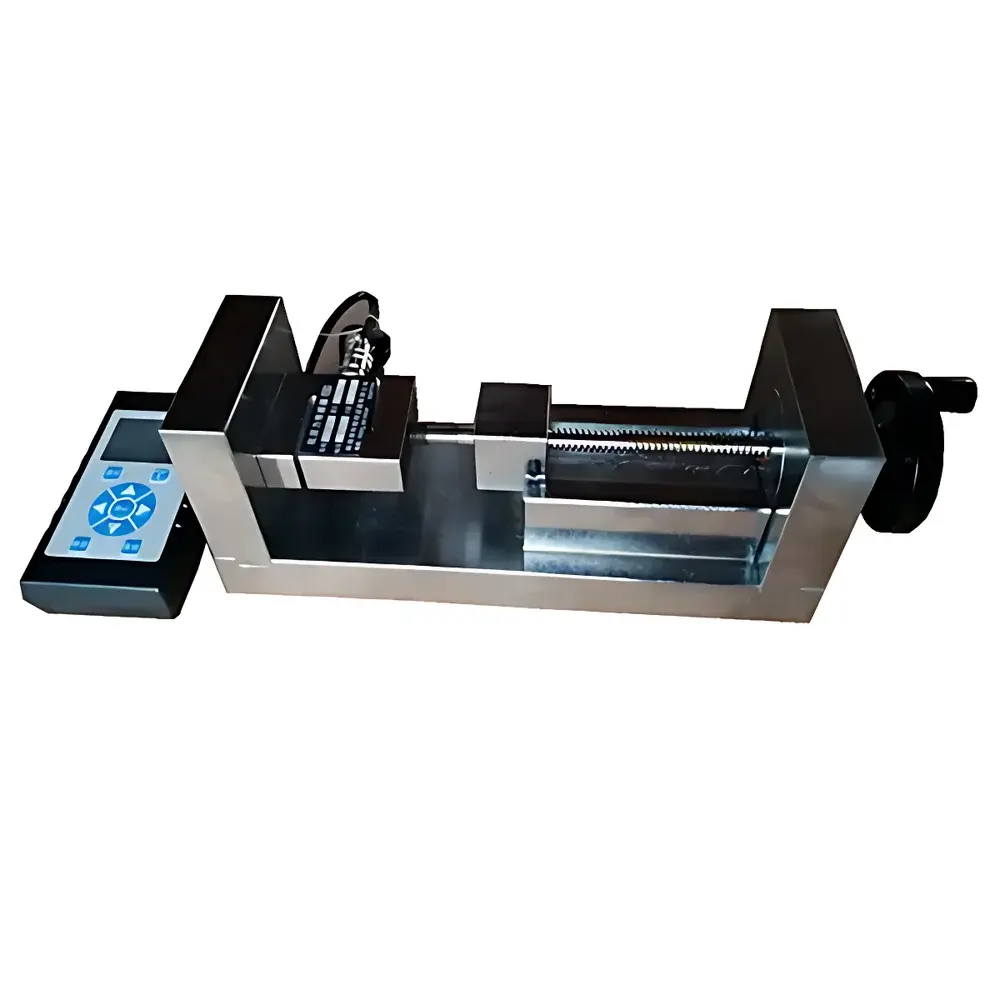
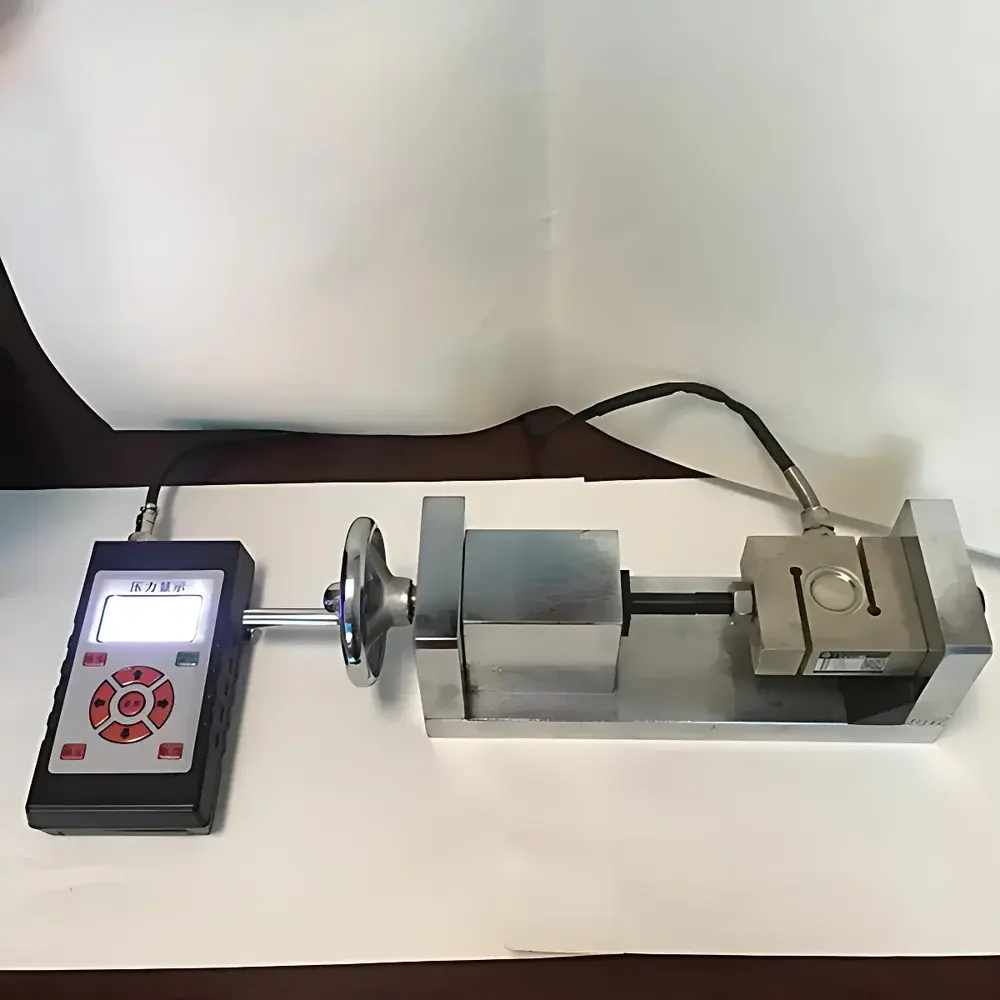
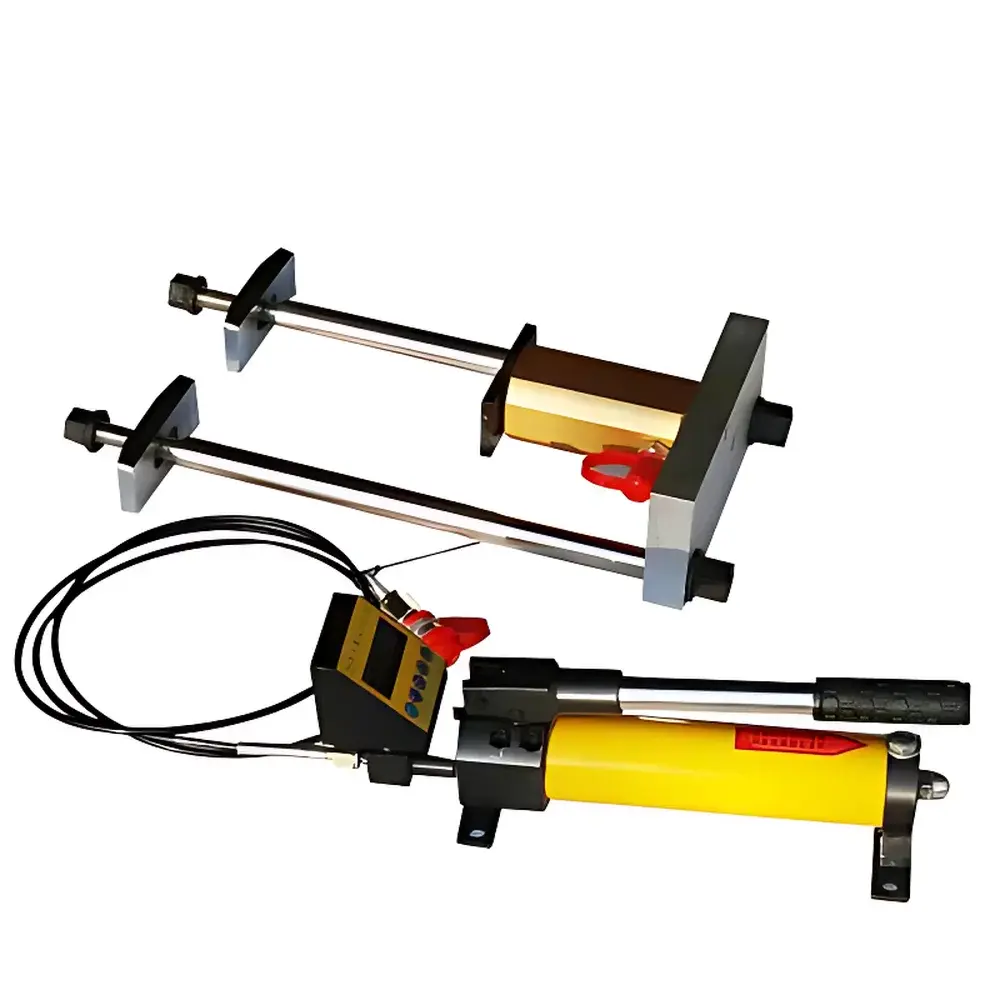
Rongjida ZY-5 Selective Compression Mortar Strength Tester
| Brand | Rongjida |
|---|---|
| Origin | Shanghai, China |
| Manufacturer Type | Manufacturer |
| Country of Origin | Domestic (China) |
| Model | ZY-5 |
| Price | USD 860 (approx.) |
| Test Type | Compressive Strength Testing of Masonry Mortar |
| Pressure Range | 0–5000 N |
| Resolution | 1 N |
| Operating Voltage | 220 V AC |
| Operating Temperature | 5–35 °C (recommended: 10–30 °C) |
| Repeatability Error | ≤ ±1% |
| Platen Diameter | (10.00 ± 0.05) mm |
| Rated Stroke | ≥ 18 mm |
| Peak Hold Function | Yes |
| Power-Off Data Retention | Yes |
| Data Storage Capacity | Built-in memory for test records |
| Force System Accuracy | ±1 N |
| Alignment System | Automatic centering and self-leveling mechanism |
| Environmental Protection | IP42-rated enclosure |
Overview
The Rongjida ZY-5 Selective Compression Mortar Strength Tester is a dedicated mechanical testing instrument engineered for the non-destructive evaluation of compressive strength in field-sampled masonry mortar specimens, in strict compliance with Chinese industry standard JGJ/T 234–2011, “Technical Specification for Testing Compressive Strength of Masonry Mortar by Selective Compression Method.” Unlike conventional universal testing machines, the ZY-5 implements a controlled uniaxial compression protocol between two precision-machined flat circular platens—each fitted with a compliant rubber interface—to apply localized load to small, prismatic mortar fragments extracted from horizontal bed joints. This method isolates the intrinsic mechanical behavior of the mortar matrix while minimizing boundary effects from adjacent brick units. The instrument operates on a quasi-static loading principle, where force is applied at a calibrated rate (1/15–1/10 of estimated failure load per second), enabling reproducible fracture initiation and peak load capture. Its design prioritizes portability, field-deployable robustness, and metrological traceability—making it suitable for quality assurance in construction site laboratories, third-party inspection agencies, and precast mortar certification workflows.
Key Features
- High-precision dual-platen compression system with (10.00 ± 0.05) mm diameter flat circular platens, manufactured from hardened stainless steel to ensure dimensional stability and surface uniformity.
- Integrated automatic centering and self-leveling alignment mechanism that compensates for minor specimen tilt or surface irregularity, reducing operator-induced bias and improving inter-test repeatability.
- Digital force measurement system with 1 N resolution, ±1 N absolute accuracy, and real-time peak-hold functionality—ensuring unambiguous identification of maximum compressive load at specimen failure.
- Non-volatile internal memory capable of storing >500 test records with timestamp, load value (N), and optional user-assigned ID tags—supporting audit-ready data retention without external devices.
- Robust mechanical architecture featuring high-rigidity load frame and guided linear actuation, designed to maintain structural integrity under repeated 5000 N loading cycles over extended service life.
- Compliance-ready electrical design: 220 V AC input, thermal management optimized for ambient operation between 5 °C and 35 °C, and ingress protection rated IP42 for dust resistance and limited moisture exposure avoidance.
Sample Compatibility & Compliance
The ZY-5 is validated exclusively for use with mortar specimens prepared per JGJ/T 234–2011 requirements: rectangular fragments measuring ≥30 mm in minimum linear dimension, thickness 8–16 mm, and opposing faces parallel within ±0.2 mm. Specimens must be air-dried to constant mass prior to testing; no conditioning at controlled humidity is required. Each test uses one specimen per cycle, with five primary specimens and one backup per sampling zone. The instrument’s platen geometry and stroke limit (≥18 mm) accommodate typical mortar fragment deformation without bottoming out. While not certified to ISO 1920 or ASTM C109, its methodology aligns with the physical principles underlying standardized compressive testing—particularly in eliminating confounding variables from bond interface or substrate constraint. For regulatory reporting, raw force data (in N) may be converted to compressive strength (MPa) using nominal cross-sectional area derived from caliper-measured dimensions (to 0.1 mm precision), satisfying documentation requirements under China’s GB/T 50315 and local construction supervision protocols.
Software & Data Management
The ZY-5 operates as a standalone embedded system with no proprietary PC software dependency. All data acquisition, processing, and storage occur onboard via a microcontroller-based measurement module calibrated against NIST-traceable force standards. Test records include: date/time stamp, numeric load value (N), sequential ID, and optional alphanumeric annotation. Data export is supported via USB-C interface (firmware update mode) or manual transcription. Though lacking native 21 CFR Part 11 compliance features such as electronic signatures or audit trails, the device supports GLP-aligned workflows when used with laboratory logbooks and documented calibration certificates (recommended annually or after 500 tests). Firmware updates—distributed by Rongjida upon request—maintain long-term compatibility with evolving metrological guidelines.
Applications
- On-site compressive strength verification of lime-cement, cement-only, and polymer-modified mortars in new construction and renovation projects.
- Comparative assessment of mortar batches across delivery lots to detect consistency deviations exceeding ±15% relative standard deviation.
- Forensic evaluation of degraded mortar in historic masonry structures, where minimal sampling is mandated.
- Quality control during precast block manufacturing, particularly for thin-joint systems requiring precise mortar performance validation.
- Supporting compliance with China’s Construction Engineering Quality Acceptance Unified Standard (GB 50300) and local housing authority inspection mandates.
FAQ
What is the maximum allowable specimen thickness for the ZY-5?
The instrument accepts specimens up to 16 mm thick, provided the platen-to-platen gap remains sufficient to avoid mechanical interference before load application. Specimen thickness must be measured at three locations within the loaded area using a digital caliper (0.1 mm resolution) and averaged.
Can the ZY-5 be used for grout or concrete testing?
No. The ZY-5 is specifically calibrated and validated for mortar specimens conforming to JGJ/T 234–2011 geometry and composition. Grout and concrete exhibit significantly higher stiffness and failure loads, falling outside the 0–5000 N operational range and risking sensor saturation or frame deformation.
Is periodic recalibration required?
Yes. Rongjida recommends annual calibration using certified dead-weight or hydraulic force standards traceable to national metrology institutes. Field verification with reference load cells is advised before each daily testing session.
Does the ZY-5 meet international standards such as ISO or ASTM?
It complies with JGJ/T 234–2011, which is harmonized with the conceptual framework of ISO 679 (cement strength testing) but differs in specimen geometry and loading protocol. It is not certified to ISO 1920 or ASTM C109, and results are not directly interchangeable without empirical correlation studies.
How is data integrity ensured during power interruption?
The embedded memory retains all stored test records even after complete power loss. The peak-hold function preserves the last measured failure load until manually cleared, preventing data overwrite during transient voltage drops.





