
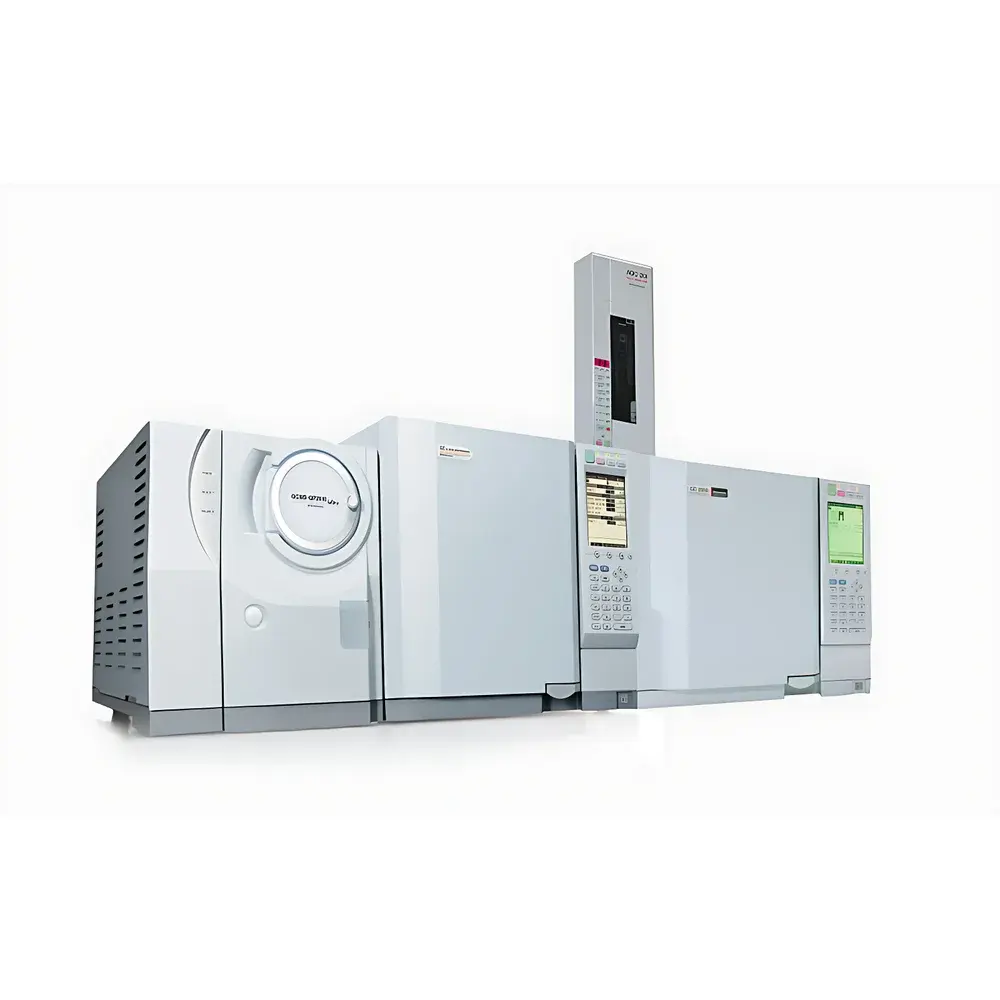
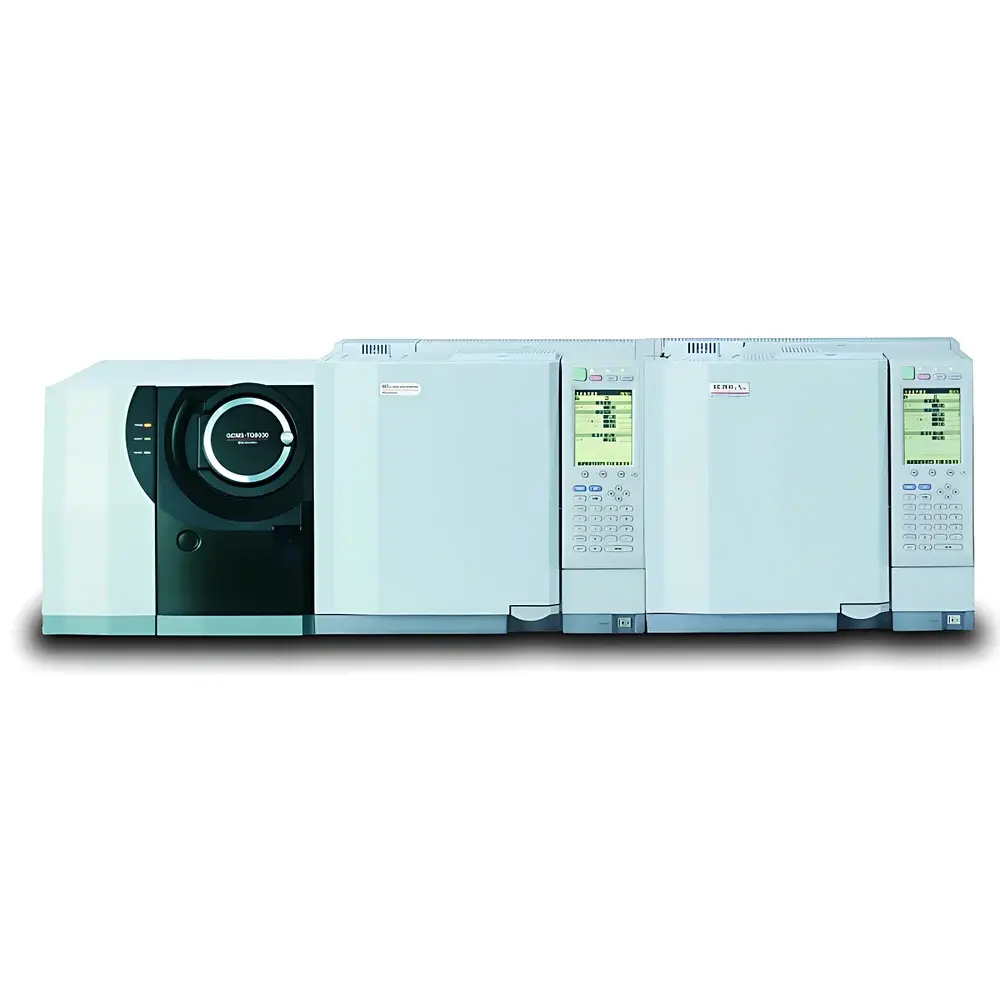
Shimadzu MDGC/GCMS Multi-Dimensional Gas Chromatography–Mass Spectrometry System
| Brand | Shimadzu |
|---|---|
| Origin | Japan |
| Manufacturer Type | Original Equipment Manufacturer (OEM) |
| Import Status | Imported |
| Model | MDGC/GCMS |
| Application Scope | General-Purpose Analytical Chemistry |
Overview
The Shimadzu MDGC/GCMS is a high-performance, multi-dimensional gas chromatography–mass spectrometry system engineered for enhanced separation power and compound identification reliability in complex matrix analysis. It implements comprehensive heart-cutting (MDGC) using the Multi-Deans Switching (MDS) technology — a pneumatically actuated, pressure-balanced flow control architecture that enables precise, reproducible transfer of selected chromatographic fractions from the first dimension (¹D) to the second dimension (²D) without retention time drift, even after repeated modulation cycles. Unlike conventional single-column GC or simple column-switching configurations, the MDGC/GCMS employs two physically independent ovens (dual-column oven system), allowing fully independent temperature programming for each column — a critical capability for optimizing resolution, peak shape, and elution window alignment across dimensions. The entire flow path — including transfer lines, valves, and interface components — is constructed from ultra-inert materials (e.g., Siltek®-treated stainless steel and low-bleed fused silica) to minimize active site interactions, thereby suppressing analyte degradation, adsorption, and peak tailing commonly observed with thermally labile or polar compounds.
Key Features
- Multi-Deans Switching (MDS) architecture with real-time pressure feedback control ensures sub-second switching accuracy and zero retention time shift across hundreds of sequential heart-cuts.
- Dual independent column ovens support simultaneous yet distinct temperature ramp profiles — enabling orthogonal separation mechanisms (e.g., polarity-based ¹D + volatility-based ²D) for maximum peak capacity expansion.
- Ultra-inert flow path design minimizes surface activity; validated for quantitative analysis of reactive species including organic acids, amines, aldehydes, and organophosphates.
- Integrated GCMS platform allows seamless transition between standalone GC mode and full MDGC/GCMS operation via software configuration — no hardware reconfiguration required.
- Modular detector compatibility: supports single-quadrupole (QMS), triple-quadrupole (QqQ), and high-resolution time-of-flight (TOF) mass spectrometers — configurable per application requirements.
Sample Compatibility & Compliance
The system accommodates liquid, gaseous, and solid-phase microextraction (SPME) samples across environmental, food safety, pharmaceutical, and forensic applications. It complies with ISO/IEC 17025:2017 method validation requirements and supports audit-ready workflows aligned with FDA 21 CFR Part 11 for electronic records and signatures. All method parameters — including valve timing, oven ramps, MDS event triggers, and MS acquisition settings — are stored with full version control and user traceability. Routine performance verification follows ASTM D6729 (gasoline hydrocarbon analysis) and USP guidelines for system suitability testing in regulated laboratories.
Software & Data Management
MDGCSolution™ software provides an intuitive, workflow-driven interface for method development, sequence execution, and multidimensional data review. Its graphical MDS setup module enables drag-and-drop definition of cut windows, synchronization with oven programs, and automatic calibration of transfer times. Raw data files adhere to ANDI/NetCDF format for cross-platform compatibility. Batch processing includes automated peak table generation with retention time locking (RTL), spectral deconvolution (AMDIS-integrated), and library search against NIST, Wiley, and custom spectral libraries. Audit trail logs record all user actions, parameter changes, and instrument state transitions — supporting GLP/GMP compliance and internal quality audits.
Applications
- Environmental analysis: Targeted and non-targeted screening of PAHs, PCBs, dioxins, and emerging contaminants (e.g., PFAS precursors) in soil, water, and air extracts.
- Food authenticity and adulteration: Discrimination of botanical origin (e.g., olive oil varietals), detection of pesticide metabolites, and characterization of volatile flavor profiles.
- Pharmaceutical impurity profiling: Separation and structural confirmation of low-abundance genotoxic impurities co-eluting with API peaks in forced degradation studies.
- Petrochemical fingerprinting: Hydrocarbon group-type analysis (saturates, olefins, aromatics, naphthenes) in refinery streams and lubricant base oils.
- Forensic toxicology: Differentiation of isomeric drugs of abuse (e.g., THC isomers, synthetic cannabinoids) where conventional GCMS fails due to co-elution.
FAQ
What is the primary advantage of MDGC over comprehensive two-dimensional GC (GC×GC)?
MDGC offers superior sensitivity and quantitative precision for targeted analytes by isolating specific regions of interest — avoiding signal dilution across the entire ²D space inherent in GC×GC modulation.
Can the system operate as a conventional GC or GCMS without MDGC functionality?
Yes — MDGCSolution allows full deactivation of switching valves and independent use of either column as a standalone GC or GCMS channel.
Is method transfer possible between different Shimadzu MDGC/GCMS instruments?
Retention time locking (RTL) combined with standardized MDS timing protocols ensures robust inter-instrument reproducibility when using identical column chemistries and oven programs.
Does the system support EPA Method 8270 or similar regulatory protocols?
Yes — validated configurations exist for EPA 8270E (semivolatile organics) and 8082A (PCBs), including automated calibration, QC checks, and reporting templates compliant with laboratory information management systems (LIMS).




